

Key takeaways
- Twelve activities, most taking 10 to 30 minutes of hands-on time, using paper, pasta, foil, string and recycling.
- Each one can go wrong safely and be fixed straight away, which is the point.
- Let your child guess first. A prediction makes the result matter.
- Balloons, coins and small magnets need adult supervision for under 8s.
- Repeat one activity with a single change before starting a new one.
These are 12 easy activities for 5 year olds, and for 6 and 7 year olds too, each with materials, steps and a time. Most take 15 to 30 minutes.
1. Paper bridge
Turn one sheet of paper into a bridge and see how many coins it holds. Ages 5–7 · 20 minutes
- 1 sheet of A4 paper
- 2 stacks of books, same height
- Coins (an adult counts them out; they are a choking risk for under-6s)
- Rest the paper flat across a gap of about 15 cm between the stacks.
- Add coins one at a time in the middle until it sags.
- Fold the paper into an accordion and try again. Count the coins.
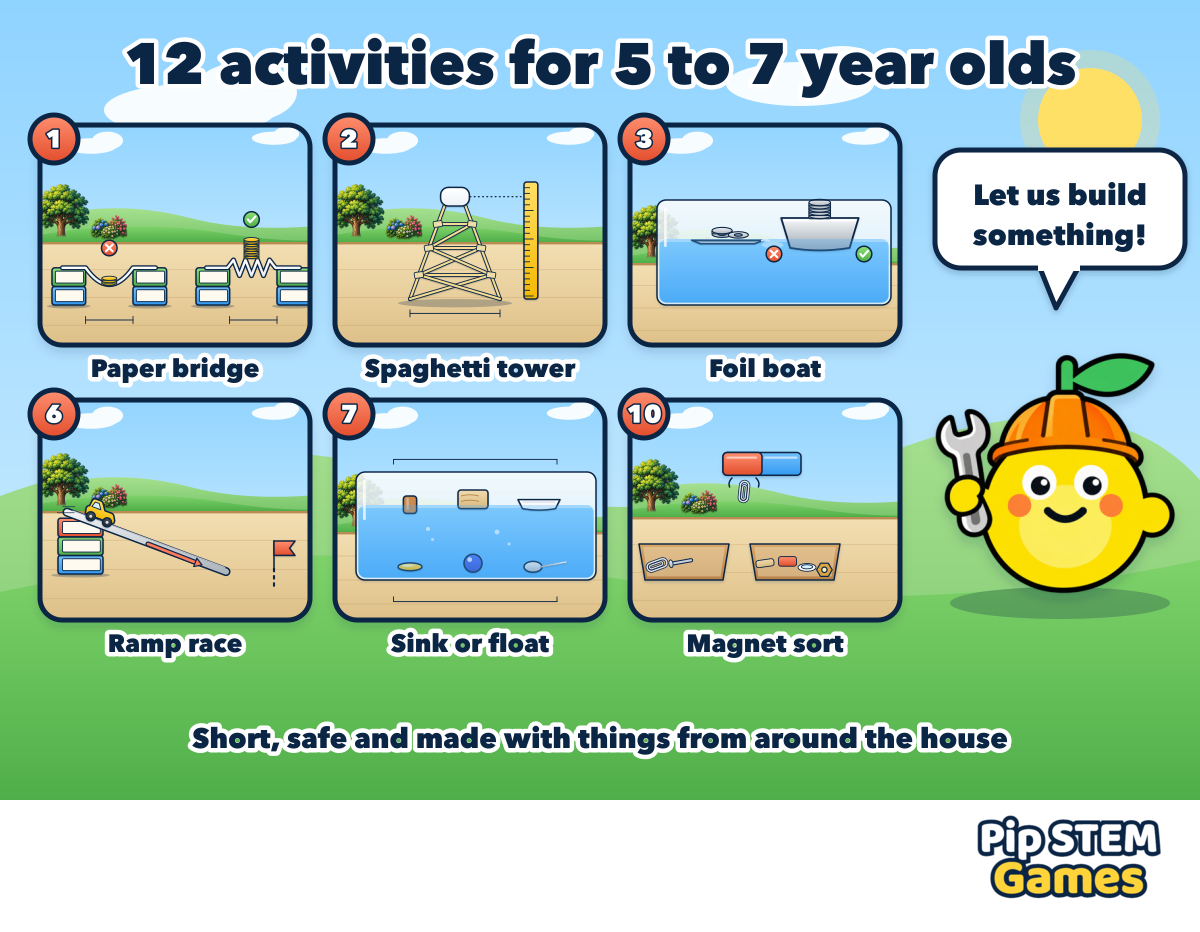
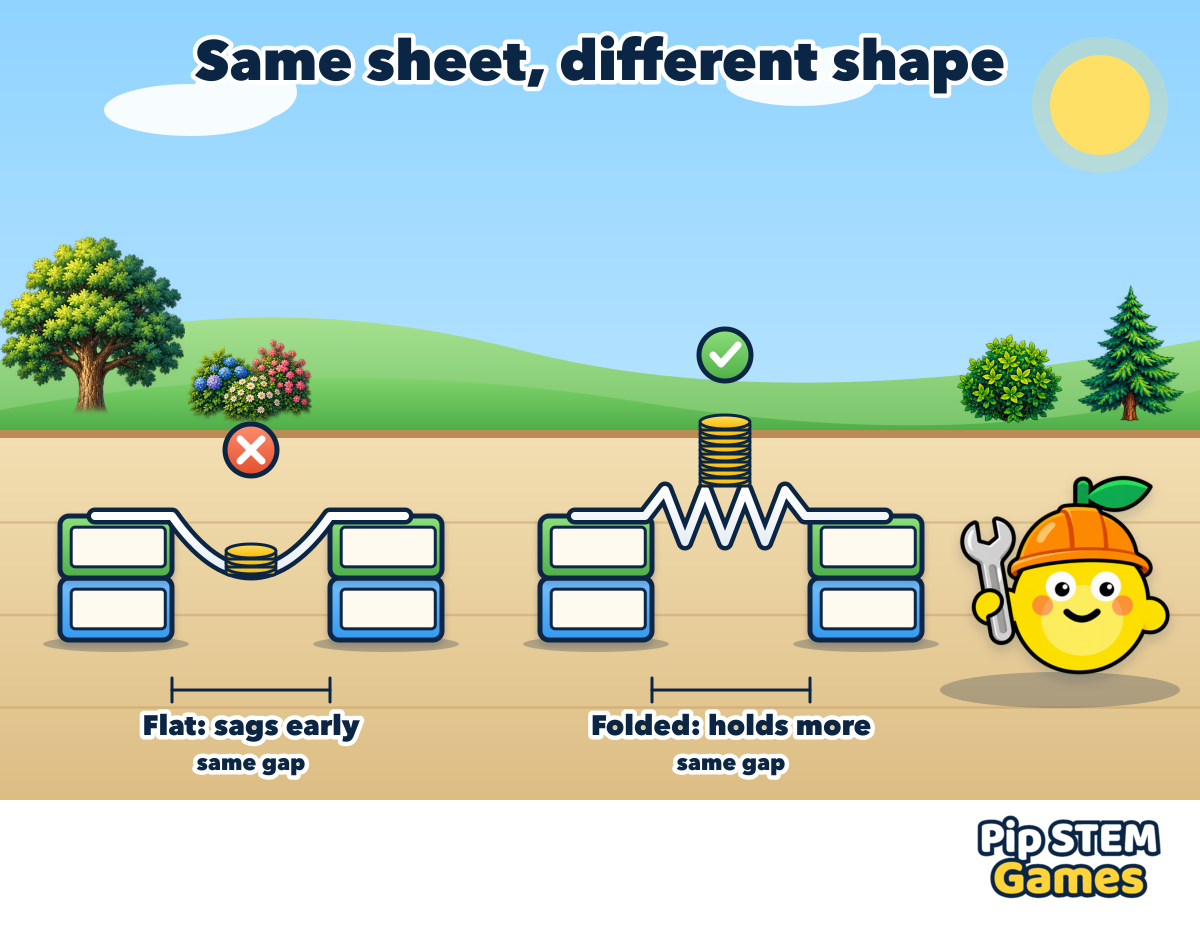
Folds make paper stiffer, so the accordion holds far more. Full steps are in our one sheet of paper and 20 coins challenge.
2. Spaghetti and marshmallow tower
Build the tallest tower you can from dry spaghetti and tape. Ages 5–7 · 25 minutes
- 10 sticks of dry spaghetti
- Masking tape
- 1 mini marshmallow
- A ruler
- Tape a wide base of three or four sticks on the table.
- Bring the sticks together as the tower rises, taping only at the joins.
- Put the marshmallow on top and measure the height.
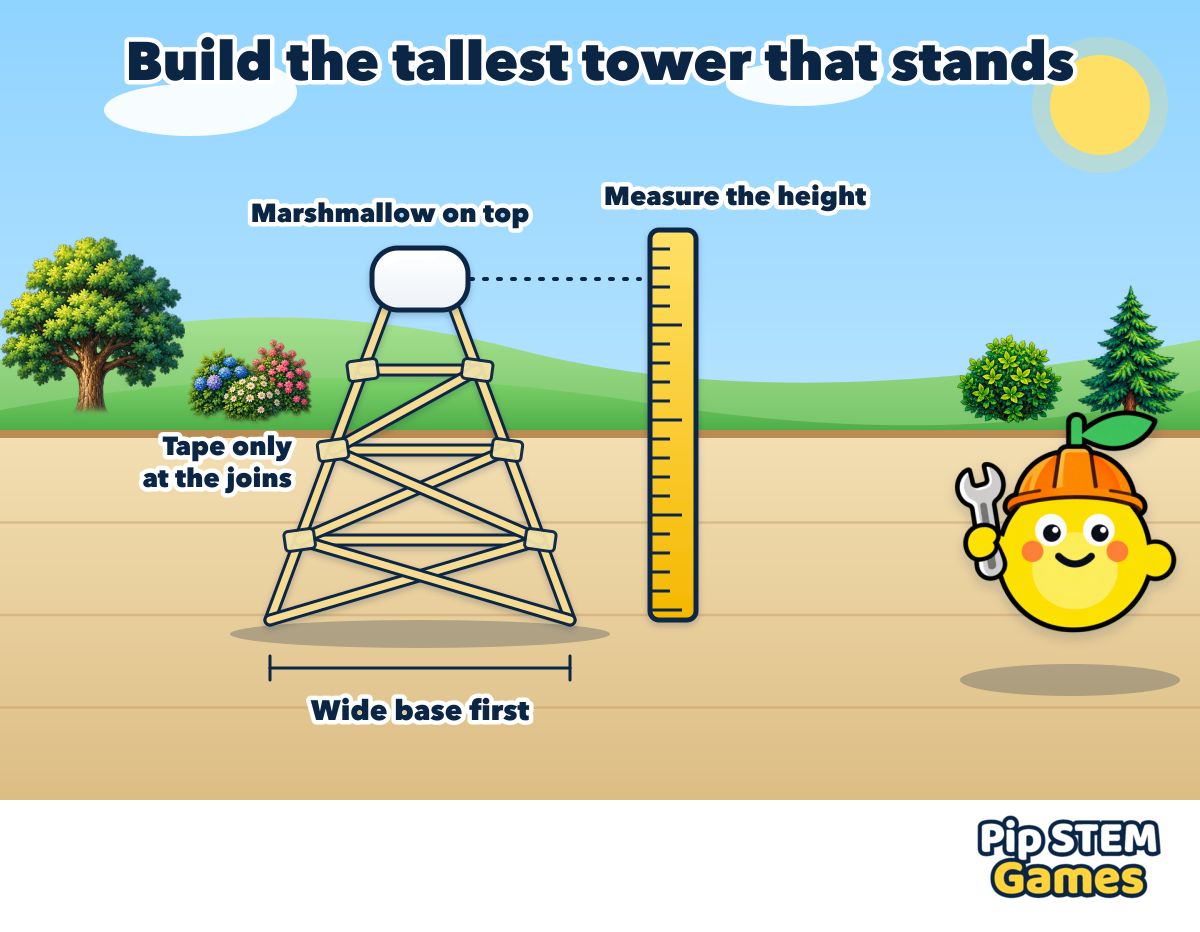
A wide base keeps it standing. If it wobbles, change one thing and rebuild; see the 10 spaghetti tower challenge. Check for wheat and gelatin allergies first.
3. Foil boat
Fold a square of foil into a boat and load it with pennies until it sinks. Ages 5–7 · 20 minutes
- Squares of kitchen foil, about 15 cm
- A bowl or basin of water
- Pennies or washers (an adult handles the pennies)
- A towel
- Fold the foil into a boat with the sides turned up.
- Float it gently on the water.
- Add pennies one at a time near the middle and count how many it holds.
- Make a second boat with a different shape and compare.
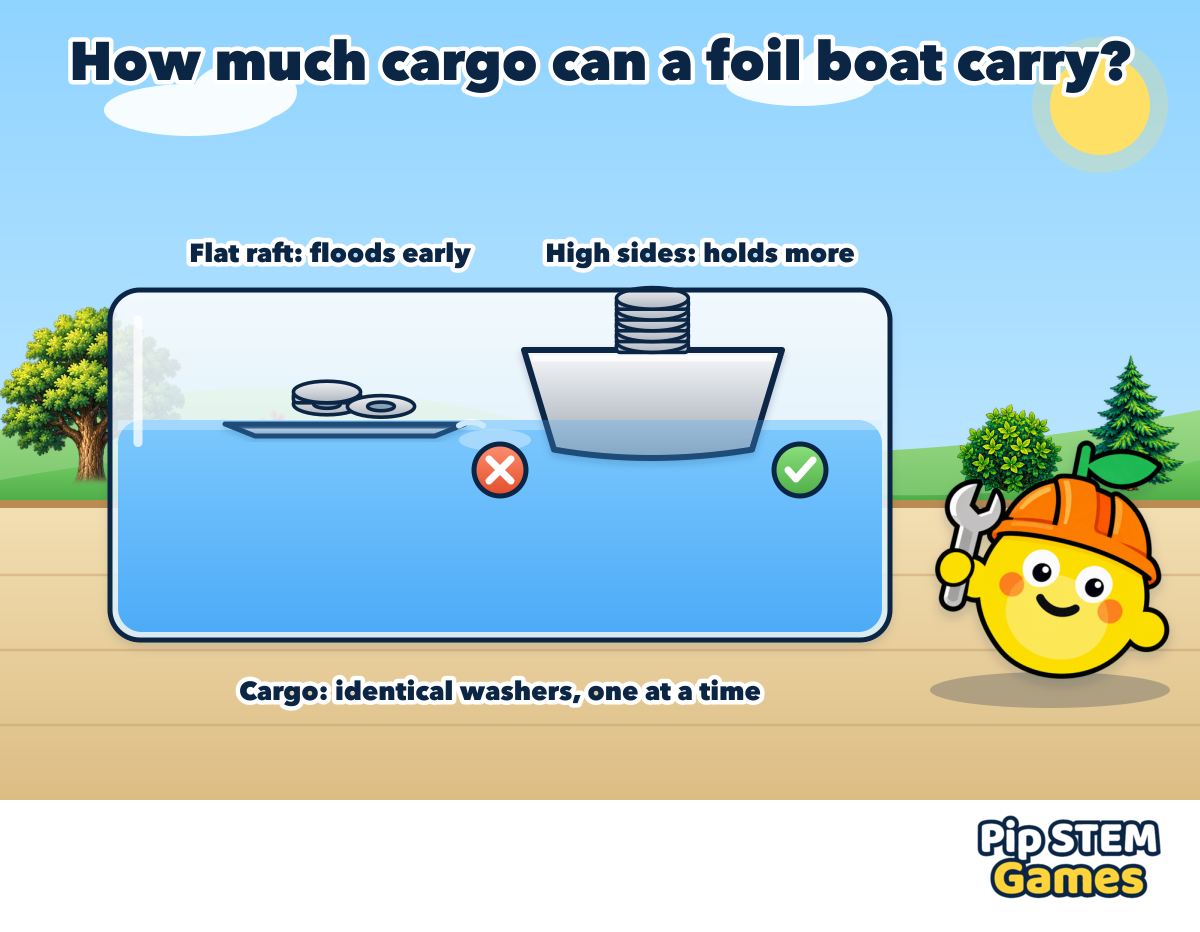
Wide, flat boats push aside more water, so they hold more. Dry the table afterwards. More in how to build a boat that actually floats.
4. Balloon-powered car
Make a card car that zooms across the floor on air. Ages 5–7 · 30 minutes · adult helps
- A piece of card, about 10 x 15 cm
- 2 straws and 2 wooden skewers (an adult trims the sharp ends)
- 4 bottle tops for wheels
- 1 balloon and tape
- An adult makes holes in the bottle tops and trims the skewers.
- Tape the straws across the underside of the card and slide the skewers through.
- Push a bottle top onto each skewer end.
- Tape a straw on top, pointing backwards, and fix the balloon to it. An adult blows up the balloon, then let go.

Air pushed backwards pushes the car forwards. Keep burst balloon pieces away from children under 8. The balloon car build has the full method.
5. Cardboard marble run
Tape card and tubes into a track and send a marble down it. Ages 5–7 · 30 minutes
- A cardboard box or a wall to build on
- Kitchen roll tubes or strips of card
- Masking tape
- A large marble (an adult supervises, as it is a choking risk)
- Tape a sloped strip of card to the box.
- Add a gentle turn and a tray at the end to catch the marble.
- Roll the marble and watch where it stalls.
- Change one slope or join and try again.

Steeper slopes make the marble faster, and flat bits make it stop. See the cardboard marble run for more.
6. Ramp race
Race toy cars down a ramp and change the slope. Ages 5–7 · 15 minutes
- A tray or a flat piece of card
- 3 books
- 2 or 3 toy cars
- Rest one end of the tray on one book.
- Release two cars at the same moment. Count out loud to time each one.
- Add a second book, then a third, and race again.
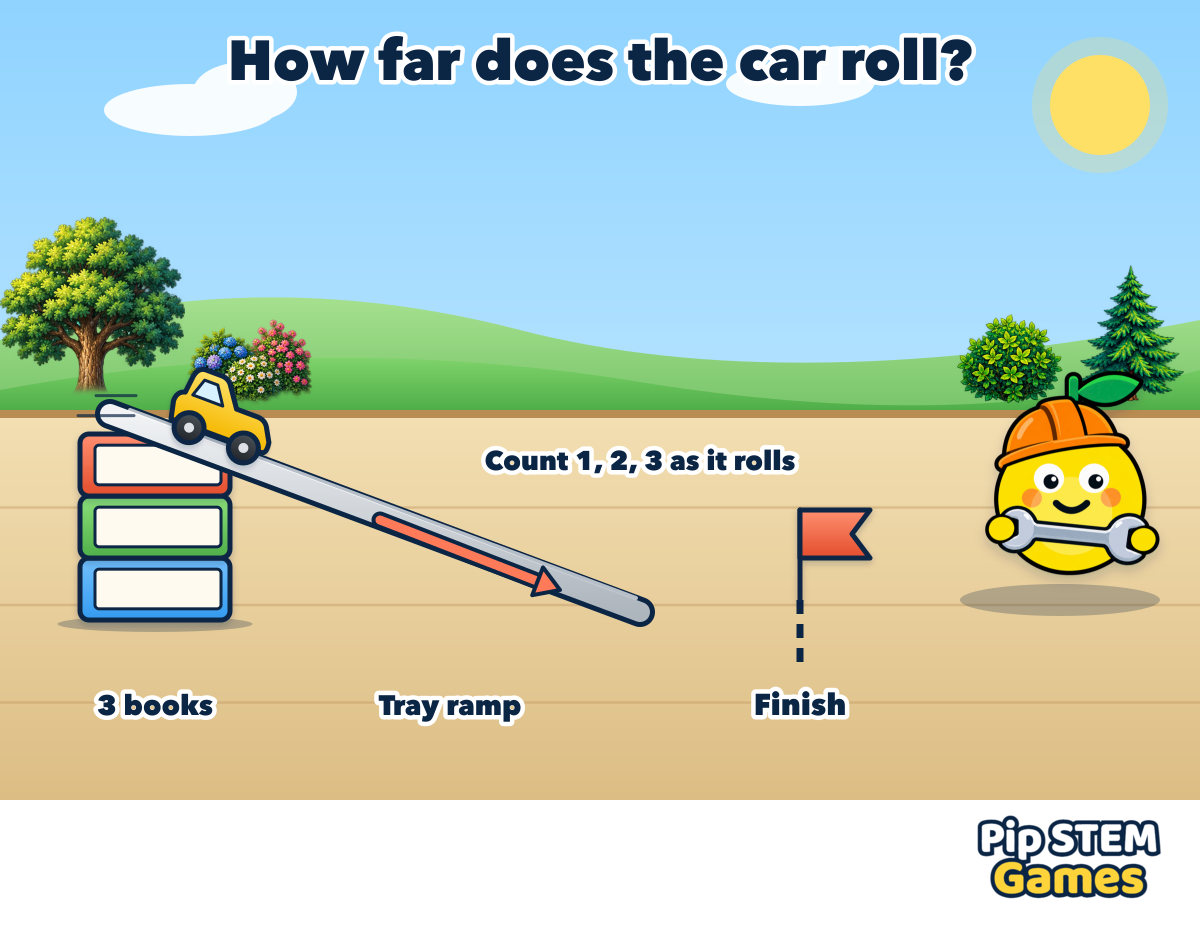
A steeper ramp lets gravity speed the car up more. If the cars crash into each other, race one at a time.
7. Sink or float
Guess whether ten things will sink or float, then test them. Ages 5–7 · 15 minutes
- A large bowl of water
- 10 household objects: sponge, cork, spoon, coin, plastic lid, rubber, apple, lego brick, leaf, key
- A towel
- Line up the objects and ask your child to guess for each one.
- Drop them in one at a time, gently.
- Sort them into two piles: sinks and floats.
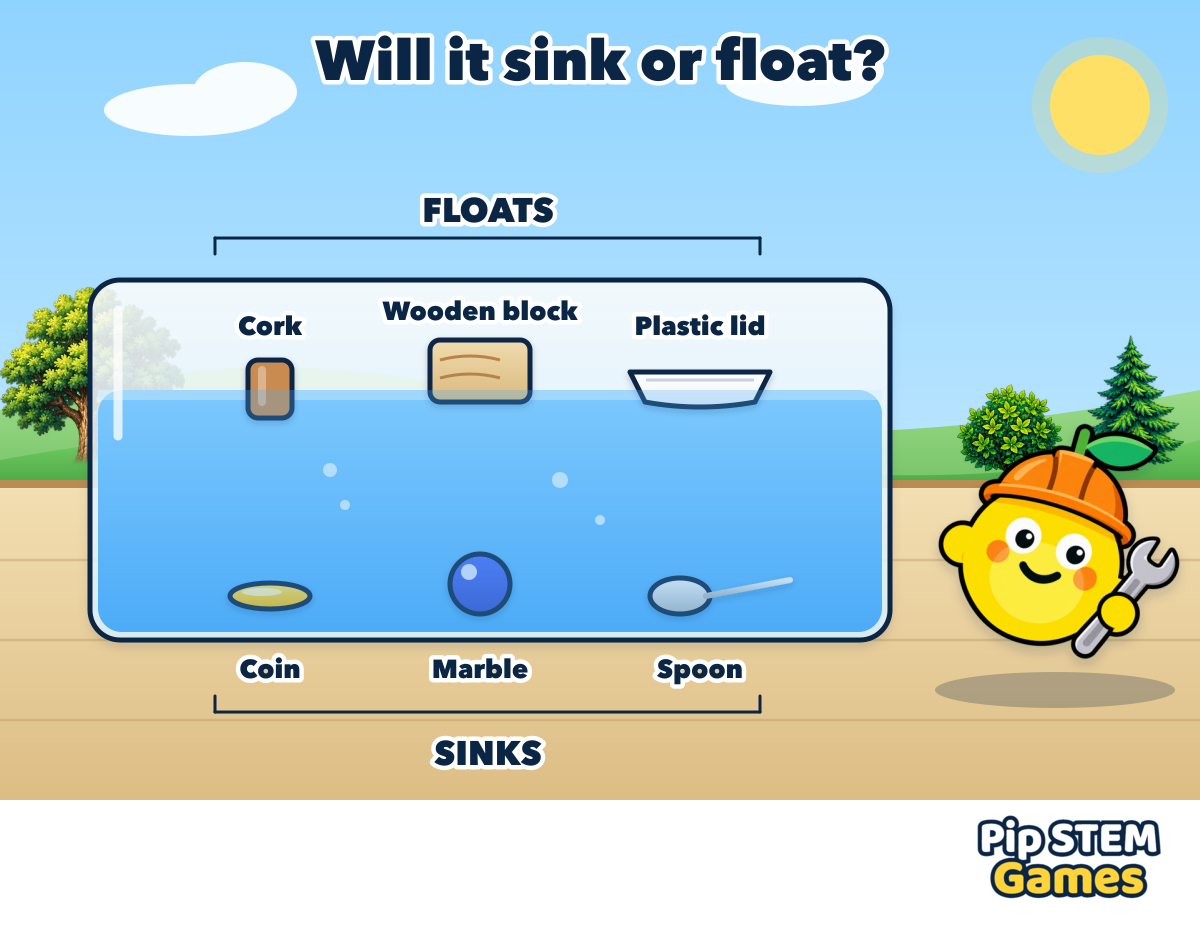
Shape matters as well as weight: a flat plastic lid floats because it spreads out and traps air. Keep coins, keys and small bricks away from under-3s and under adult watch for under-6s.
8. Simple pulley
Lift a small load by pulling a string down. Ages 5–7 · 15 minutes · adult sets up
- A small grooved pulley wheel, or a clean cotton reel on a pencil
- String
- A paper cup with a few pieces of dry pasta in it
- A sturdy low support, such as a chair back
- An adult fixes the pulley wheel to the support.
- Thread the string over the wheel and tie the cup to one end.
- Pull the free end down slowly and watch the cup rise.

A single pulley does not make the load lighter. It lets you pull down, which is often easier on your back than lifting. Keep fingers clear of the wheel. Try the household pulley build.
9. Recycling-bin robot
Build a robot from clean boxes, tubes and lids. Ages 5–7 · 30 minutes
- Clean cereal box, tubes, bottle tops and egg box
- Tape (hot glue is not needed)
- Child safety scissors, with an adult cutting card
- Pens for a face
- Choose a box for the body and a smaller one for the head.
- Tape tubes on for arms and legs.
- Add bottle-top buttons and draw a face.
- Test: can it stand on its own?

If it topples, widen the feet. More ideas are in 10 recycling bin STEM projects.
10. Magnet sort
Test which household things a magnet will pick up. Ages 5–7 · 15 minutes
- One large fridge magnet (small magnets are a swallowing risk)
- A tray of objects: paper clip, steel nail, brass nut, wooden block, plastic lid and a plastic brick
- Ask your child to guess which things are magnetic.
- Touch the magnet to each object.
- Sort them into 'sticks' and 'does not stick' trays.
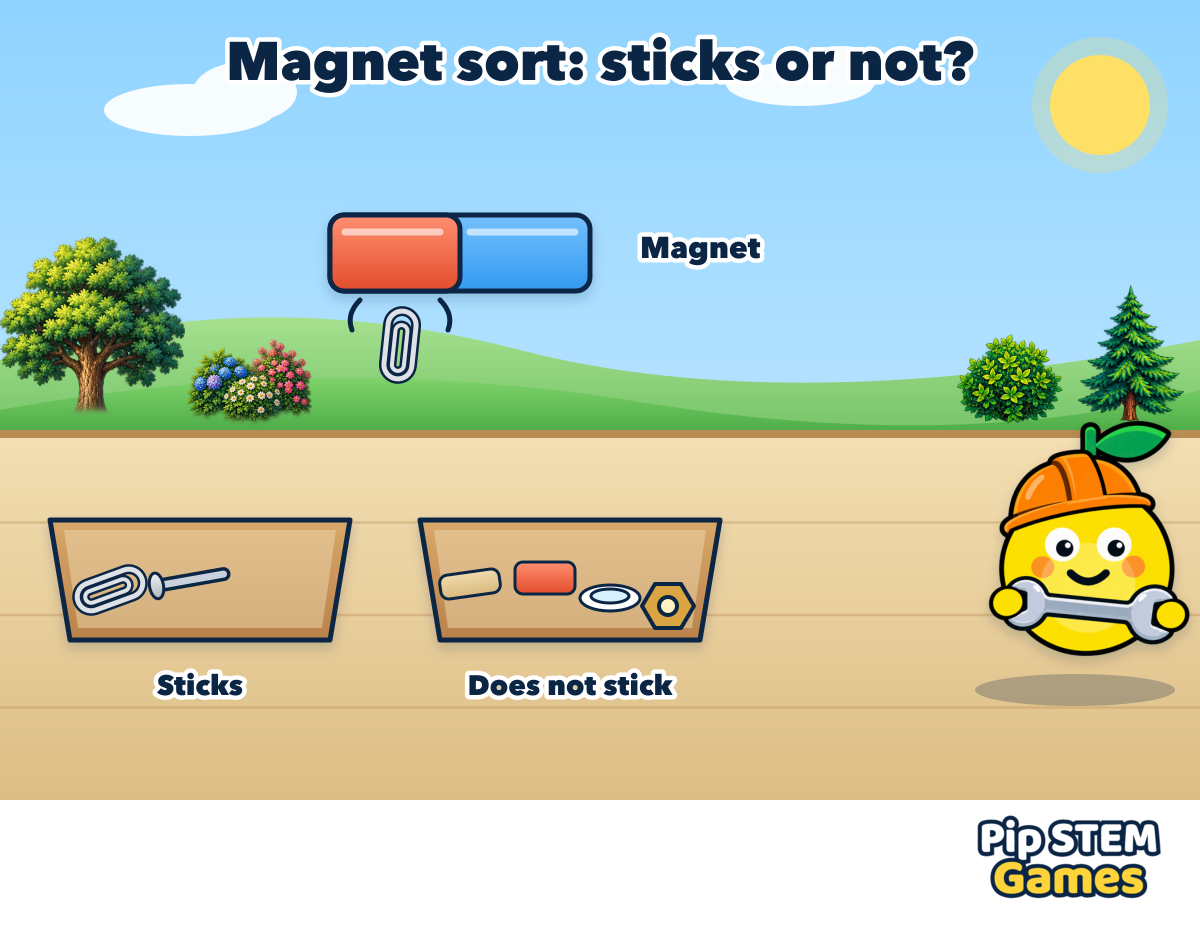
Only some metals stick: steel does, but brass, aluminium and aluminium foil do not, and some coins surprise you. Keep any small magnets out of reach.
11. Grow cress
Grow cress seeds and compare light and dark. Ages 5–7 · 10 minutes to set up, then a few days
- Cress seeds
- 2 small pots or jar lids
- Damp kitchen roll
- A sunny window and a dark cupboard
- Line each pot with damp kitchen roll and sprinkle on seeds.
- Put one pot on the window ledge and one in the cupboard.
- Keep both damp.
- Compare them after about a week.
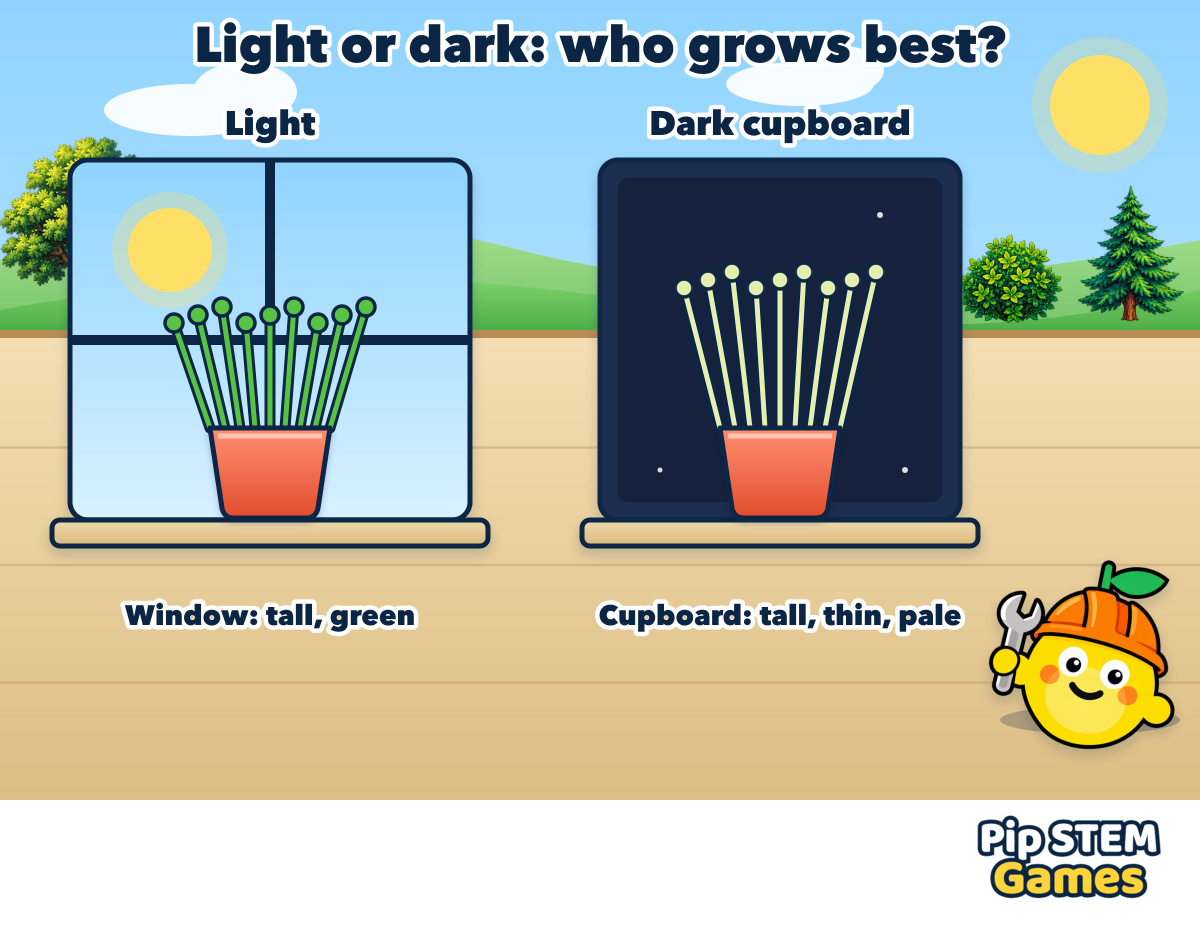
Plants need light to grow green. Wash hands after handling the pots.
12. Paper folding test
Fold a sheet of paper and see how much stronger it gets. Ages 5–7 · 15 minutes
- 3 sheets of paper
- 2 stacks of books
- Coins (adult counts them)
- Lay a flat sheet across the gap and load it with coins.
- Fold a second sheet in half and test it again.
- Fold a third sheet like a concertina and compare.

Folds make paper stiffer, so it bends less. If your results differ, great: check the same paper, gap and coins were used each time. See watch what happens when you fold paper.
How to run these safely
Stay in the room for every activity and have materials ready before you call your child over. Adults handle cutting card, trimming skewers, blowing up balloons and fixing pulleys.
- Balloons: the US Consumer Product Safety Commission advises that children under 8 should not play with uninflated balloons unsupervised, and broken pieces should be collected and binned at once.
- Small parts: coins, marbles, bottle tops and paper clips can choke a child. Keep them away from under-3s and keep under-6s under adult watch.
- Food and allergies: spaghetti, marshmallows and cress are food. Check for allergies first and do not let children eat the materials.
- Magnets: use only a large fridge magnet. Small magnets are a serious swallowing hazard.
Your child can practise stacking in the Tower Stack game, and the Junior Engineers workbook has short challenges for ages 5 to 7.
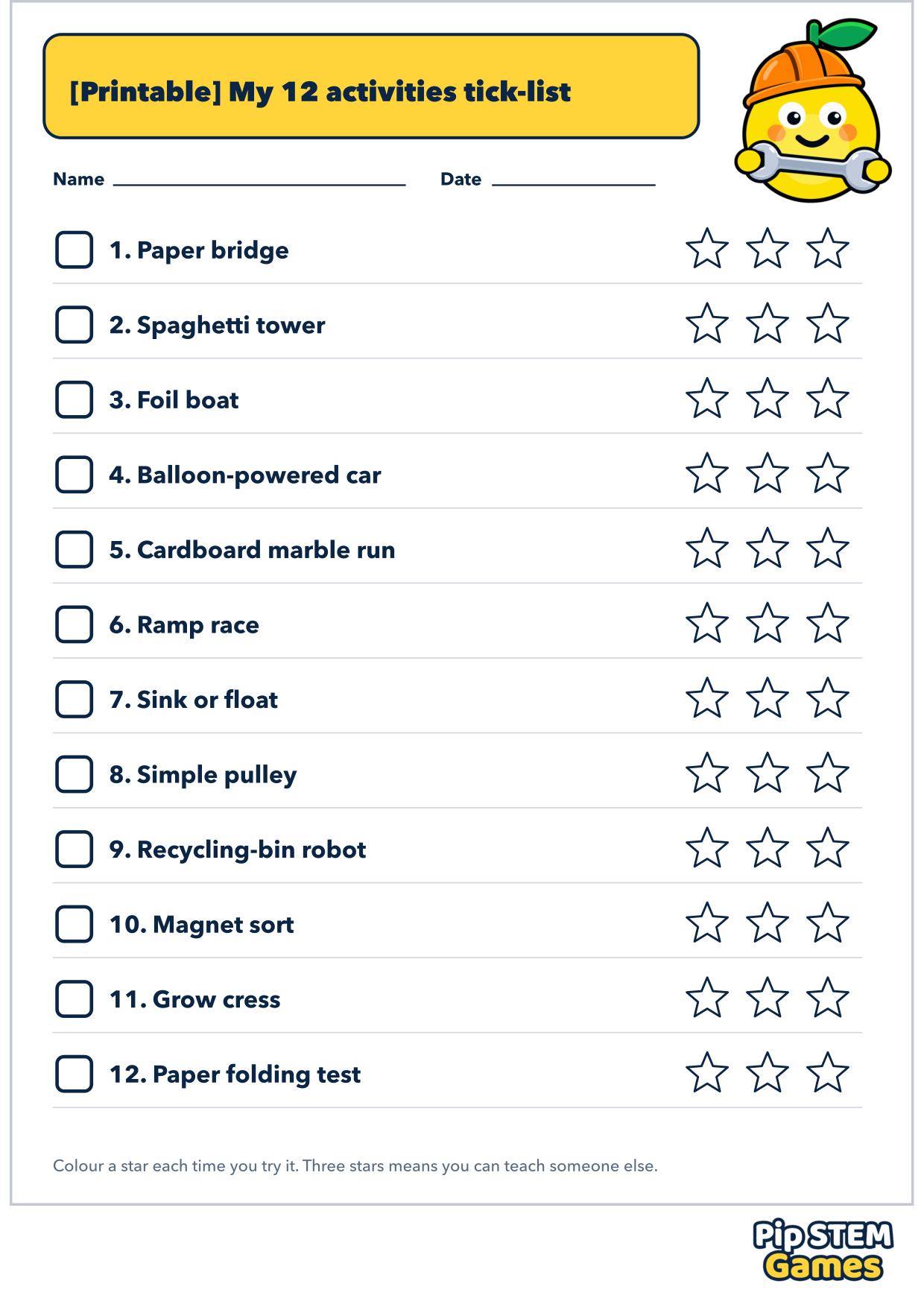
Print this tick-list and colour in a star each time you try an activity.
Questions parents ask
What are good STEM activities for 5 year olds?
Paper bridges, spaghetti towers, foil boats, ramp races and sink-or-float tests. They need little equipment, take under 30 minutes and show a clear result.
What STEM activities can a 6 year old do at home?
Balloon cars, marble runs, simple pulleys and ramp races are all good for 6-year-olds. Set the materials out first and let them predict the result.
What are good science experiments for 5 year olds?
Sink or float, a baking soda and vinegar volcano (an adult pours the vinegar and keeps it away from eyes), growing cress and mixing colours with water. Choose ones where your child does most of the doing and the result appears within minutes.
How long should a 5 year old's STEM activity last?
About 15 to 30 minutes. Plan a short second attempt, because changing one thing and testing again is where the learning happens.
Do I need special equipment for STEM at home?
No. Paper, tape, string, straws, cardboard and a bowl of water cover most activities. A ruler and a clock help with measuring.
How do I make STEM activities harder for a 7 year old?
Add numbers. Ask them to measure height, count seconds or predict how many coins a bridge will hold, then compare the guess with the result.
Great STEM activities to try next...
 The 10-Spaghetti Tower ChallengeActivity
 10 Things in Your Recycling Bin That Can Become STEM ProjectsActivity
 Can One Sheet of Paper Hold 20 Coins?Activity
More to try: STEM Club Ideas: 10 Activities and a Session Plan · Which STEM Activities Suit Your Child's Age? · Rainy Day STEM Activities for Ages 6 to 10

Pip STEM Games
We make engineering games and workbooks for kids aged 5 to 12. Every activity here is one we'd happily run at the kitchen table: test it, watch it fail, fix it, try again.




