


Key takeaways
- The challenge uses exactly 10 strands of dry spaghetti and small pieces of masking tape.
- A tower passes when it stands alone for 10 seconds, then you measure it.
- Triangles and a wide base are the two ideas that make it stand.
- Grown-ups stay close, snapped ends are sharp, and under 5s use playdough lumps bigger than a 10p coin.
- After every fall, change one thing and test again.
The spaghetti tower challenge asks you to build the tallest tower you can from exactly 10 strands of dry spaghetti and a few small bits of masking tape. It must stand on its own for 10 seconds. It takes about 15 minutes, suits ages 5 to 12, and works best with a wide base made of triangles. A grown-up should stay close, because snapped pasta is sharp and nothing here should be eaten.
What do you need for the 10-spaghetti tower challenge?
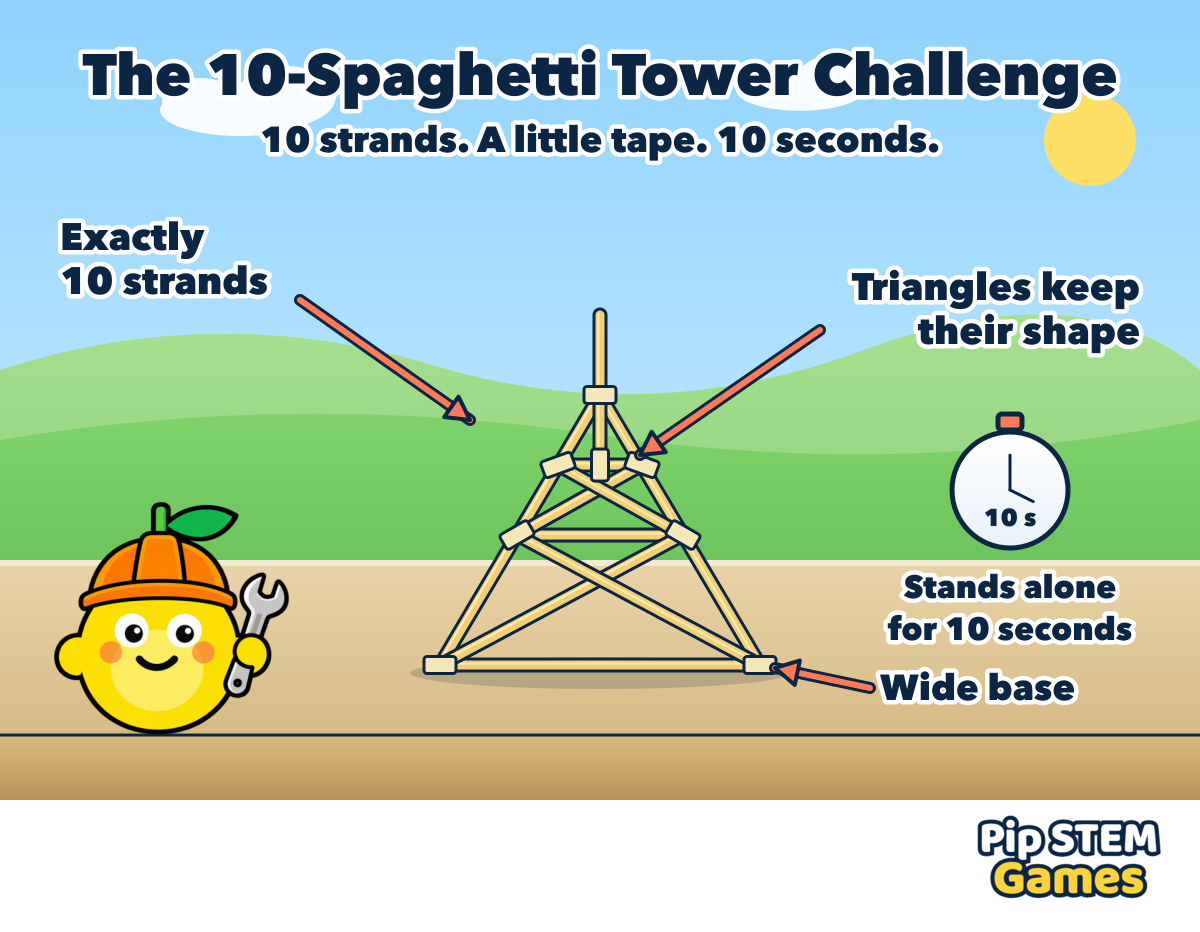
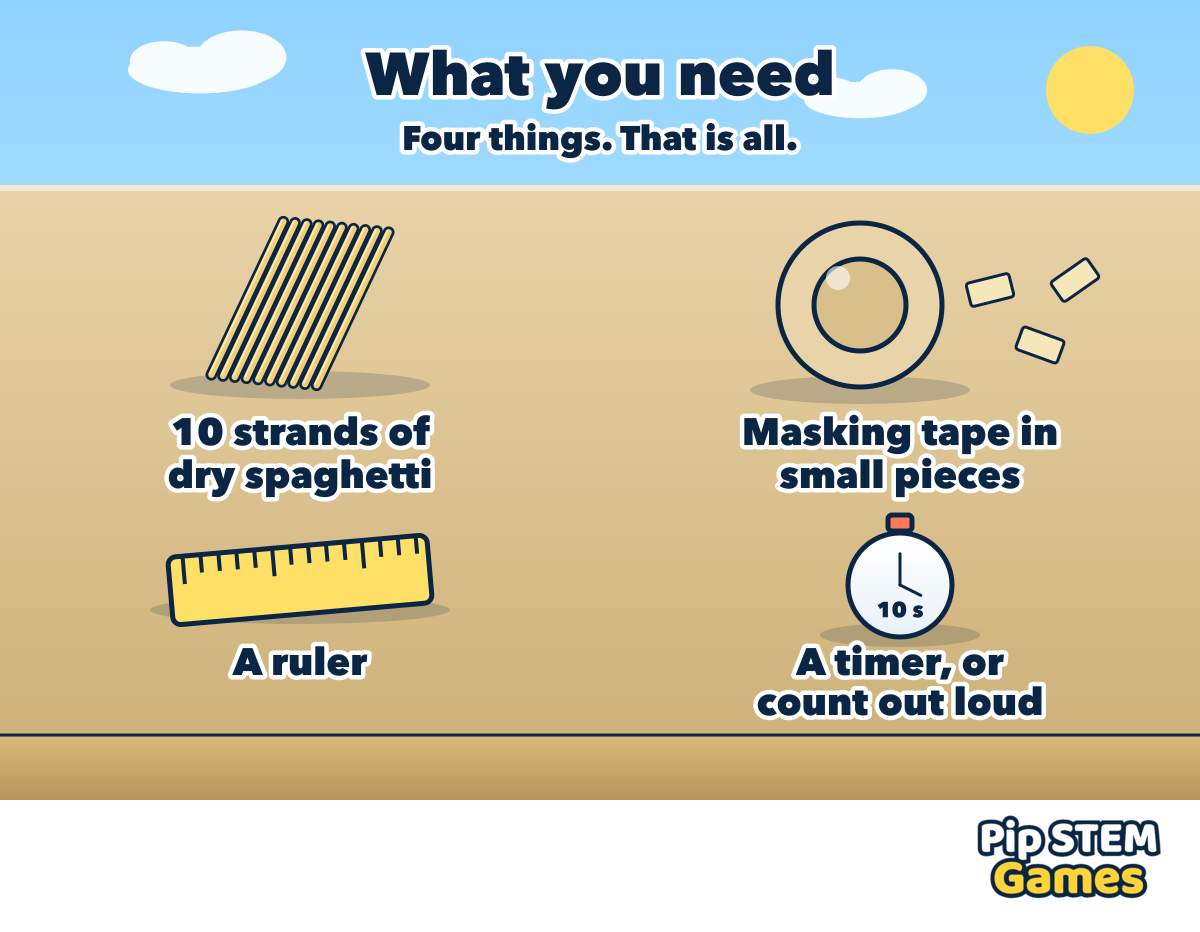
You need ten strands of dry spaghetti, a roll of masking tape, a flat table and a ruler. The whole challenge takes about 15 minutes and suits ages 5 to 12.
- Exactly 10 strands of dry spaghetti, standard thickness. Very thin pasta snaps too easily. Put the rest of the packet away so the test stays fair.
- Masking tape, torn into about 20 small pieces, each roughly 2 cm long. Stick them along the table edge before you start.
- A flat, hard table, so every foot of the tower sits on the same level.
- A ruler or tape measure to check the height.
- A timer, or just count slowly out loud.
Pro tip: tape is the only thing holding the joints, so small pieces beat long strips every time. A long strip pulls thin pasta out of line.
Is the spaghetti tower challenge safe for young children?
Yes, with a grown-up close by the whole time, and with a swap for children under 5. Dry spaghetti and tape are choking and mess risks for little ones, so an adult should watch every build.
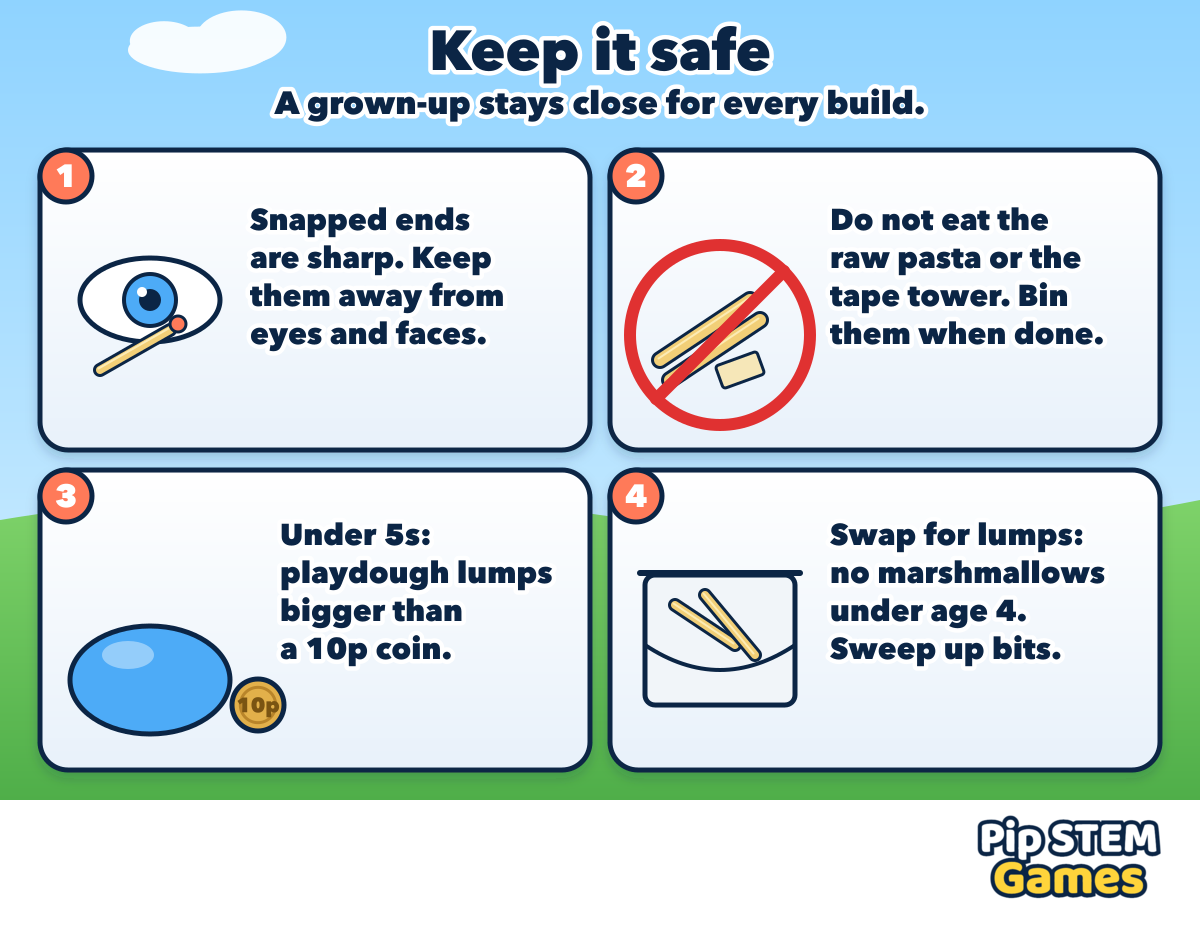
- Snapped pasta is sharp. Snap strands facing away from faces, and keep the pointed ends away from eyes. Children under 8 should ask a grown-up to snap the strands.
- Nothing gets eaten. Raw spaghetti is hard and can break into small pieces, and the tape is sticky. Bin the tower when you've finished.
- Under 5s: skip tape and loose bits. Let the grown-up snap the strands, then the child pushes them into playdough lumps to join them. Keep every lump bigger than a 10p coin (about 2.5 cm across), and a golf-ball size is safer still. Blu Tack works the same way if you roll it into lumps bigger than a 10p coin, but count it back in afterwards.
- Marshmallows aren't needed here. Some versions of the challenge put one on top. Don't offer marshmallows to children under 4. Mini marshmallows are still a choking hazard at any age under 5, so leave those out. For ages 4 and over, use one whole large marshmallow with an adult watching.
- Check for allergies. Most spaghetti, and many playdoughs, contain wheat.
- Sweep up. Broken bits on the floor can poke bare feet and tempt pets or toddlers.
How do you build a 10-spaghetti tower?
Build a triangle base first, then stack two rows of triangles on top, and finish with a tip. That uses exactly ten strands.
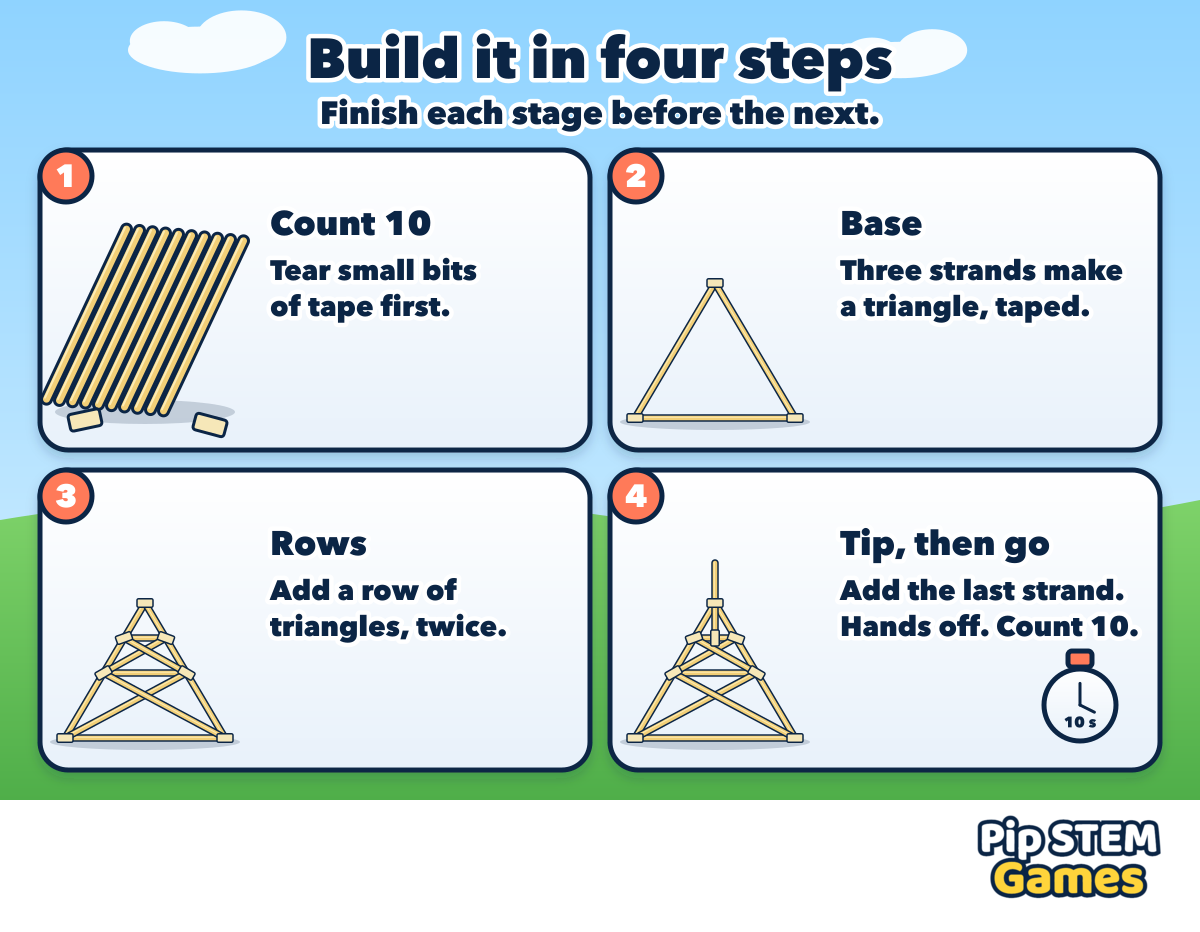
- Count out ten strands and put the rest of the packet away.
- Snap strands to the length you want, or keep them whole. Remember: snap away from faces.
- Base (3 strands): lay one strand flat. Lean two more against its ends so they meet at the top. Tape each join with a small piece. You've made a triangle.
- Middle row (3 strands): tape one strand across the tower about halfway up. Add two diagonals running from the feet up to its ends.
- Top row (3 strands): repeat the same pattern higher up, with a shorter cross strand.
- Tip (1 strand): tape the last strand pointing upwards. That's ten.
- Let go and take your hands away. Count to 10 slowly. If it's still standing, measure from the table to its highest point.
Frankly, the first tower usually falls. That's fine. The fix-it step is where the learning happens, so read on for the common problems.
Why does a triangle make a spaghetti tower stand up?
A triangle can't change shape unless one of its sides bends or breaks, but a square can fold sideways into a diamond. That's why engineers add diagonals to frames.
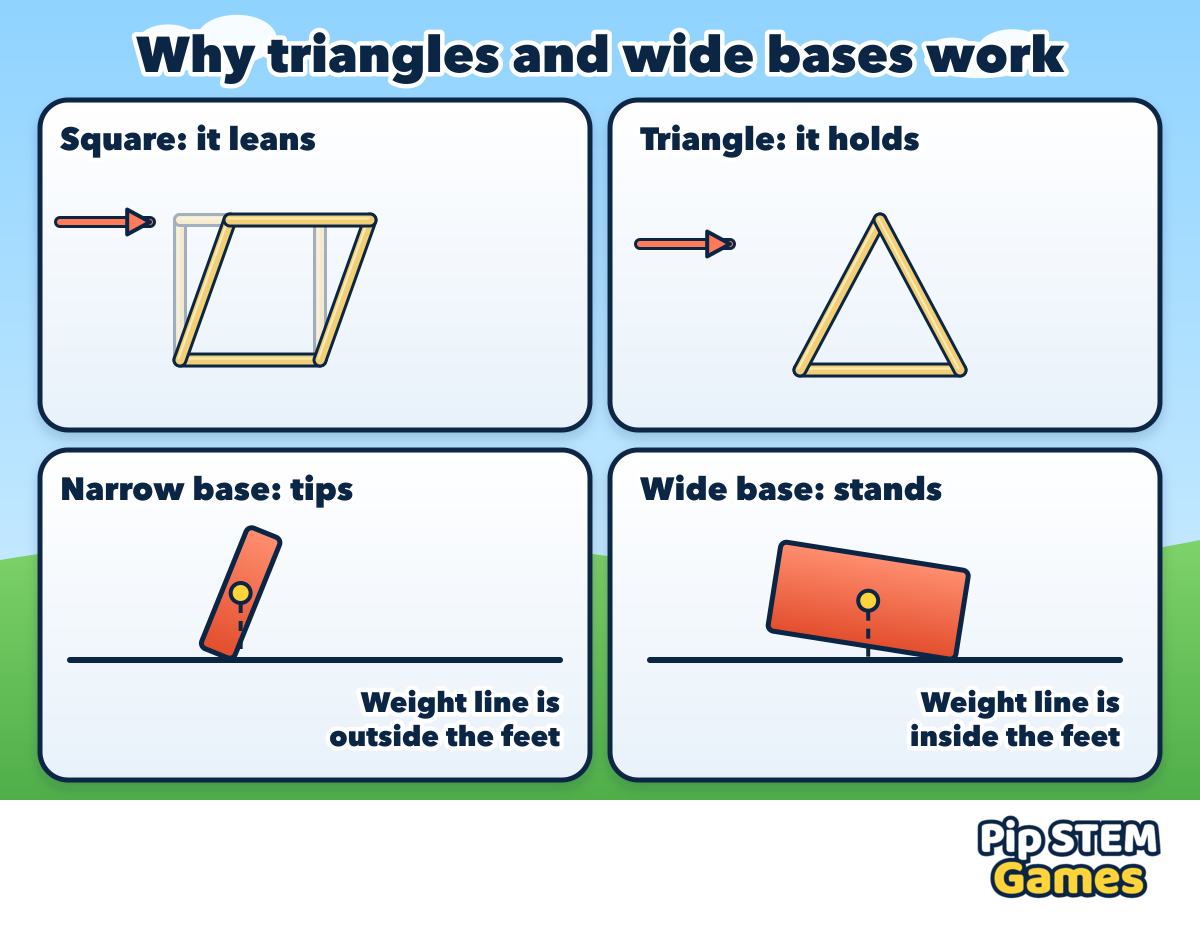
There are two ideas to spot here. The first is the shape. Spaghetti is good at being pushed straight down along its length, but it snaps when it's bent or pulled sideways. A triangle turns a sideways push into pushing and pulling along the strands, which pasta handles better than bending.
The second idea is the base. Every tower has a point where its weight seems to act, and if you drop a line straight down from that point, it has to land between the feet. A narrow tower leans a little and the line lands outside, so it tips. A wide base gives the line plenty of room.
Want to feel this with a screen first? Try the Shape Strength game. For more on the shapes engineers choose, read which shape makes the strongest tower.
What if your spaghetti tower leans or falls?
Check the feet and the joints first, then change one thing and test again. A shorter tower that stands is a better first design than a tall one that doesn't.
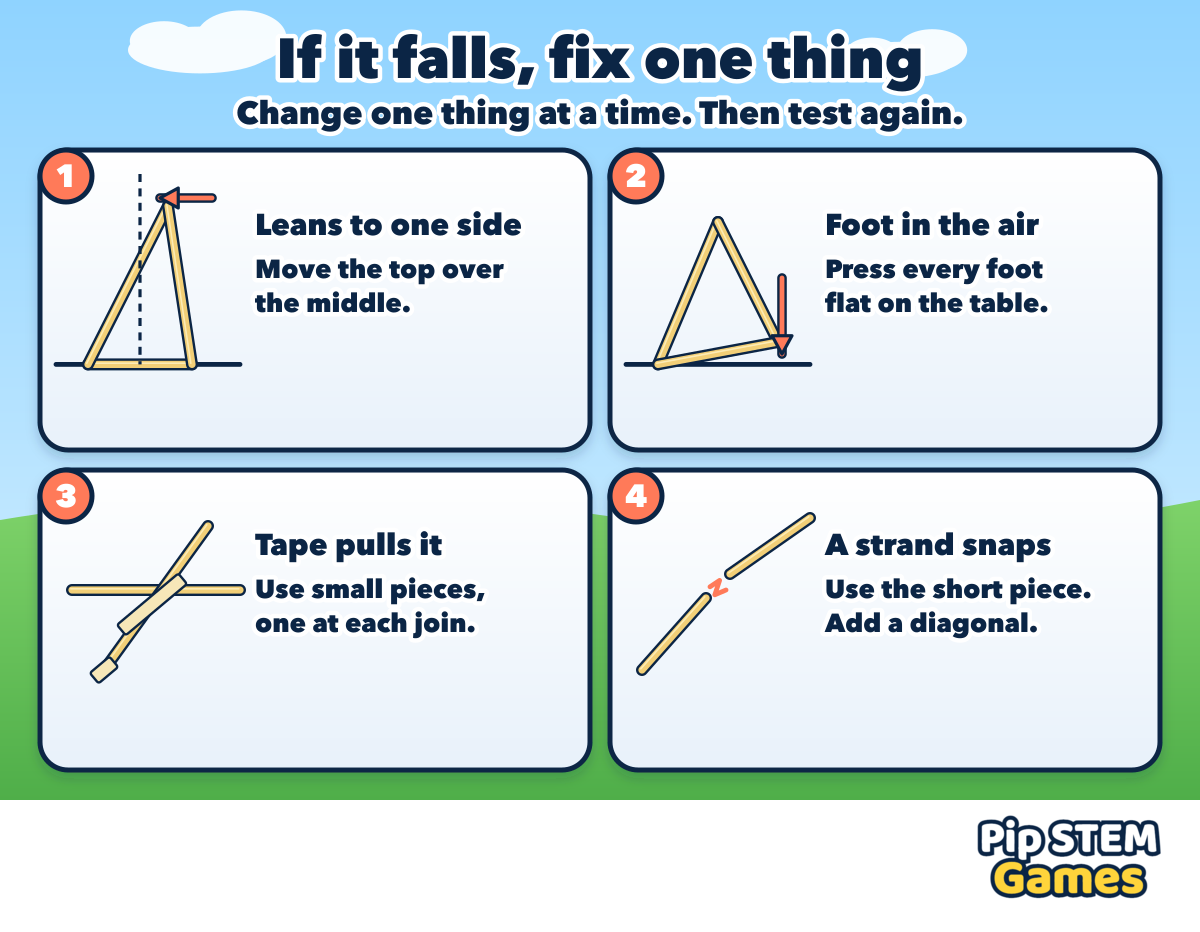
- It leans to one side. Look for an off-centre top or a loose joint. Lower the top and widen the base.
- One foot hangs in the air. All feet should touch the table. Move that foot before adding height.
- The tape pulls strands out of line. Use small pieces, one at each join.
- A strand snaps. Use the shorter piece and add a diagonal. Don't grab a new strand: the rule is ten.
- It stands but wobbles. Add a diagonal across any square gap to make two triangles.
Our post on why a tower keeps falling over goes into more detail.
How do you compare two spaghetti towers?
Measure from the table to the highest point, but only after the tower has stood for ten seconds. Record both the height and whether it stayed up.
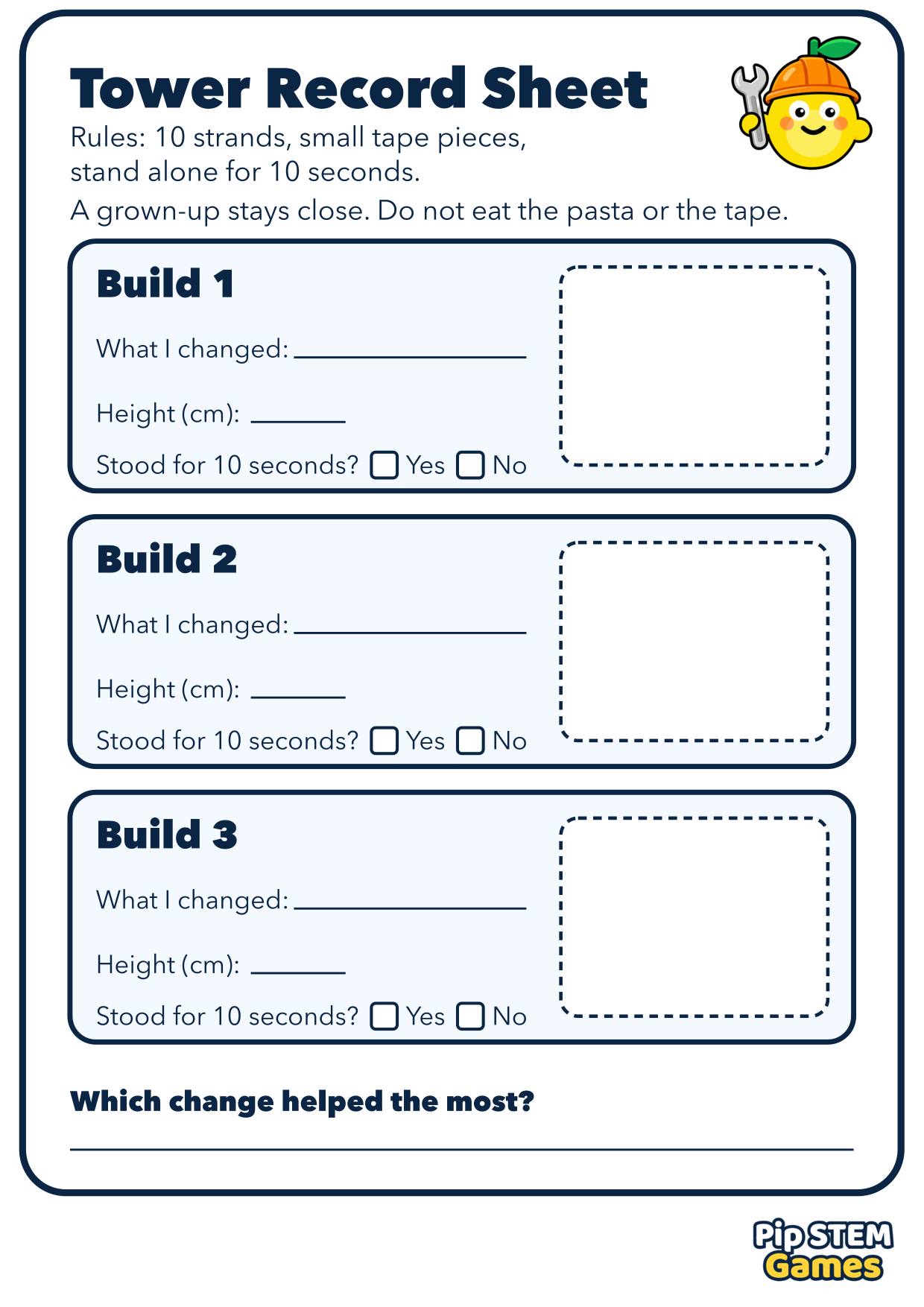
Print this sheet and fill it in after each build. Keep the same ten strands and the same tape allowance for each go, so the comparison is fair. Ask your child to name one change before rebuilding: a wider base, a lower top or another diagonal. That makes it easy to see which change helped.
Want a bigger challenge with more pasta and a time limit? Try our spaghetti and marshmallow tower, but read the safety rules above first.
How do you change the challenge for each age?
Match the build to the child. The rules stay the same: ten strands, small tape pieces and ten seconds.
- Ages 5 to 6 (easier): a grown-up snaps the strands. Children join them with big playdough lumps instead of tape, and skip the timer. Success is a tower that stands.
- Ages 7 to 9: use the standard rules, measure the height, and fill in the record sheet for three builds.
- Ages 10 to 12 (harder): cut the tape to 30 cm in total. Sketch the plan before building, and score each tower by its height in centimetres. Try to beat your own best.
Younger children can practise the same ideas in the Junior Engineers workbook. The aim isn't the tallest tower. It's learning to test, fix and try again.
Questions parents ask
Why exactly ten strands?
A fixed number makes the test fair and makes children plan. With only ten strands, every one has to earn its place, so they think about triangles and the base.
How tall should a 10-spaghetti tower be?
Most spaghetti strands are about 25 cm long, so any tower taller than a single strand is a good result. Joining strands is what makes it harder.
Is the spaghetti tower challenge safe for toddlers?
It needs a close adult and a swap. Skip tape and loose bits, and use playdough lumps bigger than a 10p coin. Never let children under 5 chew or eat the spaghetti.
Do you need marshmallows for a spaghetti tower?
No. This version uses spaghetti and tape only. If you add a marshmallow topper, leave it out for under 4s, avoid mini marshmallows, and use one whole large one with supervision for ages 4 and over.
Can you use glue instead of tape?
Masking tape is easier because it holds straight away. Glue needs time to dry, and a wet joint slips and spoils the test.
How long does the challenge take?
About 15 minutes for one build, plus a few minutes to measure and talk about what changed. Three builds fit in a half-hour session.
Great STEM activities to try next...
 Spaghetti and Marshmallow Tower: How to Build the Tallest One [Printable]Build challenge
 Why This Tower Keeps Falling OverActivity
 STEM Activities by Age: 5–7, 8–10 and 11–12Parent guide
More to try:

Pip STEM Games
We make engineering games and workbooks for kids aged 5 to 12. Every activity here is one we'd happily run at the kitchen table: test it, watch it fail, fix it, try again.




