


Key takeaways
- One cheap task, a paper tower, works from age 5 to 12. Only the rules change.
- Ages 5 to 7 need one clear goal and one change at a time, with a grown-up close by.
- Ages 8 to 10 can run a fair test and record the numbers in a table.
- Ages 11 to 12 can plan within a budget and explain a trade-off, with you acting as the client.
- Test each design three times, change one thing at a time, and let the result decide the next test.
The best STEM activities by age are not different activities. They are one simple task with different rules. A paper tower gives you a safe, cheap way to match the challenge, your role and what your child records to ages 5 to 7, 8 to 10 and 11 to 12.
What is the best STEM activity for each age?
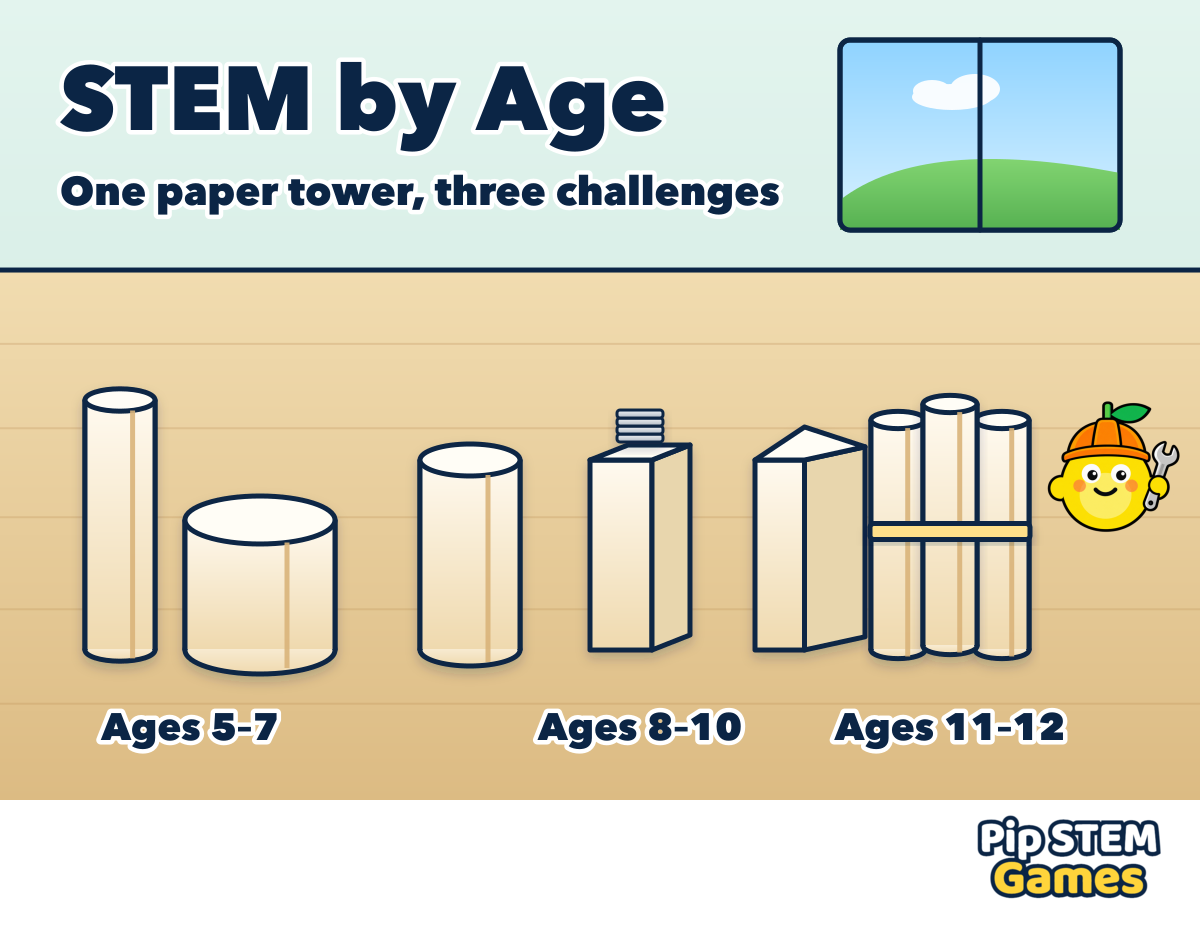
The best activity is one your child can start alone but cannot finish too quickly. That depends on how much they can plan, measure and explain.
- Ages 5 to 7 do well with one clear goal and one change at a time.
- Ages 8 to 10 can follow a fair test and record numbers.
- Ages 11 to 12 can juggle several variables, set their own limits and explain trade-offs.
The materials stay the same. Only the rules change. Educator guidance, such as the Museum of Science, Boston, suggests scaffolding challenges so children can work at different levels, and the same idea sits behind this page. The tower is a classroom-style model, not a real building design.
What materials do you need?
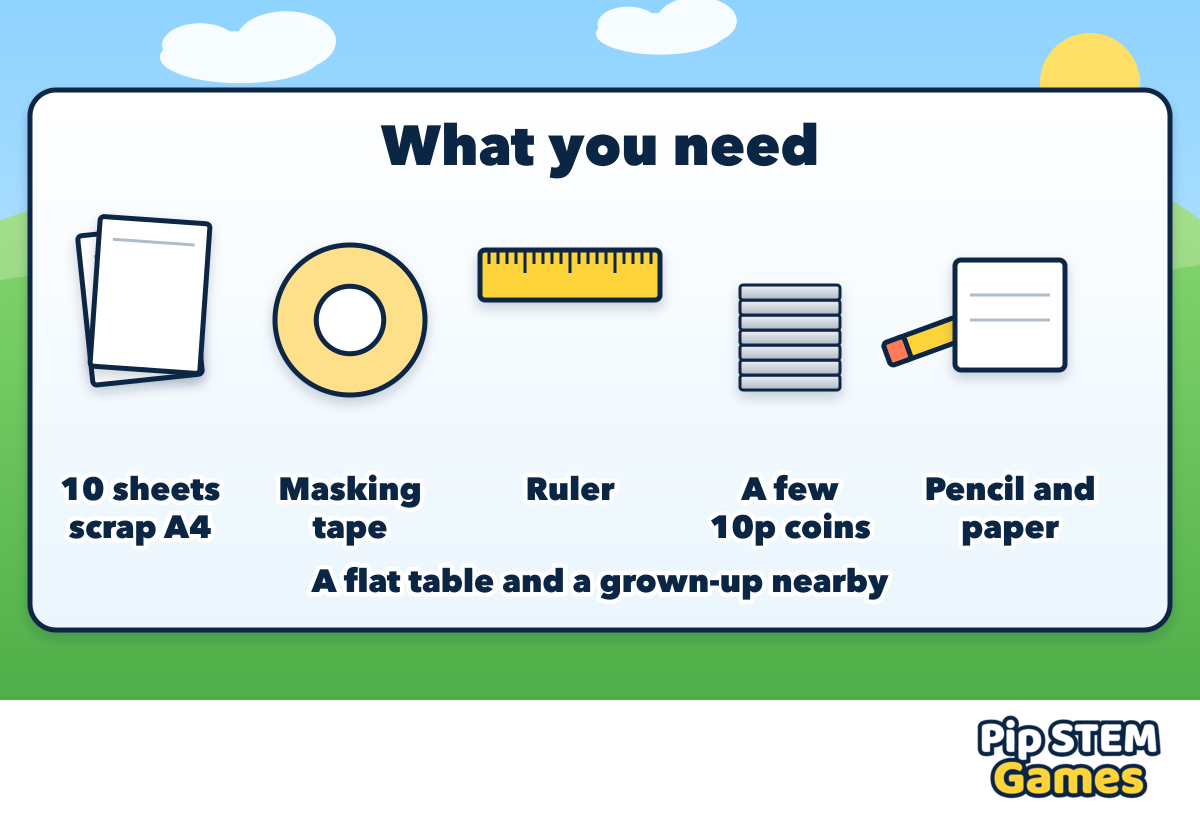
Everything is cheap and most of it is already in the house.
- 10 sheets of scrap A4 paper.
- Masking tape. Low tack tears easily and is kind to tables.
- A ruler or tape measure.
- Four or five UK 10p coins, or a small paperback, as the test load.
- A pencil and a sheet of paper for notes.
No sharp tools are needed. Tear the tape by hand, or use child-safe scissors with an adult nearby. Keep coins away from any child who still puts things in their mouth.
How do you run it for ages 5 to 7?
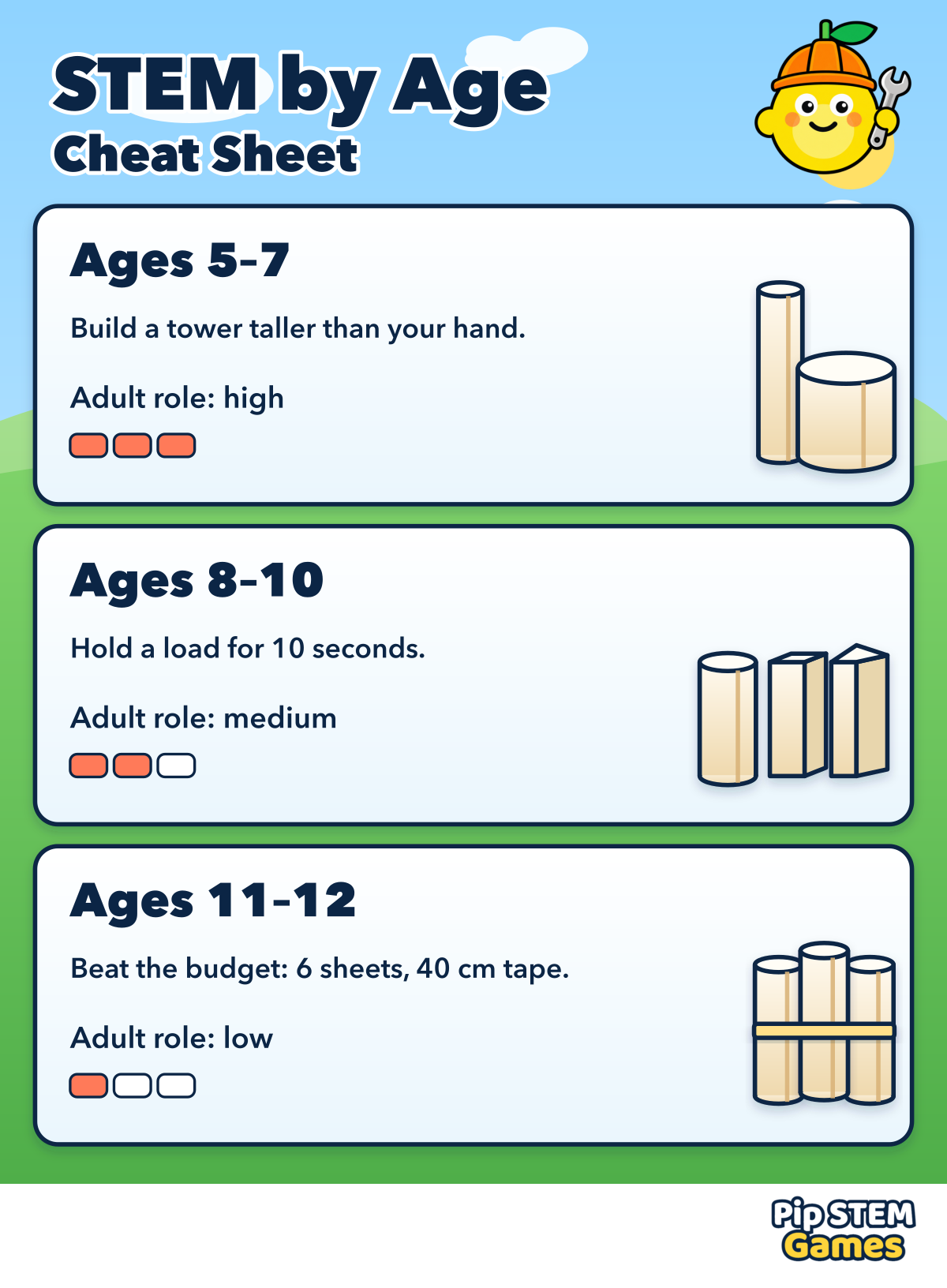
The challenge: build a paper tower that stands on its own and is taller than your hand.
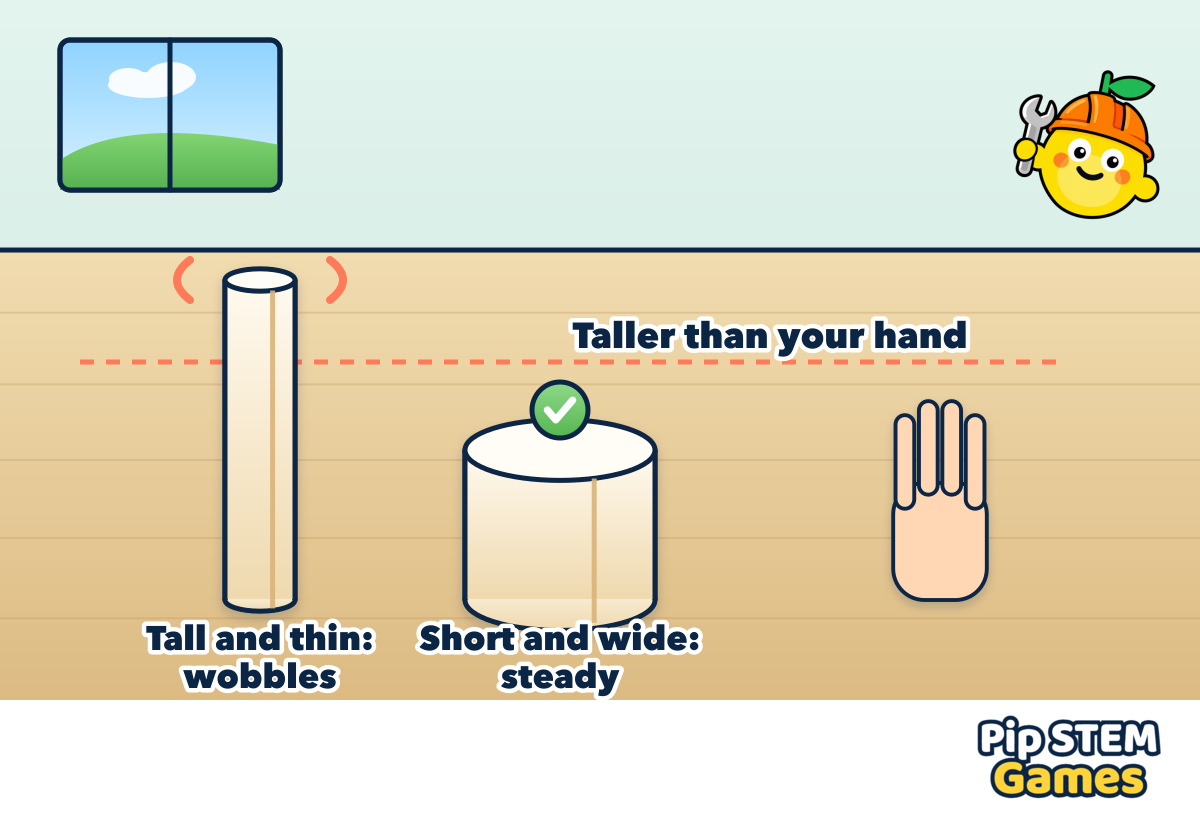
- Show your child how to roll a sheet into a tube and tape the seam.
- Ask for a guess. Will a tall thin tube or a short wide tube stand better?
- Build both and stand them up.
- Ask your child to point to the one that wobbles, and say why.
- Stack tubes and see how high you can go.
Your role is high. Offer the first step, then step back. Praise trying things, not only tall results, and keep to one change at a time. Community Playthings, a well-known early-years supplier, makes a similar point: adults stand back, allow time, and let open-ended tasks do the work.
How do you run it for ages 8 to 10?
The challenge: build the tallest tower that can hold a small load for 10 seconds.
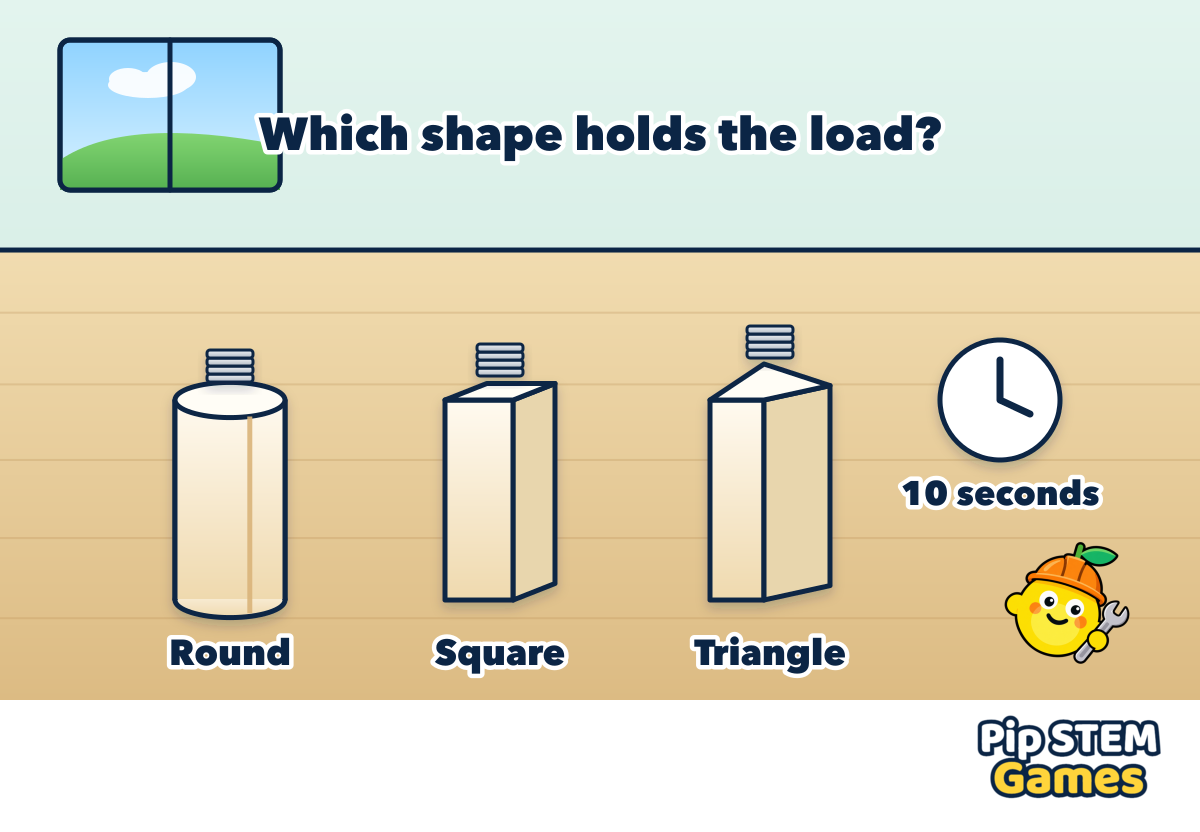
- Ask your child to write a guess before building. Which shape holds more: a round tube, a square tube or a triangle tube?
- Make one tube of each shape from a sheet of paper each, all the same length.
- Put the load on top of each tube, one at a time, and count the seconds.
- Record the results in a simple table.
- Build the best tower using what the table shows.
Your role is medium. Ask questions such as "What did you keep the same?" instead of giving answers. Shapes tend to differ in strength, but the result depends on your paper and tape, so trust your own table.
How do you run it for ages 11 to 12?
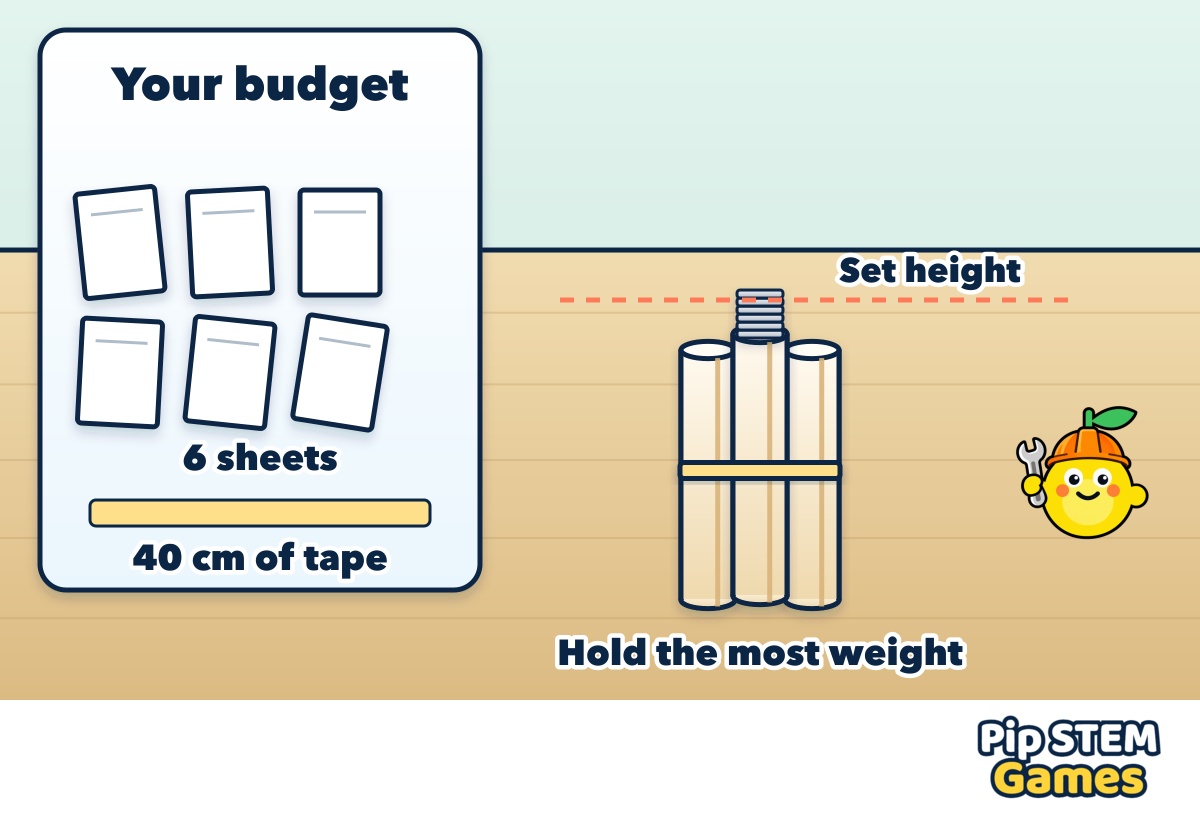
The challenge: design a tower within a budget, such as 6 sheets of paper and 40 cm of tape, that holds the most weight at a set height. The budget is our own suggestion, so change it if it is too easy or too hard.
- Your child writes a design plan with a sketch and a guess.
- They choose which variable to test first, such as tube width, the number of tubes or a brace.
- They test, measure and record each change.
- They say which result surprised them and what they would test next.
Your role is low. Act as a client who asks for a short report: what worked, what failed and why. Let them argue their trade-offs, such as strength against tape used.
How do you make it a fair test?
Change one thing at a time and keep everything else the same. Test each design at least three times and compare the middle result. One odd result then stops mattering so much.
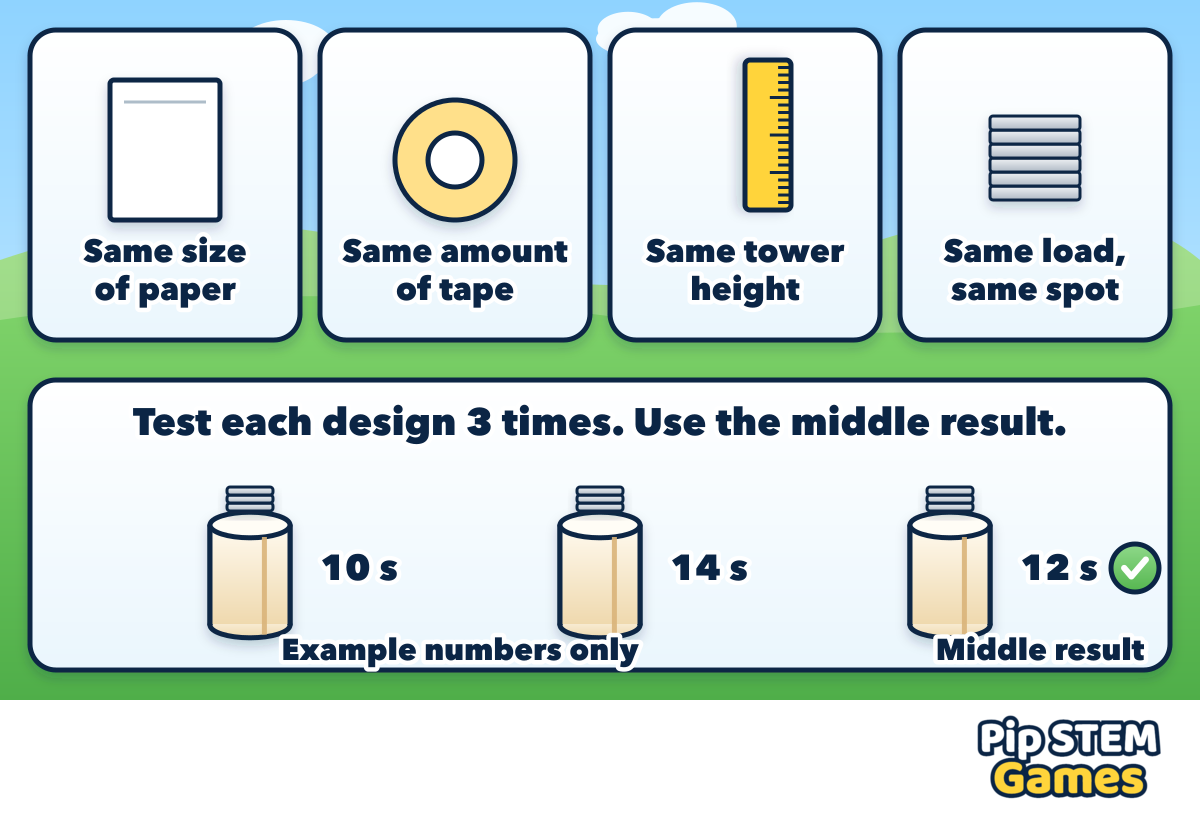
If the results jump around, check that the table is flat and that the load always sits in the same spot. A tower that fails the same way twice is telling you something. Try it with the Tower Stack game for a screen version of the same idea.
What if it goes wrong?
It will. That is useful, because a collapse shows where a design is weak. The why getting it wrong is part of engineering guide goes into this more.
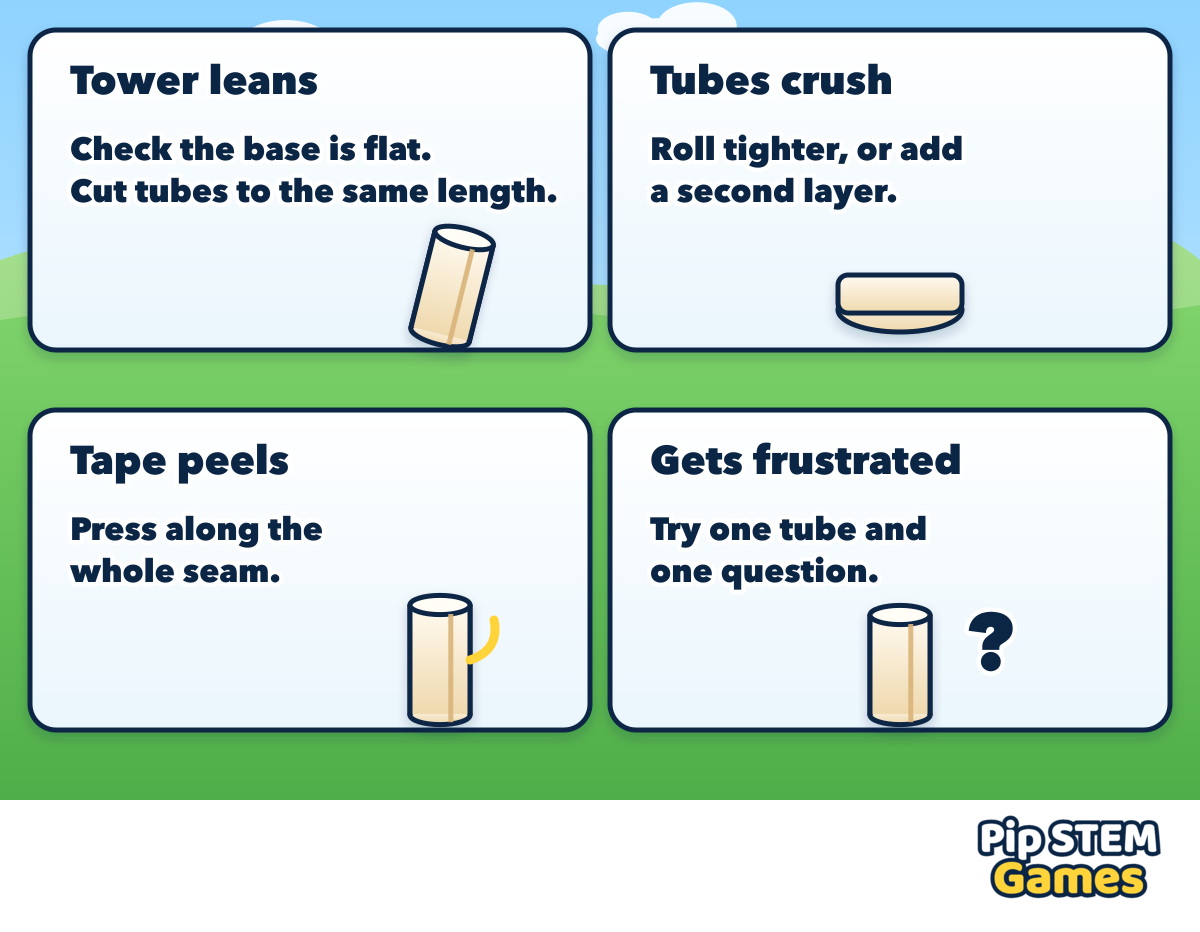
- The tower leans: check the base is flat and the tubes are the same length.
- The tubes crush: roll tighter or add a second layer.
- The tape peels: press along the whole seam.
- Your child gets frustrated: cut it back to one tube and one question.
What should you test next?
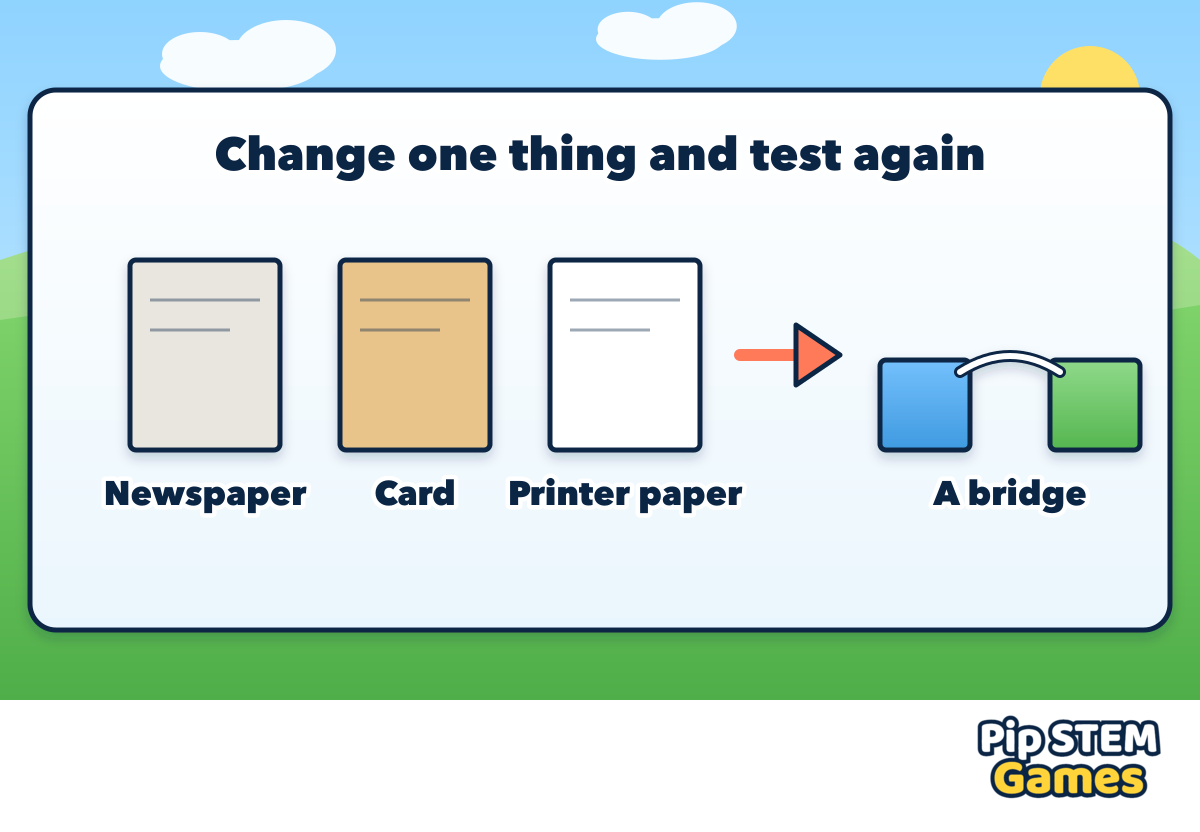
Ask whether the answer changes with a different paper, such as newspaper or card. You could also try a bridge instead of a tower. Each next test should change one thing, so your child can see cause and effect. Give more independence as their confidence grows.
For a longer build, try the paper tower challenge, or read about which shape makes the strongest tower.
Is there a printable record sheet?
Yes. Print it, and fill in one row for each design.
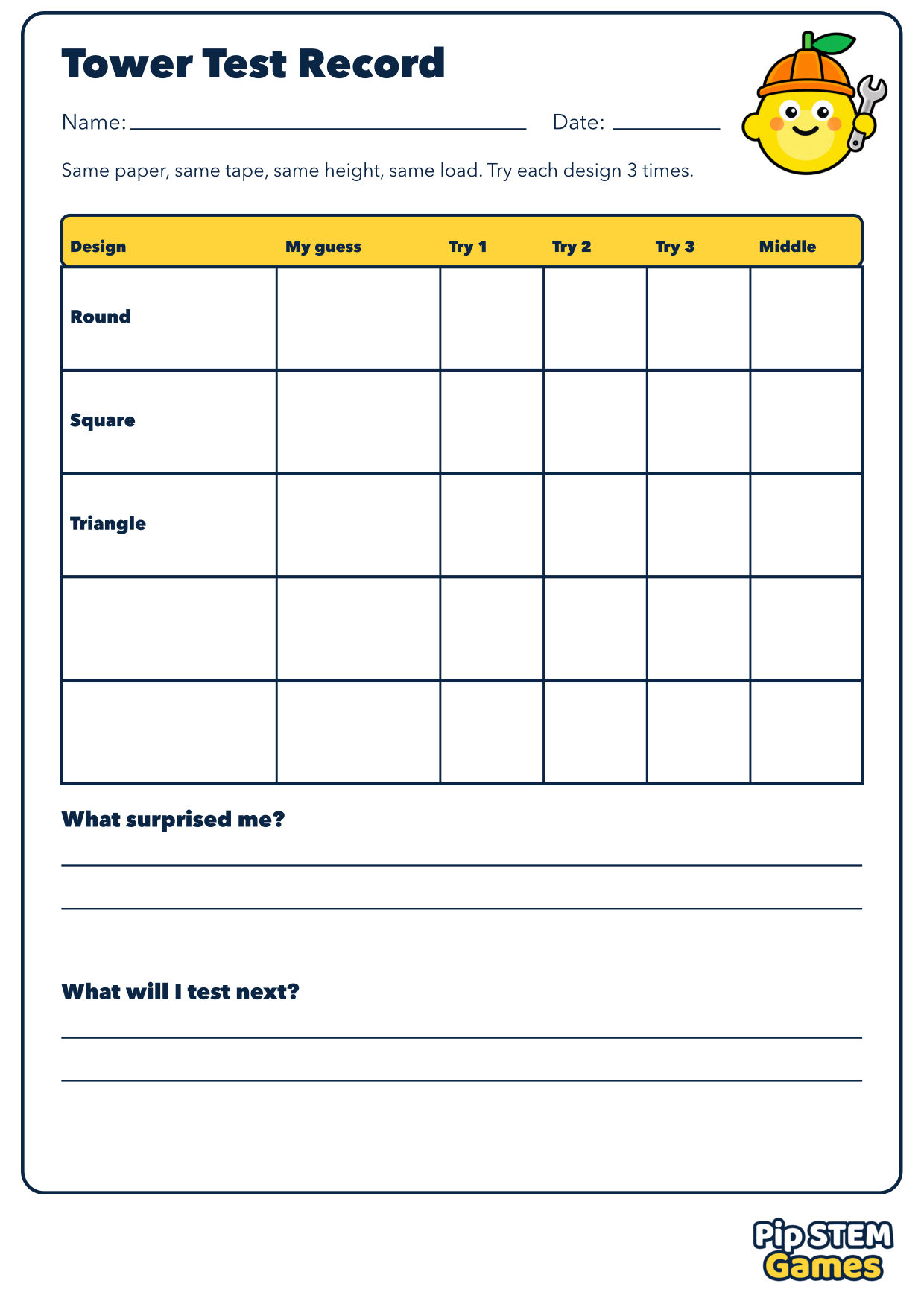
[Printable] Tower test record: write your guess, three tries and the middle result for each design.
What is the quick version?
Keep this next to the paper. Pick your child's age band, read the challenge, and check your role.
Questions parents ask
What are the best STEM activities by age?
One simple task such as a paper tower works for every age if you change the rules. Ages 5 to 7 get one goal and one change, ages 8 to 10 run a fair test with a table, and ages 11 to 12 plan within a budget.
How much should I help my child?
A lot at ages 5 to 7, less at 8 to 10 and very little at 11 to 12. At the oldest age, act as a client who asks for a short report on what worked and what failed.
What is a fair test?
A fair test changes one thing and keeps the paper, tape, height and load the same. Repeat each design three times and use the middle result.
Do I need special materials?
No. Scrap A4 paper, masking tape, a ruler, a few 10p coins and a pencil are enough.
What if my child gets frustrated?
Cut the task back to one tube and one question, take a break, and come back to it. A collapse is information, not a failure.
What should we test after the tower?
Change one thing: a different paper such as newspaper or card, or build a bridge instead of a tower.
Great STEM activities to try next...
 Paper Tower Challenge: How Tall Can Your Child Build With Paper and Tape? [Printable]Build challenge
 Which Shape Makes the Strongest Tower?Activity
 The Engineering Design Process for Kids: 6 Steps Families Can Use [Printable]How it works
More to try: Which STEM Activities Suit Your Child's Age? · 5 Low-Mess STEM Activities for Your Kitchen Table

Pip STEM Games
We make engineering games and workbooks for kids aged 5 to 12. Every activity here is one we'd happily run at the kitchen table: test it, watch it fail, fix it, try again.




