


Key takeaways
- A bridge that sags has given your child a clue. The design failed, not the child.
- Test a flat paper bridge first, count the coins it holds, and write that number down as the baseline.
- Change one thing at a time, so the next result tells you which change mattered.
- Look at where the paper bent first. That spot shows what to fix.
- A wrong guess is still a result. Record it and plan the next test.
Here is why failure is part of engineering: every collapse, sag and slip shows an engineer something that could not be seen before. A flat paper bridge, a cup and some 10p coins give your child a safe place to practise getting it wrong on purpose.
Why is a failed bridge useful?
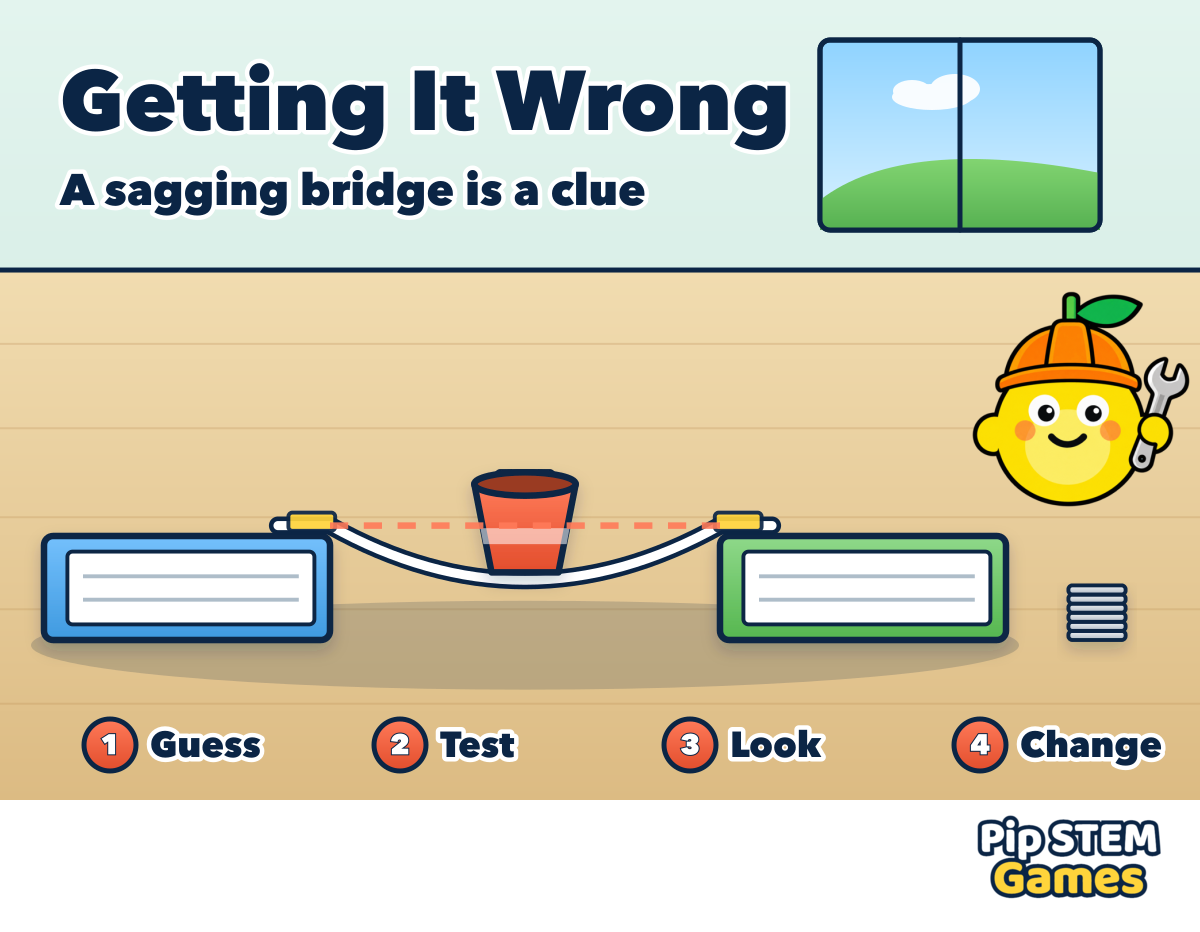
Engineers test things until they break, then read the break like a message. A bridge that sags in the middle tells you where it is weakest. A bridge that slides off its books tells you the ends need fixing. Either way, the test did its job.
Guidance from educators, such as the Museum of Science, Boston, makes the same point: when a design fails, the design has failed, not the student. It also suggests giving children at least one chance to revise, praising effort, and holding back from rescuing. Children practise looking closely at what went wrong, and that is a habit worth building.
The test below is small, cheap and quick. It also fails every time, which is the point.
What do you need for the paper bridge test?
- Two stacks of books, the same height, with a gap of 20 cm between them.
- Several sheets of A4 paper.
- Masking tape.
- A ruler.
- About 20 UK 10p coins. A 10p coin weighs 6.5 g, so every coin adds the same amount.
- A small plastic or paper cup.
- Pencil and paper for notes.
Coins are not for young children to put in their mouths, so stay close. Set the books on a steady table, keep the cup low and catch the coins on a tray or a towel if you like. Nothing needs cutting or heating.
How do you run the first test?
The first test is your baseline. Everything after it gets compared with it, so keep it plain.
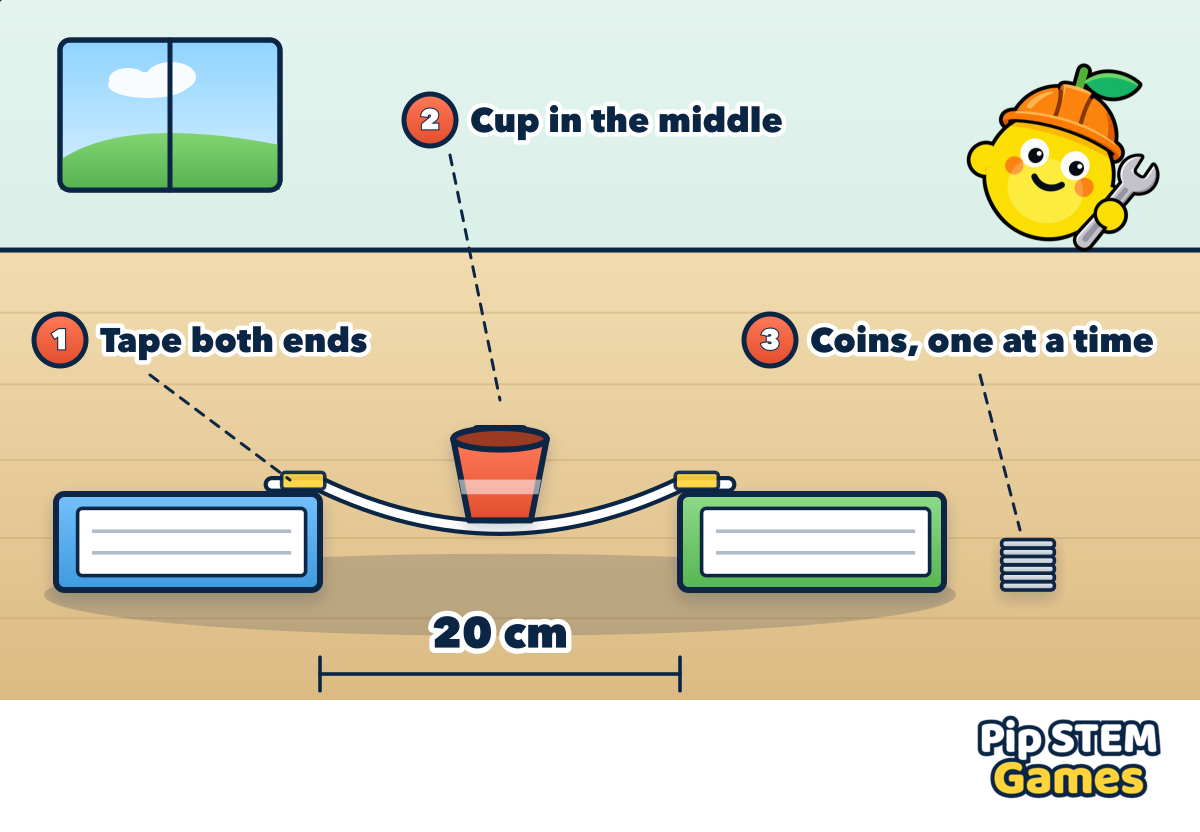
- Tape a flat sheet of A4 across the 20 cm gap. Tape both ends to the books.
- Before you start, ask your child to guess: how many coins will it hold? Write the guess down.
- Set the empty cup in the middle of the paper.
- Add coins to the cup one at a time. Count out loud.
- Stop when the paper sags a lot or the cup slides. Write down the number of coins.
That number is the baseline. It is not a score. Your numbers will differ from anyone else's, and that is fine.
What can you change one thing at a time?
Now pick one change. Just one. Four good choices are shown below.
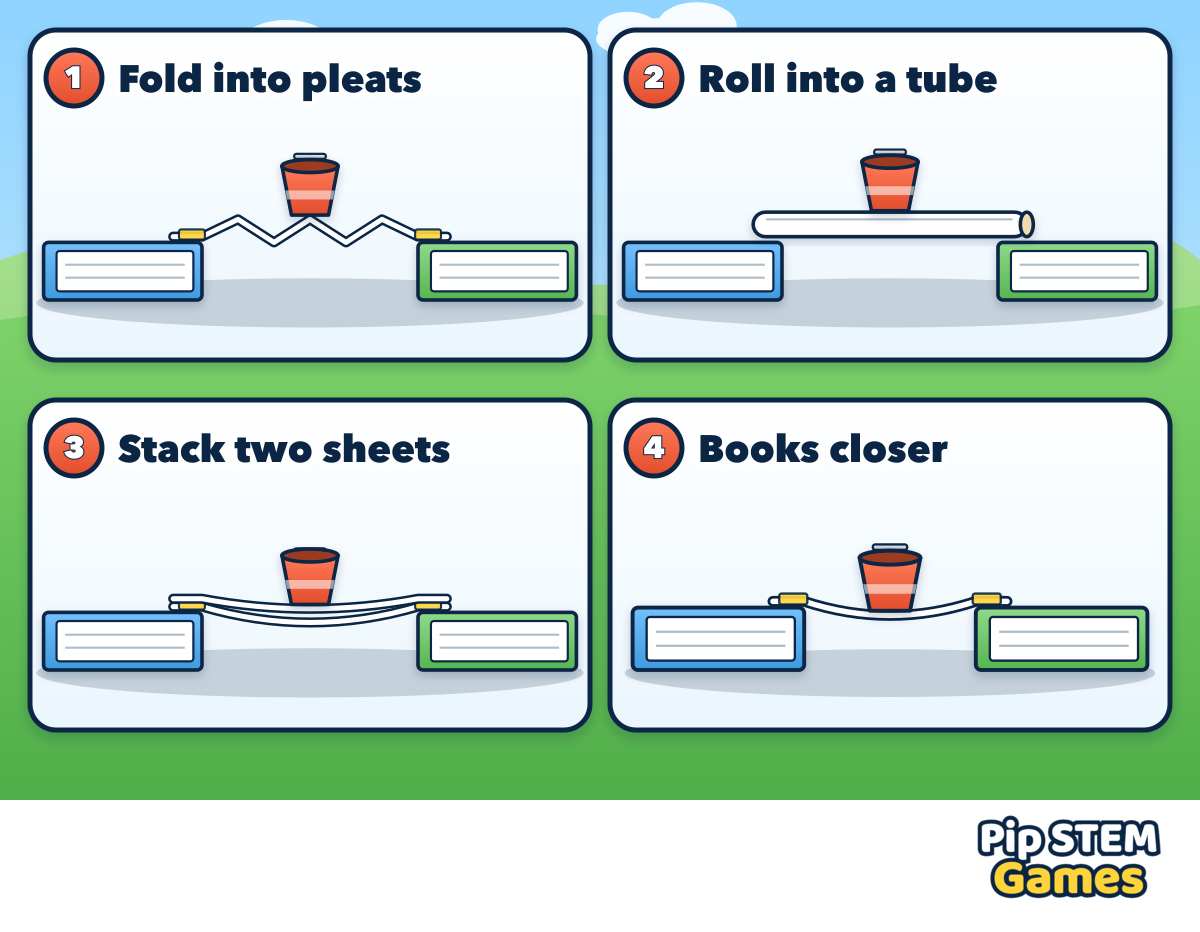
- Pleats: fold the sheet back and forth like a fan, then tape it across.
- Tube: roll the sheet into a tube and lay it across the gap.
- Two sheets: stack a second sheet on top of the first.
- Gap: move the books closer together, or further apart.
Folded or rolled paper usually holds more than flat paper, because the fold gives it depth that resists bending. That is a rule of thumb, so check it with your own coin counts.
How do you keep the test fair?
A fair test changes one thing and keeps everything else the same. If your child changes the paper and the gap at once, a better result could come from either one.
- Use the same type of paper every time.
- Keep the gap at 20 cm unless the gap is the thing you are changing.
- Put the cup in the same spot, in the middle.
- Add the coins at the same slow pace.
Say these out loud before each test: "This time I am changing the paper. The gap, the cup and the pace stay the same." Saying it helps children hold the plan in their heads.
What does the sag tell you?
Look at where the paper bent first. A flat sheet tends to bend most in the middle, right under the cup, while the taped ends stay put on the books. That is the weak spot.
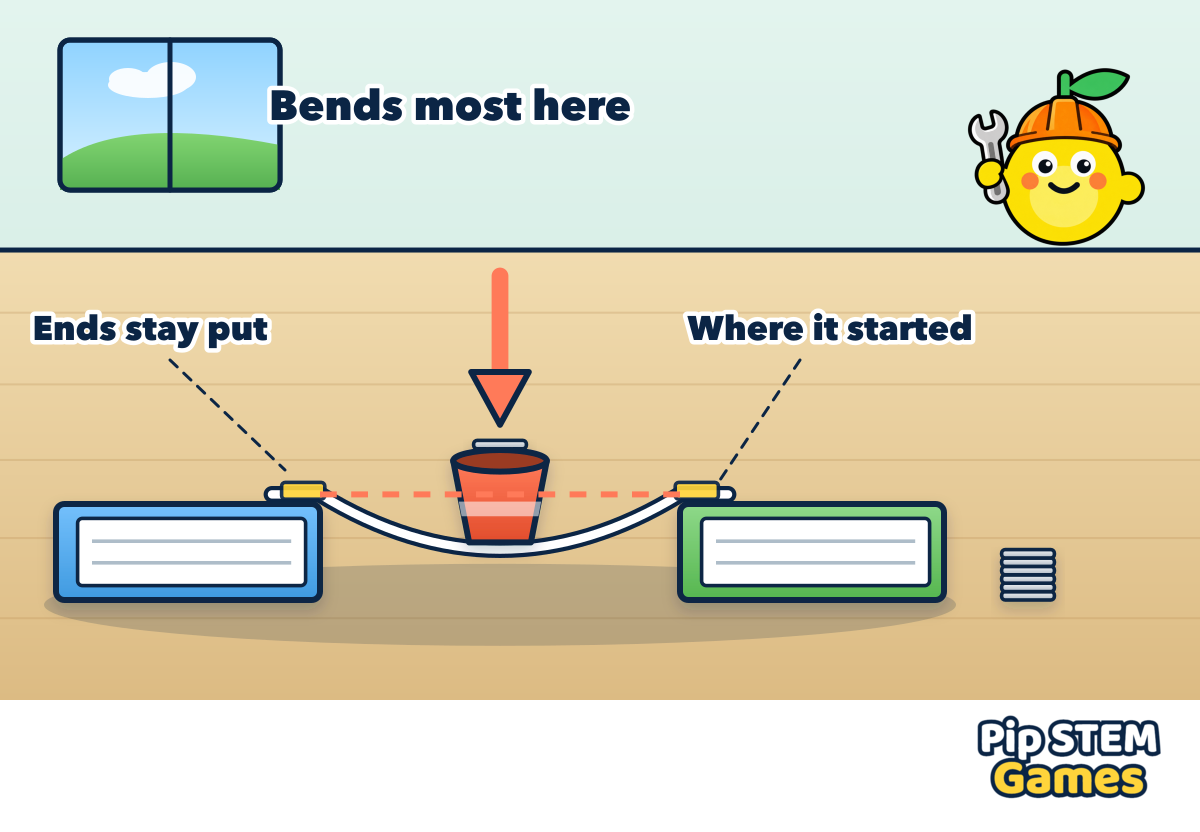
Ask your child: "Where did it bend first?" and "What could we do about that spot?" Ideas such as a fold along the length, a tube or a support under the middle all come straight from the clue. You do not need to supply the answer. Let the bridge do the teaching.
What if the results are confusing?
Messy results happen to everyone. Here are the usual causes.
- The paper slips off the books. Tape the ends down, or put heavier books on top of them.
- The cup tips over. Use a flat-bottomed cup and keep it in the middle.
- The same number of coins keeps showing up. That is still a result. It tells you the change did not matter much.
- The paper tears at the tape. Use a wider strip of tape, and write it down as a change.
Whatever happens, write it down. A result you did not expect is often the most useful one.
What is a good next test?
Try a small support under the middle, such as a little box, and guess first: will the bridge hold more coins or fewer? Then test it. The other option is to build the strongest bridge you can from two sheets with the tape fixed firmly, and see how it compares with the baseline.
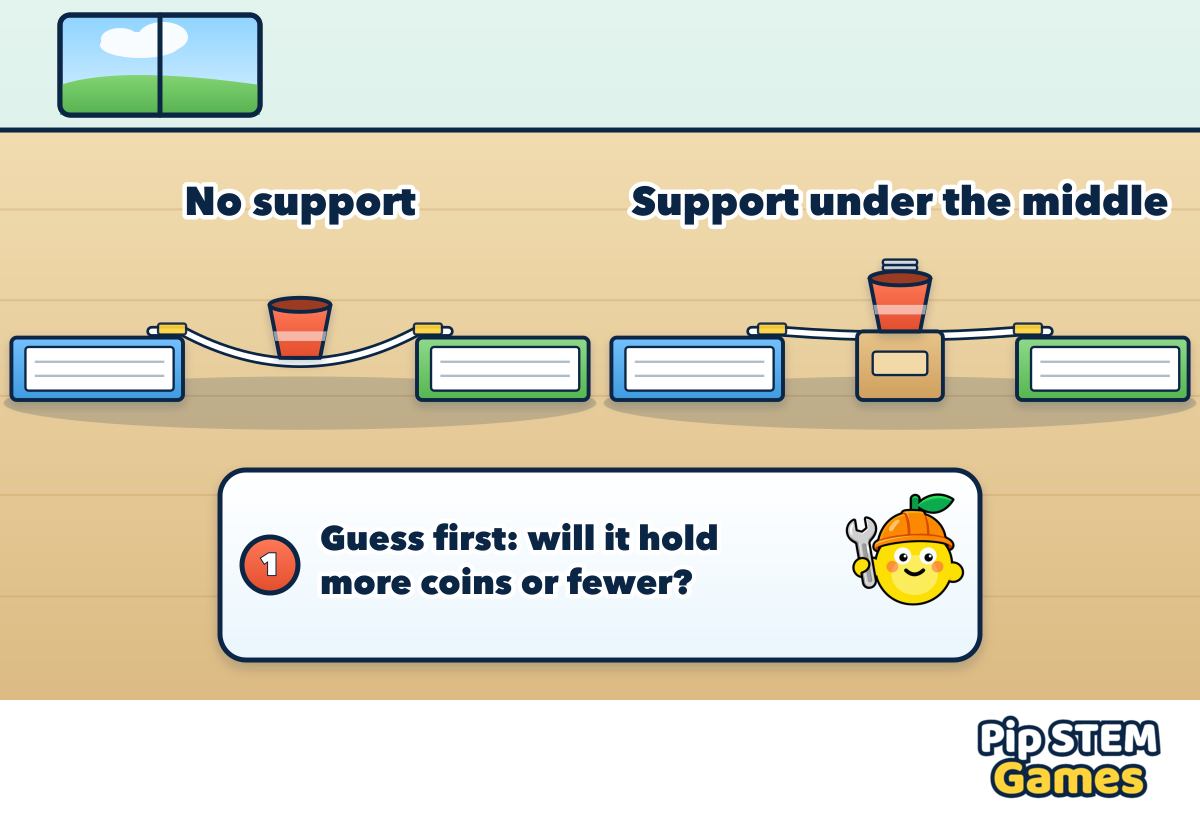
Want to try bridges on a screen too? The Bridge game lets children test a design and watch where it fails. The paper bridge challenge is a bigger version of this test, and the engineering design process guide shows how a test like this fits into the full loop.
How does this change by age?
Ages 5 to 7: make one change and count the coins together. Keep it to two or three tests, and cheer for the wrong guesses. An adult stays close.
Ages 8 to 10: record each test in a table, then compare the results and pick the best change.
Ages 11 to 12: measure the sag with a ruler for each coin count, and draw a graph of sag against coins.
This is a classroom-style model. It is a good way to practise testing, but it is not how real bridges are designed.
Is there a printable log?
Yes. Print the page, fill in one row for each test, and keep it with the bridge.
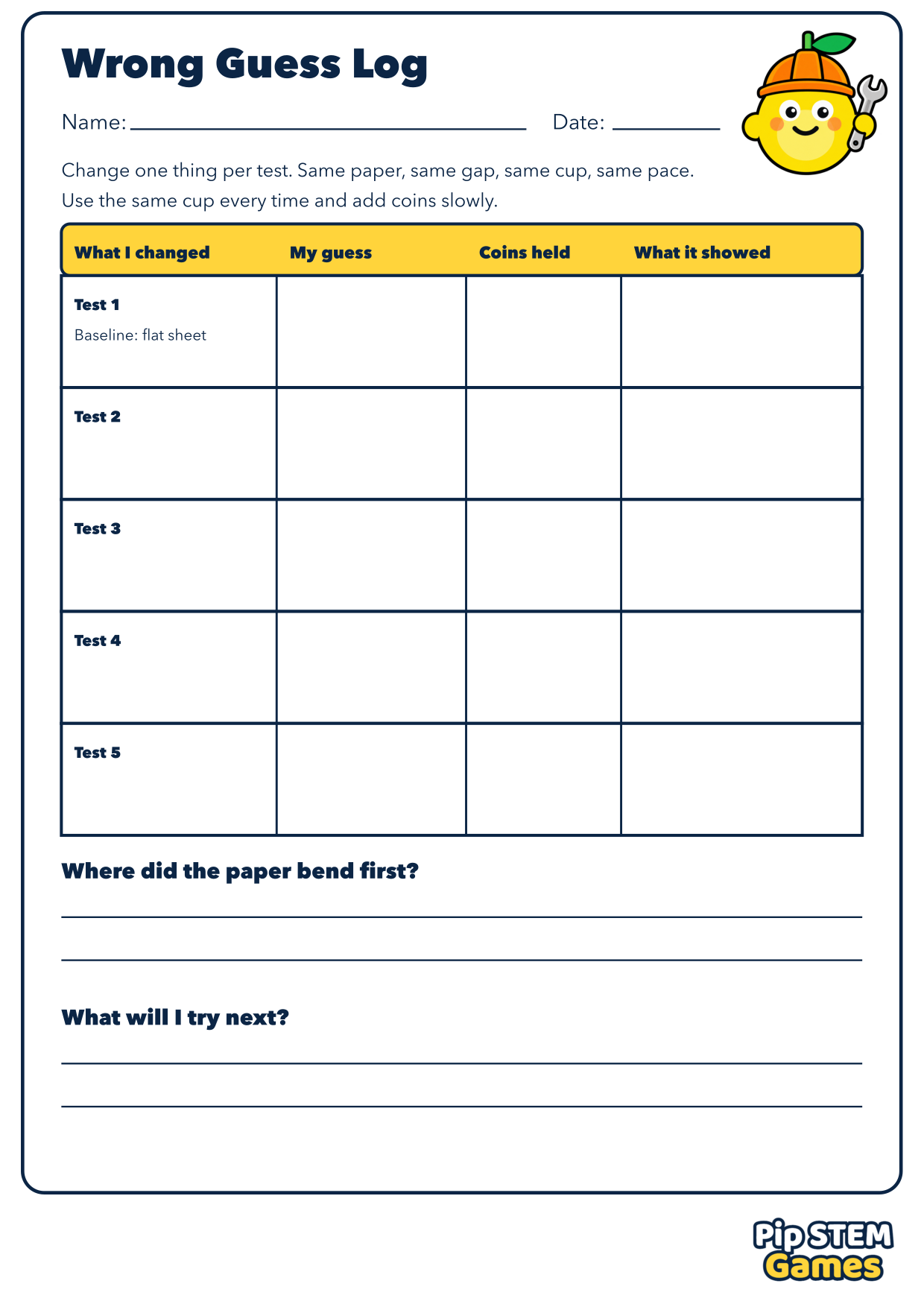
[Printable] Wrong guess log: write what you changed, your guess, the coins held and what each test showed.
Prefer a worksheet that covers the whole process? Try the design process worksheet.
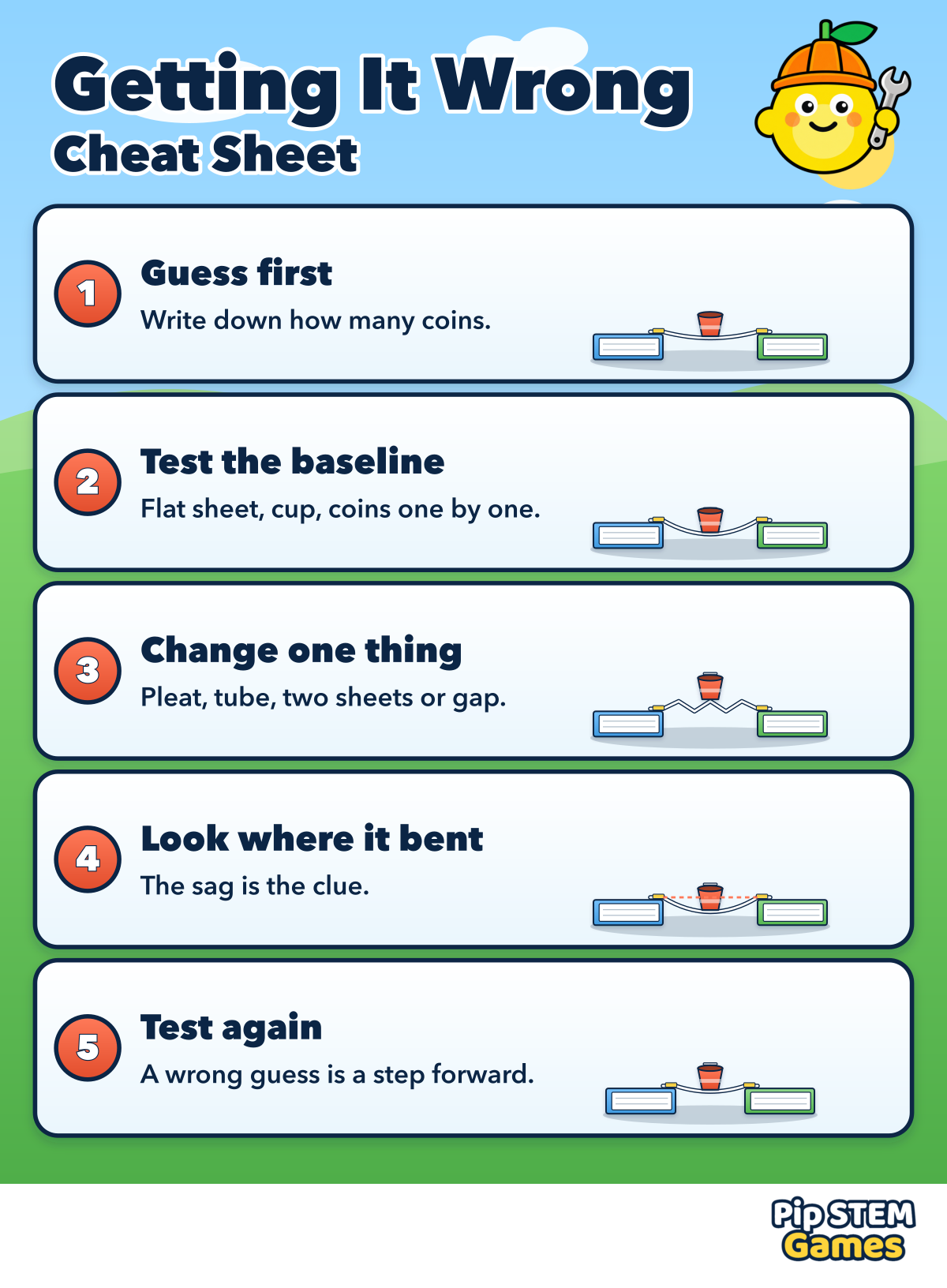
What is the quick version?
Keep this next to the books. Guess, test, look, change, and test again.
Questions parents ask
Why is failure part of engineering?
Engineers test designs until they fail, then use what they see to improve the next version. A failure shows where a design is weak.
How do I help my child who hates getting things wrong?
Talk about the bridge, not the child. Say "the design sagged" instead of "you got it wrong". Praise the effort and ask what the sag shows.
What is a baseline test?
It is your first test with the plainest version, here a flat sheet of paper. You compare every later test with it.
What is a fair test?
A fair test changes one thing and keeps everything else the same, so you know which change caused the result.
Do I need real 10p coins?
No. Any small objects of the same size and weight will do, such as identical washers or marbles. Keep small items away from young children.
What if my child stops caring after one test?
Keep it to two or three tests, and let them choose the change. A short, finished test is better than a long one that nobody enjoys.
Great STEM activities to try next...
 The Engineering Design Process for Kids: 6 Steps Families Can Use [Printable]How it works
 Paper Bridge Challenge: Build a Bridge From One Sheet of Paper [Printable]Build challenge
 Spot the Engineering MistakeBuild challenge
More to try: The £5 Engineering Activity Supplies List for Kids · 7 Engineering Projects Using Recycled Materials · 10 Skills Kids Practise Through Engineering

Pip STEM Games
We make engineering games and workbooks for kids aged 5 to 12. Every activity here is one we'd happily run at the kitchen table: test it, watch it fail, fix it, try again.




