

Key takeaways
- Cardboard tubes, cartons, lids and card are enough for seven real engineering builds.
- Match the material to the job: tubes guide, wide bases hold, folds stiffen.
- Change one thing at a time, then test three times before you decide.
- Clean, dry packaging is safer and easier to tape than damp or sticky packaging.
- Lids, marbles and coins are small parts, so keep them away from children under 5.
These are 7 engineering projects using recycled materials: a marble run, a tower, a boat, a pulley, a bridge, a launcher base and a windmill. Each one turns something from the recycling bin into a working machine, with a test and a fix for when it goes wrong.
1. Marble run
Ages 5 to 12, about 20 minutes. Tape cardboard tubes to a card backboard and send a marble down them.
- 3 cardboard tubes (kitchen roll or wrapping paper tubes, cut in half)
- A big piece of flat card
- Tape and a marble
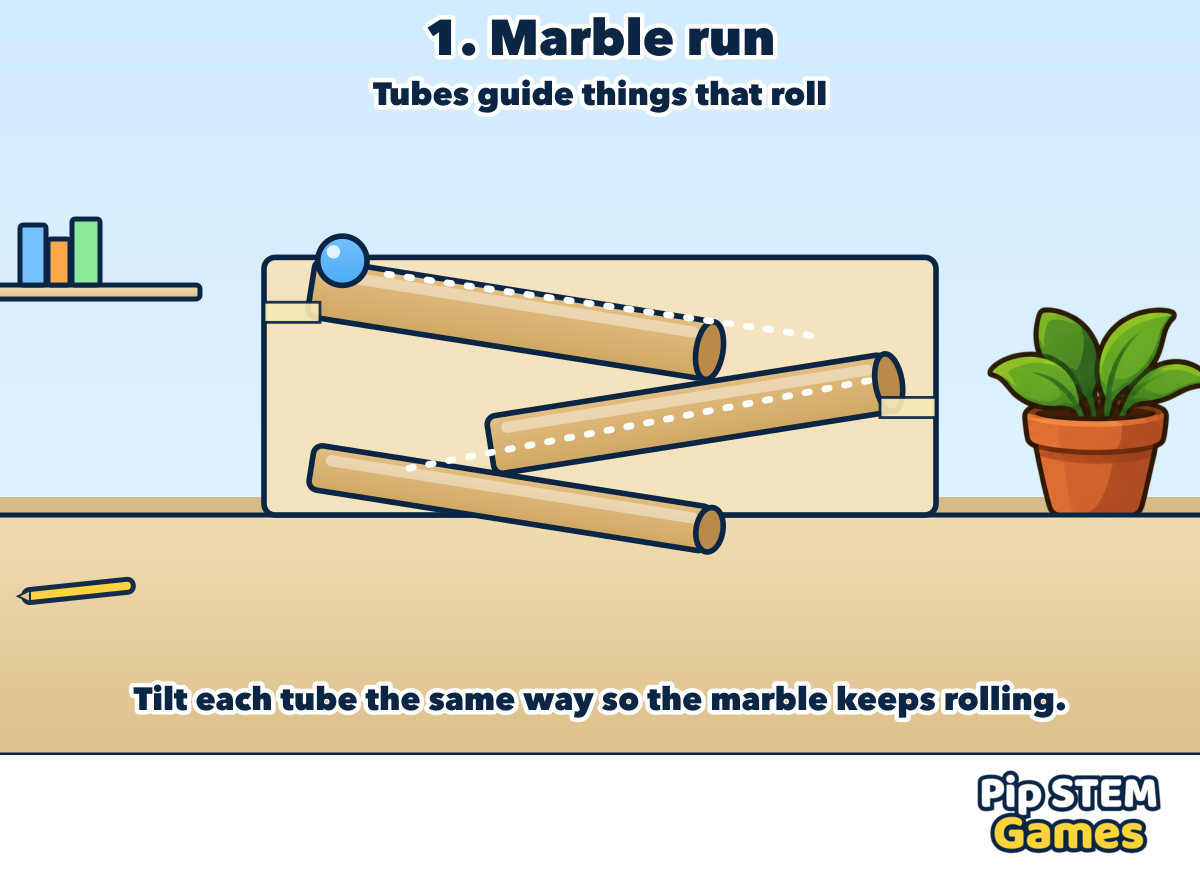
- Prop the card upright against a wall or a box.
- Tape the first tube near the top, sloping down to the right.
- Tape the second tube below it, sloping down to the left, so the marble drops from one to the next.
- Roll a marble through. If it stops, make that tube slope more.
Want a bigger version? See our cardboard marble run. Marbles are small parts, so keep them away from children under 5.
2. Cardboard tower
Ages 5 to 12, about 15 minutes. Stack cartons into the tallest tower that stays up.
- 6 or more small clean cartons or boxes
- Tape
- A ruler or tape measure
- Lay three cartons in a row for the wide base and tape them together.
- Tape two cartons on top, then one on the very top.
- Measure the height and gently wobble the table. Does it hold?
- If it leans, add a carton to the bottom row.
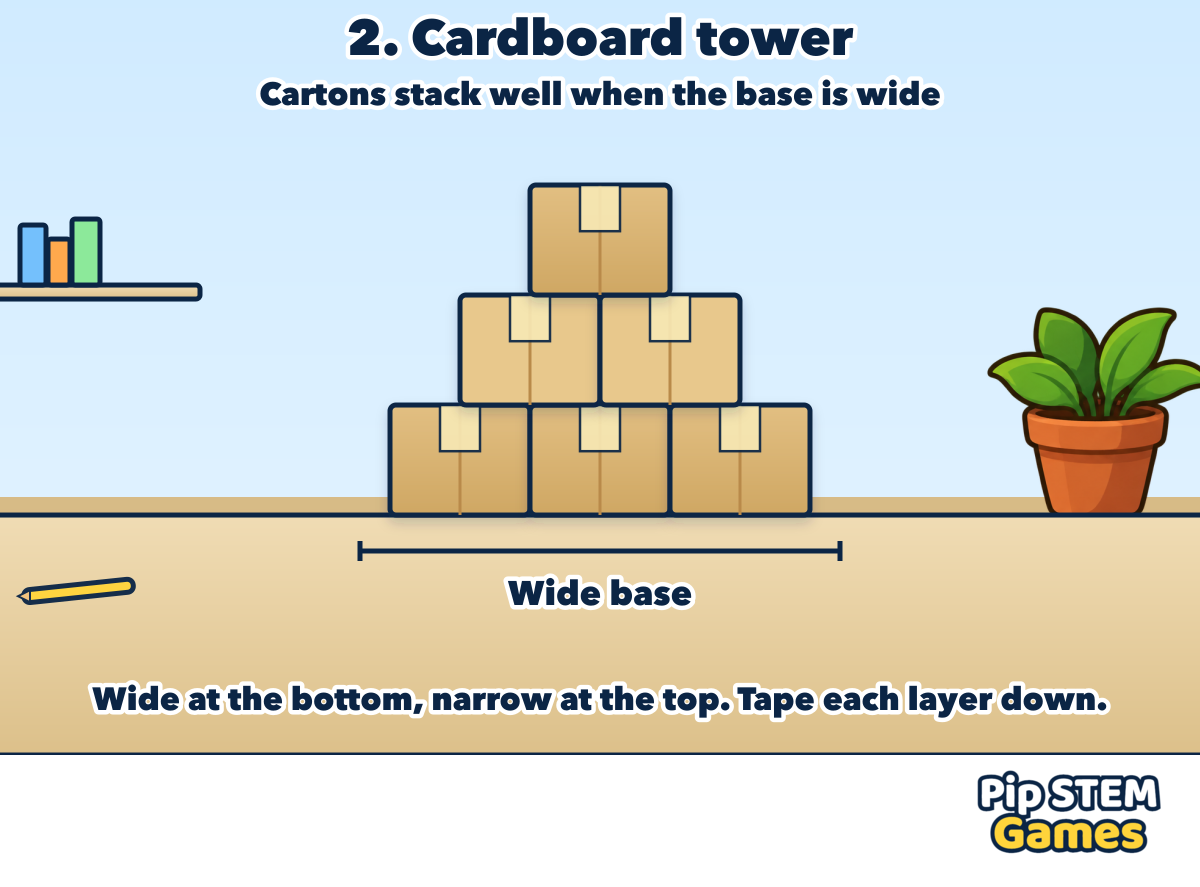
A wide base is the oldest trick in building. For more, read which shape makes the strongest tower.
3. Carton boat
Ages 6 to 12, about 20 minutes. Make a boat from a sealed carton and see how many coins it carries.
- A clean, dry juice or milk carton, cut open on one side by an adult
- Waterproof tape
- A washing up bowl of water and some 10p coins
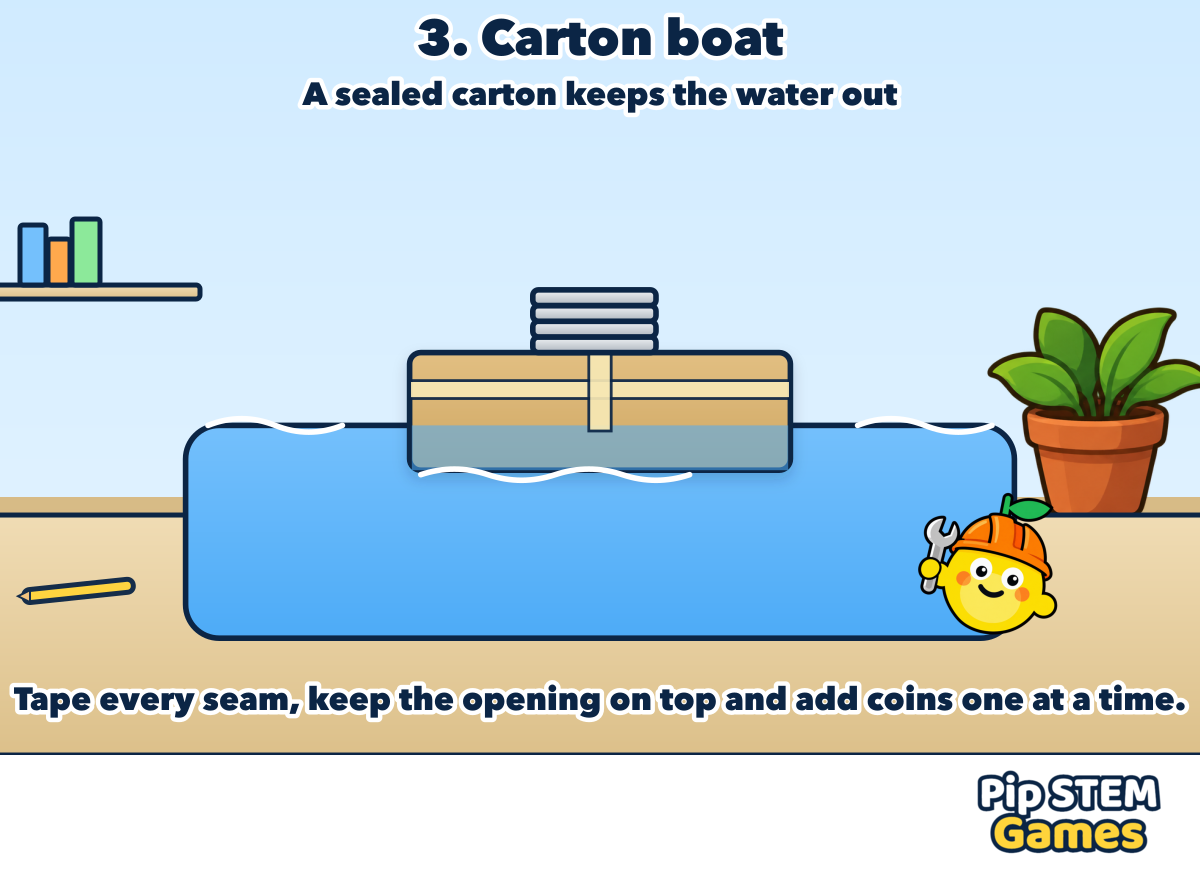
- Ask an adult to cut the top side off the carton, leaving an open boat shape.
- Tape over every seam and cut edge so water cannot get in.
- Float it and guess how many coins it will hold.
- Add coins one at a time, spread out evenly, and count them. If it leaks, dry it and add more tape.
Wipe up spills so nobody slips. For a bigger build, try a boat that actually floats.
4. Lid pulley
Ages 6 to 12, about 20 minutes. Use a plastic lid as a wheel and lift a bag with a gentle pull.
- A smooth plastic lid, with a hole made by an adult
- A pencil or a long straw to hold it
- String and a small bag with a few coins
- Fix the lid so it can spin, for example on a pencil taped to the back of a chair.
- Lay the string over the lid and tie the bag to one end.
- Pull down on the other end and watch the bag rise.
- If the lid sticks, smooth the edge or move the string away from the tape.
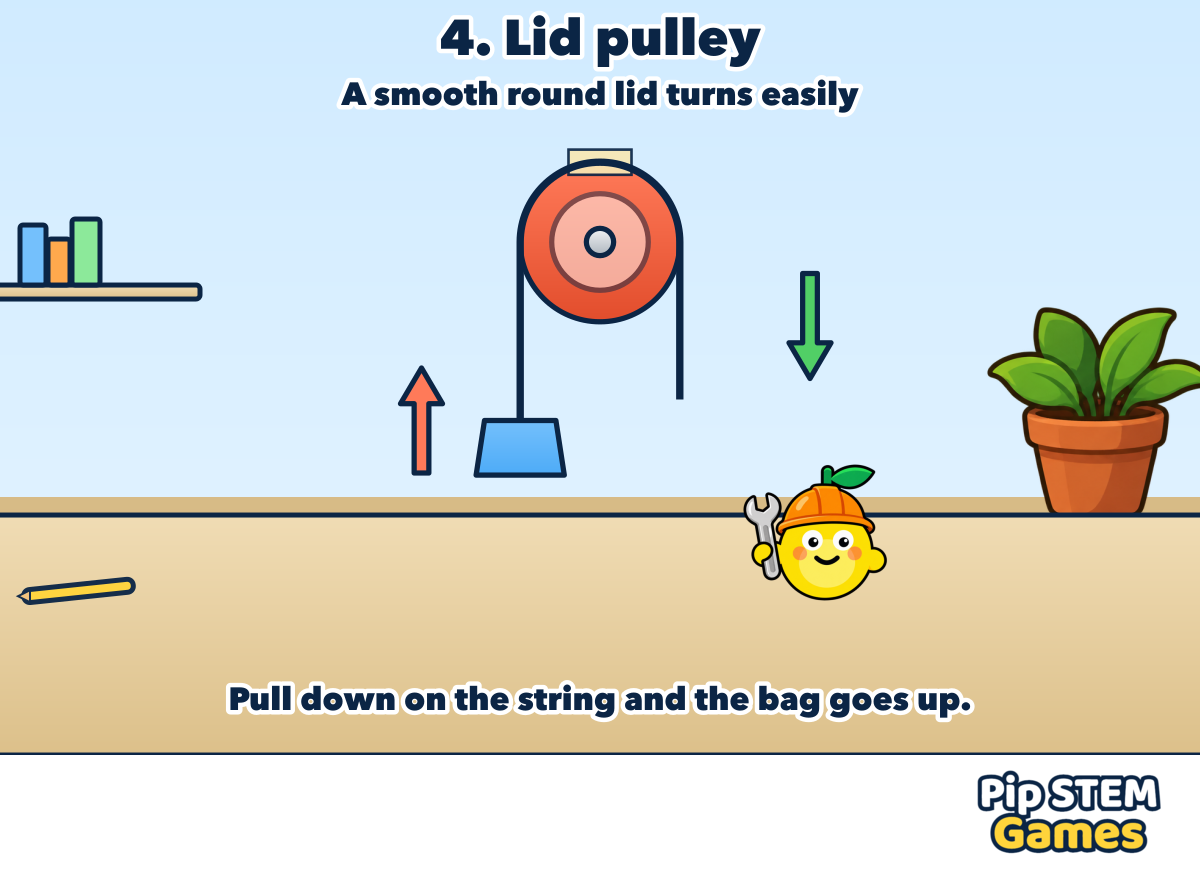
Try the same idea in the Pulley Puzzle game, or build a simple pulley at home.
5. Folded card bridge
Ages 5 to 12, about 15 minutes. Fold card into a zigzag and see how much weight it carries.
- 2 strips of thin card, the same size
- 2 stacks of books, 15 cm apart
- A toy car and some 10p coins
- Lay the first strip flat across the gap and roll the toy car across it.
- Fold the second strip into a zigzag like a fan and lay it across the same gap.
- Add coins one at a time to each and count how many each holds.
- Compare. Folds usually make card stiffer, but trust your own count.
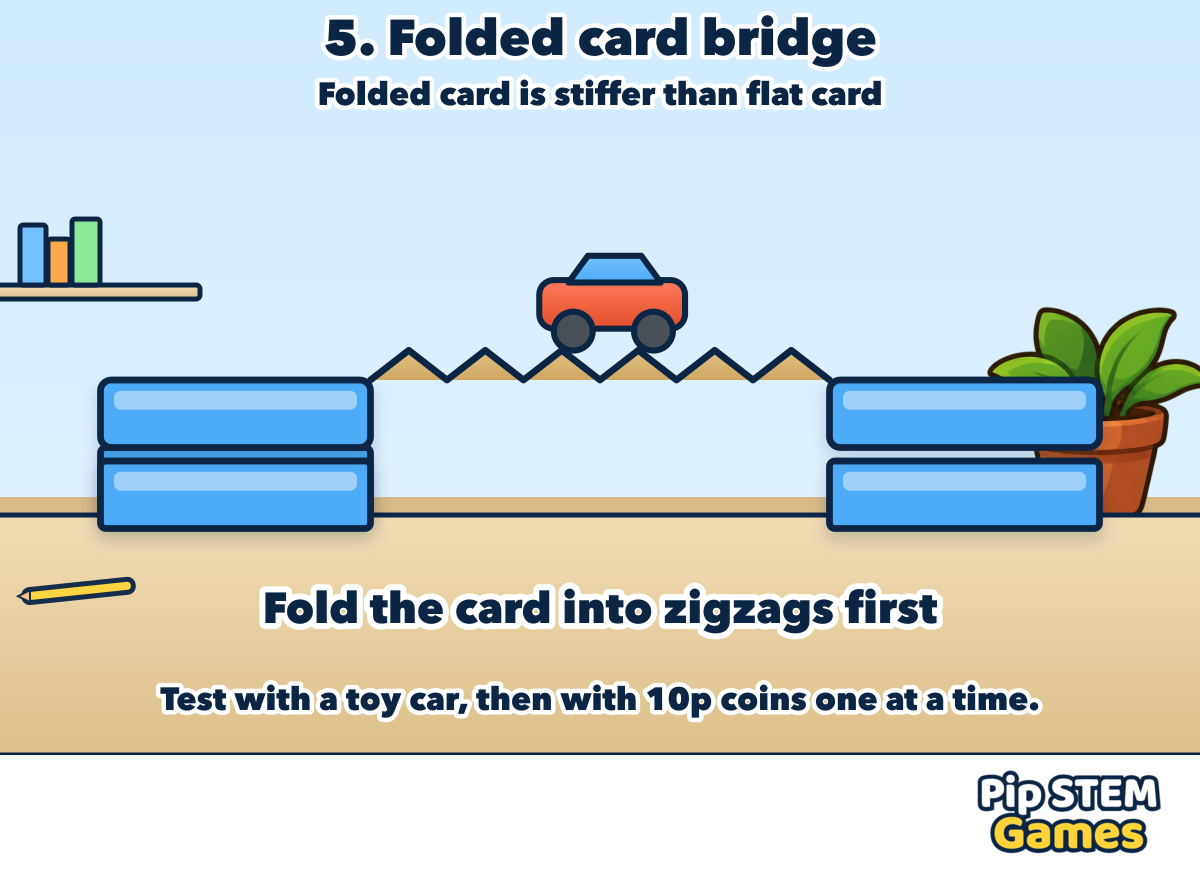
For the full test, try the paper bridge challenge.
6. Rubber band launcher base
Ages 8 to 12, about 20 minutes. Build a box base with a card arm that flicks a soft paper ball. An adult should help.
- A small sturdy box
- A strip of stiff card for the arm
- 2 wide rubber bands, tape and a soft paper ball
- Wrap a rubber band around the box so it crosses the top.
- Tape the end of the arm to the box so it can swing up.
- Pull the arm back, place the paper ball and let go.
- Change the band tightness and measure how far the ball goes each time.
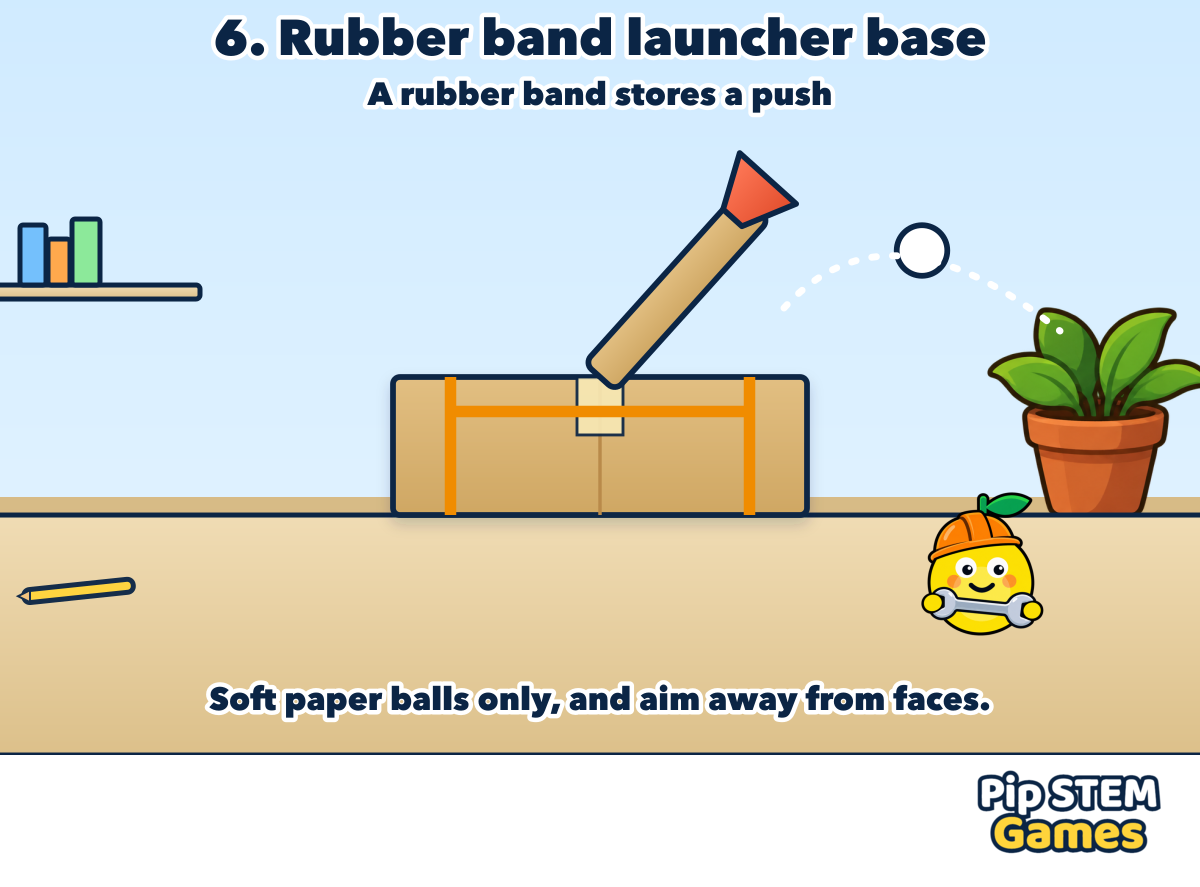
Safety: use soft paper balls only, aim away from faces and pets, and keep rubber bands away from children under 5.
7. Lid and tube windmill
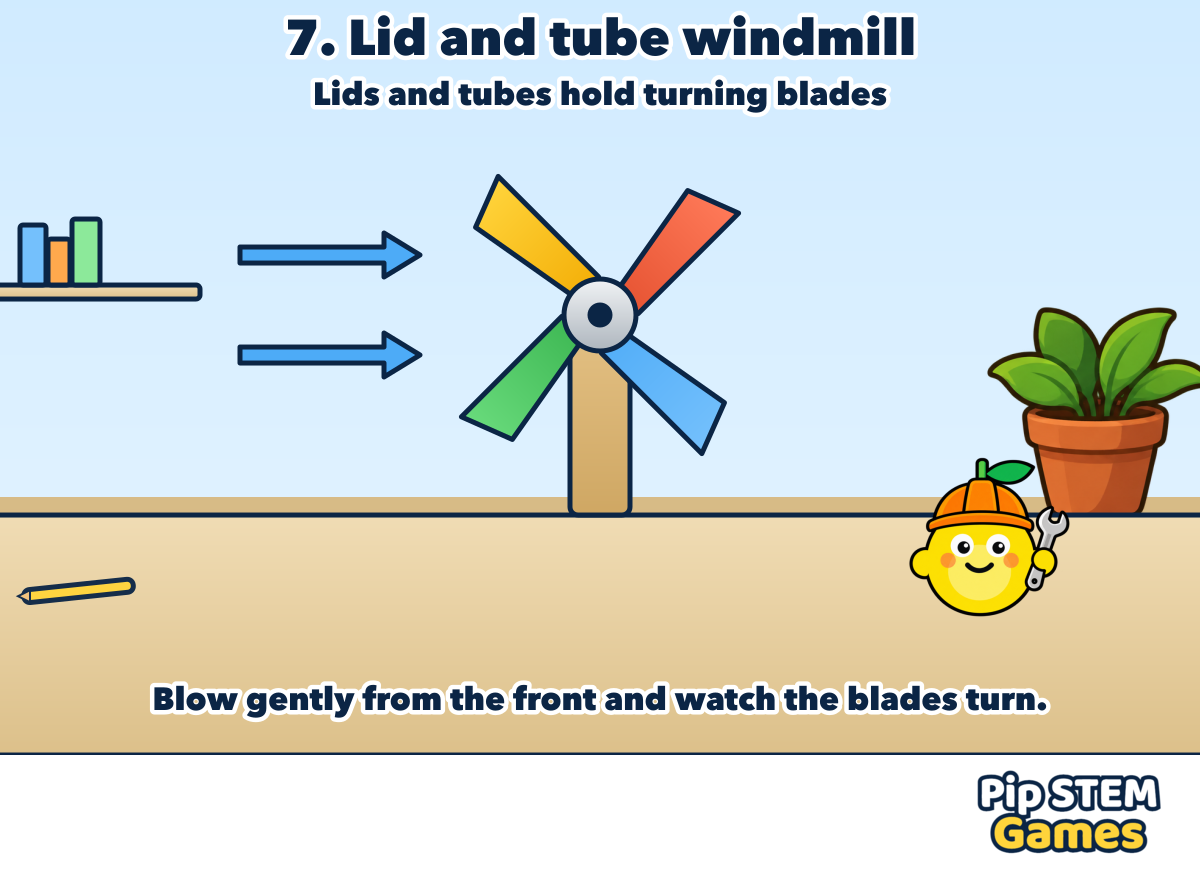
Ages 6 to 12, about 20 minutes. Spin four card blades on a lid hub, held up by a cardboard tube.
- A cardboard tube for the post
- A plastic lid for the hub
- 4 card blades, tape and a pencil
- Tape the tube to a heavy box so it stands up.
- Tape the four blades evenly around the lid, all tilted the same way.
- Fix the lid to the top of the tube so it can turn, for example on a pencil.
- Blow gently from the front. If it stalls, check the blades are tilted the same way.
How do I match the material to the job?
Tubes guide things that roll, wide cartons make steady bases, folded card is stiff, smooth lids turn and rubber bands store a push. Pick the shape for the job, then test it.
Use clean, dry packaging, because wet card sags and sticky packaging will not take tape. Change one thing at a time and test three times. Print the log, and stick the cheat sheet on the fridge.
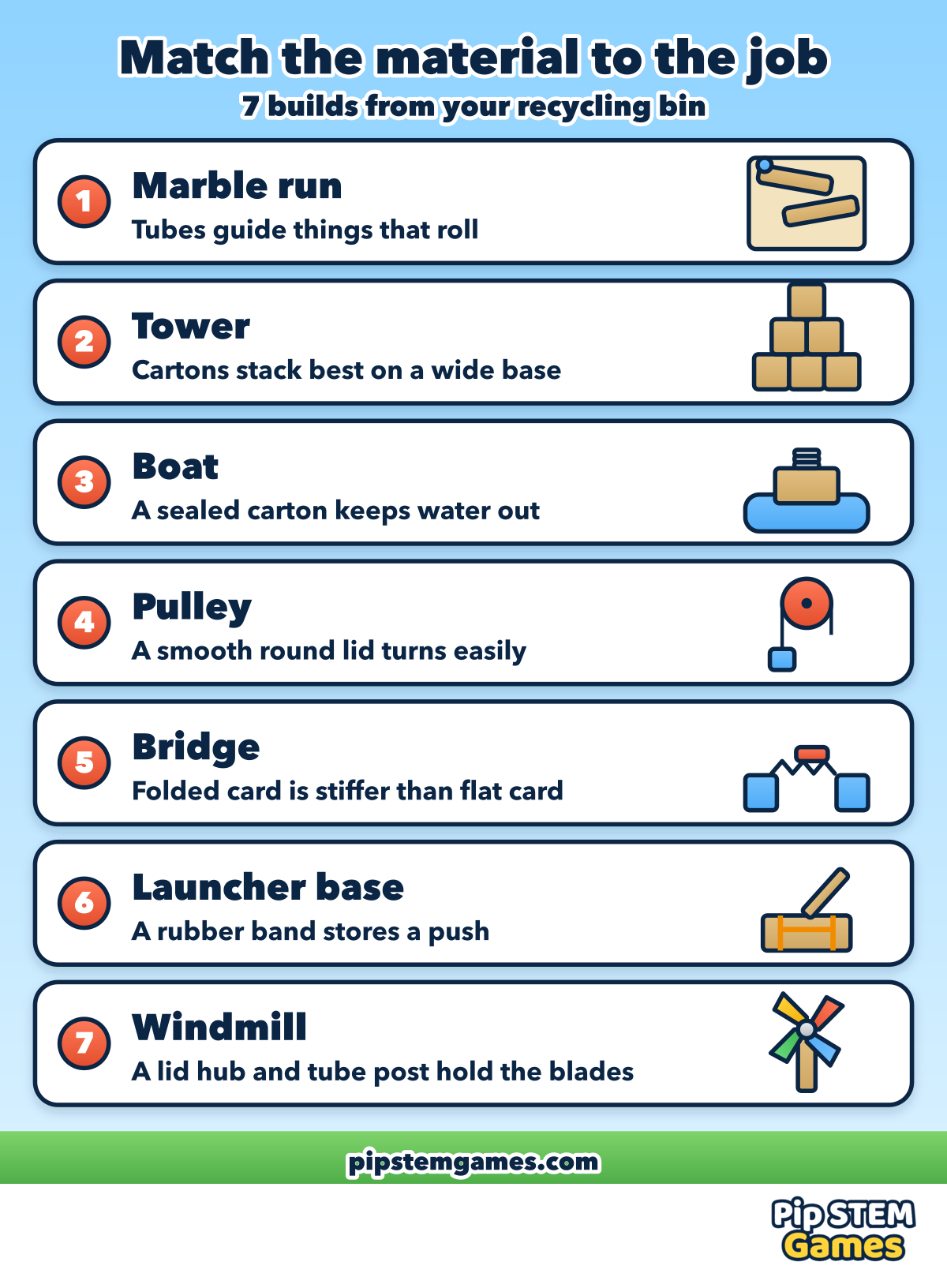
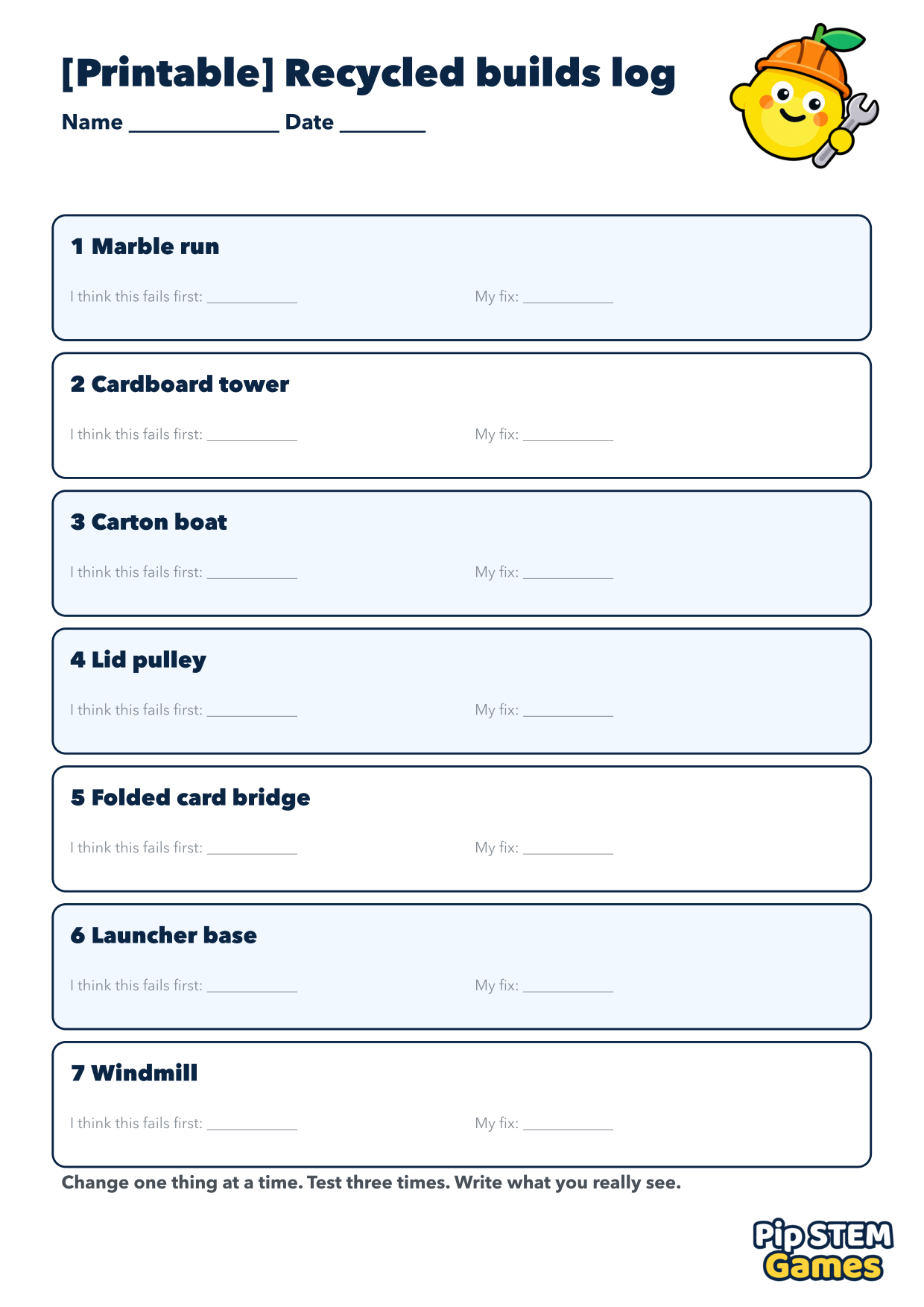
When a build fails, use the engineer's five-step fix-it checklist. For more ideas, see 10 things in your recycling bin that can become STEM projects. The Engineering Workbook for Kids has more tests for ages 8 to 12.
Safety: an adult cuts anything thick, keeps lids, marbles and coins from children under 5, and checks that cartons are clean and dry.
Questions parents ask
What are good engineering projects using recycled materials?
A marble run, a tower, a carton boat, a lid pulley, a folded card bridge, a rubber band launcher base and a windmill all use things from the recycling bin. Each is a small test with a guess and a result.
What age are these projects for?
They suit ages 5 to 12. Younger children can build the tower and marble run, and older children can try the launcher base and measure distances.
What materials should I save?
Clean cardboard tubes, small cartons, plastic lids, flat card and string. Rinse and dry anything that held food or drink.
How do I stop my build from falling apart?
Use more tape at the joints, make the base wider and fix one weak spot at a time. Test again after each change.
Are these projects safe?
Yes with an adult nearby. An adult should cut anything thick, and lids, marbles and coins should stay away from children under 5.
How do I make it a fair test?
Change one thing at a time and keep everything else the same. Test three times and write down each result.
Great STEM activities to try next...
 10 Things in Your Recycling Bin That Can Become STEM ProjectsEngineering activities
 DIY Cardboard Marble Run for KidsActivity
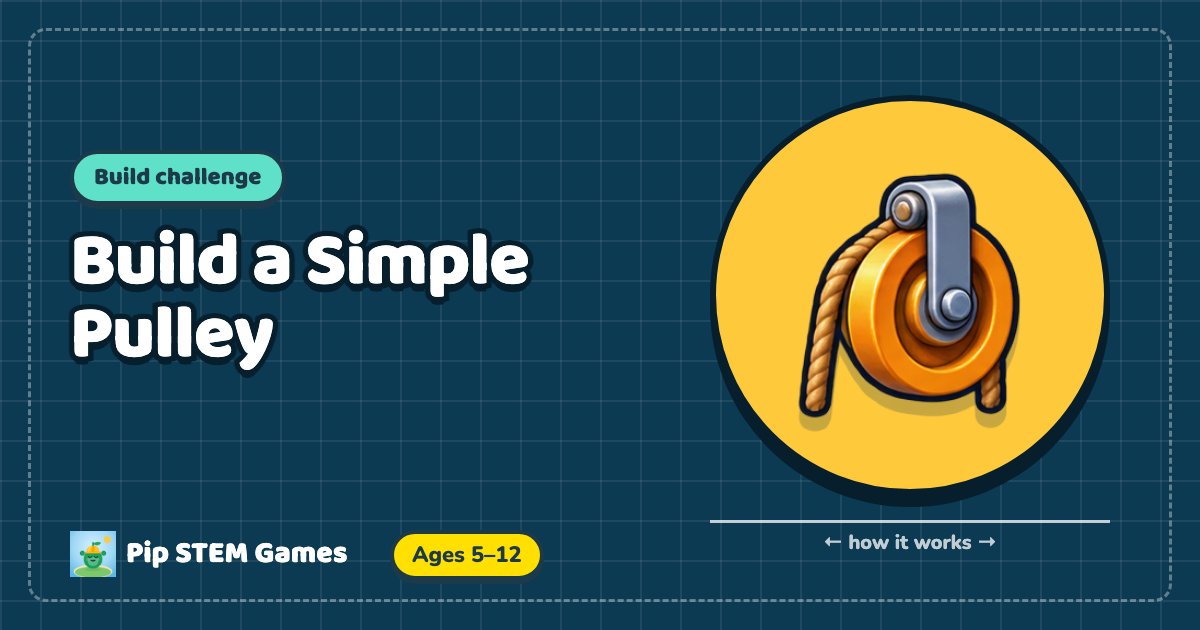 Build a Simple Pulley With Household ItemsActivity
More to try:

Pip STEM Games
We make engineering games and workbooks for kids aged 5 to 12. Every activity here is one we'd happily run at the kitchen table: test it, watch it fail, fix it, try again.




