


Key takeaways
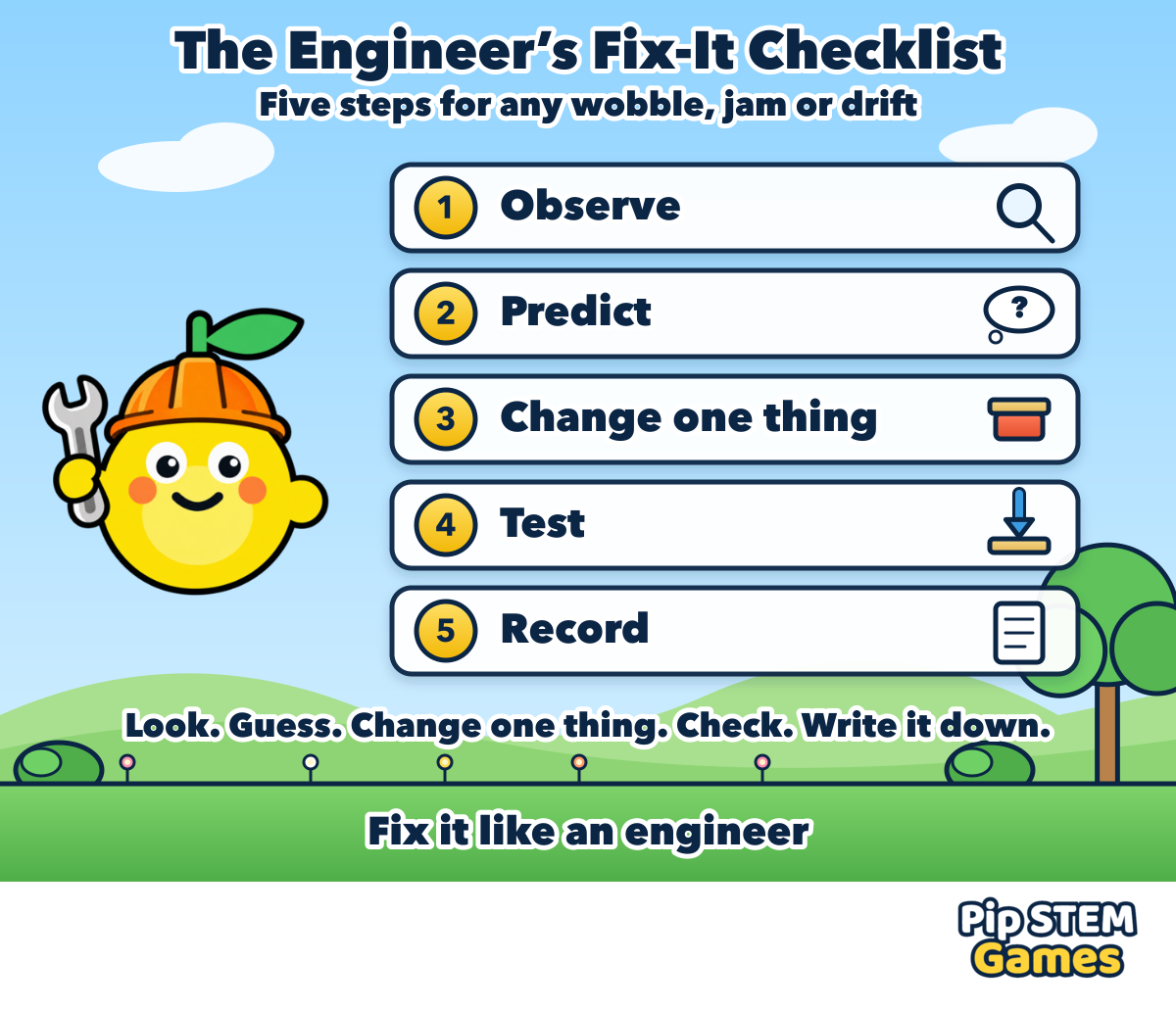
- Engineers fix problems in five steps: observe, predict, change one thing, test, record.
- Press every corner to find which leg rocks.
- Change only one thing, or you cannot tell what worked.
- Repeat the same test before and after the fix.
- Write down every try, including the ones that fail.
This fix-it checklist for kids has five steps: observe, predict, change one thing, test and record. Try it on a wobbly table, a sticking drawer or a toy car that veers left.
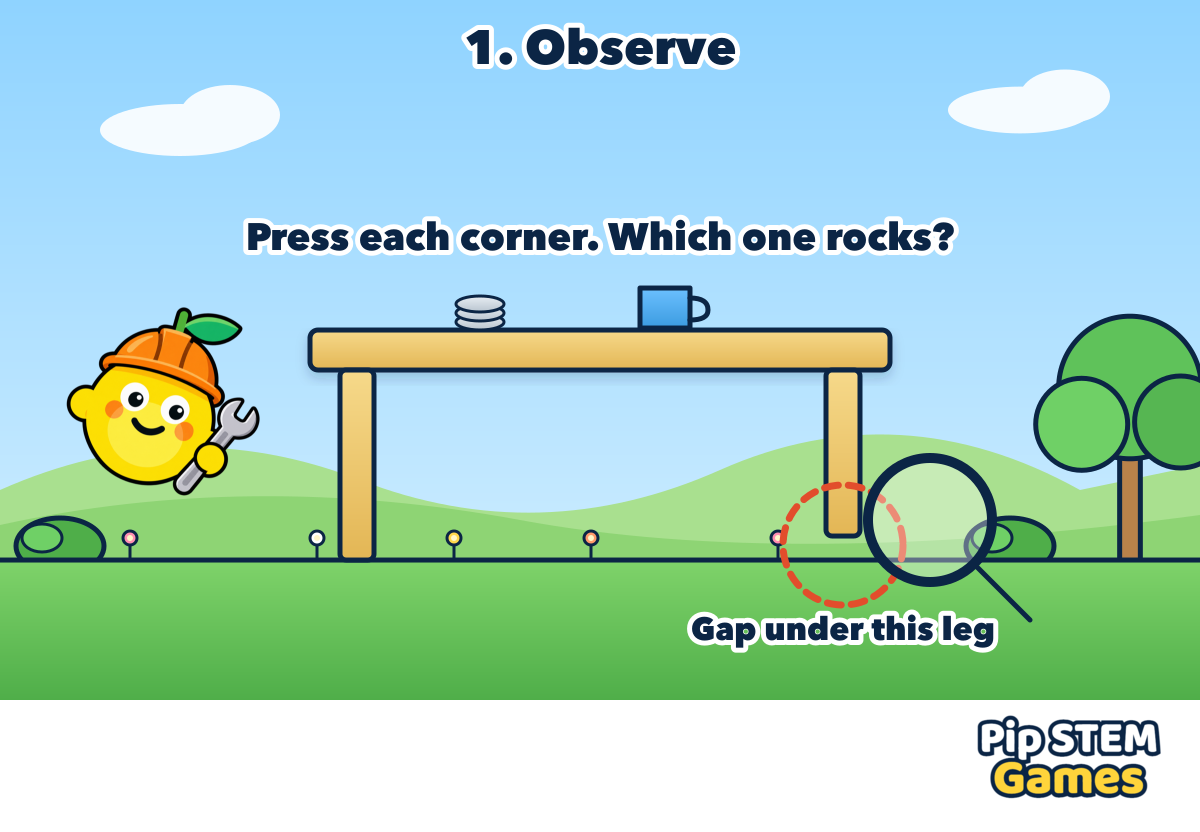
1. Observe
Look closely and say what is wrong in words. About 5 minutes, ages 5 to 12.
- A wobbly table, stool or folded cardboard model
- Pencil and paper
- Press each corner or leg, one at a time.
- Find the corner that rocks.
- Look underneath. Is there a gap, or is one leg shorter?
- Say the problem in one sentence: “The back right leg does not touch the floor.”
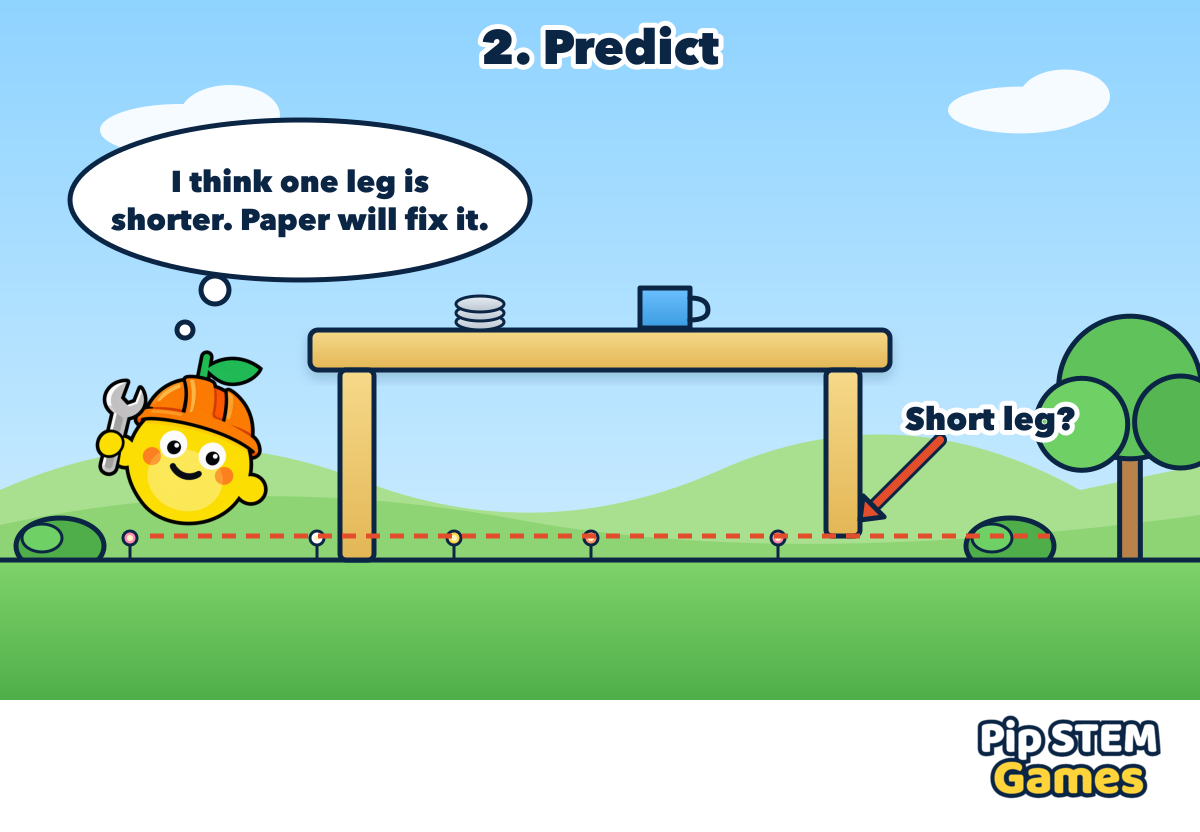
2. Predict
Say what you think is causing the fault and what your fix should do. About 3 minutes, ages 5 to 12.
- Your notes from step 1
- Pick the most likely cause, for example: one leg is shorter.
- Say what fix you will try: a folded piece of paper under that leg.
- Say what you expect to see: the table stops rocking.
- Write your prediction down before you test it.
A guess you can check is better than a guess you keep in your head. For a related challenge, see why this tower keeps falling over.
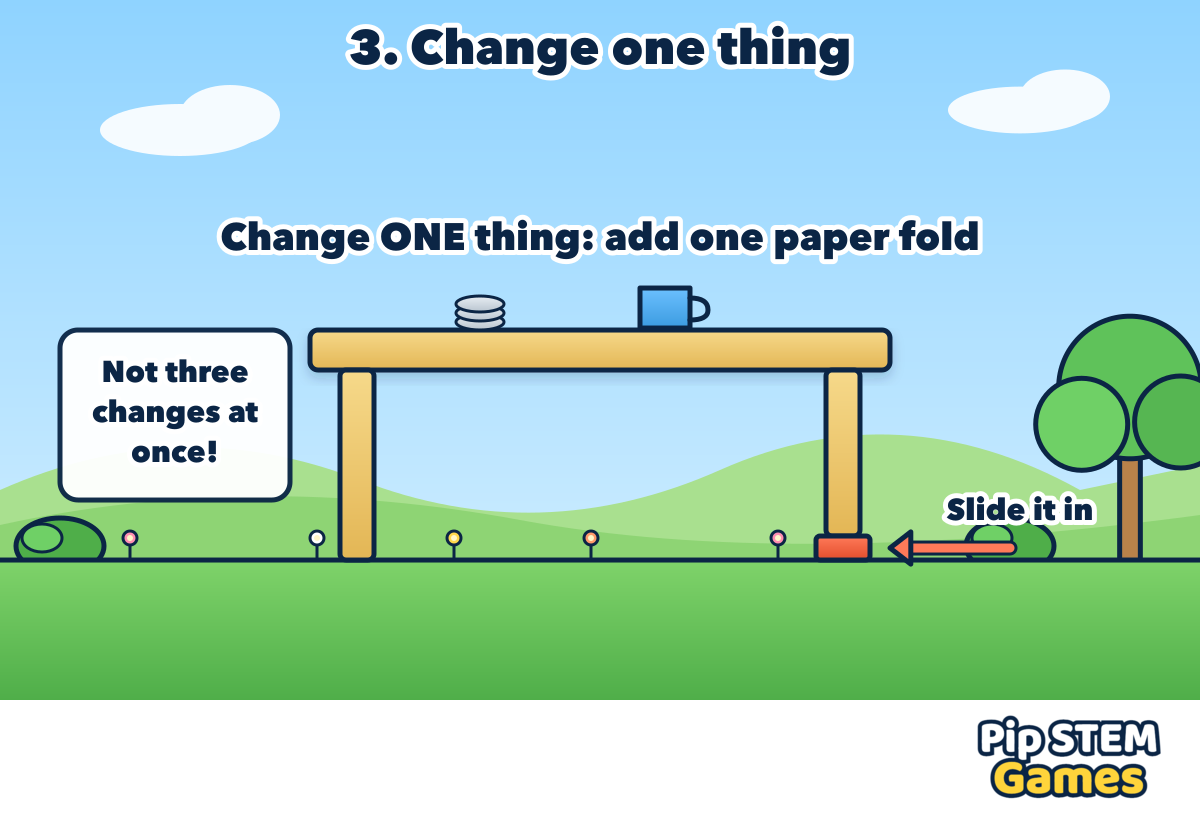
3. Change one thing
Alter only one part, so you know which change did the work. About 5 minutes, ages 5 to 12. An adult should supervise any small parts.
- Paper folded into a thick strip (a shim)
- Masking tape
- Fold one piece of paper into a small pad.
- Slide it under the short leg.
- Tape it so it cannot slip.
- Leave everything else exactly as it was.
If you change three things at once, you cannot tell which one helped.
4. Test
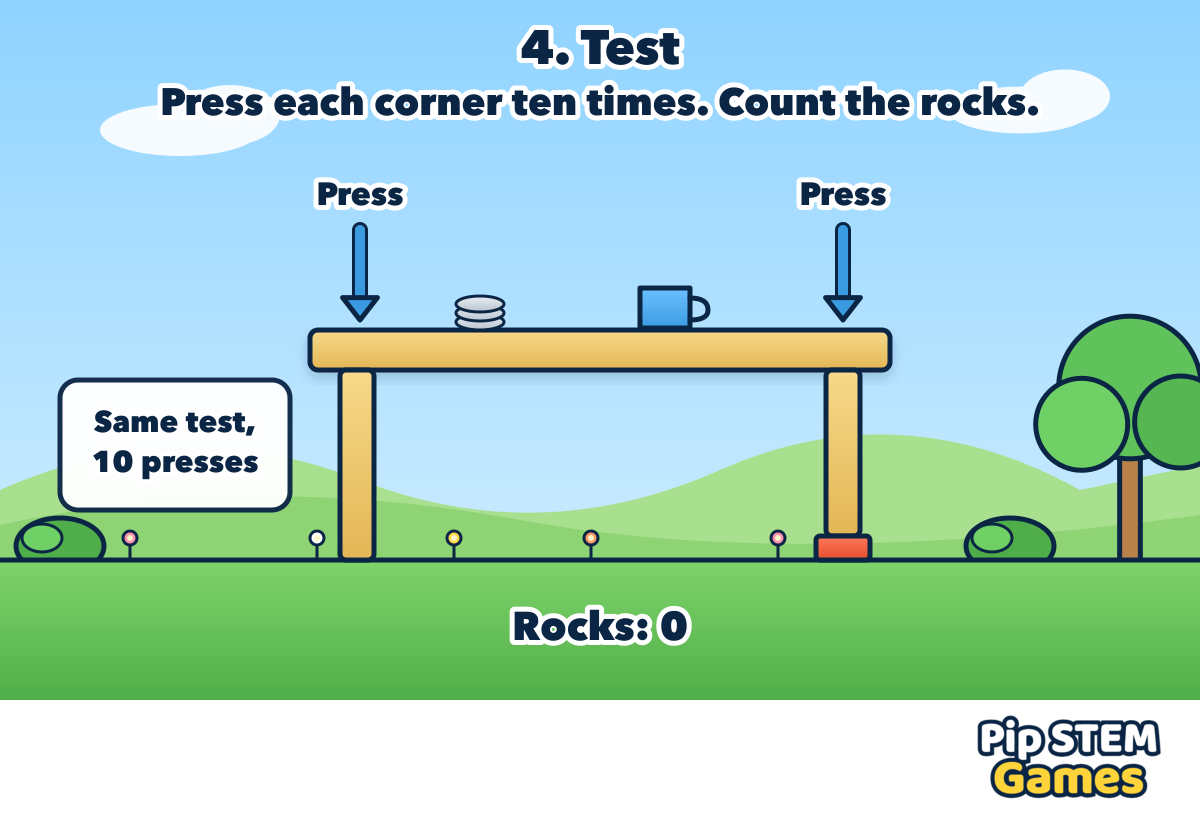
Repeat the same test you did in step 1. About 5 minutes, ages 5 to 12.
- The same table in the same spot
- A UK 10p coin as a standard load (it weighs 6.5 g)
- Press each corner ten times, with the same push.
- Count how many times it rocks.
- Place the coin in the middle and press again.
- Compare with your first count. Fewer rocks means the fix is working.
You can also try the idea in our Ramp Runner game, where small fixes change the result.
5. Record
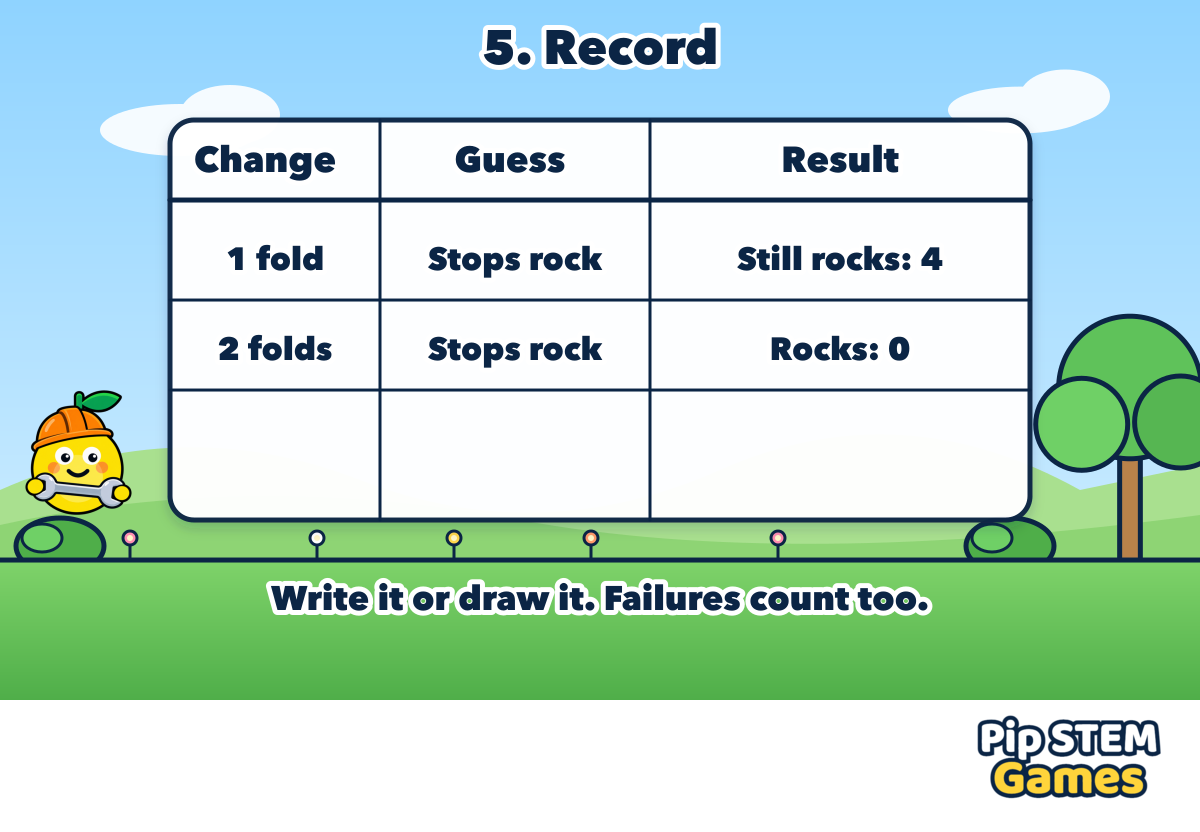
Write or draw what you changed, what you guessed and what happened. About 5 minutes, ages 5 to 12.
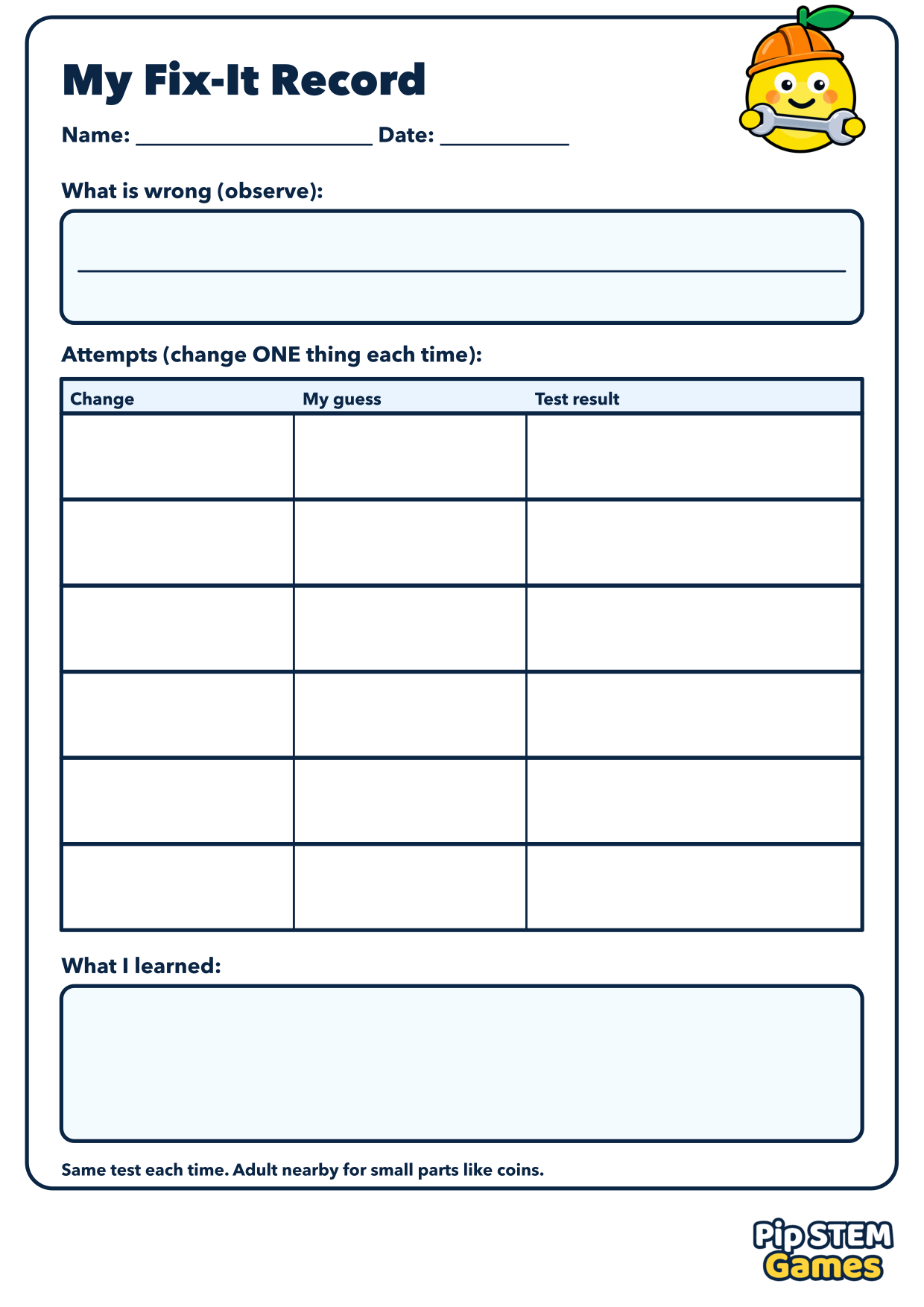
- Pencil and paper, or the printable sheet below
- Draw a table with three columns: Change, Guess and Result.
- Write one row for every attempt.
- Include the failures. A test that did not work still teaches you something.
- Circle your best fix.
What if the fix does not work?
Undo the change, then try a thicker fold or a different leg. If the rock moves to another corner, your first guess was partly right and the floor may be uneven too. Change one thing at a time, and write each try in your record. Engineers expect some tries to fail. When a fix finally works, run the test one more time. If it passes twice, you can trust it, and you have a record to show how you got there.
How do we keep the test fair?
A fair test changes one thing and keeps everything else the same. Think of it as a promise to yourself that nothing sneaky is helping. Keep these the same: the same table, the same floor spot, the same coin and the same number of presses. For another fair-test activity, try the paper bridge challenge.
What can we fix next?
Use the five steps on a sticking drawer, a toy car that drifts left or a wobbly shelf. Predict first, then check against the result. Our engineering workbook for kids has more problems to fix. Ages 5 to 7 can draw the fault and give a thumbs up or down for each test. Ages 8 to 12 can count rocks over ten presses and record numbers.
Questions parents ask
What are the five steps of the fix-it checklist?
Observe the problem, predict the cause and fix, change one thing, test, and record what happened. Each step stops guessing and shows why a fix worked.
Why change only one thing?
If you change several things at once, you cannot tell which one helped. One change gives a clear answer.
What if the fix makes no difference?
Undo it, write down what happened and try a different change. A fix that fails still rules out one idea.
What age is this for?
Ages 5 to 7 can draw the fault and give thumbs up or down. Ages 8 to 12 can count, record numbers and compare.
Is it safe?
Yes with an adult nearby. Keep coins and other small parts away from children under three, and do not use sharp tools or mains electricity.
Great STEM activities to try next...
 Spot the Engineering MistakeBuild challenge
 Why This Tower Keeps Falling OverActivity
 Can Your Child Fix This Broken Circuit?Activity
More to try: 12 Things Kids Use That Engineers Helped Create

Pip STEM Games
We make engineering games and workbooks for kids aged 5 to 12. Every activity here is one we'd happily run at the kitchen table: test it, watch it fail, fix it, try again.




