

Key takeaways
- Bikes, lifts, zips and swings all hide simple machines that engineers designed.
- A lift counterweight balances the car, so the motor only lifts the difference.
- Longer swing chains swing more slowly, whoever is riding.
- Wide bag straps spread the weight, so the same load feels lighter.
- Coins and keys are small parts, so keep them away from under-3s and stay close by.
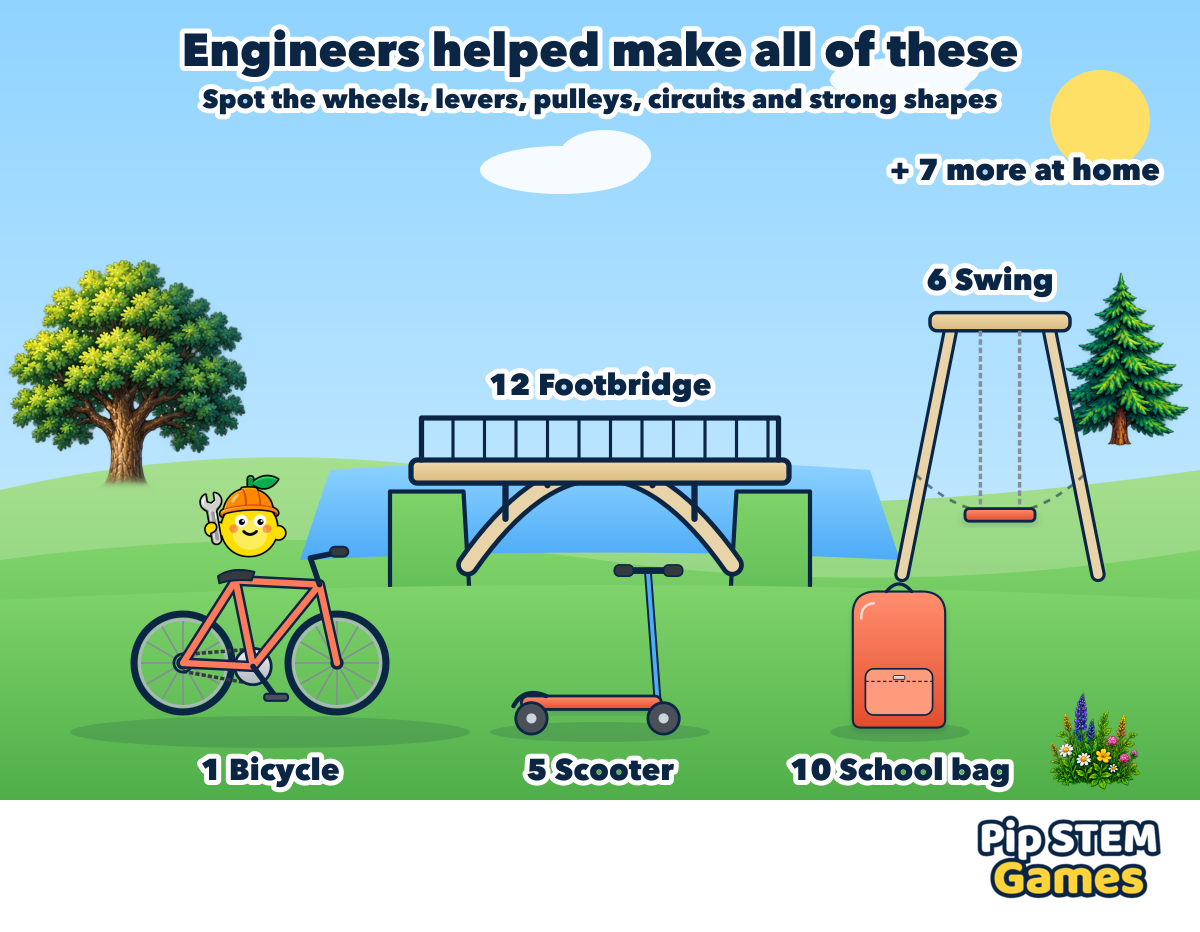
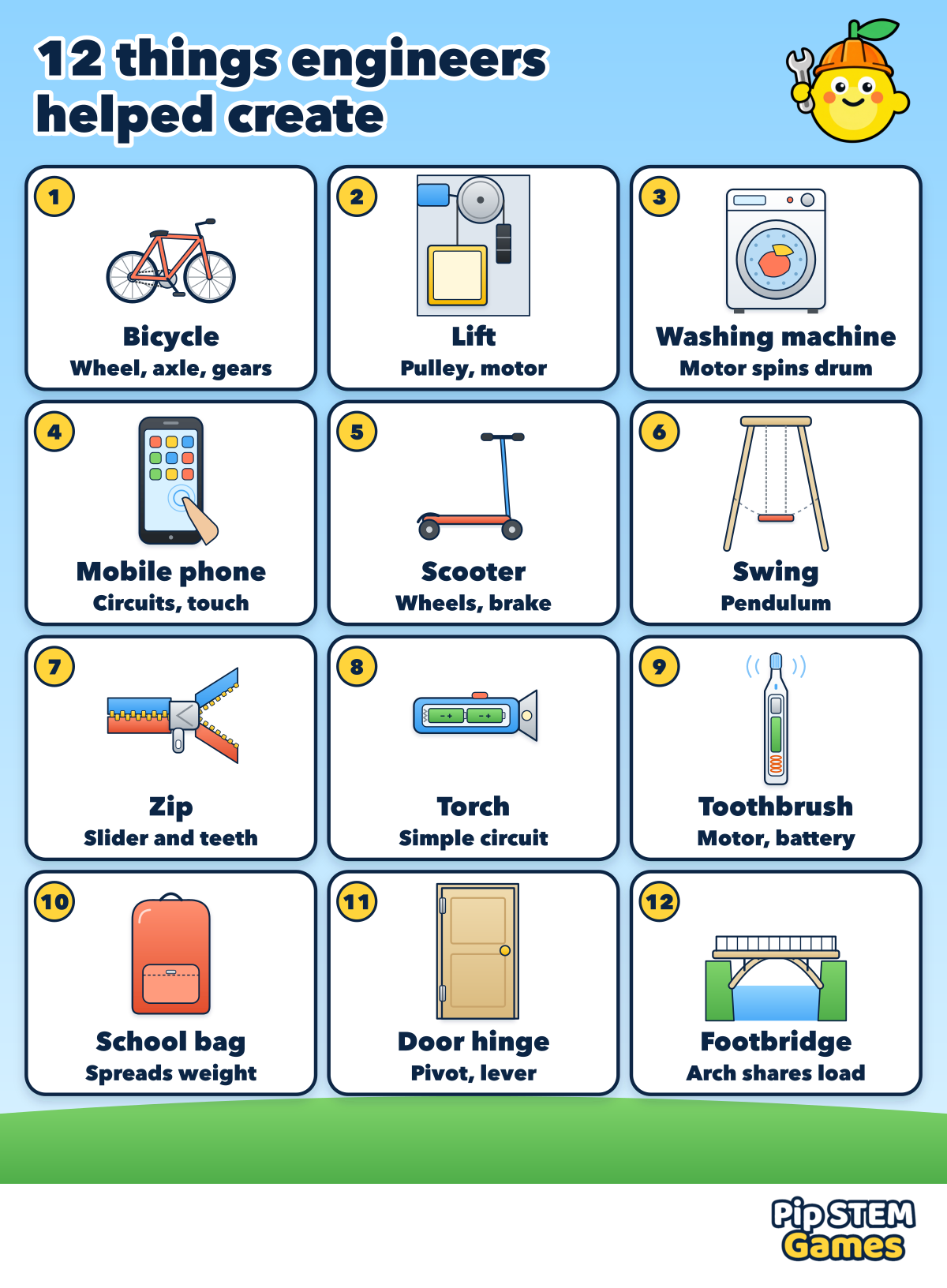
These are 12 things children use that engineers helped create, each with the machine hiding inside, a quick safe test and a picture. Five are in the park and seven are at home.
1. Bicycle
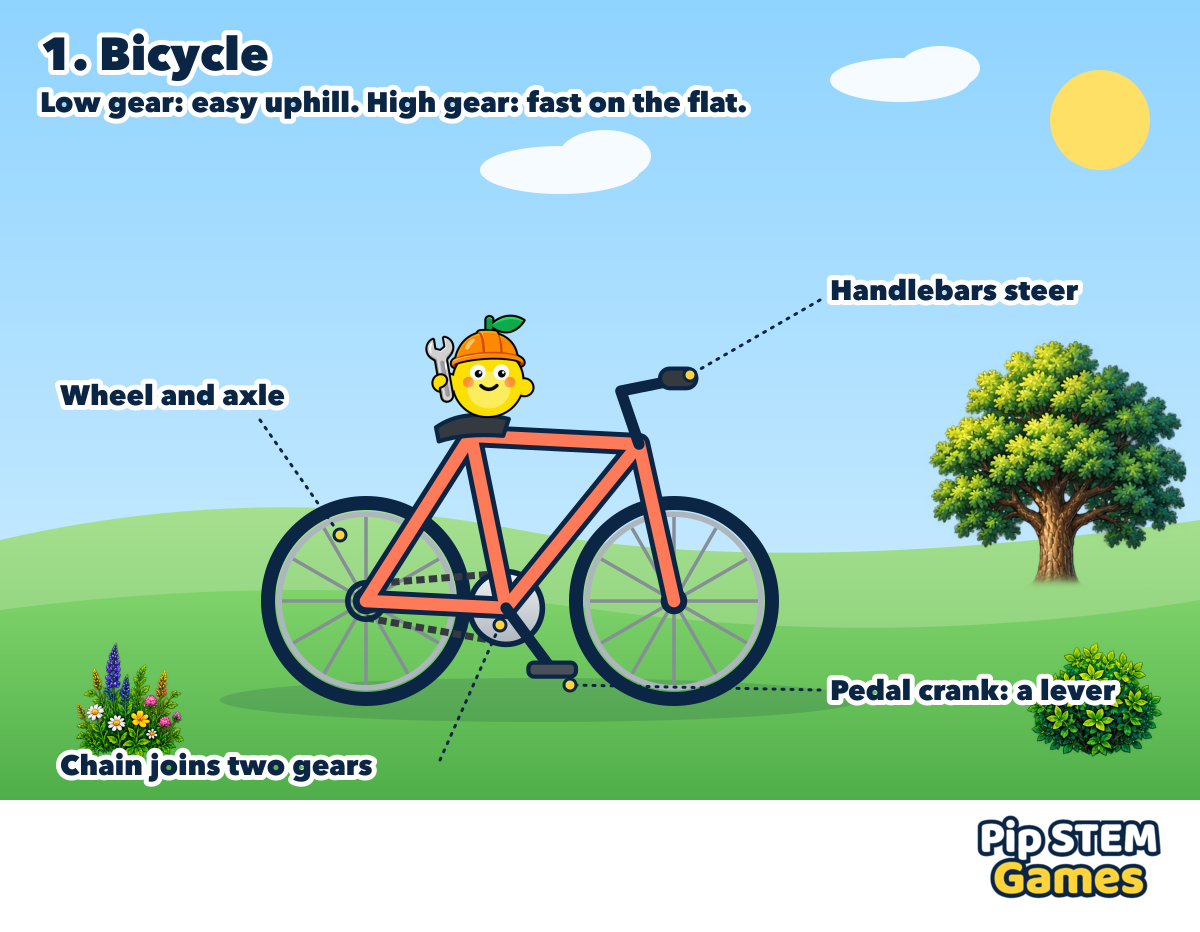
Ages 5 to 12, about 10 minutes. A bike is a box of simple machines. The wheels turn on axles, the chain joins two gears, and each pedal crank is a lever. Low gears make hills easier but you pedal more. High gears take you further with each push.
You need:
- A bike with gears
- A flat, quiet path and an adult
Try it:
- Put the bike in a low gear. Turn the pedal once by hand and count how far the back wheel turns.
- Change to a high gear and do the same.
- Which gear moved the wheel further? Which felt harder to push?
- Ride a short way in each gear, slowly, with your helmet on.
Spin wheels on axles in the Wheel and Axle game.
2. Lift
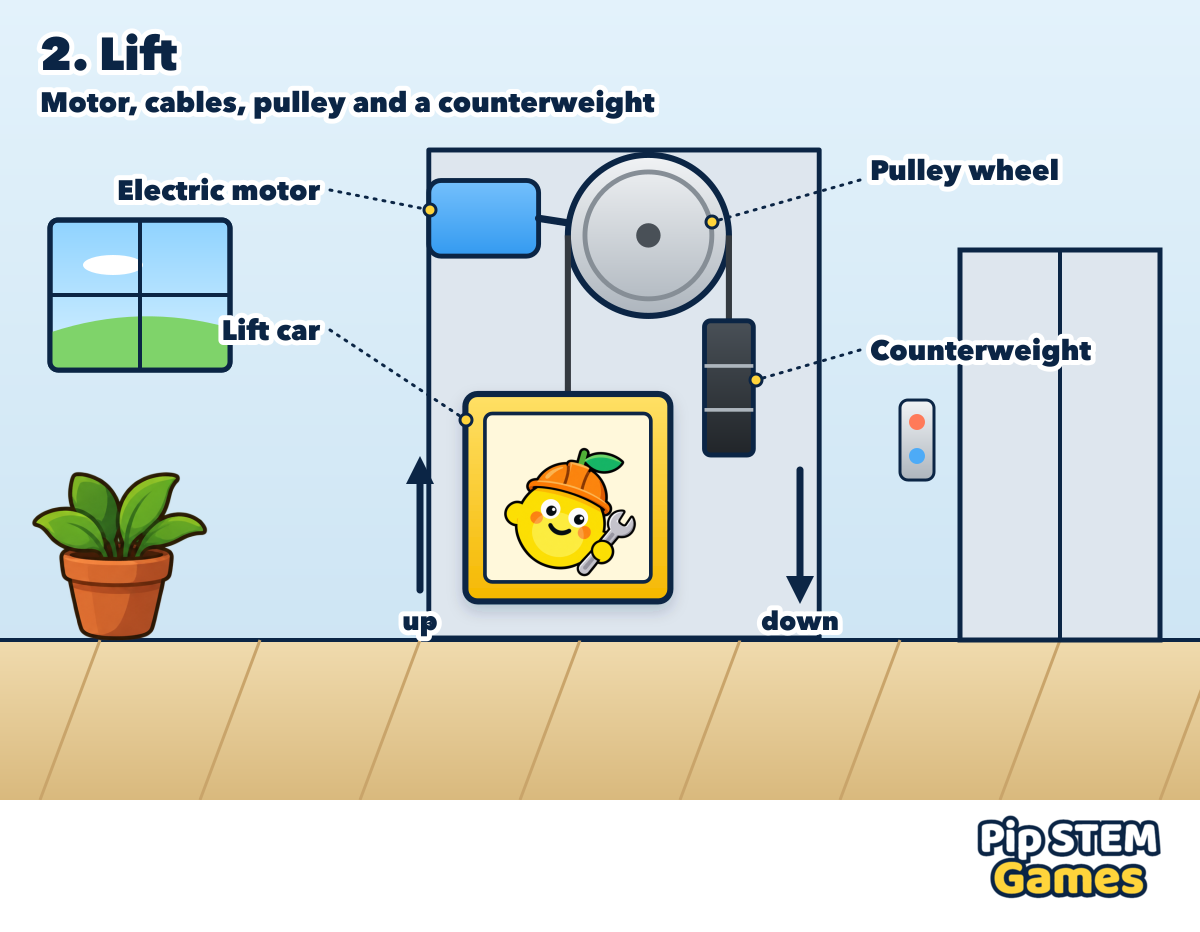
Ages 6 to 12, about 15 minutes. A lift car hangs from steel cables that run over a big pulley wheel at the top. On the other side hangs a heavy counterweight, about the weight of the car plus part of a full load. The motor only has to lift the difference.
You need:
- 2 paper cups
- String about 1 metre long
- A broom handle across two chairs
- Some 10p coins
Try it:
- Tie a cup to each end of the string and hang it over the broom handle.
- Put 5 coins in one cup. Pull it up with the other cup empty. How hard is it?
- Now put 4 coins in the other cup, the counterweight. Pull again.
- Talk about why the counterweight helps.
Read more in how do lifts work, or try the Pulley Puzzle game.
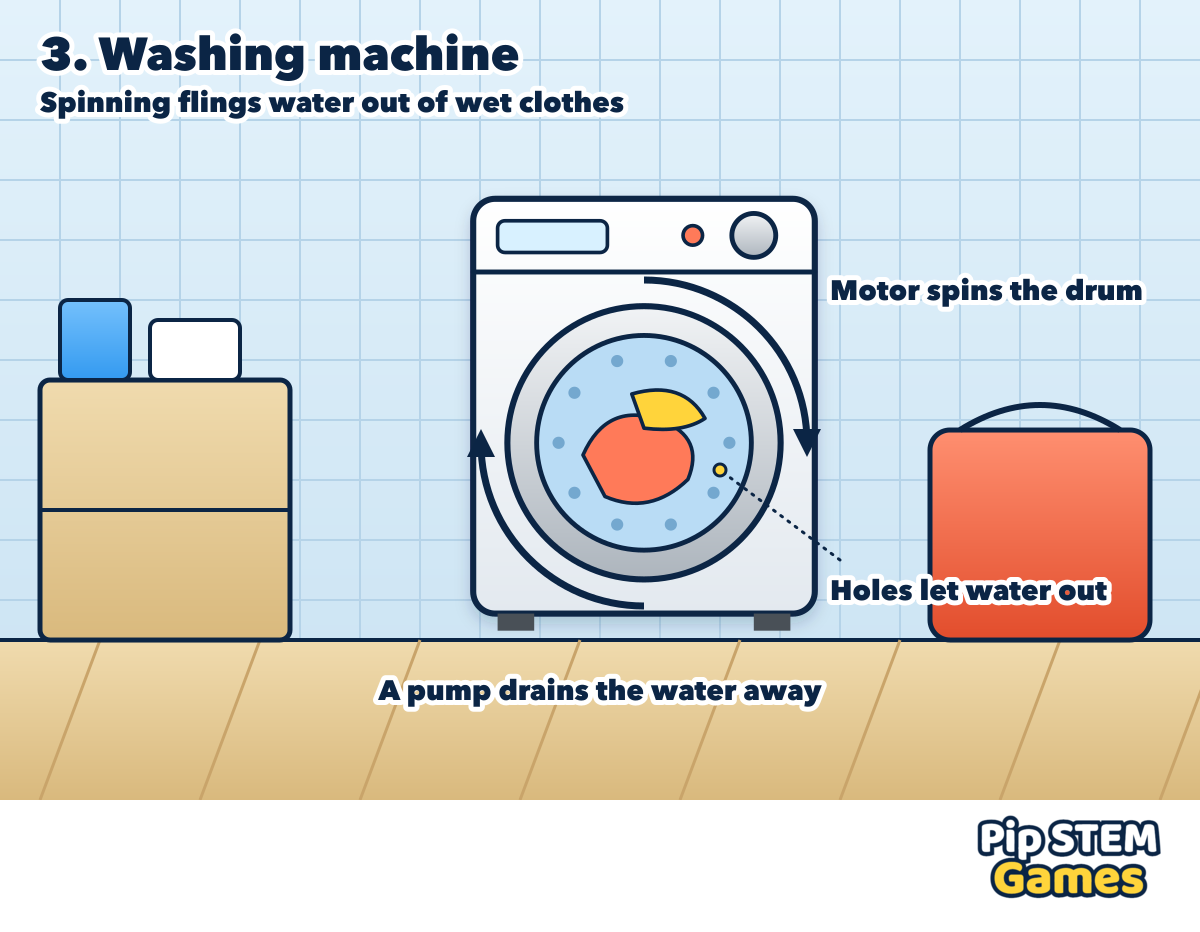
3. Washing machine
Ages 5 to 12, about 10 minutes. A motor spins the drum very fast. The wet clothes get pushed to the outside wall, and the water flies out through the little holes. A pump then sends the water down the drain.
You need:
- A salad spinner
- A wet tea towel
- Kitchen scales, if you have them
Try it:
- Weigh the wet towel, or just feel how heavy it is.
- Put it in the salad spinner and spin for 20 turns.
- Tip out the water and look at how much came out.
- Weigh or feel the towel again. Spin 20 more turns and see if more comes out.
4. Mobile phone
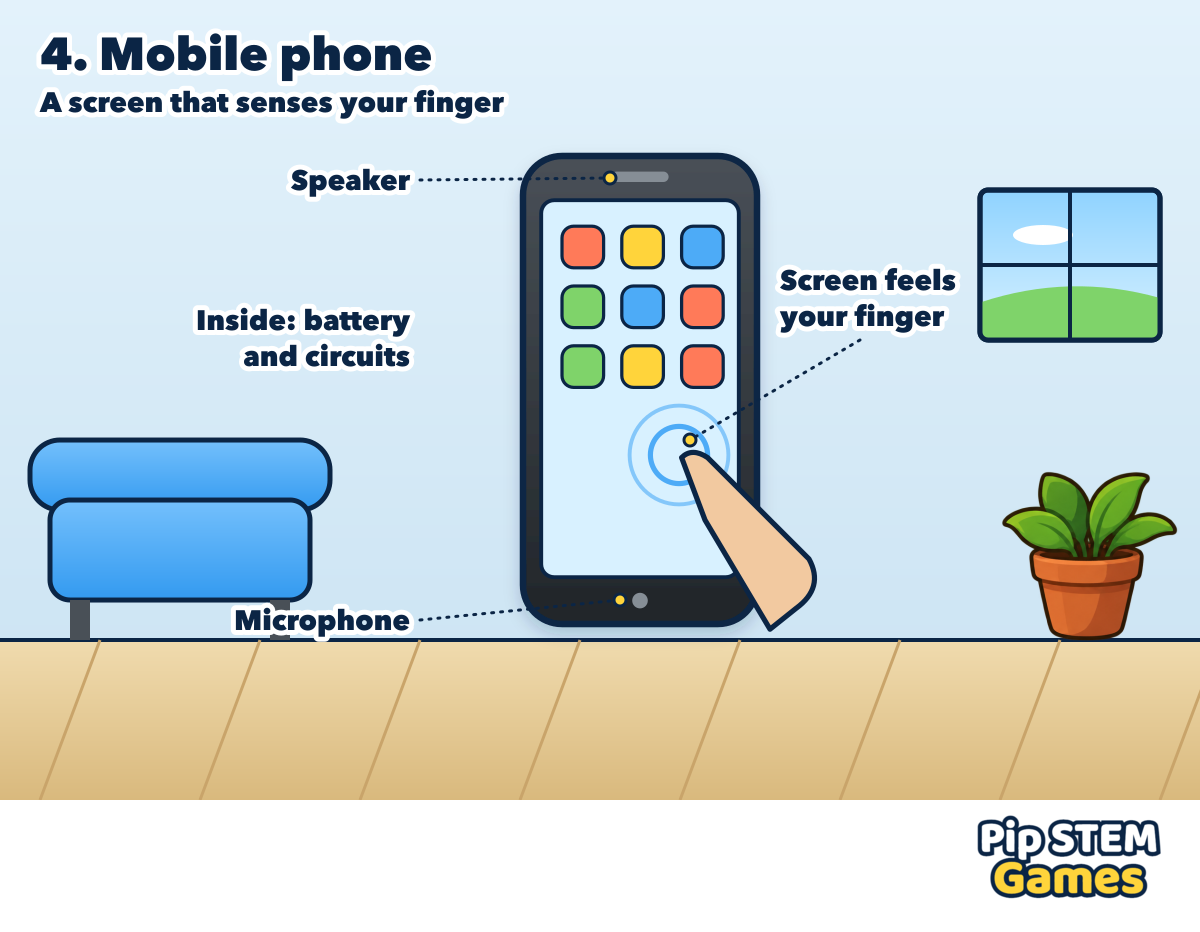
Ages 6 to 12, about 10 minutes. A phone is full of tiny circuits, a battery, a speaker and a microphone. Most touch screens are capacitive. Your finger carries a tiny electric charge, and the screen feels where you touch it.
You need:
- A phone or tablet, with an adult
- A woollen glove
- A pencil with a rubber on the end
Try it:
- Tap an app with your finger. It works.
- Now tap with the glove on. Does it work?
- Try the pencil rubber and then the wooden end.
- Talk about which things the screen could feel.
Learn how electricity flows in circuits for kids.
5. Scooter
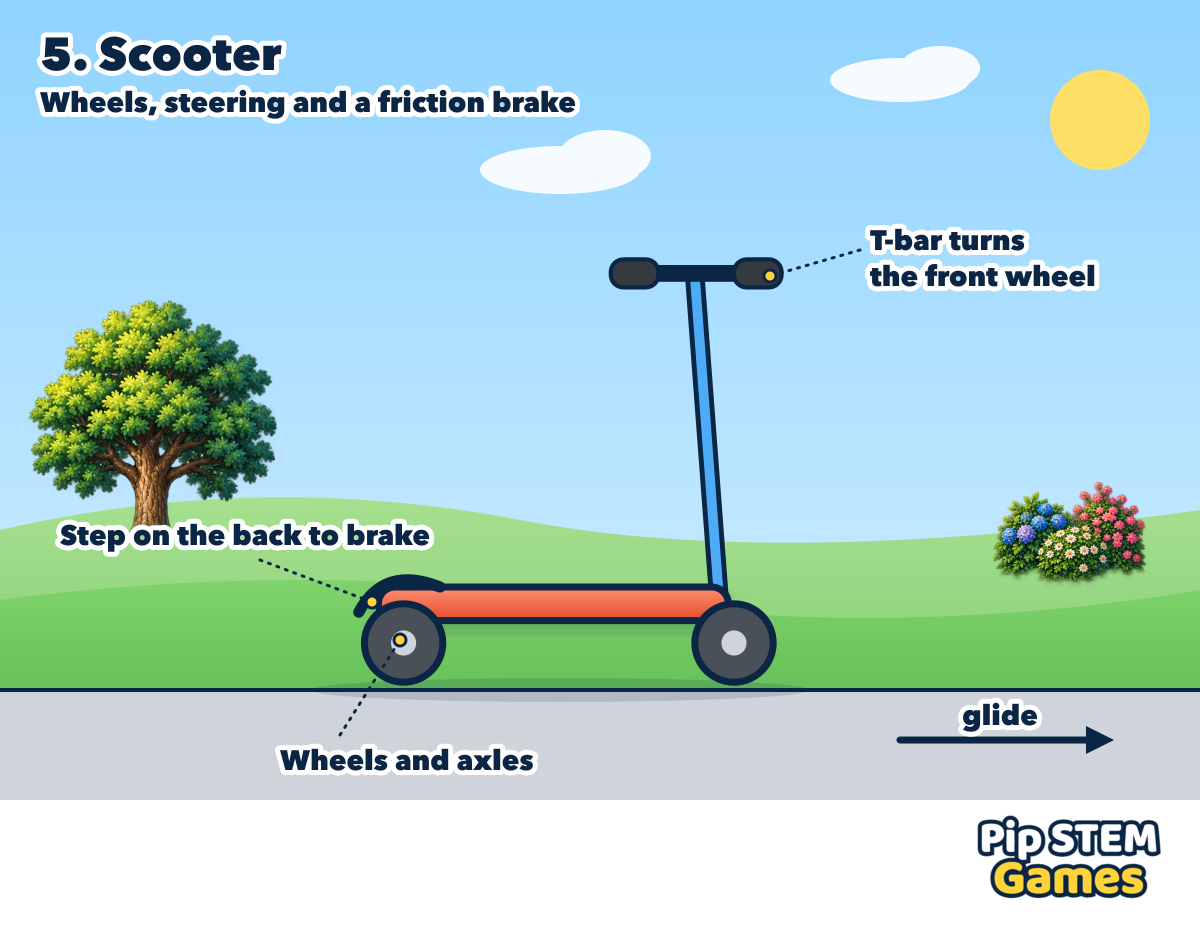
Ages 5 to 10, about 10 minutes. A scooter has wheels on axles, a T-bar that turns the front wheel, and a brake. Most kick scooters brake when you press your foot on the back mudguard. That rubs against the wheel and slows it down with friction.
You need:
- A scooter and helmet
- A smooth path and a patch of grass
- Chalk to mark a line
Try it:
- Mark a start line on the smooth path.
- Give one kick and glide. Mark where you stop.
- Do the same on the grass with the same kick.
- Where did you glide further? Smooth ground has less friction.
6. Playground swing
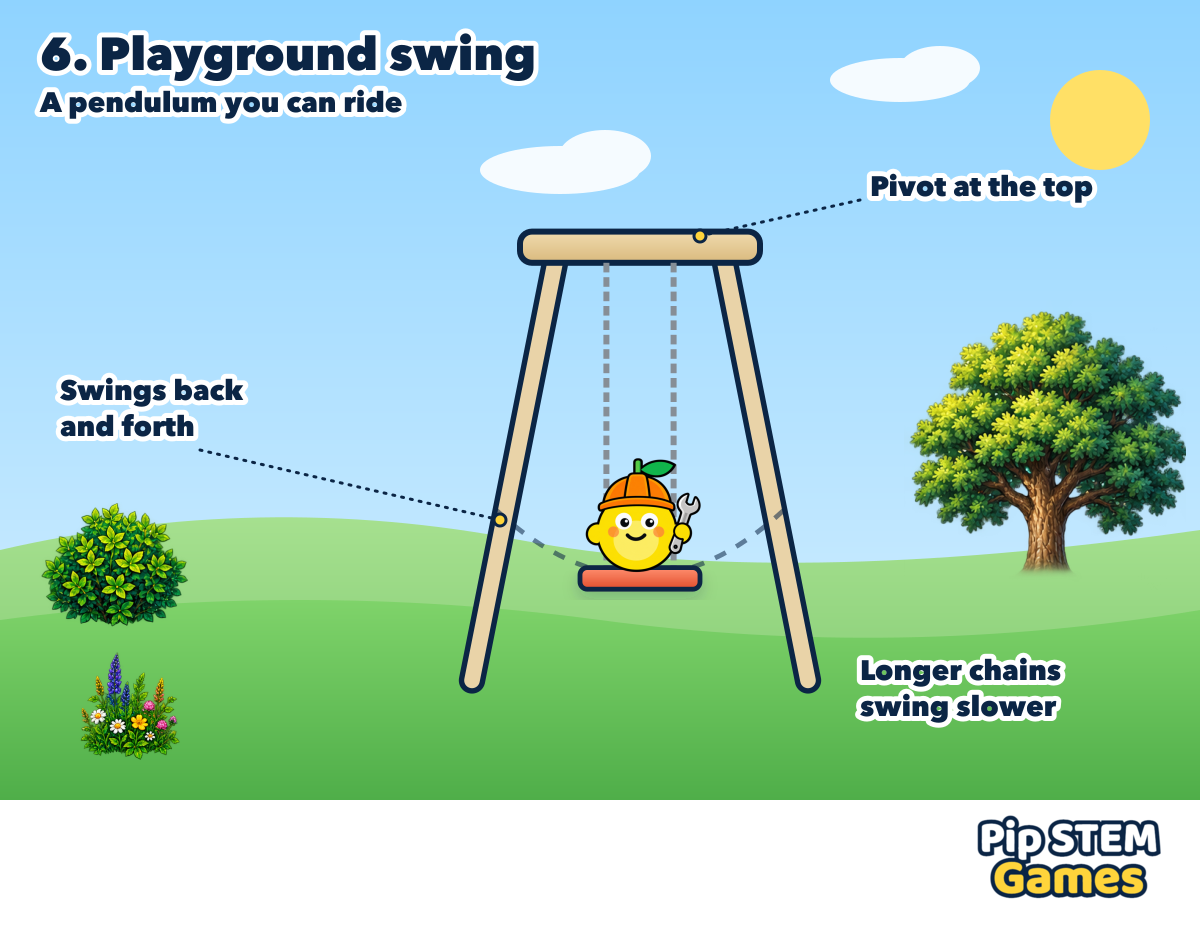
Ages 5 to 12, about 10 minutes. A swing is a pendulum. It hangs from a pivot and swings back and forth. The length of the chains sets the timing. Longer chains swing more slowly, no matter how heavy the rider is.
You need:
- A key or a metal washer
- A piece of string about 60 cm long
- A timer
Try it:
- Tie the key to the string and hold the top still.
- Pull the key to one side and let go. Count swings for 15 seconds.
- Make the string half as long and count again.
- Which one swung more often? That is why tall swings feel slow and smooth.
7. Zip
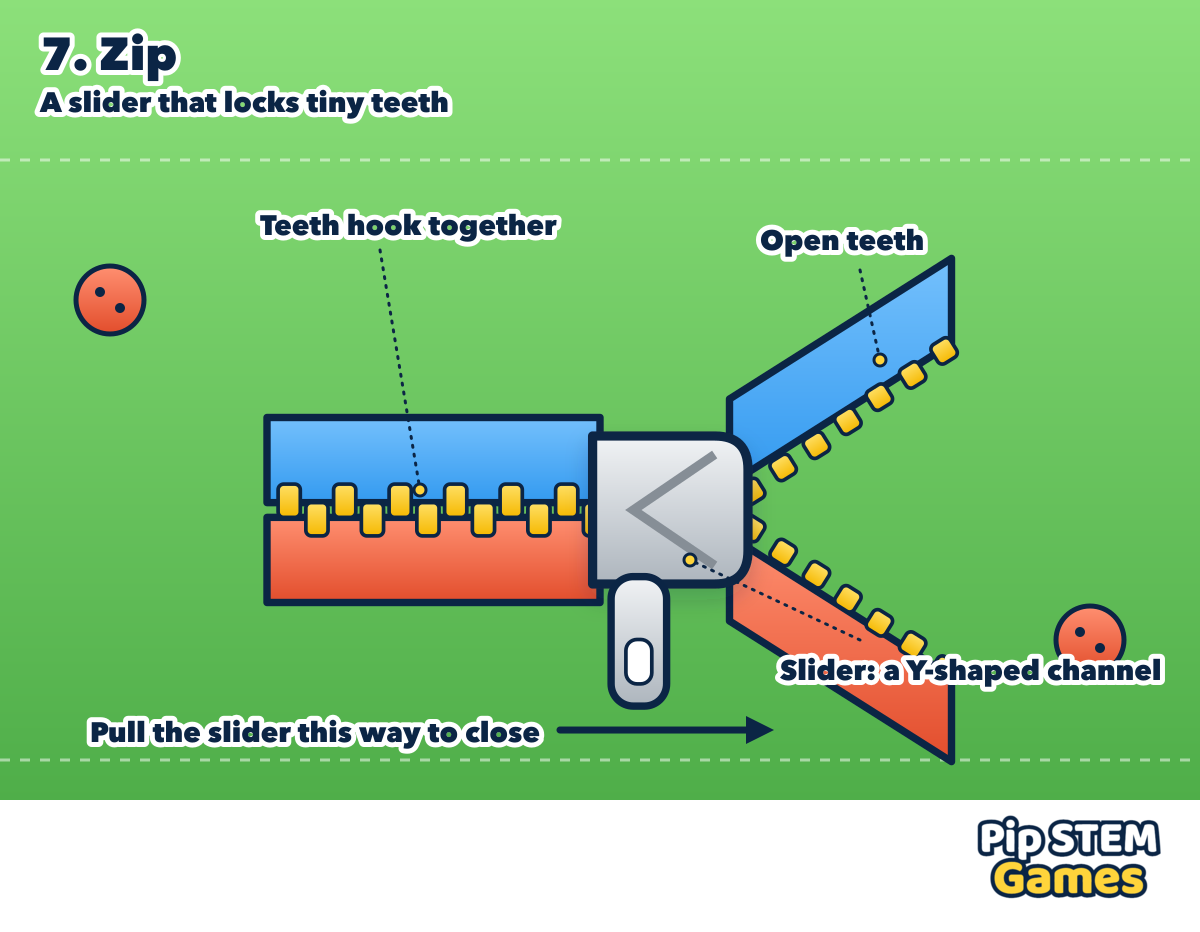
Ages 5 to 12, about 5 minutes. A zip has two rows of tiny teeth and a slider. Inside the slider is a Y-shaped channel. When you pull the slider up, it squeezes the teeth together so each one hooks into the gap on the other side. Pull it down and the channel splits them apart.
You need:
- A coat or bag with a zip
- A magnifying glass, if you have one
Try it:
- Look closely at the teeth. Each one has a bump and a hollow.
- Pull the slider halfway. Look at the teeth above and below it.
- Try to push two open teeth together with your fingers. It is very hard.
- Use the slider again. It does the job in one smooth pull.
8. Torch
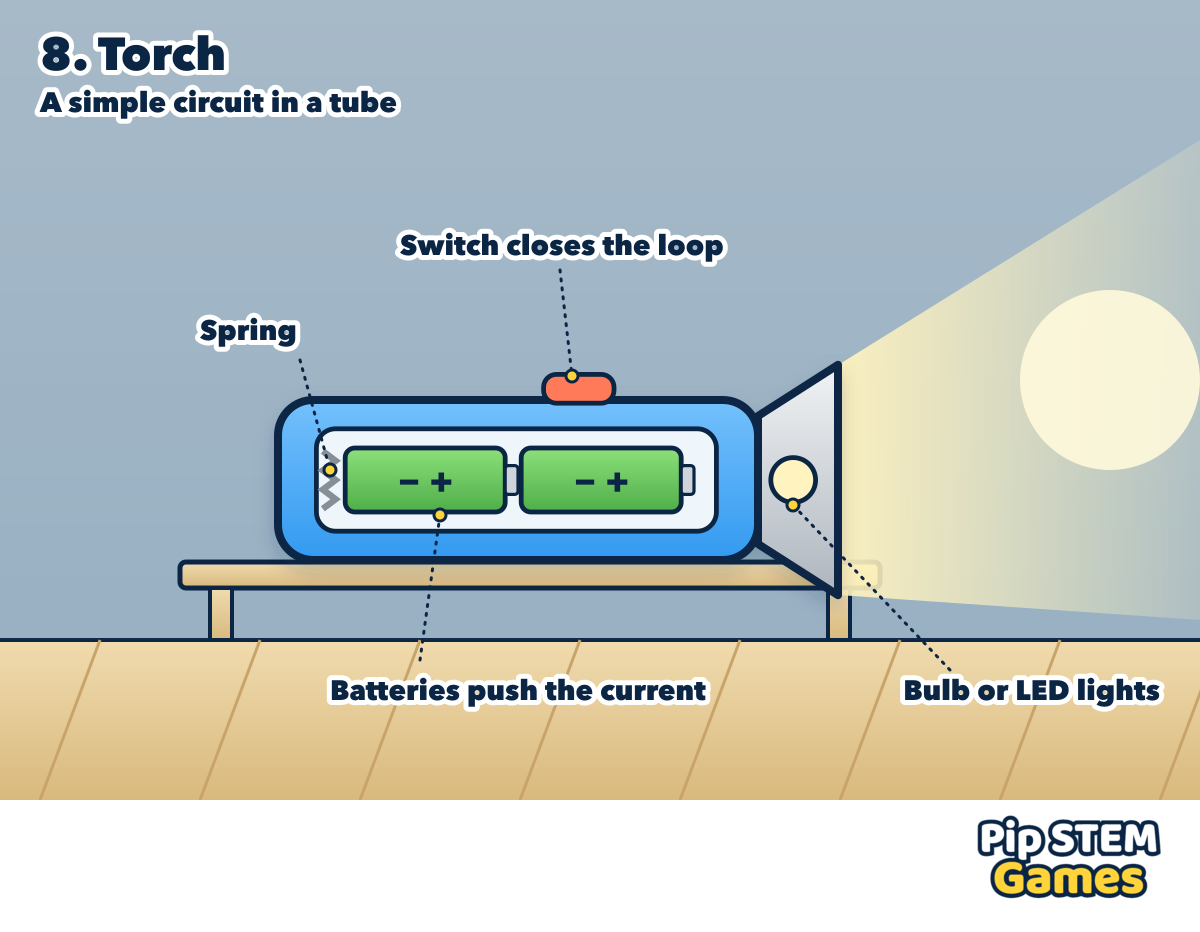
Ages 5 to 12, about 10 minutes. A torch is a simple circuit in a tube. The batteries push electric current through the switch and the bulb or LED, then back again. When the switch is off, there is a gap in the loop, so nothing lights up.
You need:
- A torch
- A dark room and a wall
- A tape measure
Try it:
- Stand 1 metre from the wall and shine the torch. Look at the size of the spot.
- Step back to 2 metres. Is the spot bigger or smaller? Brighter or dimmer?
- With an adult, open the torch and look at the batteries. Find the + and - marks.
- Put them back the right way and switch on.
Build your own loop in the Circuit game.
9. Electric toothbrush
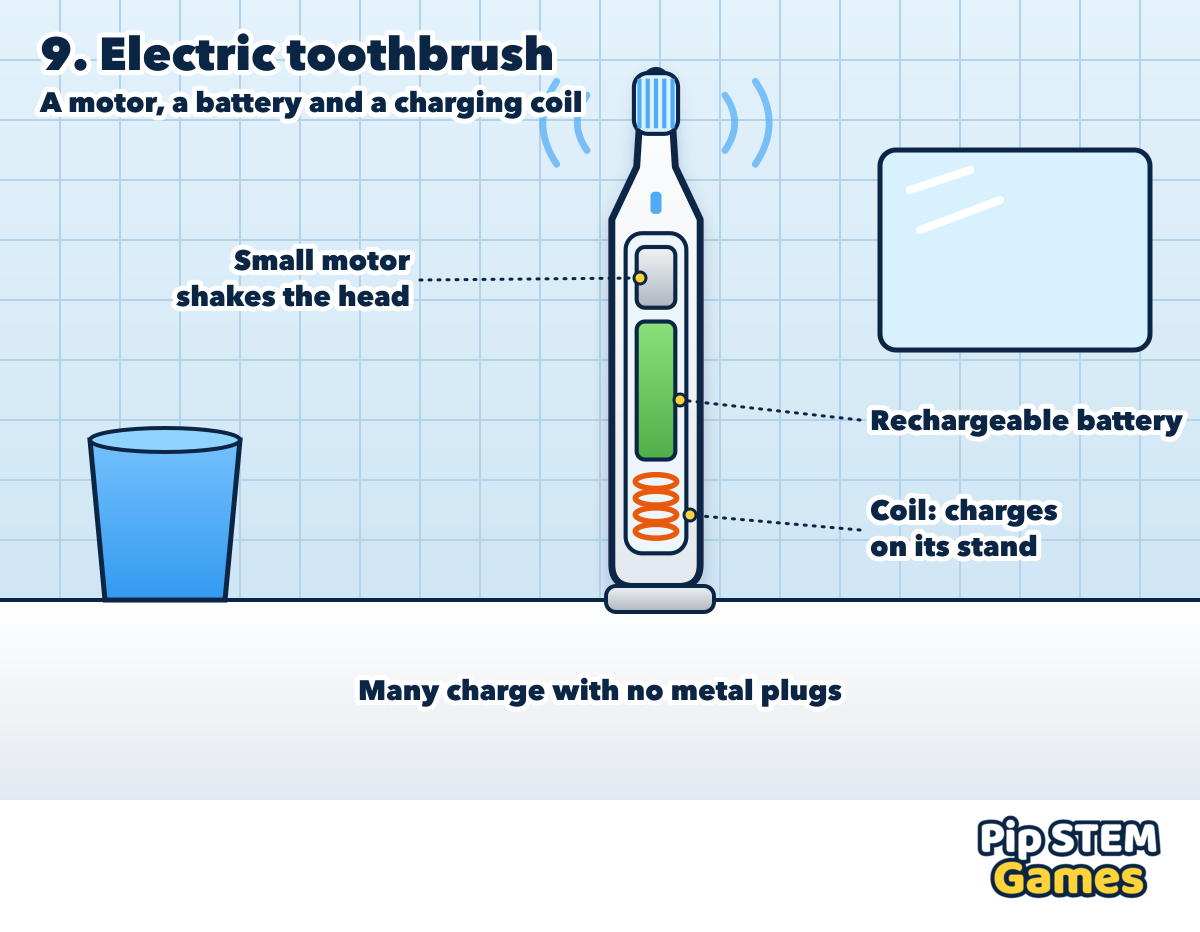
Ages 5 to 12, about 5 minutes. An electric toothbrush has a small motor that shakes or spins the head very fast. A rechargeable battery powers it. Many charge on a stand with no metal plugs, because a coil in the stand passes energy to a coil inside the handle.
You need:
- An electric toothbrush
- A cup of water
Try it:
- Hold the brush head just under the water. Switch it on.
- Watch the ripples. That is the motor shaking the head.
- Switch it off and lift it out.
- Look at the bottom of the handle and the stand. Can you find where it charges?
10. School bag
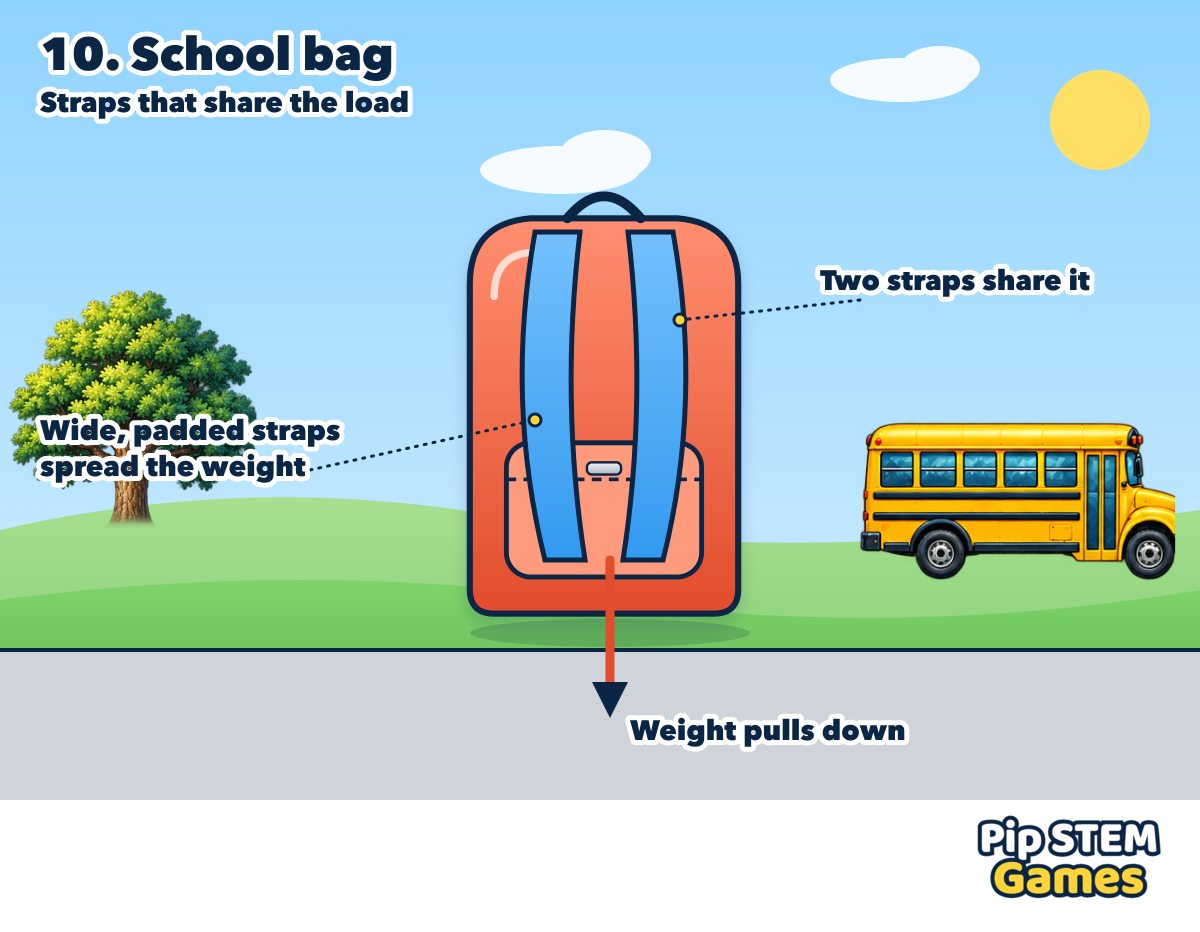
Ages 5 to 12, about 10 minutes. Engineers design bag straps to spread the load. A wide, padded strap presses on a bigger area of your shoulder, so the same weight feels lighter. Two straps share the weight across both shoulders.
You need:
- A thin plastic carrier bag
- A school bag with two straps
- 3 or 4 books
Try it:
- Put the books in the carrier bag and hold it by the handles for 30 seconds.
- How do your fingers feel?
- Put the same books in the school bag. Wear it on both shoulders for 30 seconds.
- Which felt easier? Wide straps spread the push over more of you.
11. Door hinge
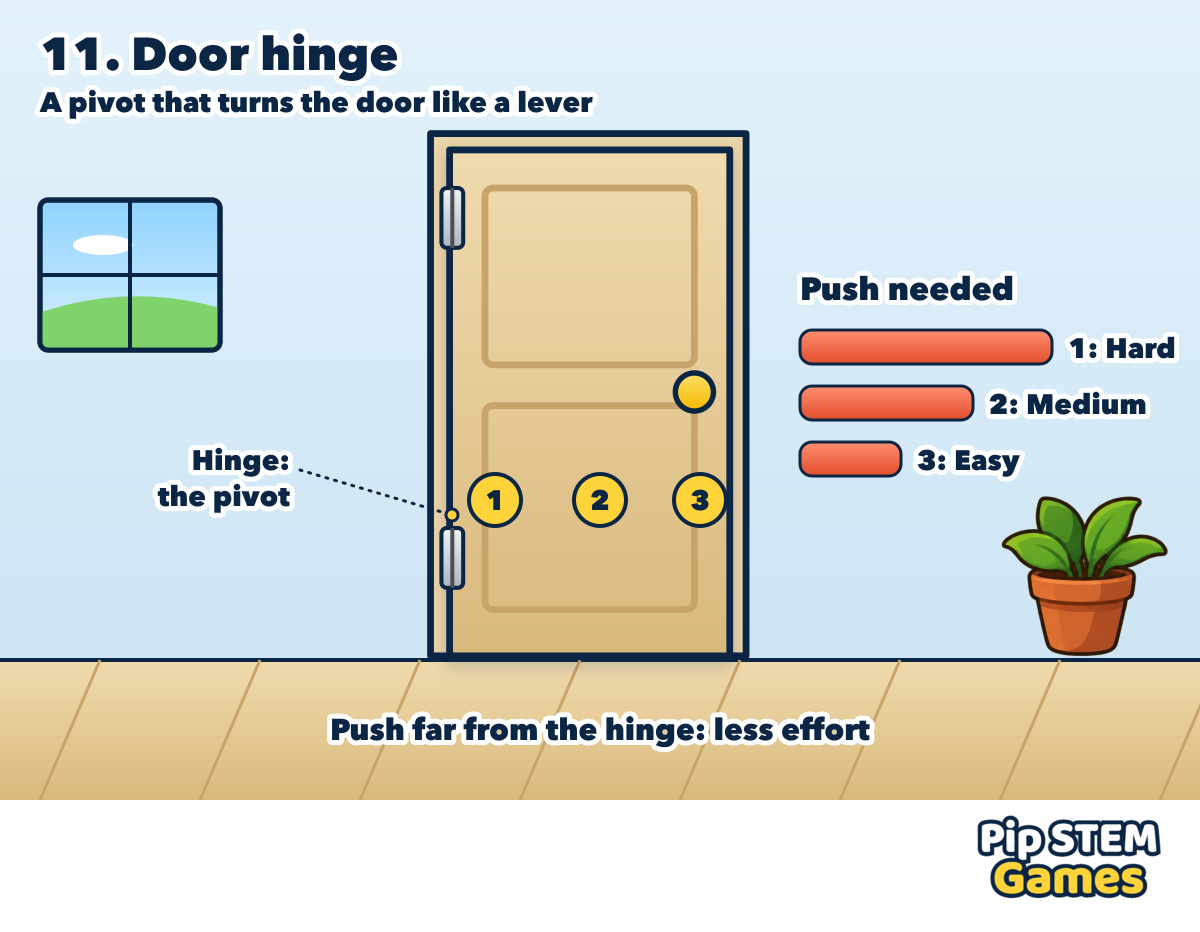
Ages 5 to 12, about 5 minutes. A hinge is a pivot. The door turns around it like a lever. If you push far from the hinge, you need less force. That is why the handle is on the far edge.
You need:
- A door that opens easily
- An adult nearby
Try it:
- Push the open door with one finger, right next to the hinge. Is it hard?
- Push in the middle of the door.
- Push at the handle edge.
- Which spot was easiest? Keep fingers away from the hinge gap.
See more levers in what is a lever, and try the Lever Lab game.
12. Footbridge
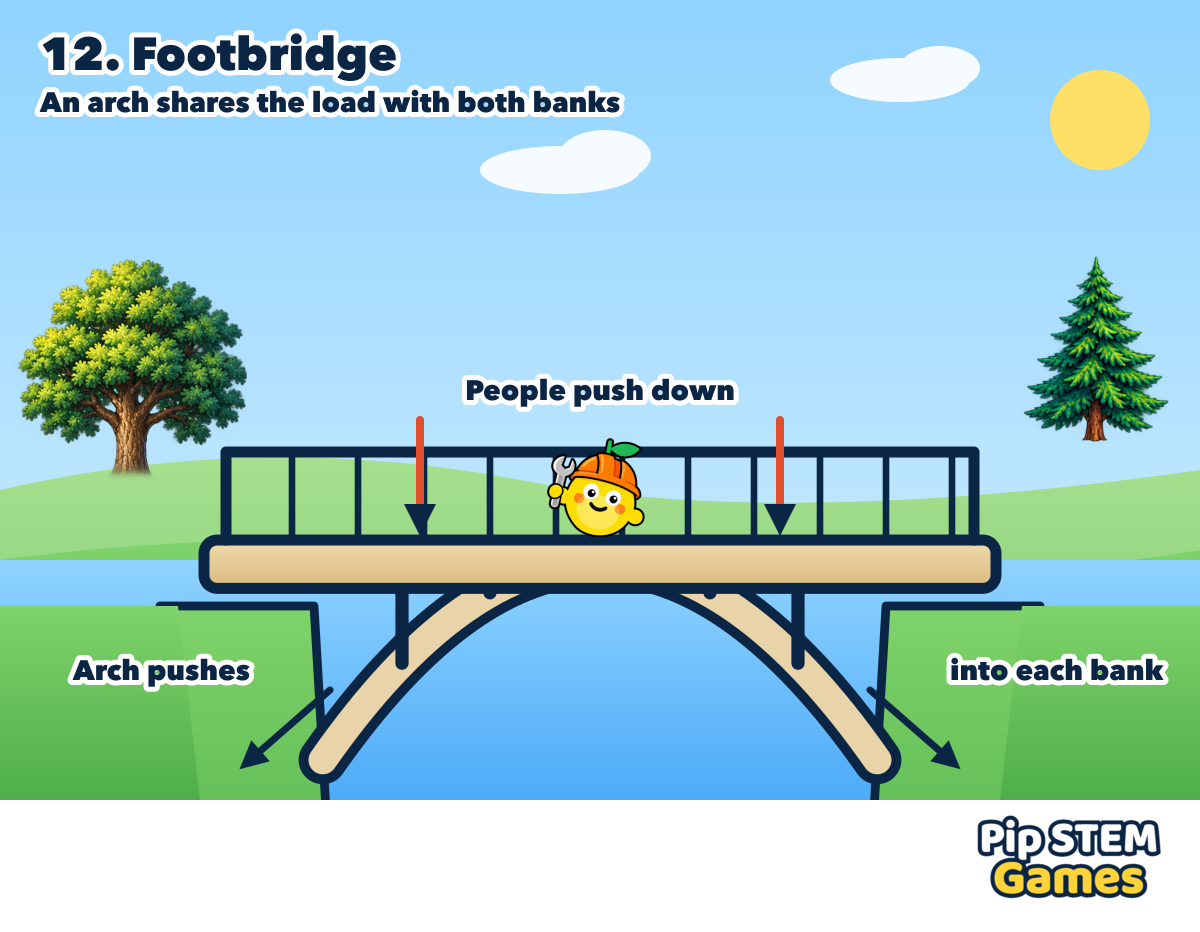
Ages 5 to 12, about 15 minutes. A footbridge has to hold people and its own weight. An arch is a strong shape. When people push down on it, the arch pushes the load sideways and down into the banks at each end.
You need:
- 2 sheets of A4 paper
- 2 stacks of books, 15 cm apart
- About 10 UK 10p coins
Try it:
- Lay a flat sheet across the gap. Add coins in the middle until it sags.
- Fold the second sheet into a zigzag, like a fan.
- Lay it across the gap and add coins the same way.
- Count. Folds and arches make paper much stiffer.
Go further with the paper bridge challenge or the Bridge game.
How do you run the home hunt safely?
Keep every test short and calm. An adult should be close by for the lift model, the torch and anything near roads or doors.
- Coins and keys are small. Keep them away from children under 3.
- Never open a phone, a charger or anything that plugs into the wall.
- Wear a helmet for the bike and scooter tests, and stay off roads.
- Keep fingers out of door hinges and away from moving swings.
- Only open a torch with an adult, and never mix old and new batteries.
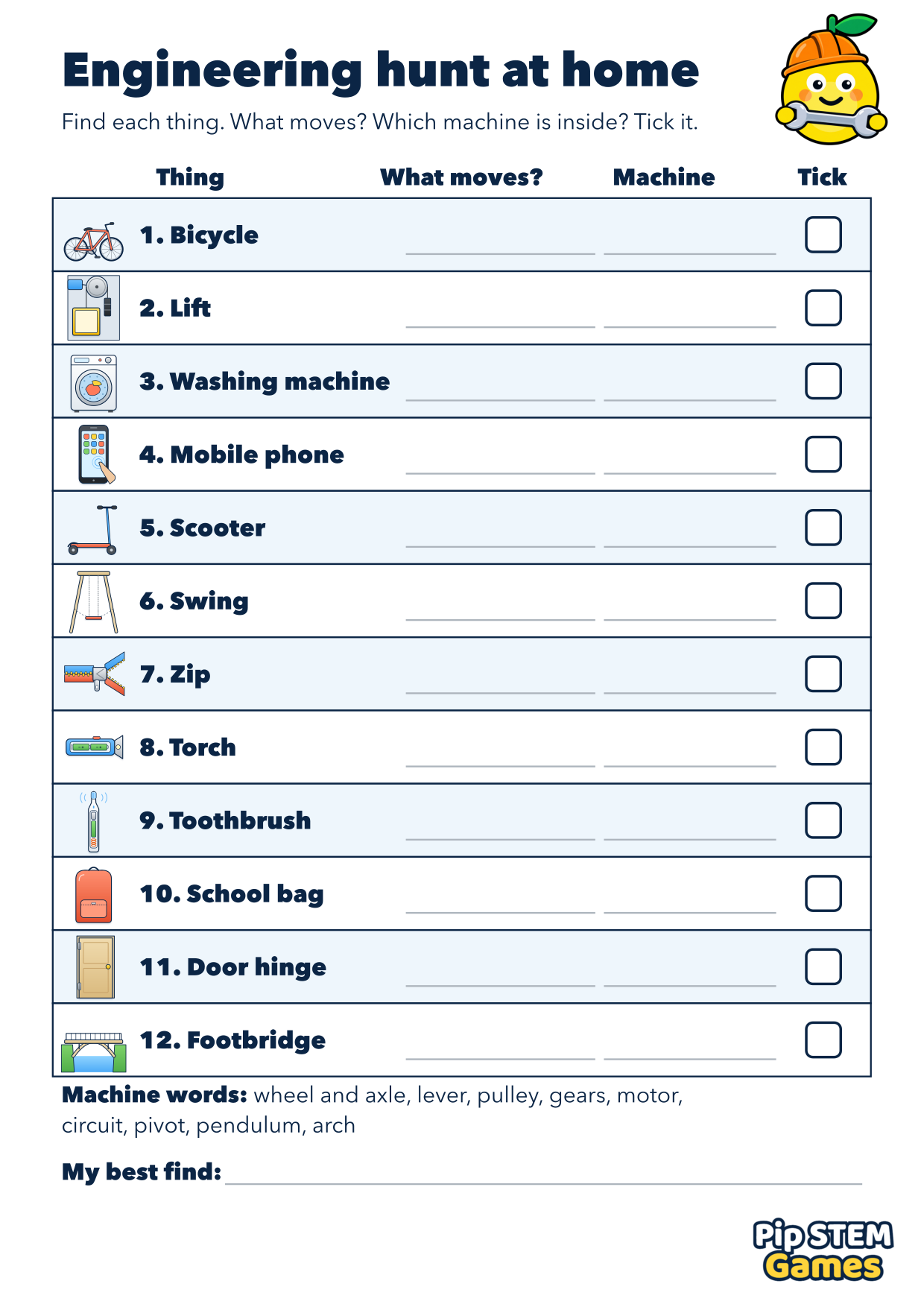
Younger children (5 to 7) can just find the thing and point to the part that moves. Older children (8 to 12) can name the machine and write one result on the sheet. For more hands-on work, see the engineering workbook for kids or simple machines for kids.
Questions parents ask
What are some things children use that engineers helped create?
Bikes, scooters, swings, lifts, zips, torches, phones, washing machines, electric toothbrushes, school bags, door hinges and footbridges. Each one has a simple machine or circuit inside.
What is the easiest one to test at home?
The door hinge. Push an open door with one finger near the hinge, then at the handle edge. The far edge needs much less push.
Why does a lift have a counterweight?
It balances the weight of the car and part of the load. The motor then only has to lift the difference, which saves energy.
Why does a touch screen not work with gloves?
Most touch screens feel the tiny electric charge in your finger. Wool stops that charge reaching the screen, so nothing happens.
What age is this hunt for?
Ages 5 to 12. Younger children find the thing and point to what moves. Older children name the machine and write down a result.
Is it safe to open a torch?
Yes, with an adult. Torches use small batteries. Never open anything that plugs into the wall, and never mix old and new batteries.
How many 10p coins does a paper bridge hold?
It depends on the paper and the gap. A flat sheet often sags under two or three. A zigzag sheet usually holds more, so count your own.
Great STEM activities to try next...
 Simple Machines for Kids: The 6 Types, With Examples and Activities [Printable]How it works
 How Do Lifts Work?Activity
 Engineering Careers Kids Might Not Know Exist [Printable]Careers
More to try: 5 Things to Say to a Child Who Is Building

Pip STEM Games
We make engineering games and workbooks for kids aged 5 to 12. Every activity here is one we'd happily run at the kitchen table: test it, watch it fail, fix it, try again.




