

Key takeaways
- Five short questions keep the thinking with your child.
- Ask for a description first, then ask what they notice.
- Let your child choose one change to test.
- Ask "why" so they link an idea to a reason.
- If you catch yourself instructing, turn it into a question.
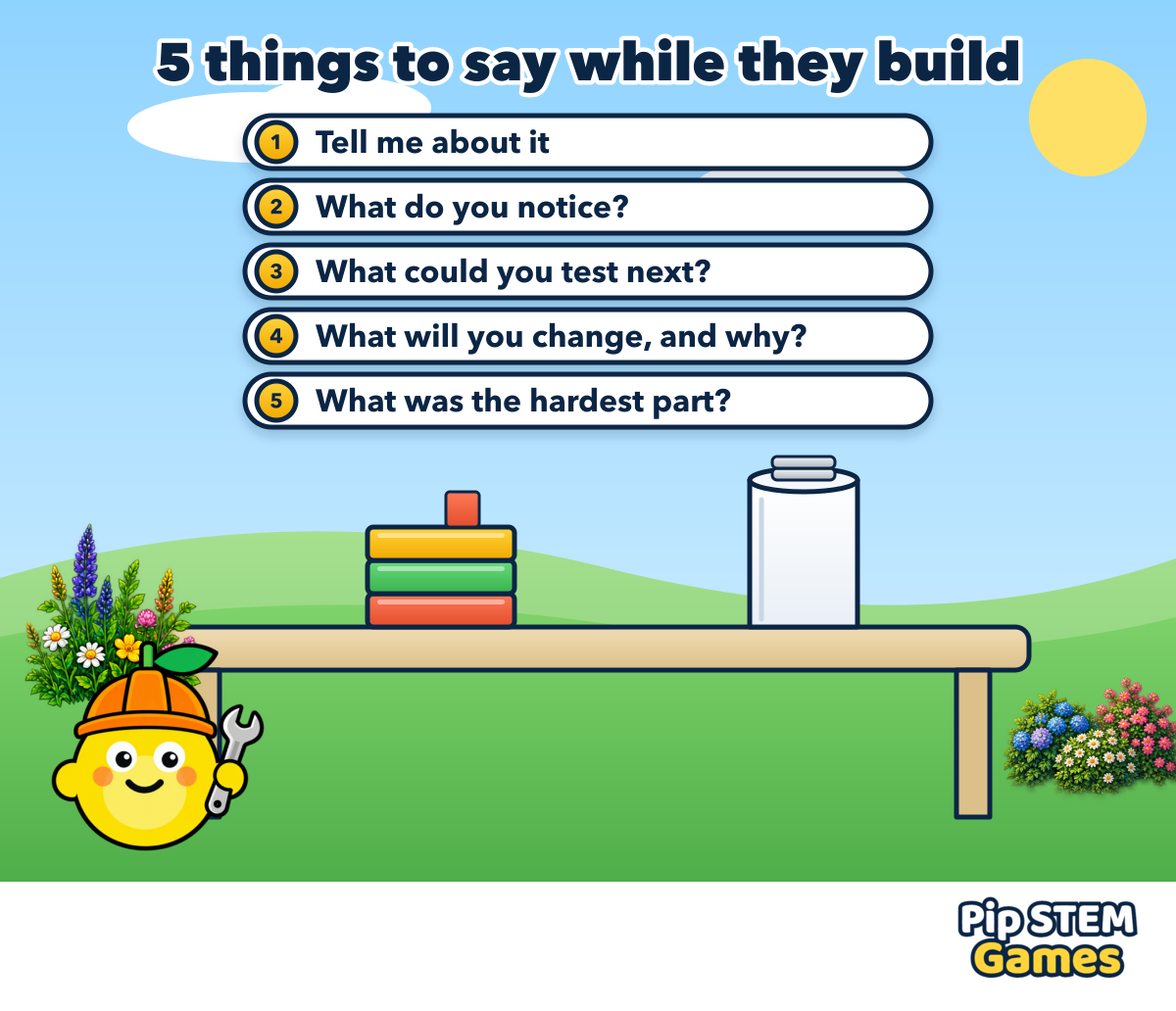
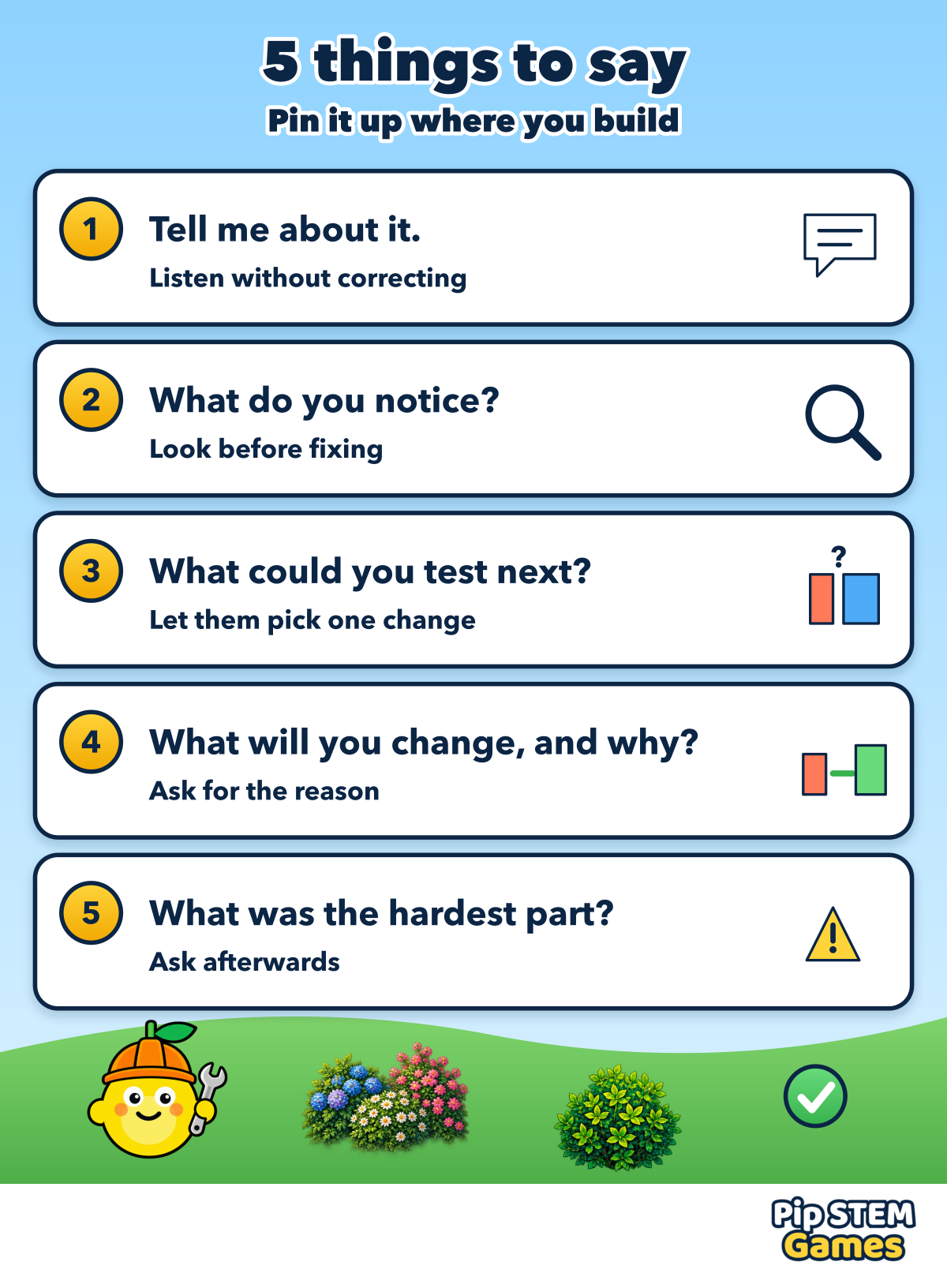
The best things to say to a child who is building something are questions, not praise: "Tell me about it", "What do you notice?", "What could you test next?", "What will you change, and why?" and "What was the hardest part?" None of them tells your child what to do.
1. "Tell me about it"
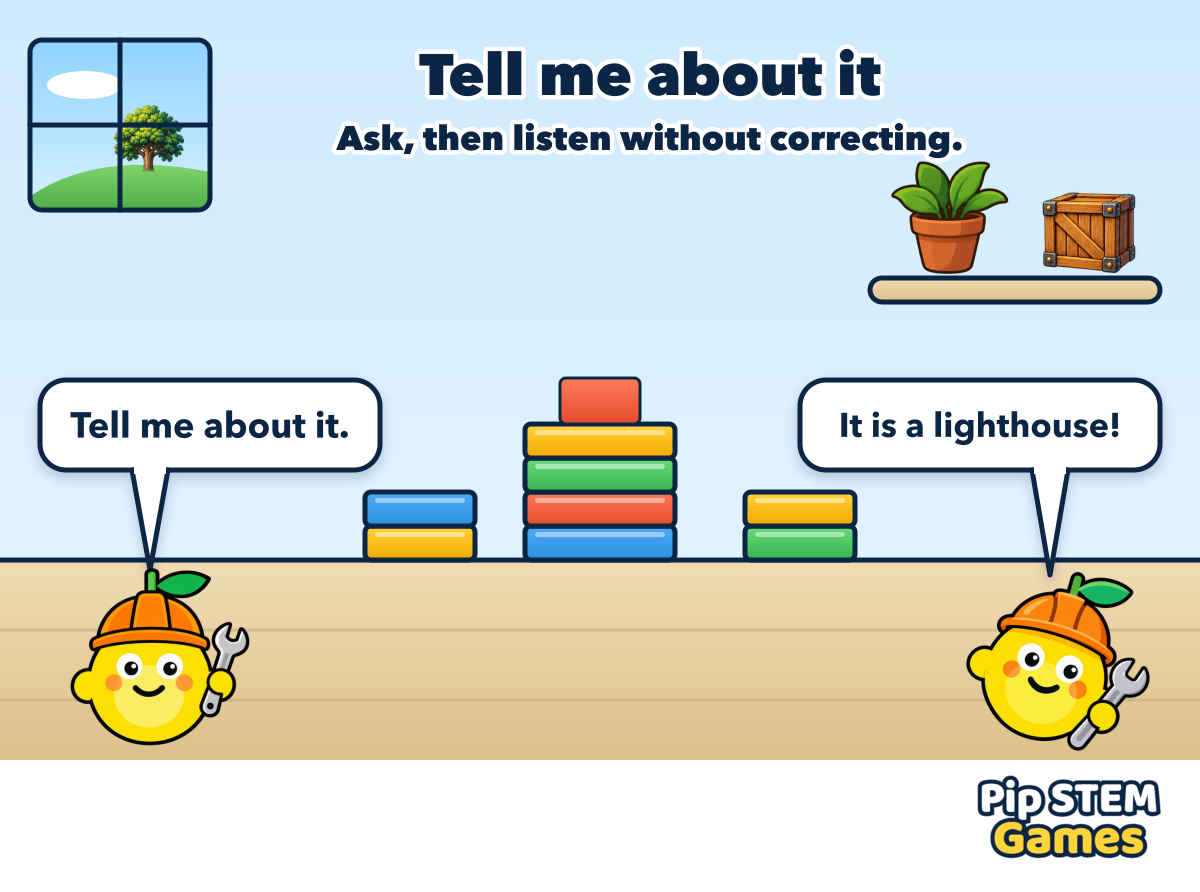
Say this first, when you do not know what they are making. It asks for a description, not a judgement, so your child chooses what to explain and you learn what they were aiming for.
- Pause and look at what they have made.
- Say, "Tell me about it."
- Listen without correcting or finishing their sentences.
- Repeat one thing they said, so they know you heard it.
2. "What do you notice?"
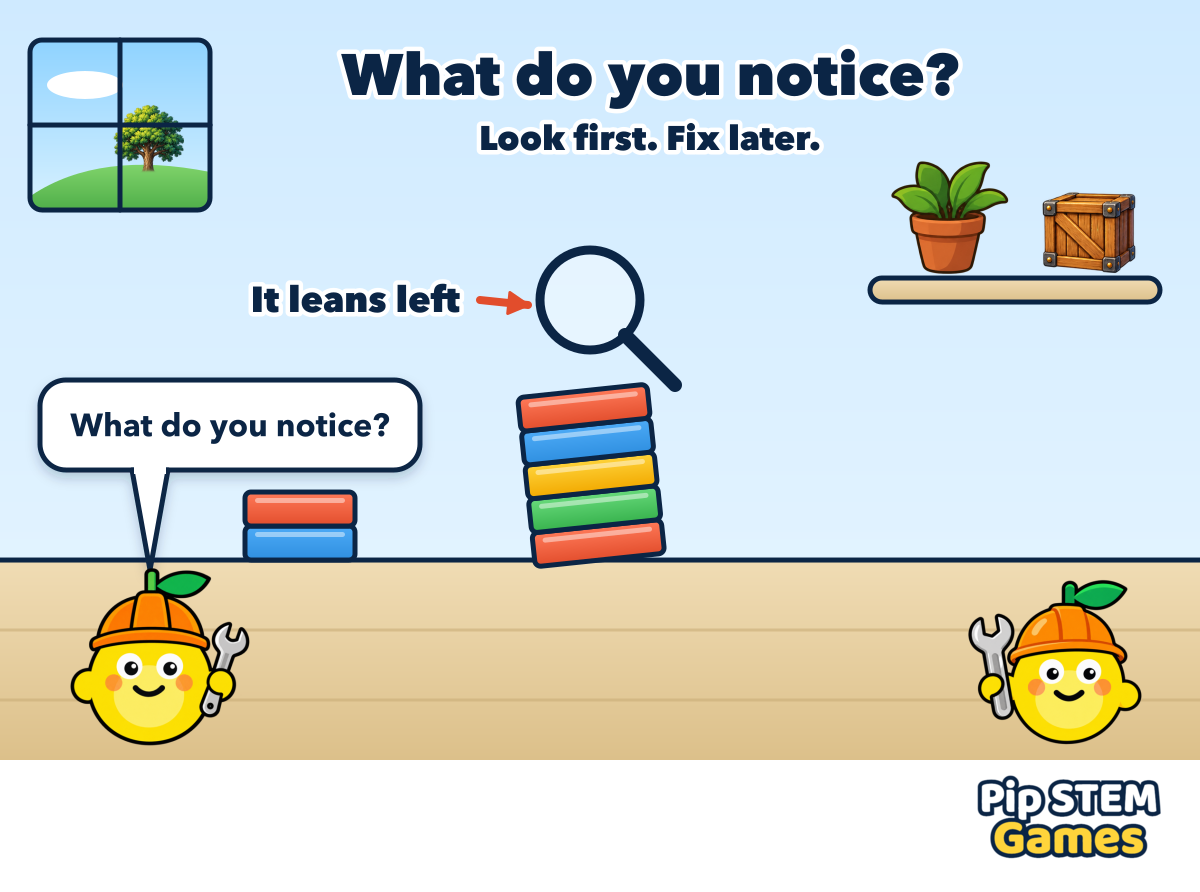
This invites observation. Your child might say the tower leans or one side is wobblier than the other. You are not asking them to fix it yet, only to look. Noticing comes before every good design choice.
- Wait until the build stands or falls.
- Say, "What do you notice?"
- Accept any answer, even a small one.
- Ask "What else?" once, then stop.
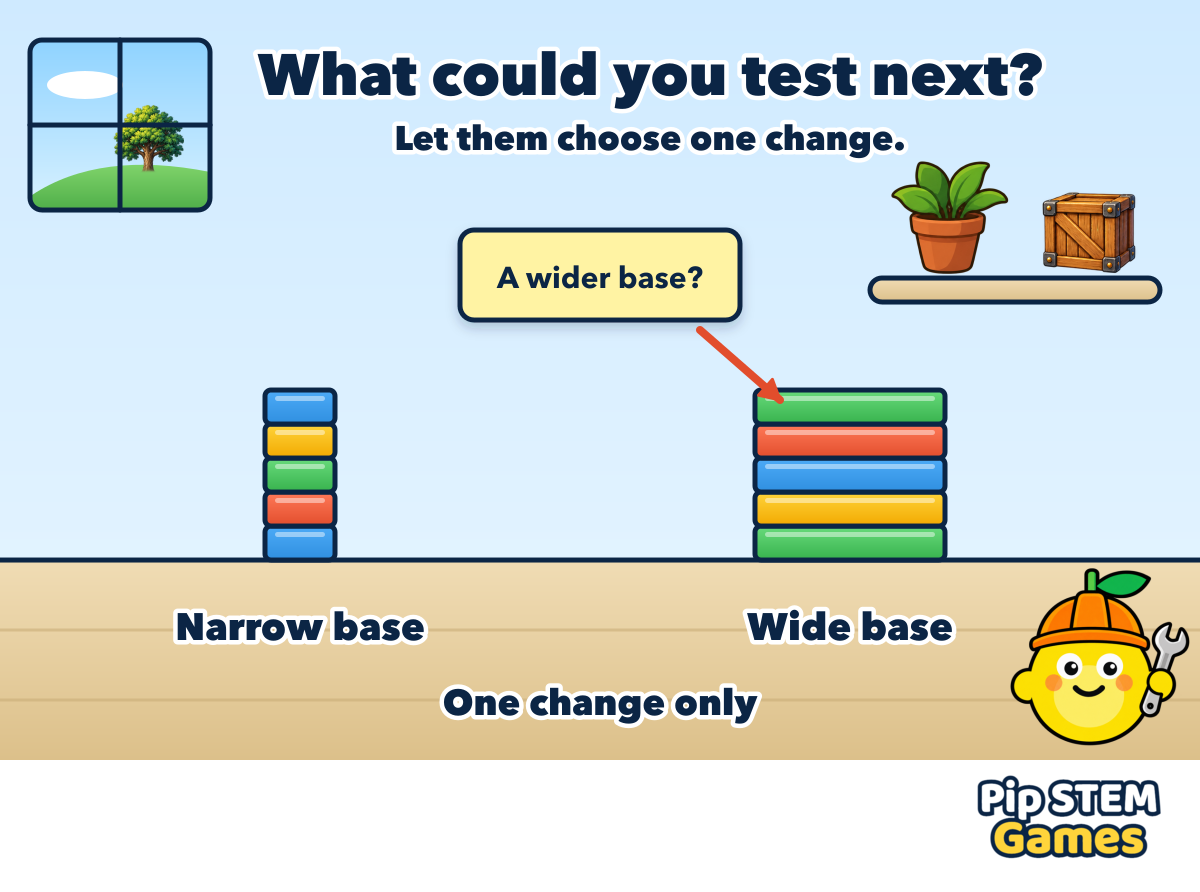
3. "What could you test next?"
This turns a problem into an experiment. A child might suggest a wider base or a lighter roof. Let them pick, then step back and watch the test happen.
- Ask, "What could you test next?"
- Let your child choose one change only.
- Keep everything else the same.
- Watch the test without helping.
4. "What will you change, and why?"
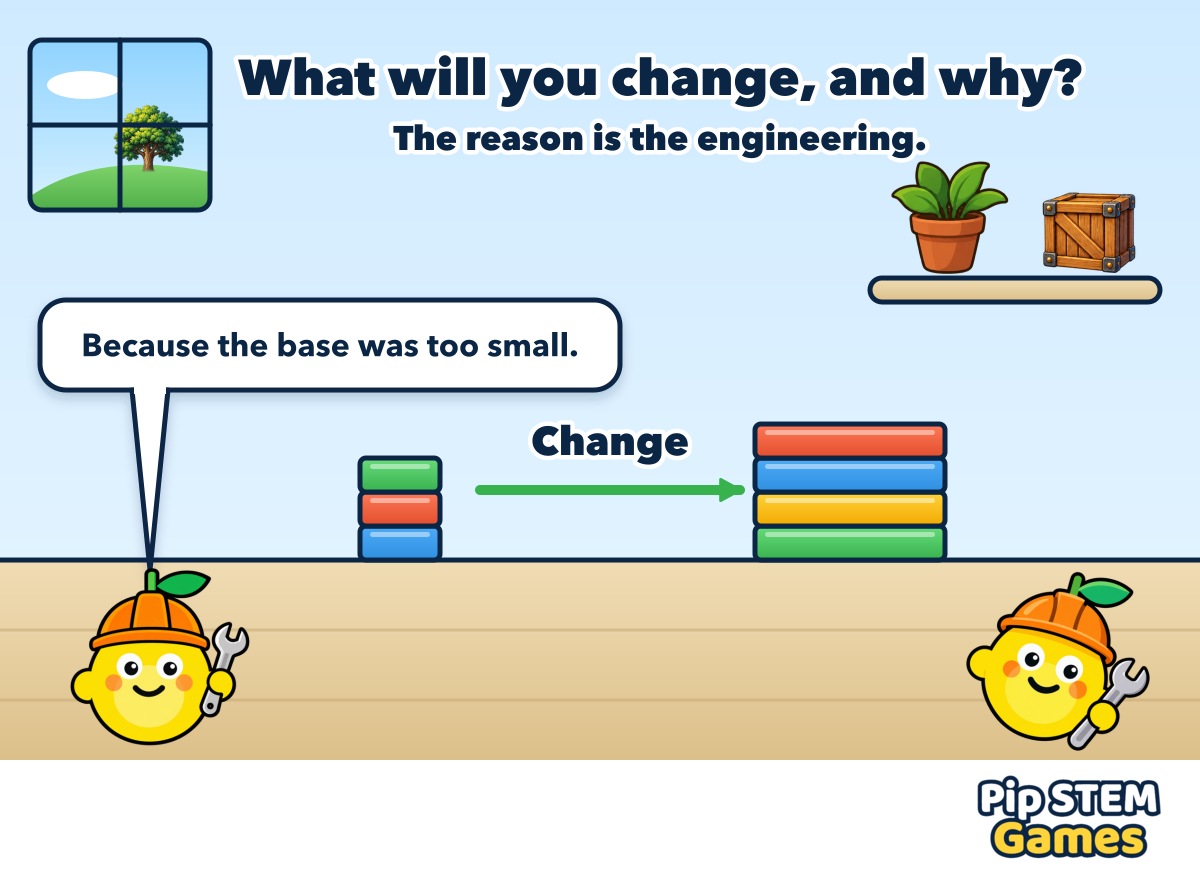
The "why" matters. It asks your child to link an idea to a reason. Even a simple reason, such as "because the base was too small", is real engineering thinking.
- Ask, "What will you change?"
- Follow with, "And why?"
- Accept a simple reason.
- Let them make the change themselves.
5. "What was the hardest part?"
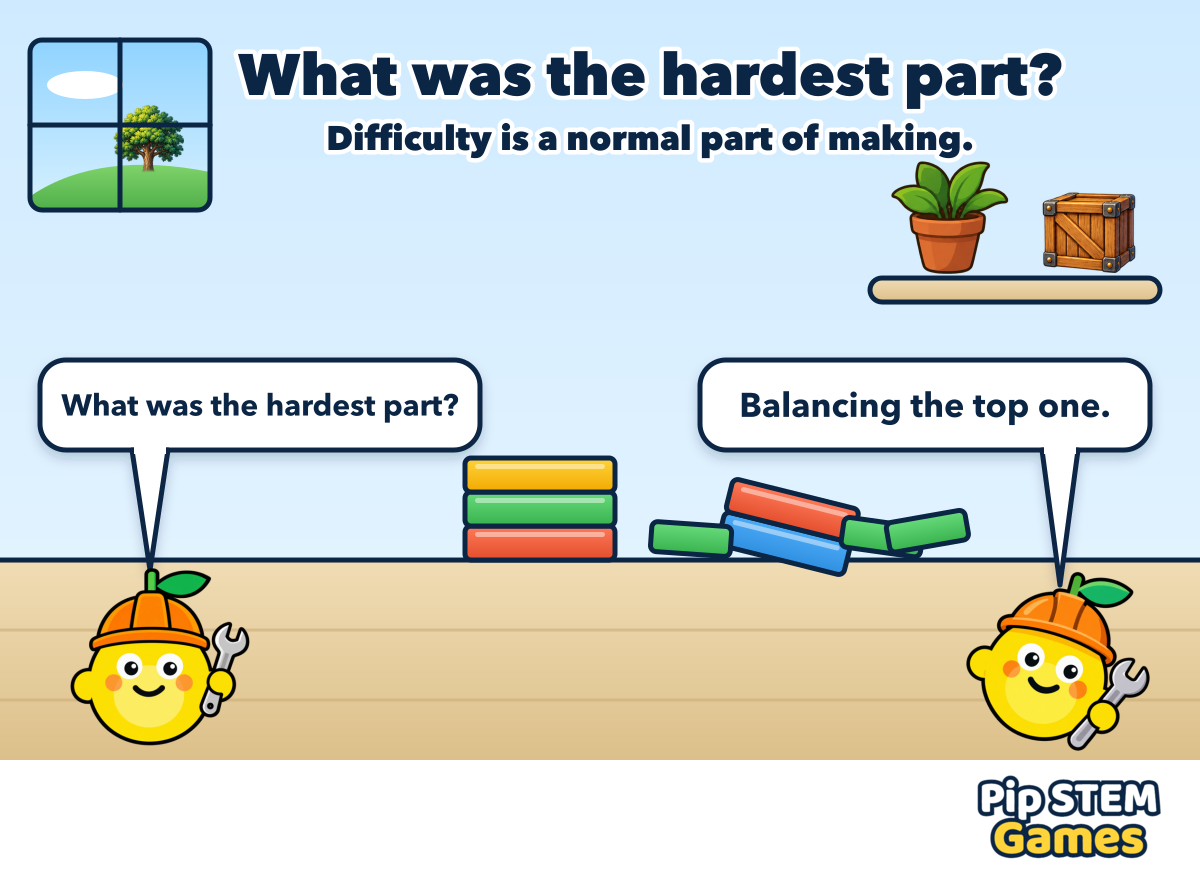
This helps children see that difficulty is a normal part of making. It also tells you what to offer next time.
- Ask it when the build is finished or put away.
- Listen to the whole answer.
- Say what you found hard too, if you did.
- Use the answer to choose the next challenge.
Why does what we say during a build matter?
The words a parent uses during a build shape what the child does next. Praise like "That's amazing" feels nice, but it can end the conversation. A question that invites observation keeps your child thinking, and it keeps the decisions with them, which is where the learning happens. For a longer list of prompts, see 7 questions to ask instead of giving your child the answer.
What materials do I need?
You only need something to build with.
- Cardboard boxes, tubes and paper cups
- Masking tape and a blunt, child-safe pair of scissors
- Building blocks or construction bricks
- Paper, drinking straws and paper clips
- A few UK 10p coins or small books as test weights
Small parts such as clips and coins need adult supervision for younger children, and coins are a choking risk for children under 5. An adult should do any cutting of card. Build on the floor or a low table, so nothing falls far.
How do I practise these prompts with a quick fair test?
Try this ten minute activity. Ask your child to build a paper tower on a table from one sheet of paper and a short strip of tape.
- Ask "Tell me about it" and listen.
- Ask "What do you notice?" once it stands, or falls.
- Ask "What could you test next?" and let them choose one change.
- Place a UK 10p coin on top, then another, one at a time.
- Ask "What will you change, and why?"
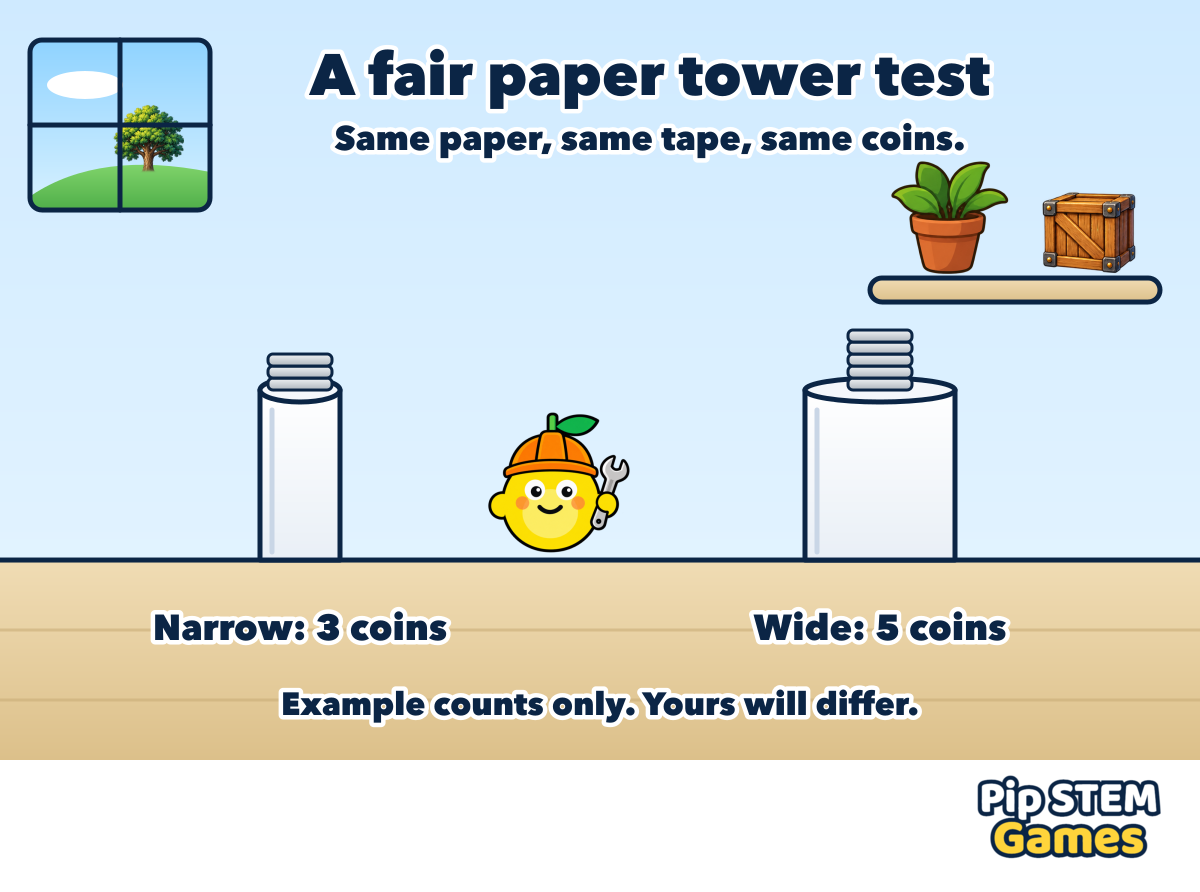
For a fair test, change only one thing, such as the width of the base, and keep the paper, tape and coins the same. Write down how many coins each tower held. Do not expect a particular result. Your child's own numbers are the answer. You can also try a tower game on Pip afterwards, or read about the paper tower challenge.
What if my child gets frustrated or ignores the questions?
If your child gets frustrated, pause the questions and say what you see: "That fell down. That is annoying." Then offer a break. If they ignore a question, do not repeat it. Ask one question per build, not five. Children often answer later, while they keep working.
If you catch yourself giving instructions, turn the instruction into a question. Instead of "Put a bigger base on it", try "What do you think would help it stand?"
What should you try next?
Once your child is used to these prompts, ask them to predict first: "What do you think will happen when we add a coin?" Then test, and compare the guess with the result. Later, swap roles and let your child ask you the five questions about something you are making. A fall can help too, as this post on why getting it wrong is part of engineering explains.
How do I adapt this for different ages?
Ages 5 to 6: use one prompt per session, usually "Tell me about it". Keep builds short and use large, safe blocks. Ages 7 to 9: use all five prompts, and introduce changing one thing at a time and counting coins or blocks. Ages 10 to 12: ask for a written or drawn plan, a prediction, and a short note on what they changed and why. Let them run the fair test themselves.
The goal is not a perfect model. It is a child who looks closely, tests ideas and makes their own decisions.
Questions parents ask
What should I say to a child who is building something?
Ask open questions such as "Tell me about it" and "What do you notice?". They invite your child to look closely and make choices without being told what to do.
Why is "That is amazing" not the best thing to say?
It feels kind, but it can end the conversation. A question keeps your child thinking and keeps the decisions with them.
How many questions should I ask in one build?
One or two is plenty. Asking five at once can feel like a test. Children often answer later, while they keep working.
What if my child gets frustrated?
Pause the questions and say what you see, such as "That fell down. That is annoying." Offer a break, then try again later.
What age are these prompts for?
Ages 5 to 12. Younger children can use one prompt per session, and older children can add a plan, a prediction and a short note on what they changed.
Is the paper tower test safe?
Yes, with sensible care. Coins are a choking risk for children under 5, so supervise, keep cutting to an adult and build on the floor or a low table.
Great STEM activities to try next...
 7 Questions to Ask Instead of Giving Your Child the AnswerActivity
 Paper Tower Challenge: How Tall Can Your Child Build With Paper and Tape? [Printable]Build challenge
 Why Getting It Wrong Is Part of EngineeringActivity
More to try:

Pip STEM Games
We make engineering games and workbooks for kids aged 5 to 12. Every activity here is one we'd happily run at the kitchen table: test it, watch it fail, fix it, try again.




