

Key takeaways
- A good question points at the evidence, so your child finds the fix themselves.
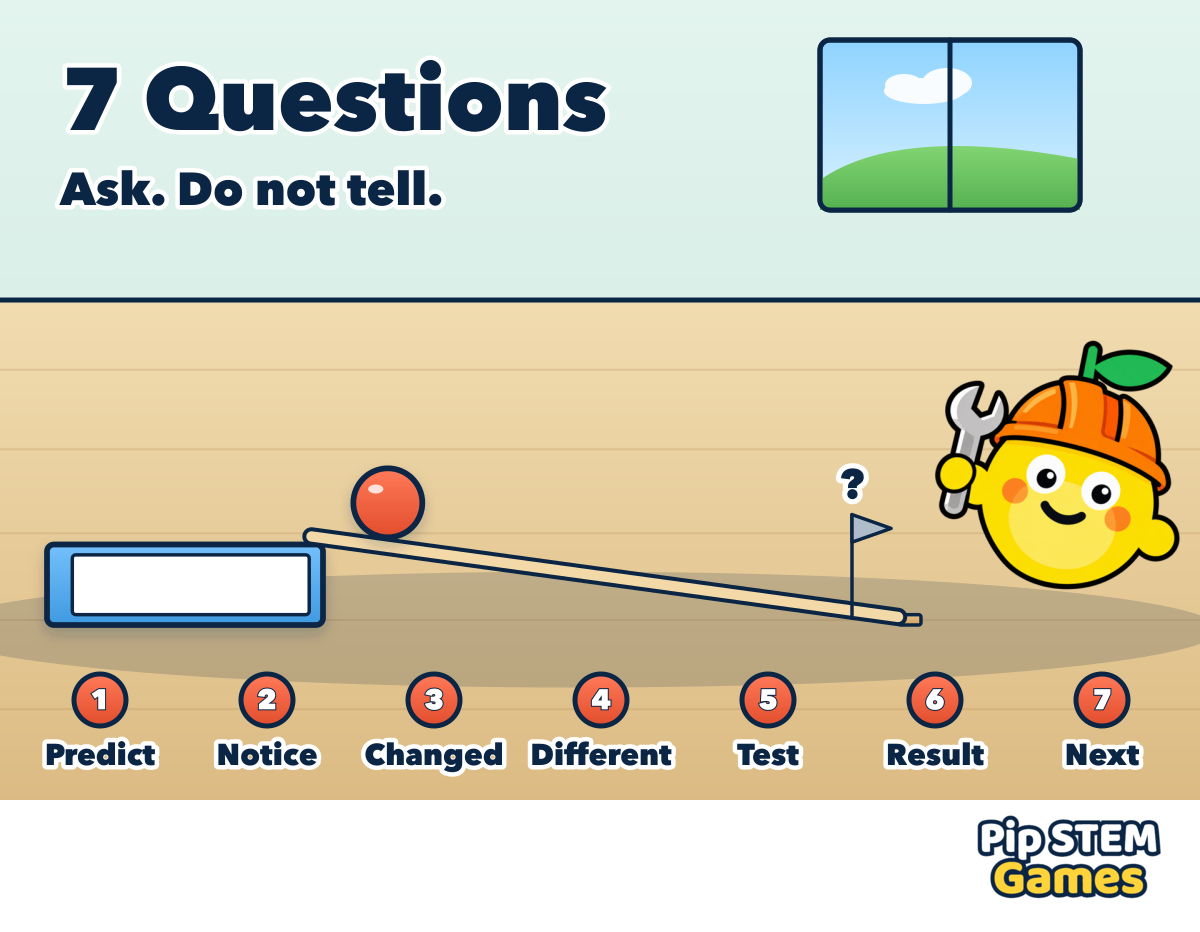
- Ask the seven questions in order: predict, notice, what changed, what is different, how to test, what it showed, what next.
- Accept short and simple answers. Do not rescue the build while they are still thinking.
- Change one thing per test so the result means something.
- A card ramp, a few books and a small ball are enough to practise all seven questions.
These seven questions to ask your child help when they are stuck, because each one points at the evidence instead of the fix. They work for building, tinkering and science at home, and a paper ramp is enough to practise them.
1. What do you think will happen?
Ask for a guess before anything is tried. A guess makes your child look closely, and it gives them something to compare with the result. Write it down so it cannot quietly change.
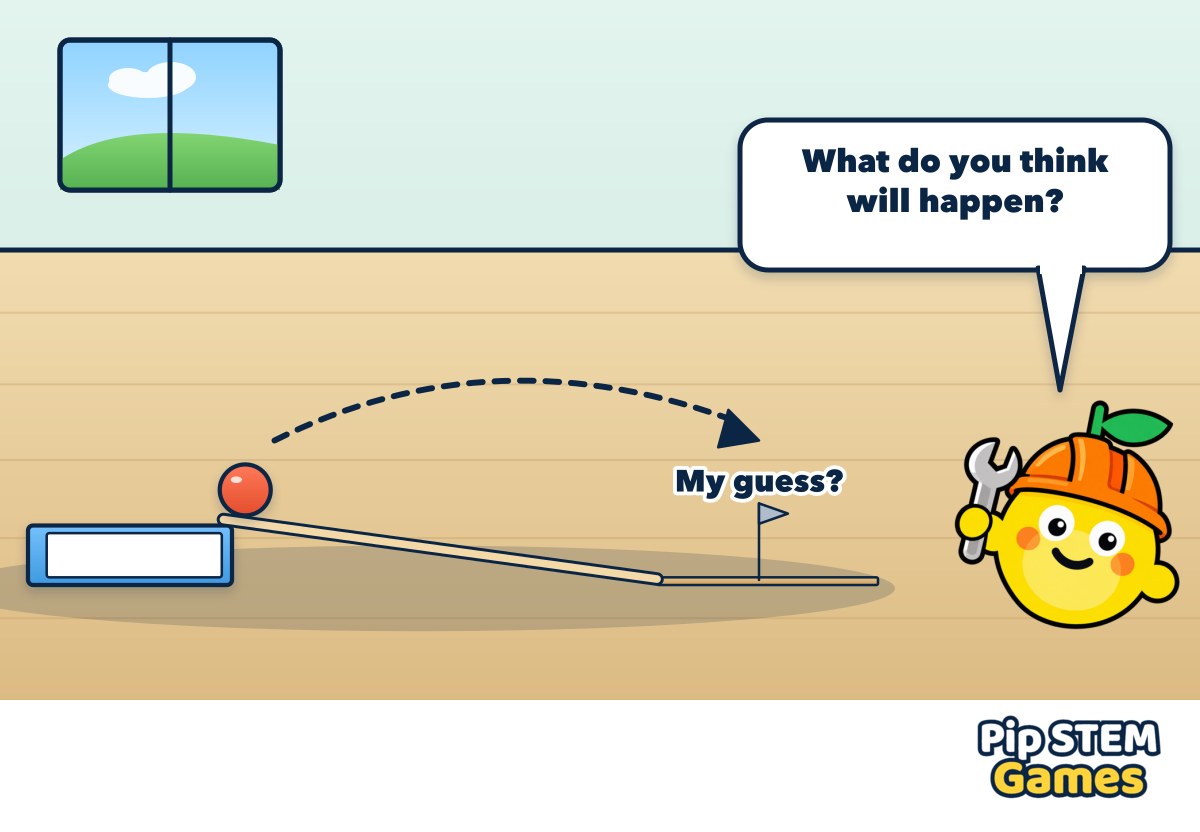
- Set a card ramp on one book and put a ball at the top.
- Ask, "What do you think will happen?" and wait.
- Put a flag, a cup or a pencil where they think the ball will stop.
2. What did you notice?
After the try, ask what they saw. Do not ask whether it worked. "What did you notice?" has no wrong answer, so children tend to say more. Museum of Science, Boston guidance for families suggests asking this kind of open question and resisting the urge to step in and fix things.
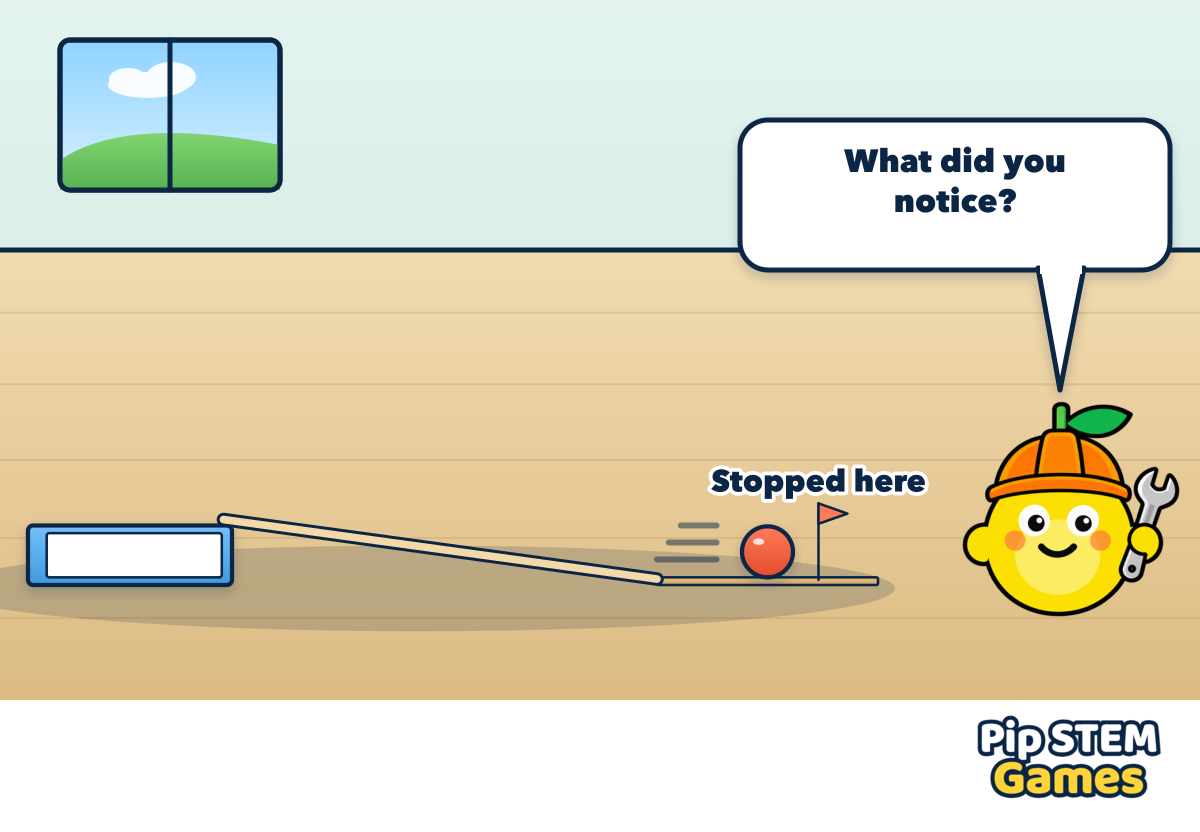
- Let the ball roll and mark where it stops.
- Ask, "What did you notice?"
- Take any answer, such as "It went fast" or "It hit the wall", and say it back.
3. What changed?
When something works better or worse, ask what changed since last time. Children often change two or three things at once without noticing. This question helps them list what they did, so they can see which change mattered.
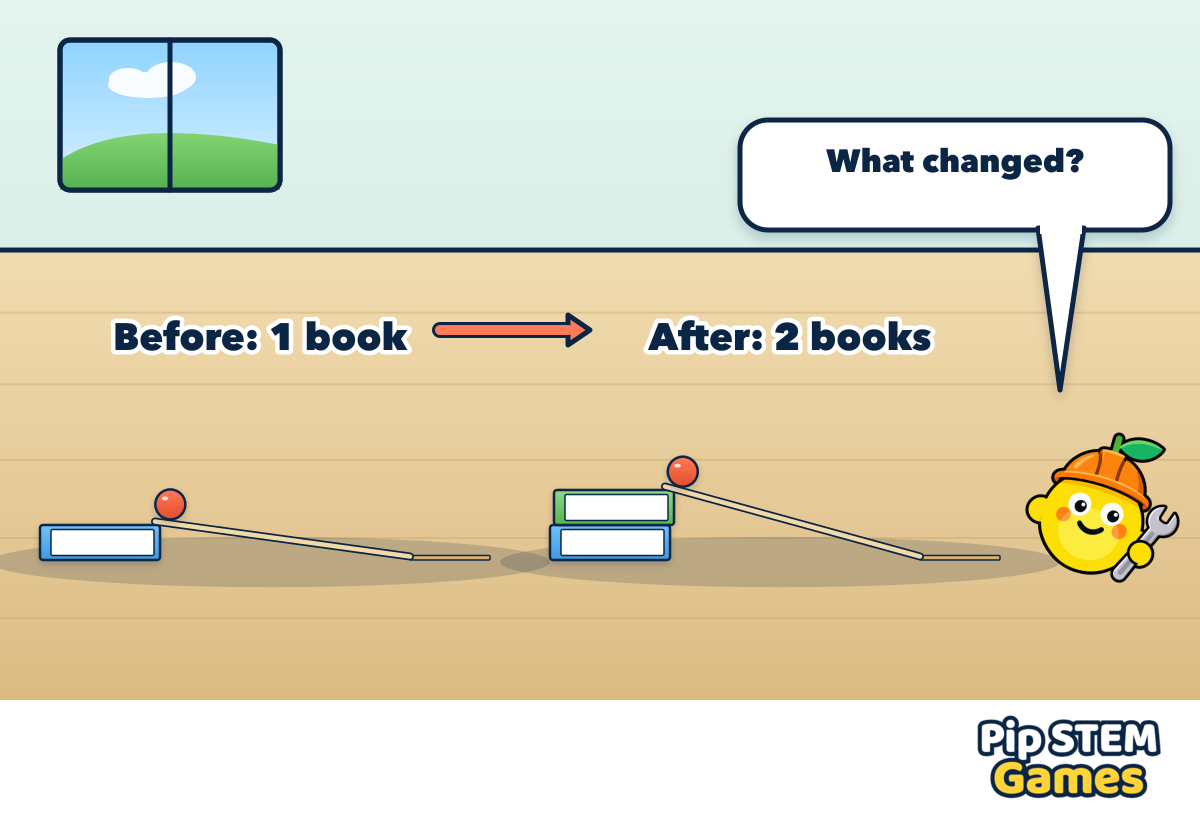
- Add a second book under the ramp and roll the ball again.
- Ask, "What changed since the first try?"
- Look at the marks together. A steeper ramp usually sends the ball further, but check it on your own ramp.
4. What is different between the one that worked and the one that did not?
This is the question for a stuck child. Put the good try and the bad try side by side and ask what is different. Your child does the spotting, and that is the skill you want them to practise.
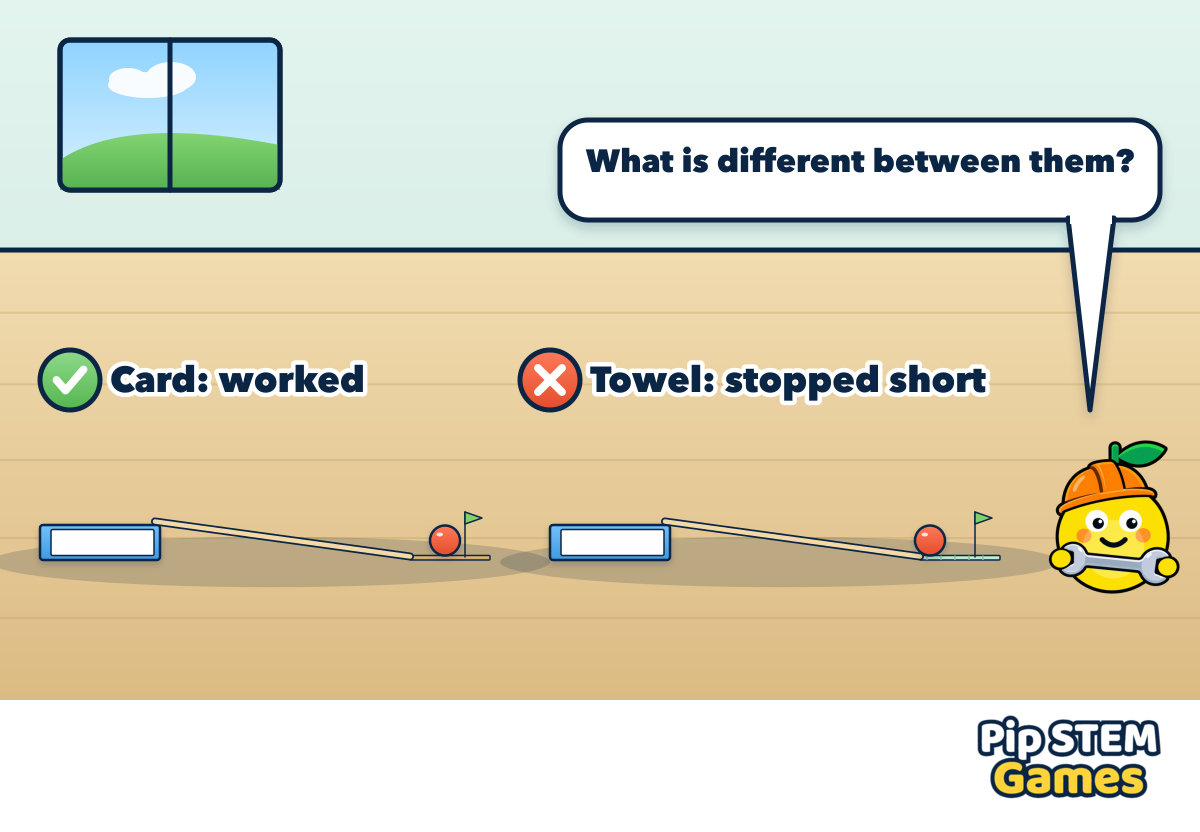
- Roll the ball down a card ramp and mark where it stops.
- Cover the ramp with a tea towel, roll again and mark that spot.
- Ask, "What is different between the one that worked and the one that did not?"
5. How could we test that?
Once your child has an idea, turn it into a test. A fair test changes one thing and keeps the rest the same. Here the ramp height, the ball and the way you let go all stay put, and only the surface changes.
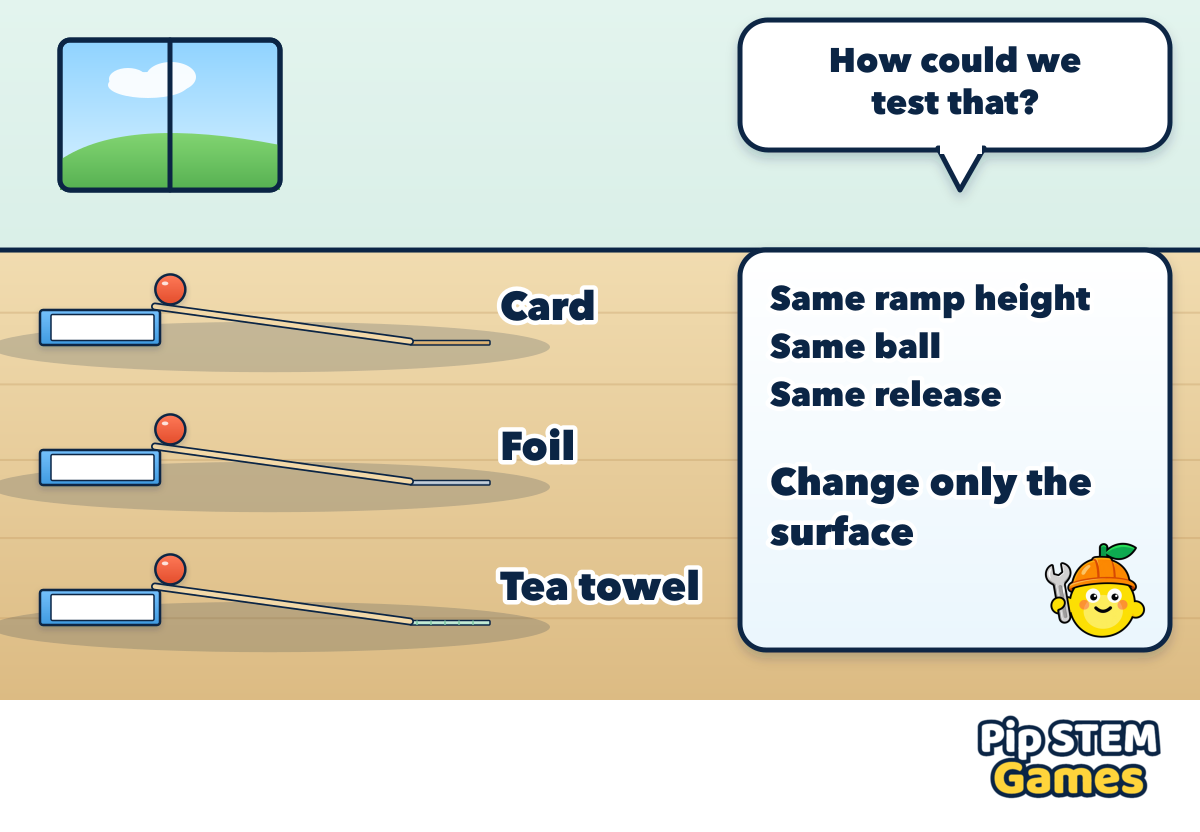
- Pick one thing to change, such as the surface: card, foil or tea towel.
- Say out loud what stays the same: same height, same ball, same release.
- Run each surface three times and write down where the ball stops.
6. What did the test show?
Ask your child to say the result in their own words. A rougher surface usually slows a ball more, but your numbers will be your own. The marks below are an example only.
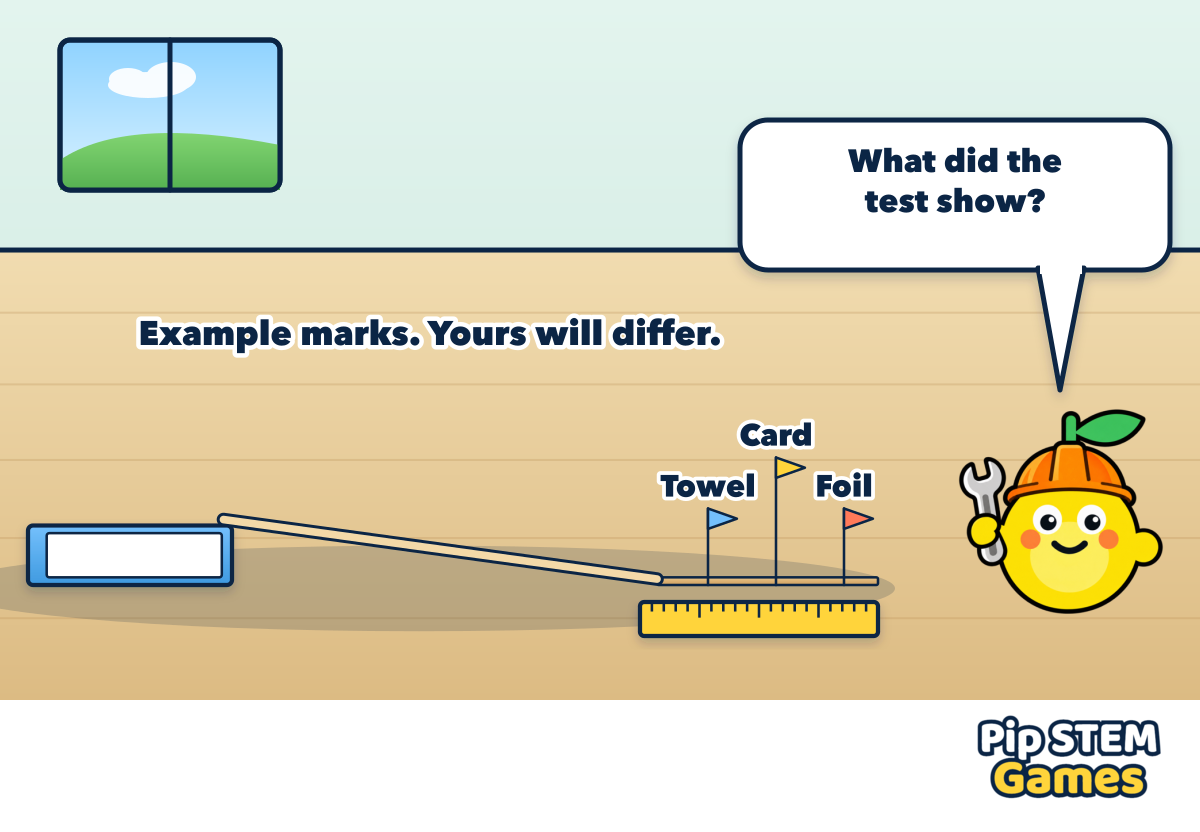
- Lay a paper strip beside the ramp and mark each stopping point.
- Ask, "What did the test show?"
- Help them finish the sentence: "When I changed the surface, the ball..."
7. What would you try next?
End with a next step, so one test leads to another. Children usually have plenty of ideas by now. Let them choose, even if it is not the one you would pick.
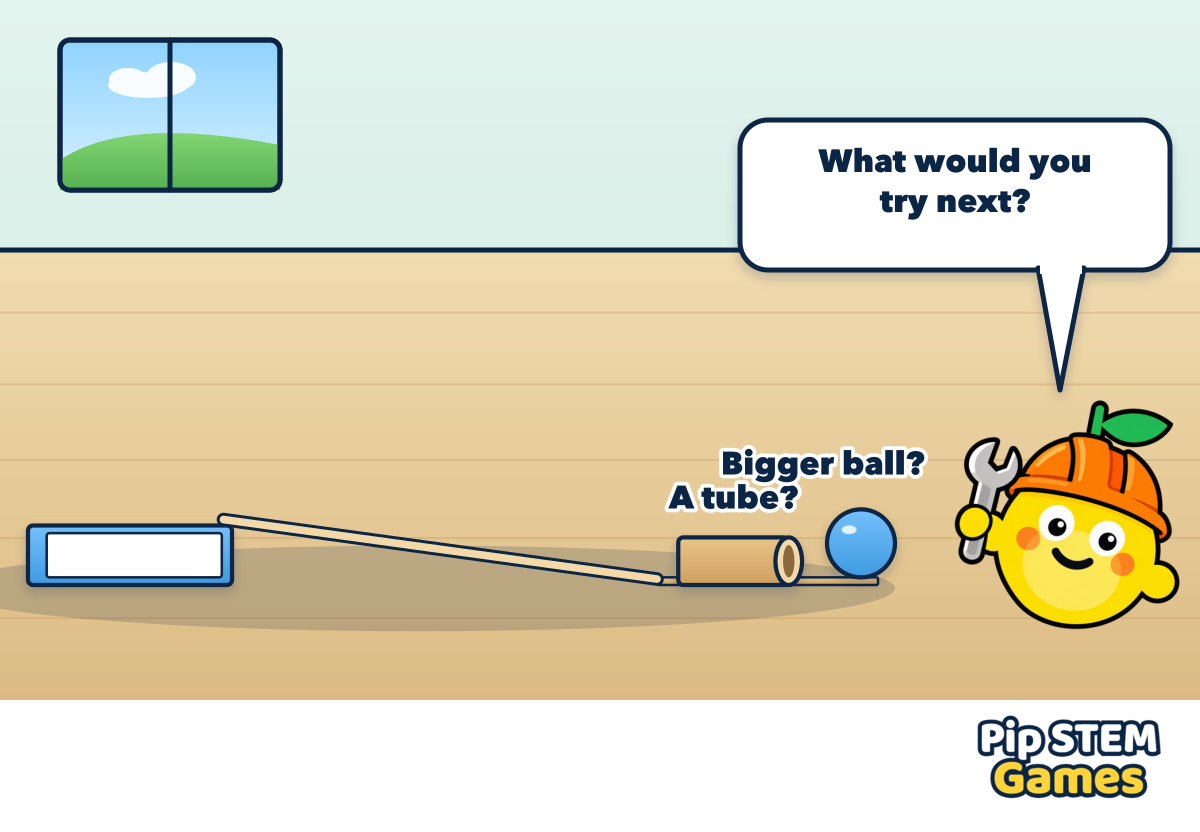
- Ask, "What would you try next?"
- Write their idea on the notepad, such as a tube or a heavier ball.
- Pick one change and start again from question 1.
Why ask questions instead of giving the answer?
If you give the answer, the problem ends. If you ask a question, your child keeps the problem and does the thinking. Educator guides from places such as Edutopia and the DuPage Children's Museum describe the same idea: adults ask open questions and children test their own ideas. Children practise noticing, comparing and testing this way. One session will not change how a child thinks overnight, but the habit builds with repeats.
Answers still have a place. If your child is in danger, or has been stuck for a long time and is miserable, help. The aim is a pause before the rescue, not a rule.
What do you need to practise the questions?
You need very little, and most of it is in the kitchen.
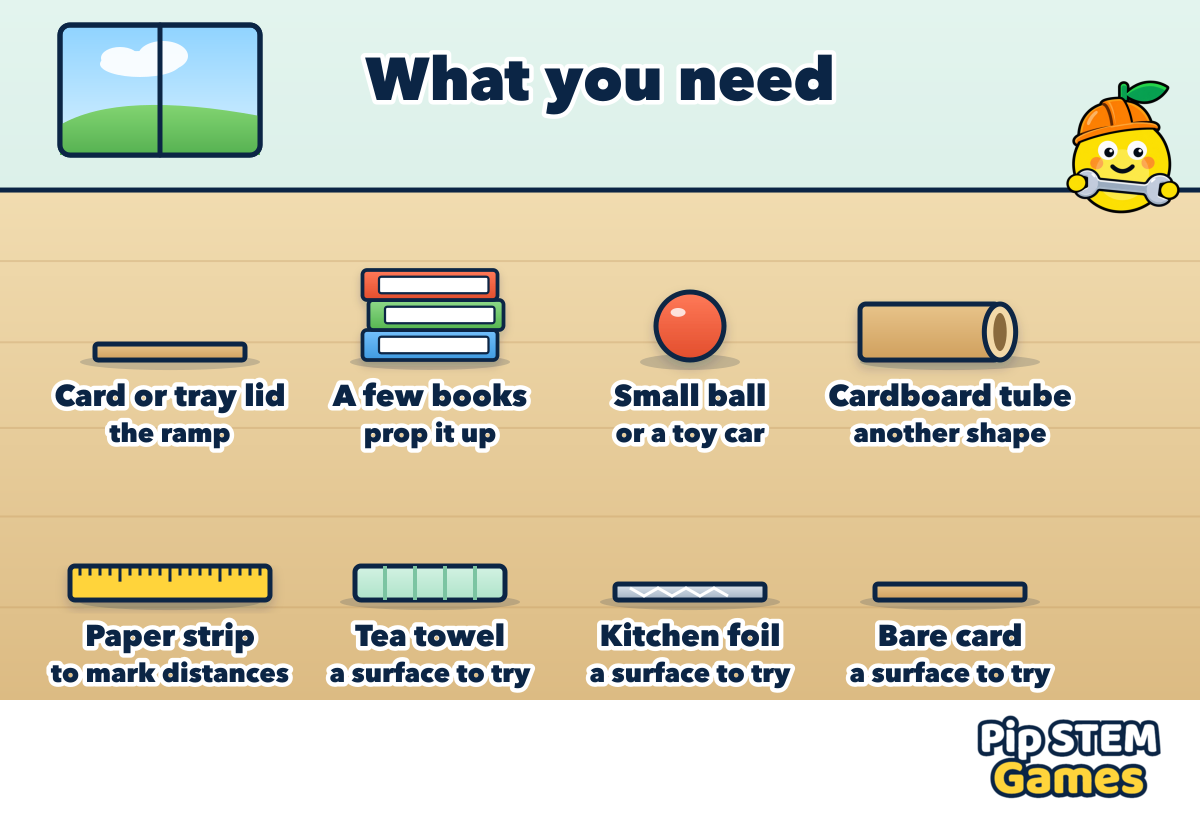
Use a low ramp and keep the floor clear so nobody trips on a rolling ball. Balls and small parts need an adult close by for children under five. Wrap foil edges flat so they do not scratch little fingers.
How do you run the ramp practice?
Allow about twenty minutes. Try it once yourself first, so the questions feel natural.
- Prop the card on one book to make a ramp.
- Ask question 1 and place a flag where your child thinks the ball will stop.
- Roll the ball and mark the real stopping point.
- Ask questions 2 and 3.
- Swap the surface and ask question 4.
- Plan a fair test (question 5), run it, and ask questions 6 and 7.
Want a screen warm-up first? The Ramp Runner game lets children try ramps and see what changes.
What if my child says "I don't know"?
That is a fine answer. Make the question smaller. Instead of "Why did it stop?" try "Where did it stop?" or "Which one went further?" Smaller questions get answers, and answers lead to the bigger ones. You can also say, "I wonder what would happen if...", and then try it together.
What if my child gets frustrated?
Stop and take a short break. Then look at the build, not at the child. Ask, "What did the ramp show us?" Frustration usually drops when the fall becomes information instead of a failure. If it does not, choose an easier version and come back another day. The engineering design process guide on this site shows how a first try that goes wrong fits the loop.
What is a good next test?
Change the ramp height and keep the surface the same. Try one, two and three books. Guess first, then mark each stopping point. The printable card keeps the questions and the results in one place.
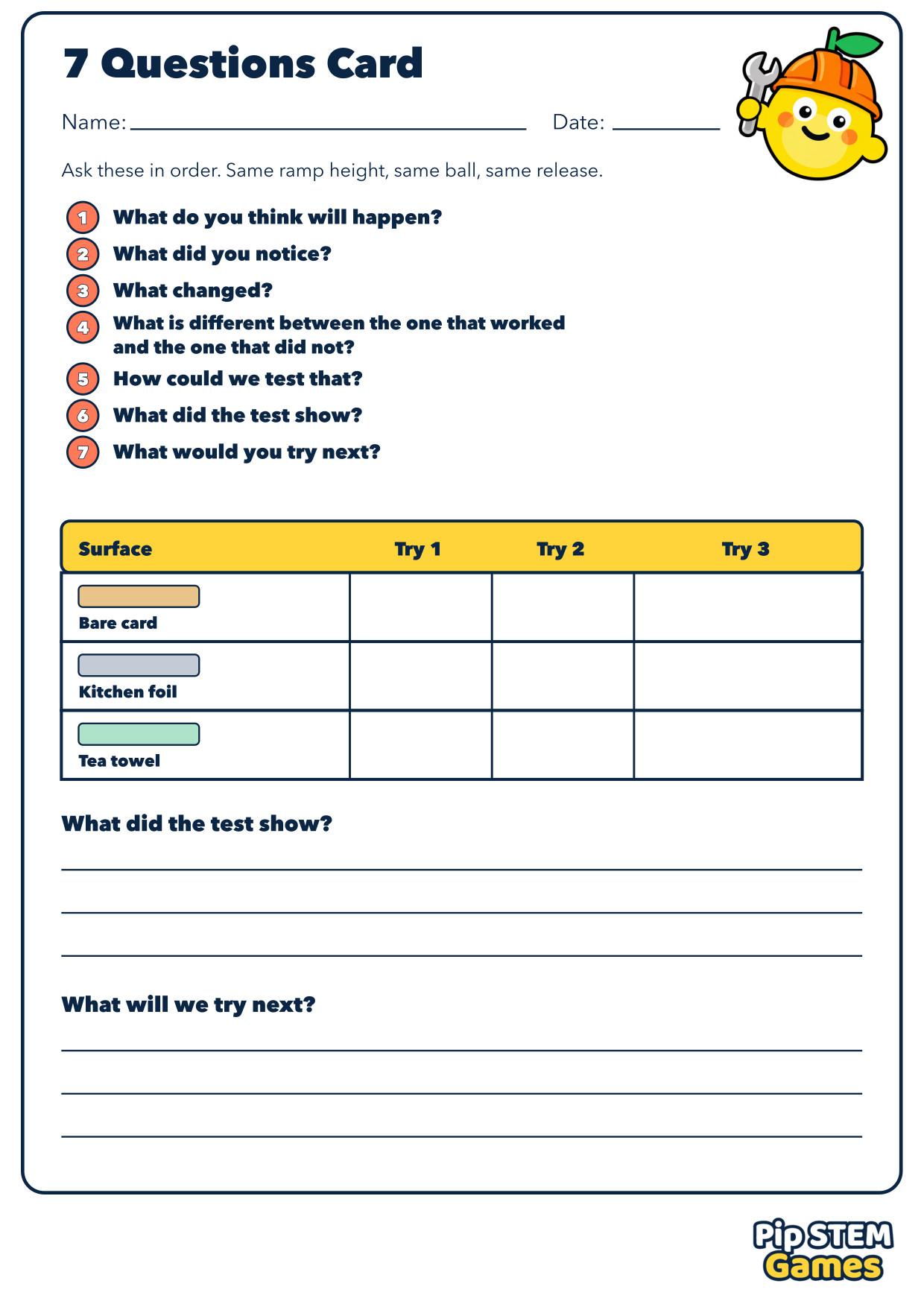
[Printable] Seven questions card: print the page, ask each question in turn and record where the ball stops on each surface.
The forces for kids guide explains why a ball slows down, in words children can follow.
How do the questions change by age?
Ages 5 to 7: use questions 1, 2 and 7. Keep it to two or three tries and celebrate the guessing. An adult stays close.
Ages 8 to 10: add questions 3 to 6. Use a simple table to record the results.
Ages 11 to 12: let them plan the whole fair test and say what stays the same before you ask anything.
What is the quick version?
Keep this near the table. When your child is stuck, find the question that fits and ask it. Then wait.
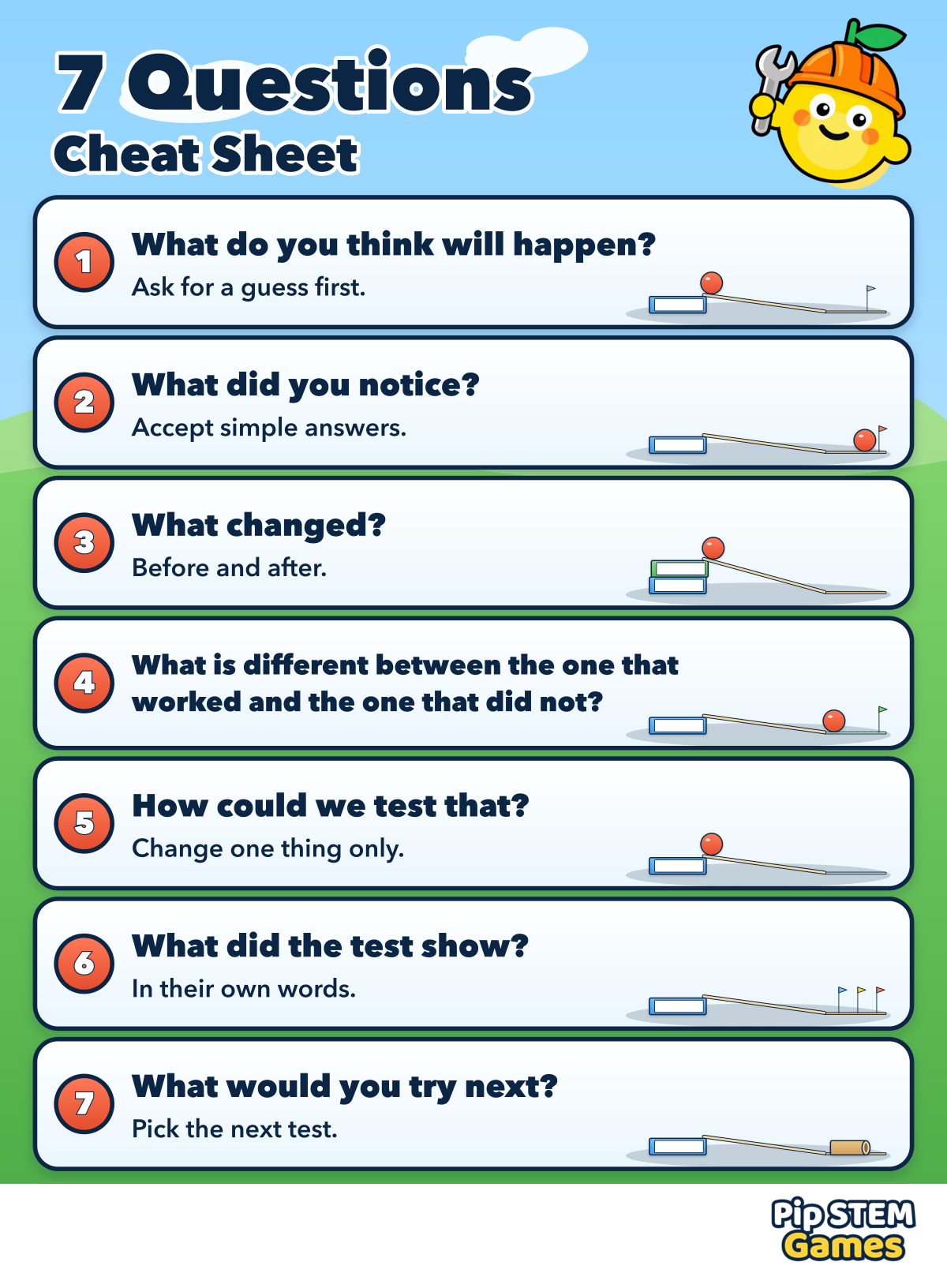
Questions parents ask
What questions should I ask my child instead of giving the answer?
Ask what they think will happen, what they noticed, what changed, what is different between the try that worked and the one that did not, how they could test it, what the test showed and what they would try next.
Why not just tell my child the answer?
Telling ends the problem. Asking leaves the problem with your child, who practises noticing, comparing and testing. If they are in danger or very upset, help.
What if my child says "I don't know"?
Make the question smaller, such as "Where did it stop?" or "Which went further?", or try something together and watch what happens.
What is a fair test?
A fair test changes one thing and keeps everything else the same, so you know what caused the difference.
What age are these questions for?
Ages 5 to 7 can use questions 1, 2 and 7. Ages 8 to 10 can use all seven. Ages 11 to 12 can plan the whole fair test themselves.
Do I need special equipment?
No. A piece of card, a few books, a small ball, a tea towel and some kitchen foil are enough.
Great STEM activities to try next...
 The Engineering Design Process for Kids: 6 Steps Families Can Use [Printable]How it works
 Forces for Kids: Pushes, Pulls and Why Things Move [Printable]Forces & energy
 Spot the Engineering MistakeBuild challenge
More to try: What Happens When You Stop Giving Children the Answer?

Pip STEM Games
We make engineering games and workbooks for kids aged 5 to 12. Every activity here is one we'd happily run at the kitchen table: test it, watch it fail, fix it, try again.




