


Key takeaways
- Acoustic, marine, materials and renewable energy engineers are four jobs most children have never heard of.
- Each job has a simple home test using foil, towels, cups, coins and a garden solar light.
- Soft towels soak up sound, while hard walls bounce it back as an echo.
- A foil boat with sides carries more coins than a flat sheet of the same foil.
- Change one thing at a time, and an adult should supervise small items like coins.
Some of the most interesting engineering careers for kids to hear about never show up in cartoons or on toy boxes. Four good examples are the acoustic engineer, who shapes sound; the marine engineer, who designs ships; the materials engineer, who picks what things are made of; and the renewable energy engineer, who collects power from sun and wind. Below, each job comes with a safe 20 minute test using foil, towels, cups and coins, so your child can try the thinking behind it at home.
Which engineering careers do kids not know about?
Four good ones are acoustic engineer, marine engineer, materials engineer and renewable energy engineer. Most children can name a builder or a car designer. Hardly any have heard of the people who make a concert hall sound right or a ship float level.
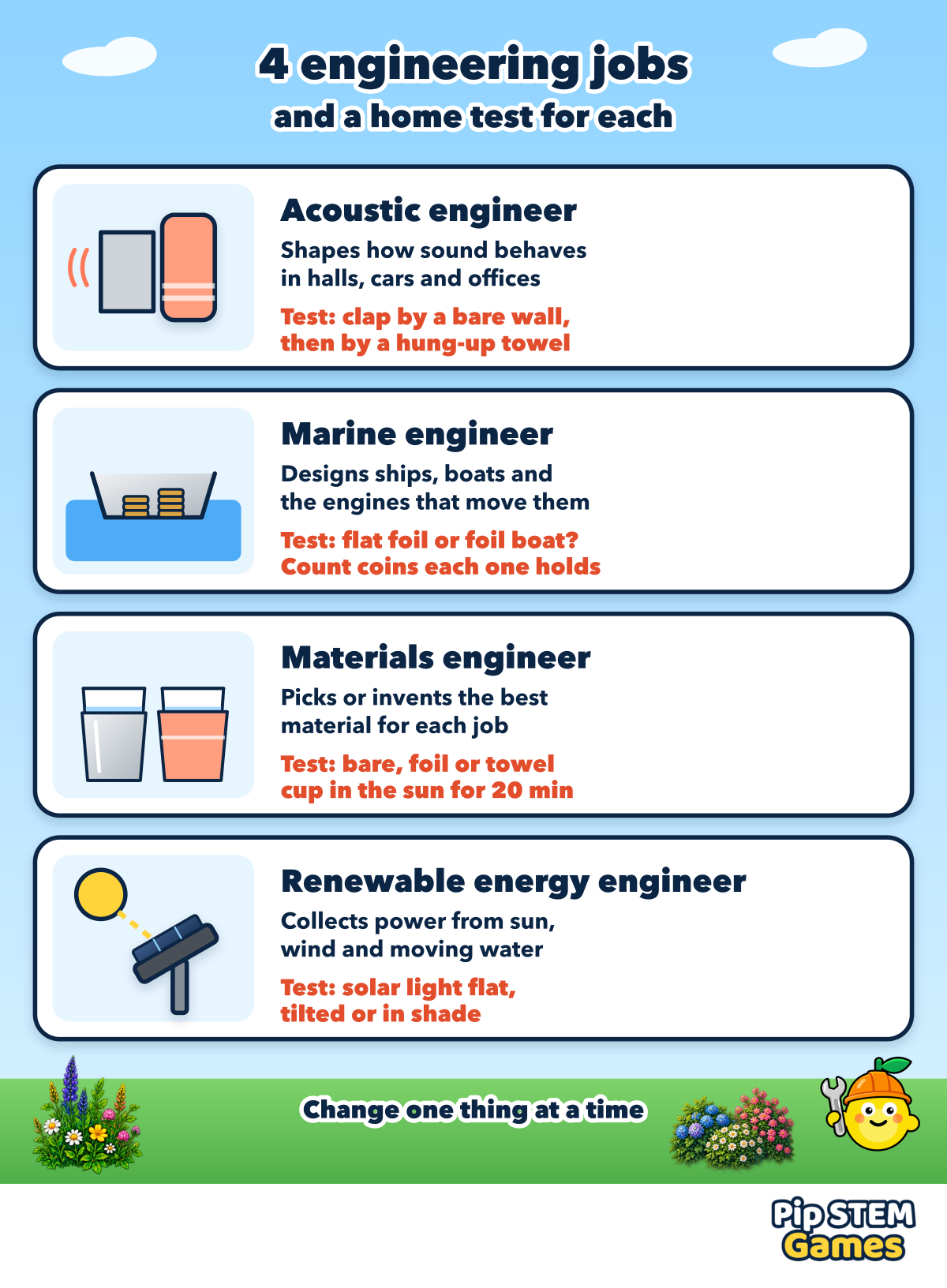
- Acoustic engineer: shapes how sound behaves in rooms, cars, offices and concert halls. Some record music, some cut traffic noise, some plan how a new building will sound.
- Marine engineer: designs and looks after ships, boats and the engines that move them. Naval architects, who work alongside them, plan the shape of the hull.
- Materials engineer: studies what things are made of and picks, or invents, the best material for a job, from a bike frame to a winter coat.
- Renewable energy engineer: designs ways to collect power from the sun, the wind and moving water.
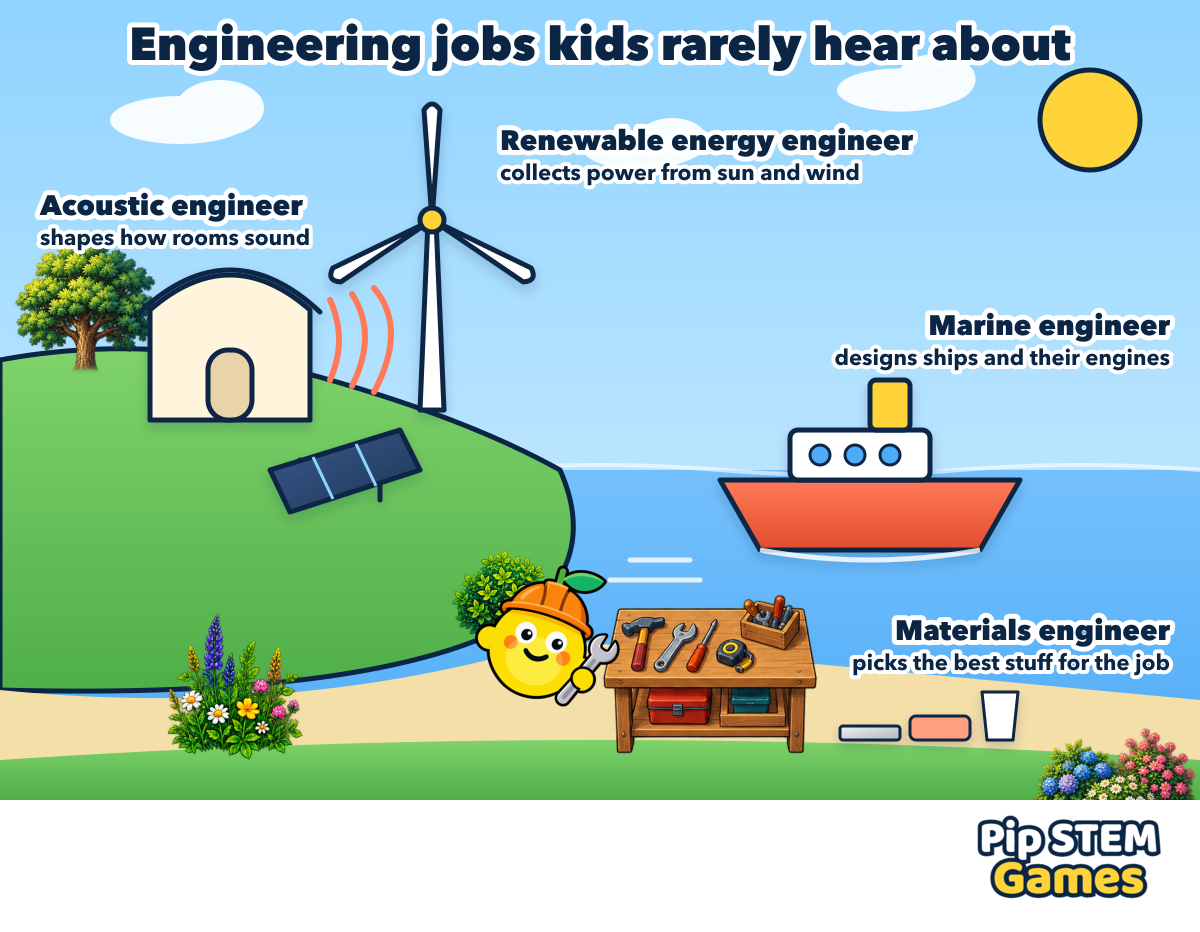
There are plenty more, of course. We picked these four because each one has a safe test you can run in a kitchen or garden in under half an hour. The tests are small models of the idea behind the job. They aren't how professionals work on real projects, and we'd say that to your child too. If you want the bigger picture of what a working day looks like, read a day in the life of five different engineers.
What do you need for the four home tests?
Everything here is ordinary household stuff. Gather it once and you can run all four tests in an afternoon.
- A washing up bowl or tub of cold tap water
- Kitchen foil and a handful of 10p coins (or dry pasta shapes)
- A bath towel, a tea towel and a chair
- Three identical paper or plastic cups
- A kitchen timer or phone stopwatch
- A small garden solar light
- Paper, pencil and ruler, or our free printable below
Safety: you won't need mains electricity, hot water or sharp tools. Coins and small pasta shapes are a choking risk for young children, so an adult should stay close throughout. Wipe up spills straight away so nobody slips.
How can kids test an acoustic engineer's job?
Clap next to a bare wall, then next to a hung-up towel, and listen for the difference. Ask your child first: which one will sound quieter?
- Find a room or hallway with hard floors and a bare wall. Stand about two big steps from the wall.
- Clap once, sharply. Listen for the ring or echo that follows.
- Hang a bath towel over a chair right in front of the wall. Stand in the same spot and clap again the same way.
- Take turns. Each person says which clap sounded softer.
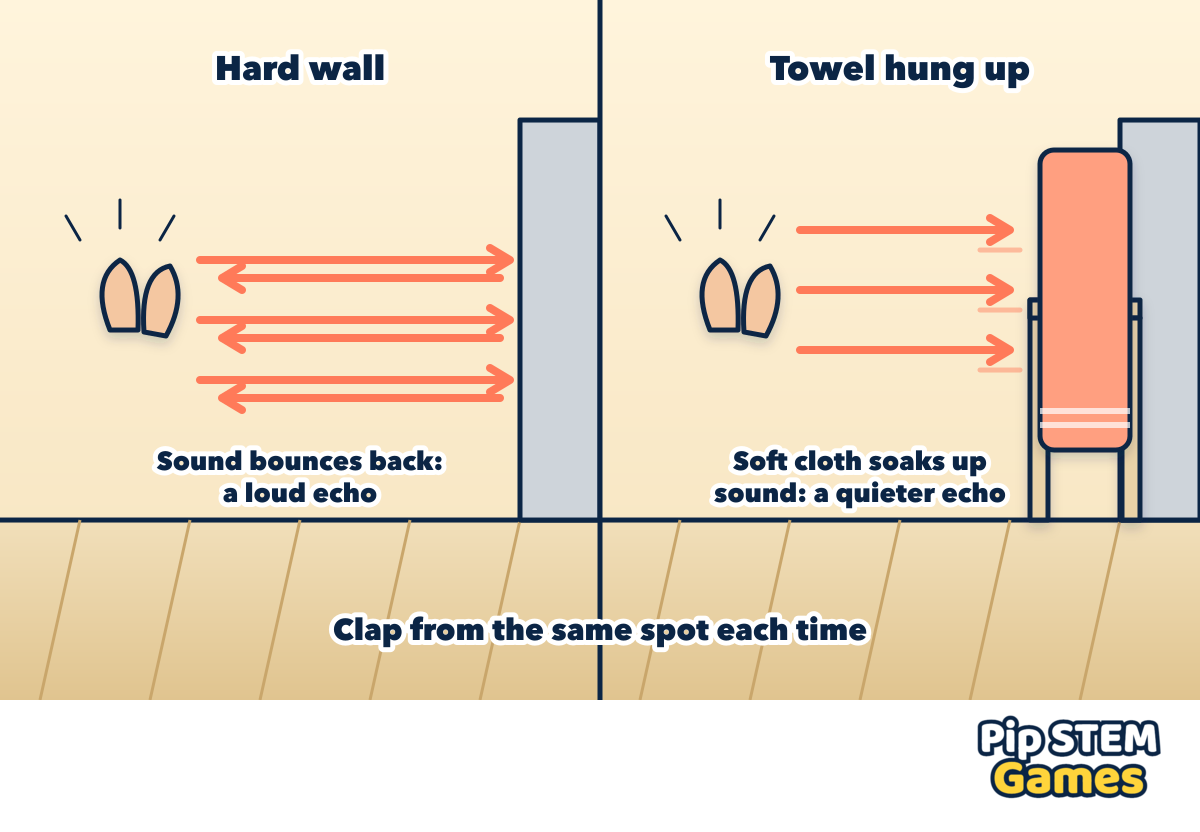
Soft, fluffy things like towels and curtains soak up much more sound than hard, smooth walls, which bounce most of it straight back. That's the whole trick behind cinema seats, carpeted classrooms and the odd-looking panels in music studios. Acoustic engineers choose those surfaces on purpose. Our post on what a sound engineer does goes further into recording and mixing.
How can kids test a marine engineer's job?
Make two shapes from the same piece of foil, a flat sheet and a boat with sides, then see which carries more coins. Most children guess the flat one, because it's bigger.
- Tear two squares of foil the same size, about 15 cm across.
- Leave one flat. Fold up all four edges of the other to make a tray with walls about 2 cm high. Pinch the corners tight.
- Float both on the tub of cold water.
- Add 10p coins one at a time, near the middle. Count how many each holds before water gets in.
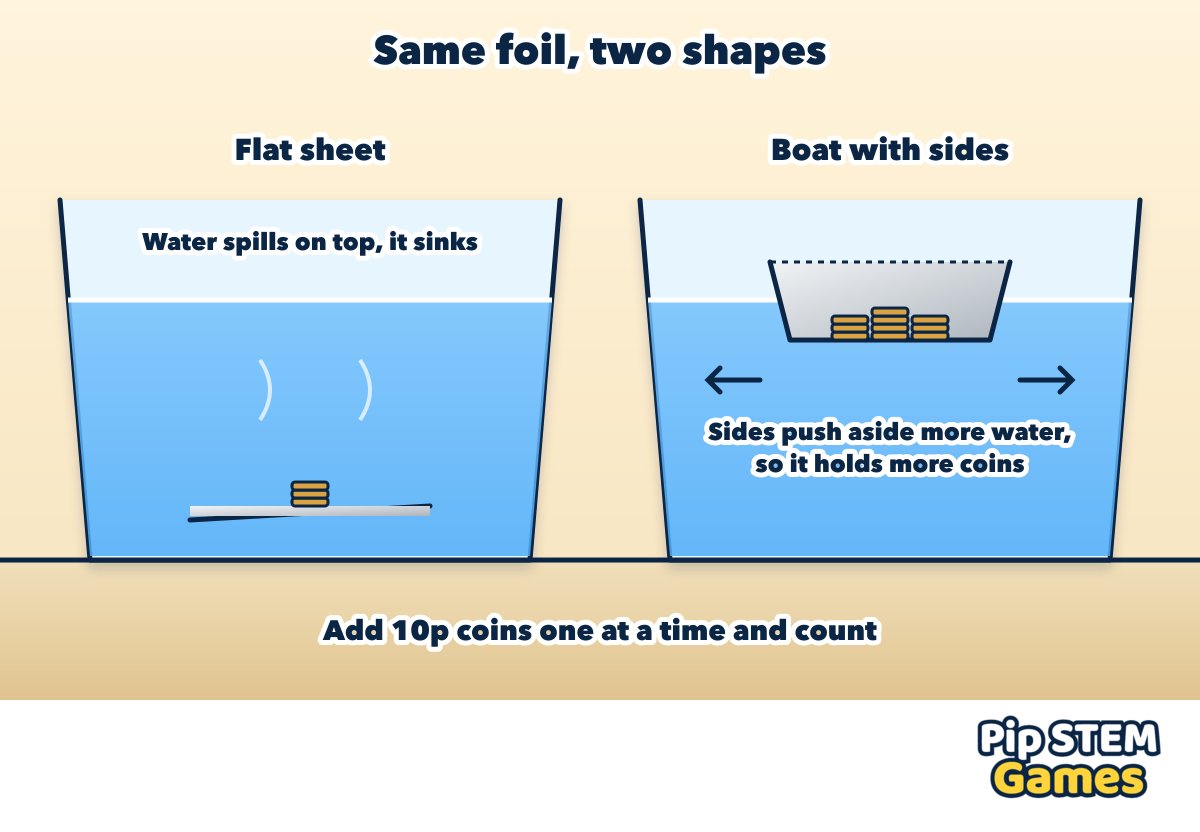
A boat floats when it pushes aside water that weighs as much as the boat and everything in it. The walls let the foil boat sit lower and push aside more water before any spills in. The flat sheet floods almost at once. Naval architects and marine engineers use the same rule, with far more maths, to decide how big a hull must be for its cargo. For a sturdier version, try our boat that actually floats build.
How can kids test a materials engineer's job?
Wrap three cups of cold water in different covers, leave them in the sun and find out which stays coolest. This is a proper fair test, and a good one to plan together.
- Fill three identical cups with the same amount of cold tap water.
- Leave one bare. Wrap one in foil, shiny side out. Wrap one in a folded tea towel.
- Stand them side by side in the same sunny spot for 20 minutes.
- Dip a finger in each, or use a kitchen thermometer if you have one. Put them in order from coolest to warmest.
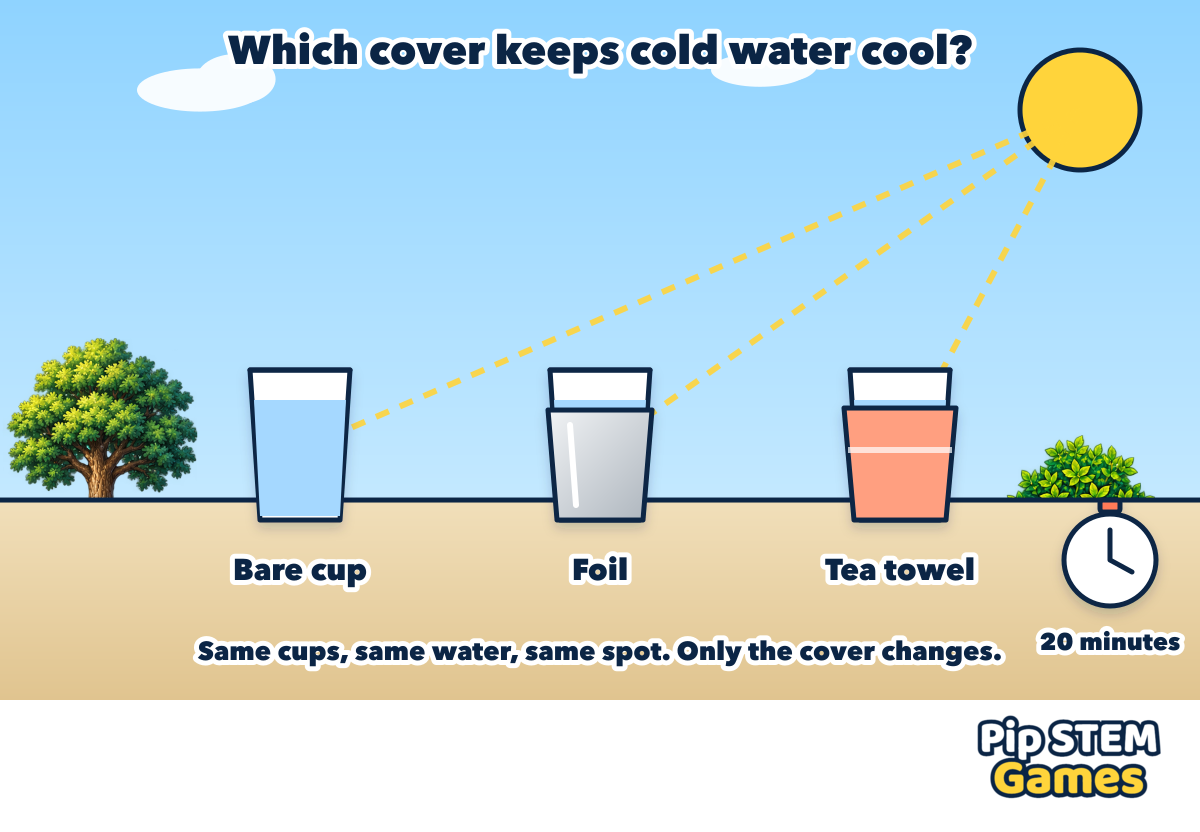
Shiny foil bounces back a lot of sunlight, and fabric traps air, which slows heat moving in. Your results might surprise you, and that's fine. Write down what happened, not what you hoped would happen. Materials engineers do this kind of testing all the time before they choose what a lunch box, a fire suit or a fridge door is made from.
How can kids test a renewable energy engineer's job?
Move a small garden solar light around for three days and see where it glows best after dark. Ask your child to predict the winner before you start.
- Day one: lay the solar light flat in a sunny spot. After dark, rate its glow: bright, medium or dim.
- Day two: tilt the panel so it faces the sun around midday. Rate it again after dark.
- Day three: put it in the shade of a tree or wall. Rate it again.
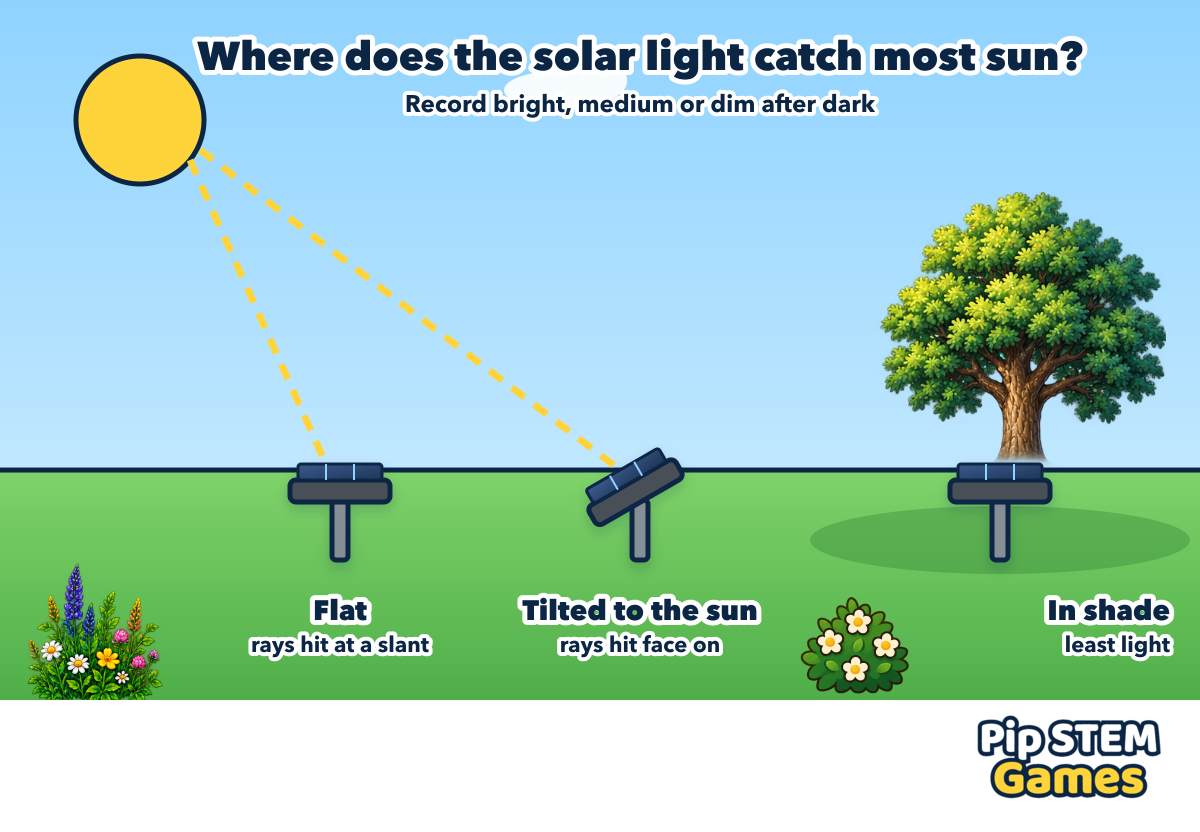
A panel catches the most light when it faces the sun straight on. At a slant, the same sunlight spreads over more of the panel, so less lands on it. Real solar farms tilt their panels for this reason, and some even turn to follow the sun. Don't try to guess power numbers. Bright, medium and dim are honest results. Cloudy days muddle the test, so repeat any day that was grey. You can practise aiming panels in our Solar Tracker game, or try the solar panel placement puzzle.
How do you keep each test fair, and what if it goes wrong?
Change one thing at a time and keep everything else the same. Same water, same spot, same timing. Repeat each test three times and write down what you see.
- Boat sinks straight away: make the sides taller and pinch the corners tighter. Gaps let water in.
- Echo is hard to hear: try a bare hallway or bathroom, where hard surfaces are everywhere.
- Cups feel the same: wait longer, or use a sunnier spot.
- Solar light is dim everywhere: it was probably cloudy. Repeat on a bright day.
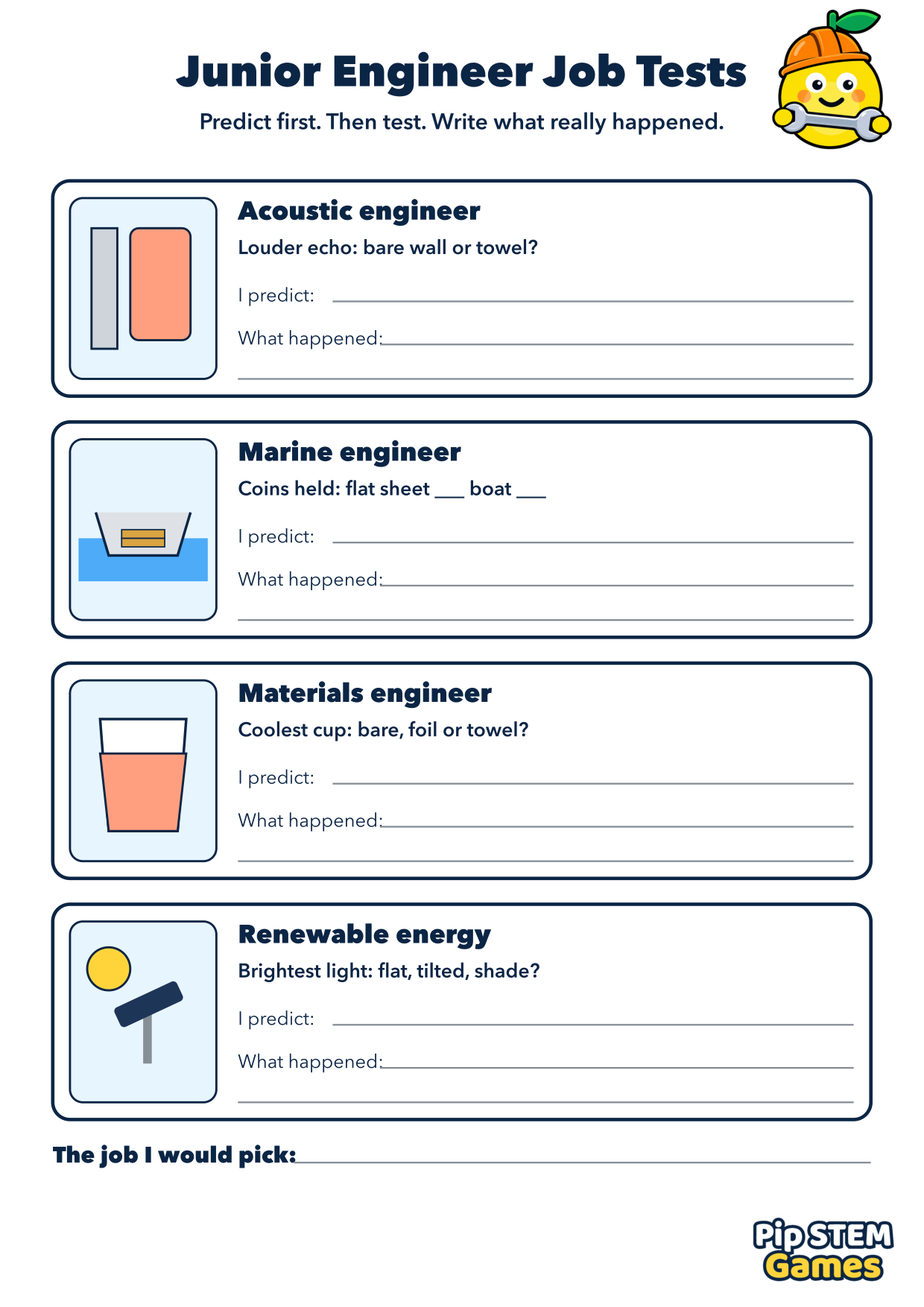
Frankly, a test that doesn't work first time teaches more than one that does. Fixing it is the engineering. Print the record sheet below so your child can predict, test and write it all down.
How can you adapt the tests for different ages?
Ages 5 to 7 should do one test at a time; ages 8 to 12 can run all four and compare.
Ages 5 to 7: pick the boat test first, since it's the most hands-on. Use words like loud, soft, sink and float, and let them count the coins out loud. The Engineering Workbook for Junior Engineers has more simple build-and-test pages.
Ages 8 to 12: add a results table, timings and a written prediction with a reason. Then ask for a second round: can they design a boat that holds twice as many coins? Which job would they pick, and why? The Engineering Workbook for Kids has harder challenges in the same spirit.
The best question to finish on is this: "Which test did you enjoy most?" The answer often points straight at the kind of engineer your child already is.
Questions parents ask
What engineering jobs are there for kids to learn about?
Beyond civil and mechanical engineers, look at acoustic, marine, materials, renewable energy, biomedical and software engineers. Each solves a different kind of everyday problem.
What does an acoustic engineer do?
An acoustic engineer controls how sound behaves. They might plan how a concert hall sounds, cut traffic noise near homes or make a car quieter inside.
What does a marine engineer do?
A marine engineer designs, builds and looks after ships, boats and their engines. They work closely with naval architects, who plan the shape of the hull.
What does a materials engineer do?
A materials engineer chooses or invents the right material for a job. They test how strong, light, warm or tough something is before it gets used.
Why does a foil boat hold more than flat foil?
Its raised sides let it sit lower and push aside more water before water spills in. The more water a boat pushes aside, the more weight it can carry.
At what age can kids start learning about engineering careers?
From about 5. Young children can enjoy one hands-on test and the name of the job, while 8 to 12 year olds can compare jobs and plan fair tests.
Great STEM activities to try next...
 A Day in the Life of Five Different EngineersActivity
 What Does a Sound Engineer Do?Activity
 Build a Boat That Actually FloatsActivity
More to try: How Do Traffic Lights Know When to Change?

Pip STEM Games
We make engineering games and workbooks for kids aged 5 to 12. Every activity here is one we'd happily run at the kitchen table: test it, watch it fail, fix it, try again.




