


Key takeaways
- Sound engineers record, mix and play back sound.
- A sound travels from a microphone to a mixing desk to speakers.
- They work at live shows, in studios and on film and TV.
- Foley artists make everyday sound effects by hand for films.
- A quiet guessing game lets children try sound effects at home.
A sound engineer records, mixes and plays back sound for music, shows, films and games. This guide explains the job in plain words, follows a sound from microphone to speaker, and gives you a printable sheet for a quiet sound effects game at home.
What does a sound engineer do?
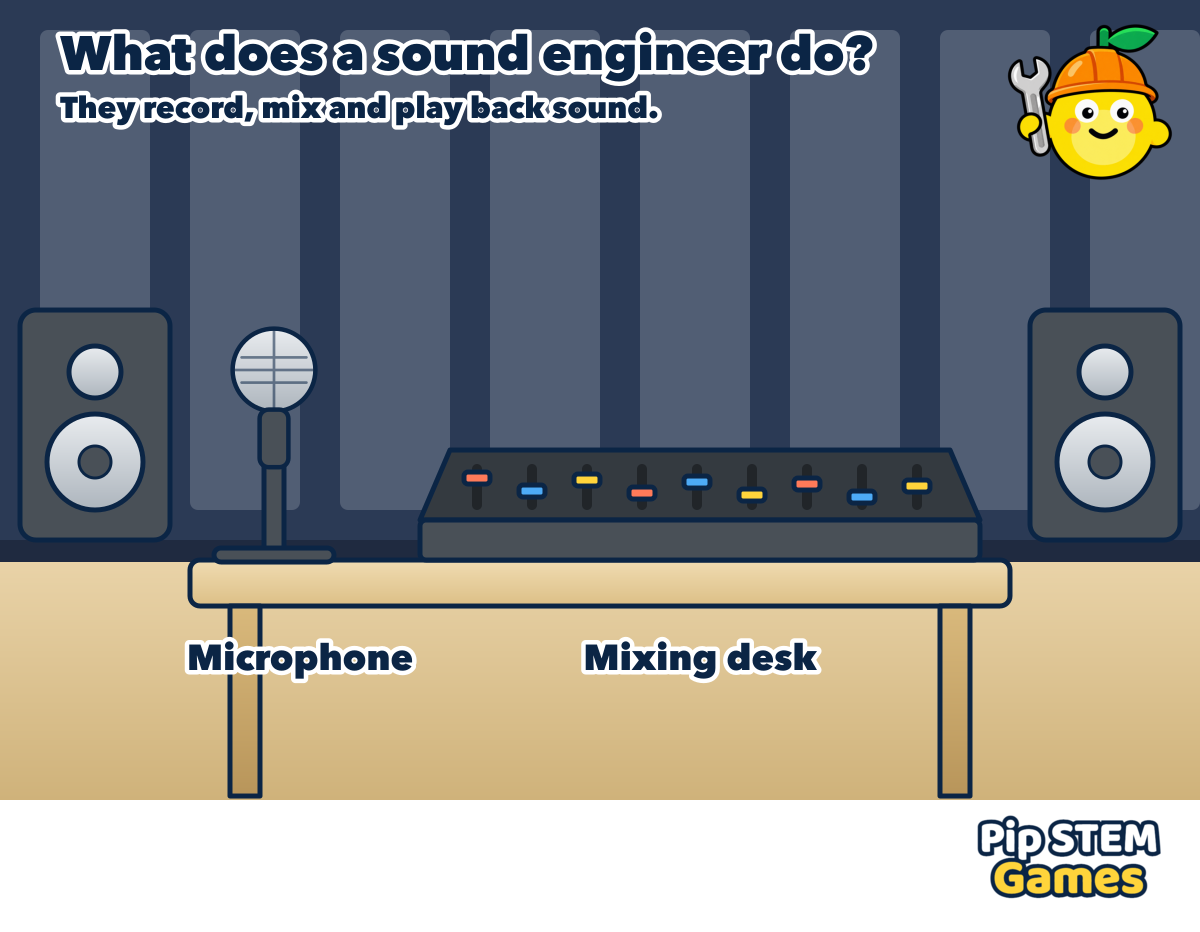
A sound engineer looks after sound. They set up microphones, record voices and music, change how each sound is balanced, and make sure the audience hears everything clearly.
You hear their work all day. The voices in a film, the music in a game and the sound at a school concert all passed through a sound engineer's hands.
This page explains the job in plain words, shows the path a sound travels, and gives a printable sheet for a quiet sound effects game at home.
Where does the sound go?
Sound engineers think about a signal path. That is the route a sound takes from the moment it is picked up to the moment someone hears it.
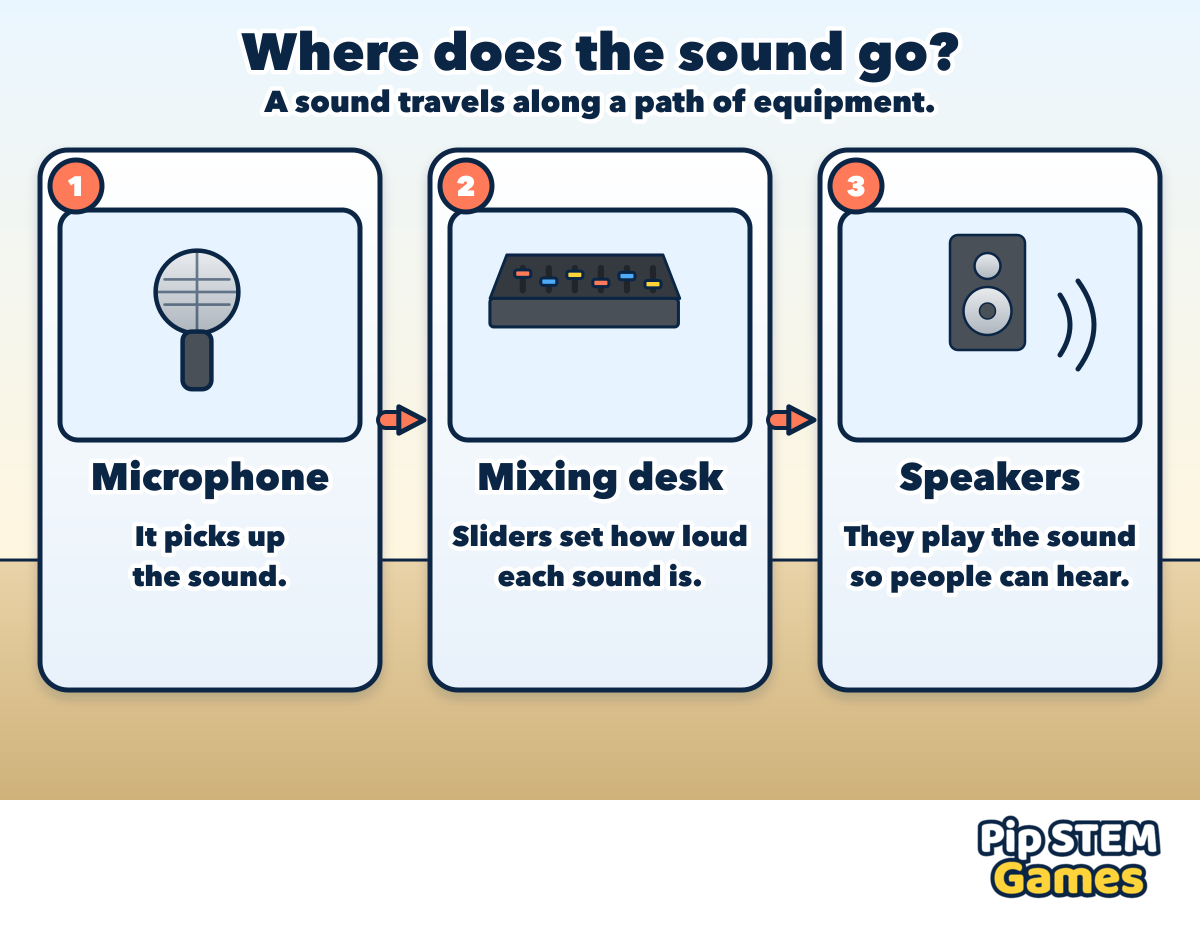
- Microphone. It picks up a sound, such as a voice or a guitar, and turns it into an electrical signal.
- Mixing desk. The engineer uses sliders to set how loud each sound is. They can also change how a sound is shaped, for example with EQ, which makes some parts of a sound louder or quieter.
- Speakers. They turn the signal back into sound that people can hear.
Sound equipment is joined by wires, and the signal follows them. Children who enjoy that idea can build paths for electricity in our Circuit game.
Where do sound engineers work?
Sound engineers work in several places, and each job is a little different.
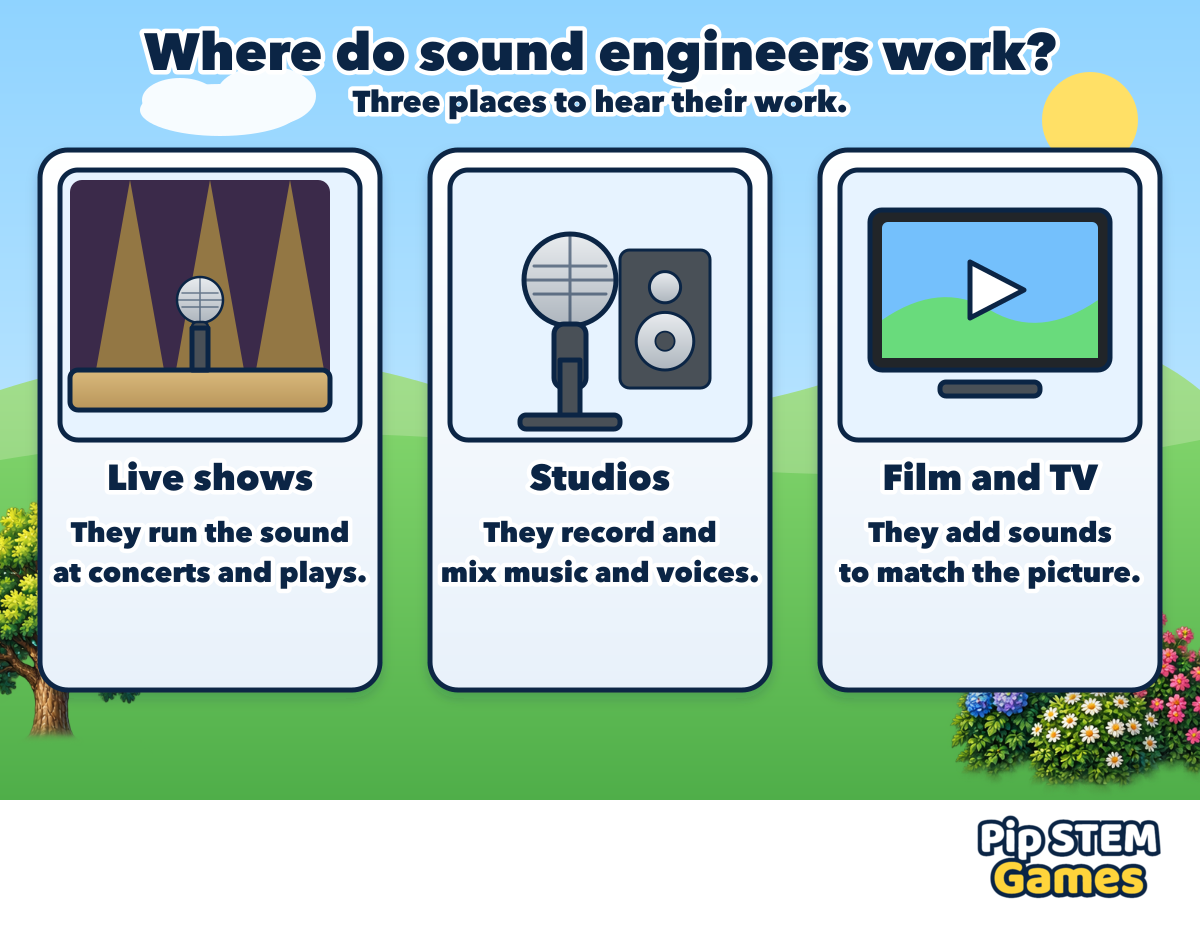
- Live sound. They set up and run the sound at concerts, plays and events. The show happens in front of an audience, so they must react quickly.
- Studio sound. They record music and voices. People often talk about recording engineers, who capture the sound, and mixing engineers, who balance it. A mastering engineer does the final polish.
- Film and TV sound. They record actors' words and add sound effects to match the picture.
Some sound for film is made by hand. Foley artists make everyday sounds, like footsteps, while they watch the picture. That is the idea behind the printable sheet below.
What do sound engineers need to be good at?
Good sound engineers listen carefully. They also need to be calm, patient and curious about how equipment works. They work as part of a team with musicians, actors, directors and other engineers.
Many love music, but that is not the only route. Some like the technical side, such as cables and settings. Some like solving problems quickly at a live show. Either way, the job needs a good ear and a willingness to try again.
To meet other careers, read engineering careers kids might not know exist, or see how five of them spend a day in a day in the life of five different engineers.
How can your child try sound engineering at home?
Play a quiet sound effects game. It takes about 15 minutes and needs only things from around the house.
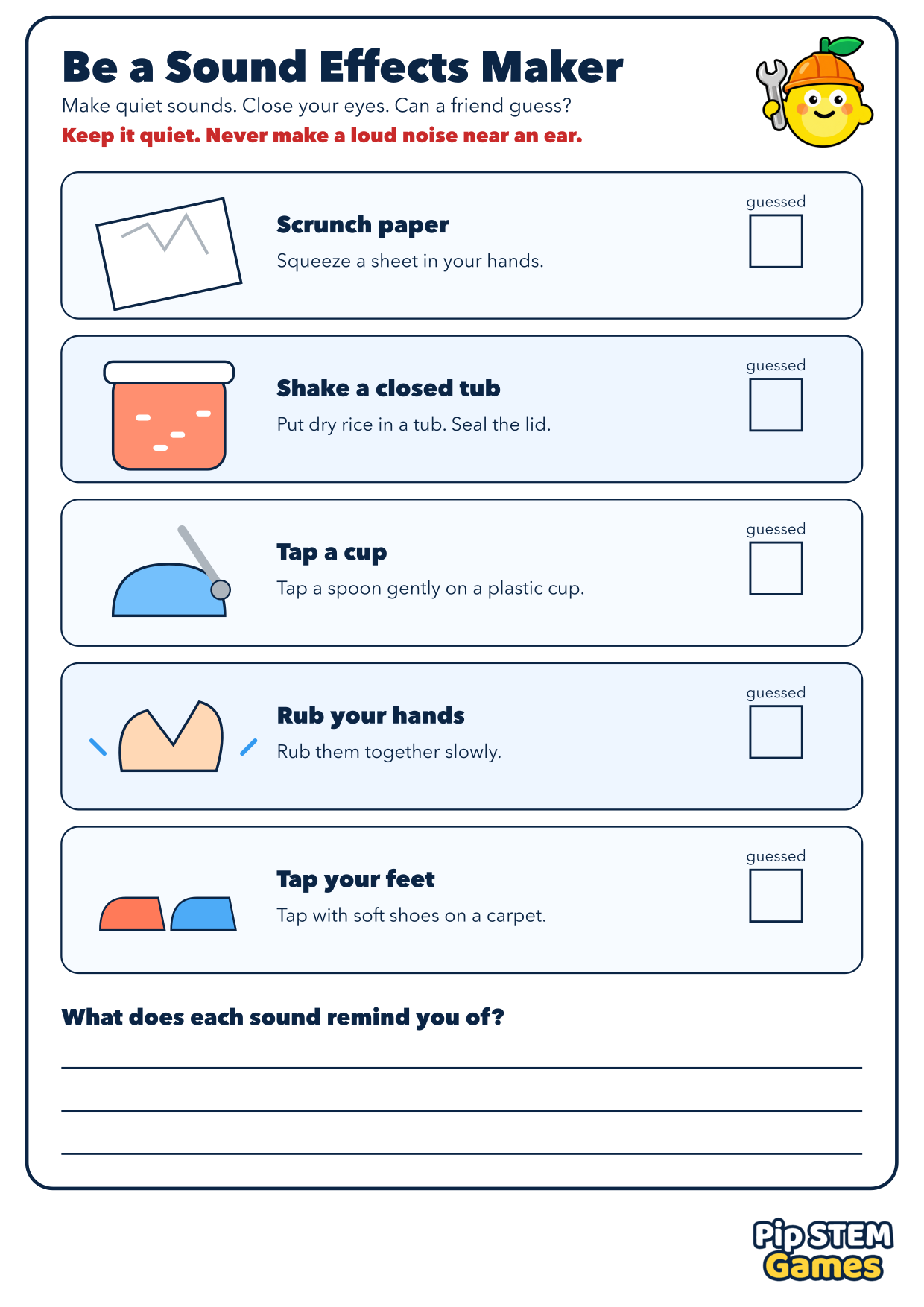
You need: a sheet of paper, a small tub with a lid, a little dry rice, a spoon, a plastic cup and some soft shoes.
- Pick one sound from the printable sheet. Make it quietly.
- One person closes their eyes. The other makes the sound.
- The listener guesses what it is. Tick the box on the sheet when they get it.
- Swap roles.
- Talk about it. What did each sound remind you of? Which one was hardest to guess?
Safety: keep every sound quiet. Never make a loud noise close to someone's ear, and keep headphone volume low. Loud sound can hurt hearing. Tape the tub lid shut so rice cannot spill, because small grains are a choking risk for children under 3.
Pro tip: try one change at a time, such as a different cup or a softer tap. Then you can tell what changed the sound. Our engineering design process page shows how to keep improving an idea.
Print the sheet below and take it round the house.
How do you change it for each age?
Match the task to the child.
- Ages 5 to 6 (easier): an adult makes each sound and the child guesses. Talk about what the sound reminds them of.
- Ages 7 to 9: the child makes the sounds, ticks the sheet and finds one more sound at home.
- Ages 10 to 12 (harder): pick a short scene, such as someone walking into a room, and make the sounds to match it. Write a list of the sounds first, then test it on a friend.
The aim is not to be loud or perfect. It is to help a child notice that every sound in a film or show was chosen by someone, and that they could choose sounds too.
Questions parents ask
What does a sound engineer do in simple words?
A sound engineer records, balances and plays back sound, so music, voices and effects can be heard clearly.
What is the signal path?
It is the route a sound takes from a microphone, through equipment such as a mixing desk, to the speakers where people hear it.
What is the difference between recording and mixing?
Recording captures the sound. Mixing balances the recorded sounds, setting how loud each one is and how it is shaped, so they work well together.
What is a Foley artist?
A Foley artist makes everyday sounds, such as footsteps, by hand while watching a film, so the sound matches the picture.
What subjects help you become a sound engineer?
Music, science, maths and design technology help, along with a good ear and plenty of practice with equipment.
How loud is safe when trying sound at home?
Keep volume low. Loud sound can hurt hearing, so never make a loud noise close to an ear, and keep headphone volume low.
Great STEM activities to try next...
 Which Engineer Would Solve This Problem? [Printable]How it works
 What Do Software and Robotics Engineers Do? [Printable]How it works
 Engineering Careers Kids Might Not Know Exist [Printable]Careers
More to try: How Does a Drawbridge Open? A Kids' Guide · What Does a Biomedical Engineer Do? Kids Guide

Pip STEM Games
We make engineering games and workbooks for kids aged 5 to 12. Every activity here is one we'd happily run at the kitchen table: test it, watch it fail, fix it, try again.




