


Key takeaways
- Biomedical engineers design devices and software that help bodies work.
- Examples include artificial limbs, hearing aids, joint replacements and imaging machines.
- A hearing aid has three parts: microphone, amplifier and speaker.
- They work with doctors, nurses, scientists and safety checkers.
- A straw and string bendy finger lets children try the ideas at home.
A biomedical engineer designs devices and software that help people's bodies work, such as artificial limbs, hearing aids and joint replacements. This guide explains the job in plain words, shows how a hearing aid works, and gives you a printable sheet for making a bendy finger at home.
What does a biomedical engineer do?
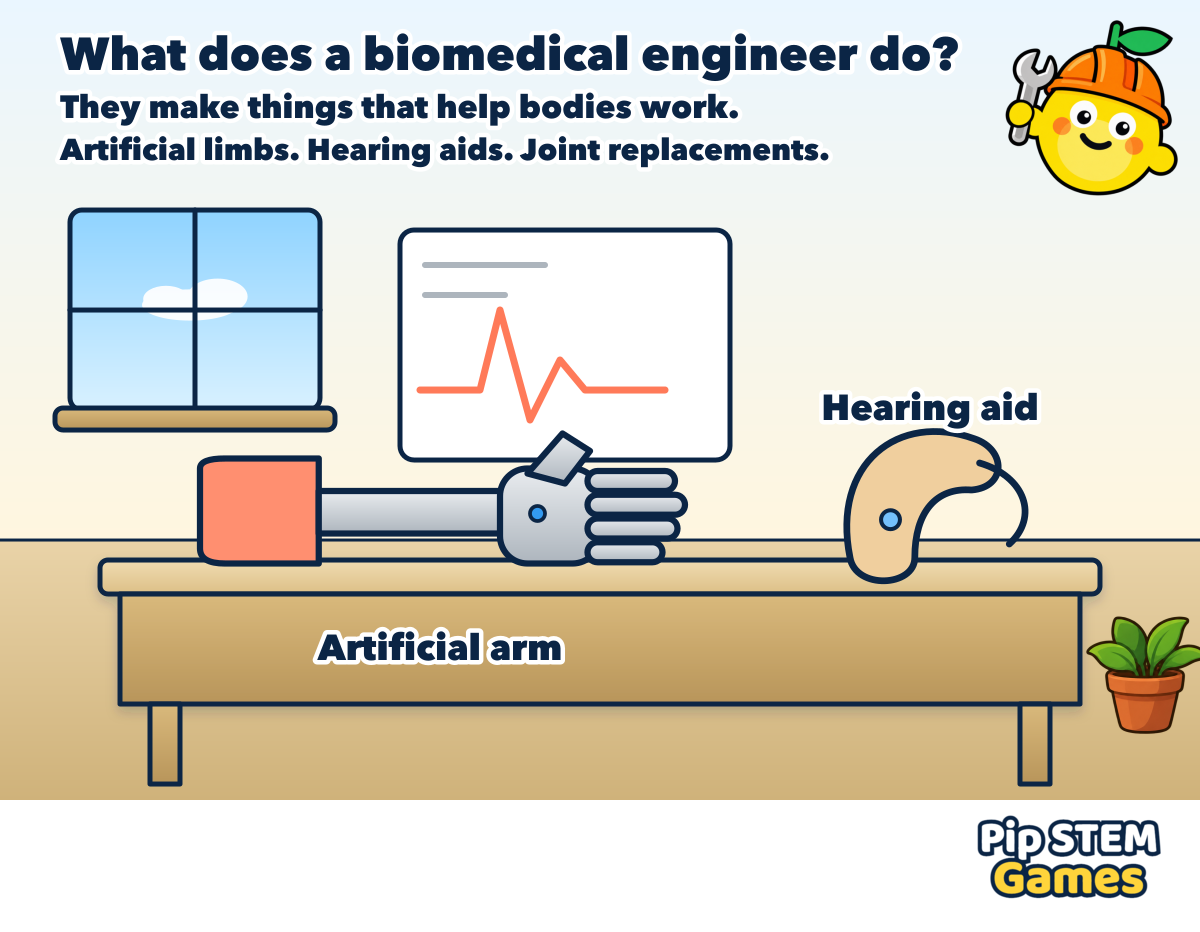
A biomedical engineer designs things that help people's bodies work. That can be a hearing aid, an artificial arm or leg, a joint replacement such as a new hip, or a machine that takes pictures of the inside of the body.
The job joins two subjects: engineering and medicine. The engineer asks how a thing should be built. The doctor or nurse says what the patient needs. Together they make something useful.
This page explains the job in plain words, shows how a hearing aid works, and gives a printable sheet for making a bendy finger at home. It is not medical advice. If you have a question about your child's health, ask a doctor or nurse.
What kinds of things do biomedical engineers make?
Biomedical engineers make hardware, which is the parts you can hold, and software, which is the instructions that run on a computer. Some examples:
- Artificial limbs (prosthetics) that replace an arm or a leg.
- Implants and joint replacements that go inside the body.
- Artificial organs that do the work of a part that is not working.
- Imaging machines that let doctors see inside the body.
- Assistive technology, such as tools that help a person hear, move or communicate.
Every one of these has to fit a real person. A device made for a child has to suit a child's body, and children keep growing. That makes the design harder, and it is one reason the work needs careful testing.
How does a hearing aid work?
A hearing aid is a good first example because it has only three main parts. Children can follow each step.
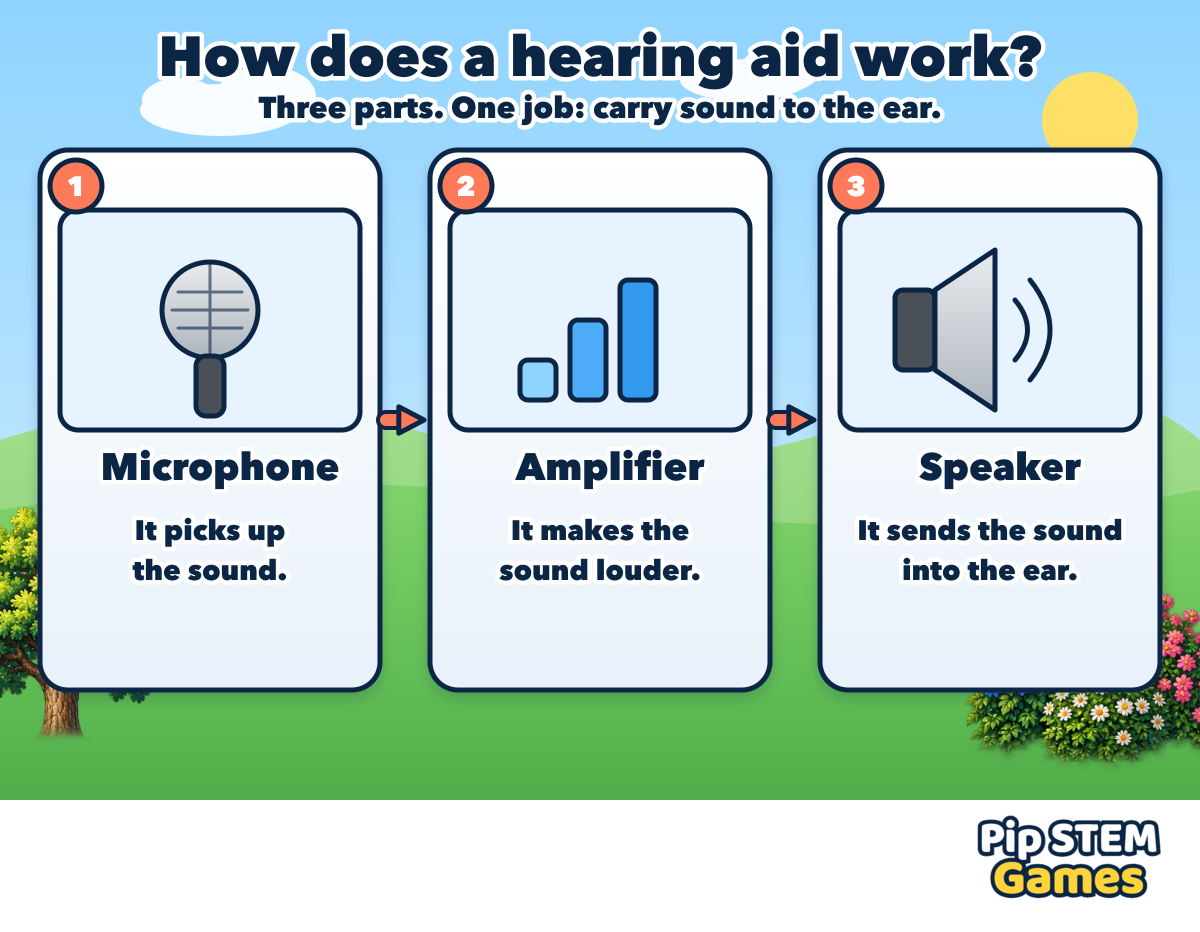
- Microphone. It picks up sound from around you and turns it into a signal.
- Amplifier. It makes the signal stronger, so the sound will be louder.
- Speaker. It turns the signal back into sound and sends it into the ear.
A real hearing aid is tiny, and its designers must think about comfort, battery life and how it sits behind the ear. The idea underneath is simple. Pick up the sound, make it louder, and play it into the ear.
Ask your child: where else have you seen a microphone and a speaker working together? Phones, video calls and toy karaoke machines all do.
Who do biomedical engineers work with?
Biomedical engineers do not work alone. A new device needs people with different skills.
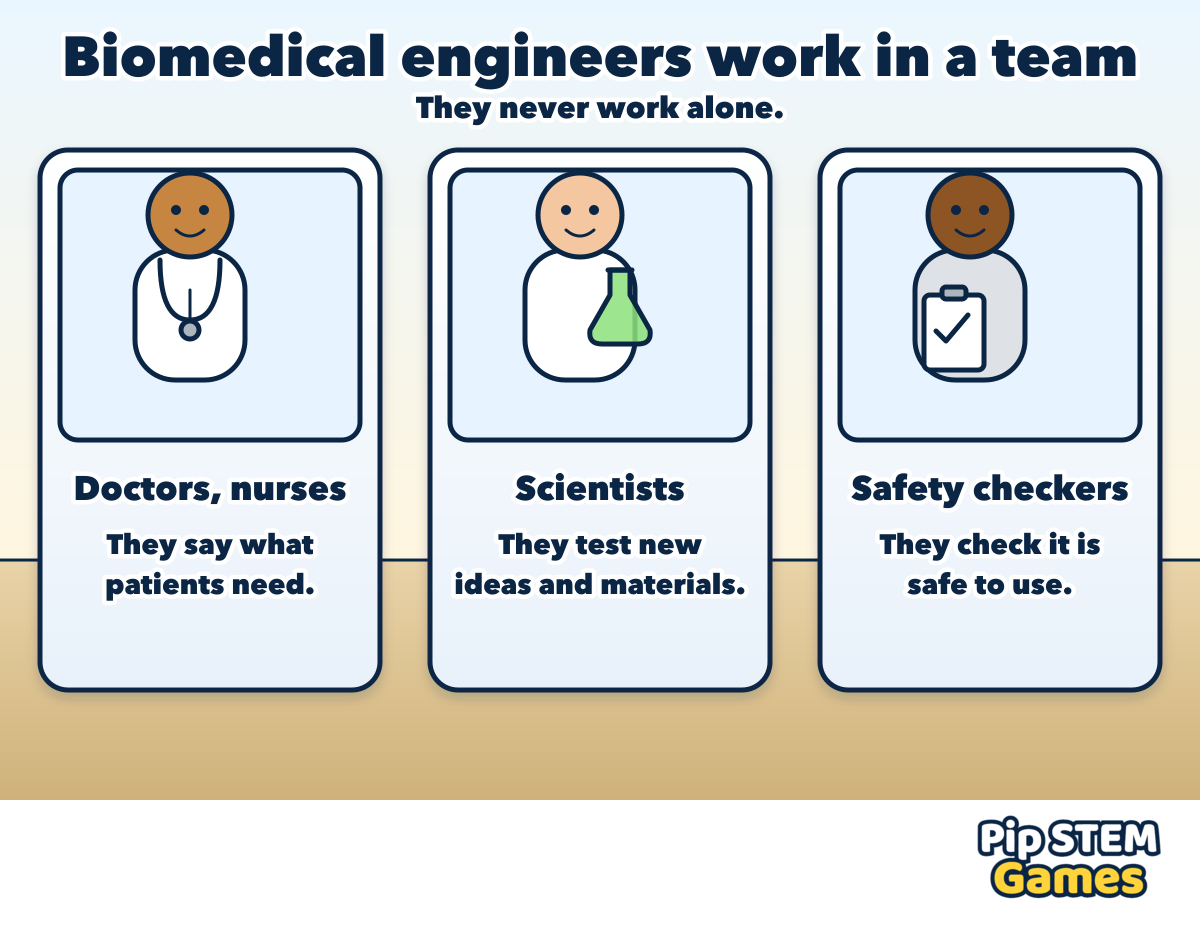
- Doctors and nurses know what patients need and how a device is used.
- Scientists test new ideas and materials.
- Safety checkers (called regulators) make sure a medical device is safe before people use it.
The final check matters. A medical device goes into or onto a body, so it is checked carefully. Many engineers say the careful checking is what makes the job worth doing. To meet other kinds of engineer, read engineering careers kids might not know exist, or see how five of them spend a day in a day in the life of five different engineers.
How can your child try biomedical engineering at home?
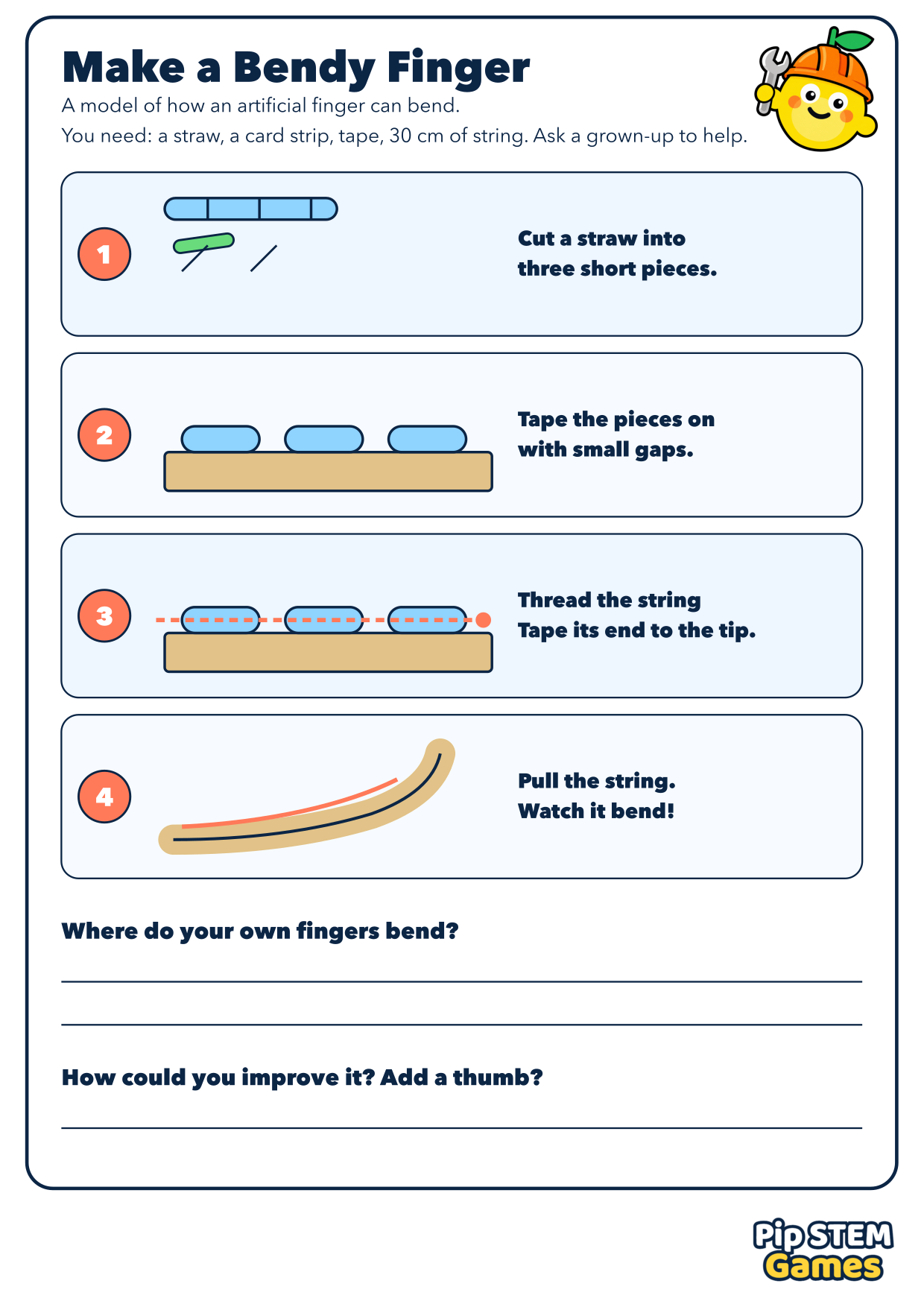
Make a bendy finger from a straw, a card strip and string. It takes about 20 minutes. It is a model of how an artificial finger could bend, and it is not a real medical device.
You need: a drinking straw, a strip of thin card about 15 cm long, sticky tape, 30 cm of string and blunt-ended scissors.
- Cut the straw into three short pieces. Ask a grown-up to help.
- Tape the pieces along the card strip with a small gap between each one.
- Thread the string through all three pieces. Tape one end to the tip of the strip.
- Hold the strip flat and pull the string. The finger should bend at the gaps.
- Look at your own fingers. Where do they bend? How many bends do you count?
Safety: use blunt-ended scissors with an adult nearby. Keep string away from babies and toddlers, and never put string around anyone's neck. Straw and tape pieces are choking risks for children under 3.
Pro tip: if the finger will not bend, make the gaps a little wider. Engineers call that a small design change, and they make them all the time. Our engineering design process page shows how to keep improving a design.
Print the sheet below and follow the four steps. Children can also play with levers on screen in our Lever Lab game. Your fingers, arms and legs bend at joints, and levers help show how that kind of movement works.
How do you change it for each age?
Match the task to the child.
- Ages 5 to 6 (easier): an adult cuts the straw. The child tapes the pieces, pulls the string and watches the finger bend. Talk about their own fingers.
- Ages 7 to 9: the child does every step, answers the two questions on the sheet, and draws their own finger next to the model.
- Ages 10 to 12 (harder): ask them to improve the model. Could it grip a pencil? Could it have a thumb? Draw a plan first, build it, test it and write down what changed.
The aim is not a perfect finger. It is to show a child that people design the things that help bodies work, and that they could design one too. Mistakes are part of it. The finger that will not bend is the first version, and the engineer's job is to make the next one better.
Questions parents ask
What does a biomedical engineer do in simple words?
A biomedical engineer designs things that help bodies work, such as artificial limbs, hearing aids and joint replacements. They use engineering to solve medical problems.
What do biomedical engineers make?
They make medical hardware and software. Examples are prosthetic limbs, implants, joint replacements, imaging machines and assistive technology.
Who do biomedical engineers work with?
They work with doctors, nurses, scientists and safety regulators. Each group helps make sure the device meets a real need and is safe to use.
How does a hearing aid work?
A microphone picks up sound, an amplifier makes it louder, and a speaker sends it into the ear.
What subjects help you become a biomedical engineer?
Science and maths help, along with design and hands-on projects. Biology is useful too, because the work centres on the human body.
Is this page medical advice?
No. It explains a job and offers a model-making activity. For any question about your child's health, speak to a doctor or nurse.
Great STEM activities to try next...
 Which Engineer Would Solve This Problem? [Printable]How it works
 What Do Software and Robotics Engineers Do? [Printable]How it works
 12 Things Children Use That Engineers Helped Create [Printable]Engineering activities
More to try: What Does a Sound Engineer Do? Kids Guide

Pip STEM Games
We make engineering games and workbooks for kids aged 5 to 12. Every activity here is one we'd happily run at the kitchen table: test it, watch it fail, fix it, try again.




