

Key takeaways
- Five experiments and seven build challenges, most under 40 minutes.
- Most have something to measure: millilitres, volts, clips, centimetres or seconds.
- Change one thing at a time so the test stays fair.
- Adults handle batteries, hot glue, blades and anything near the mains.
- Let your child fix their own failures, because that is where the learning happens.
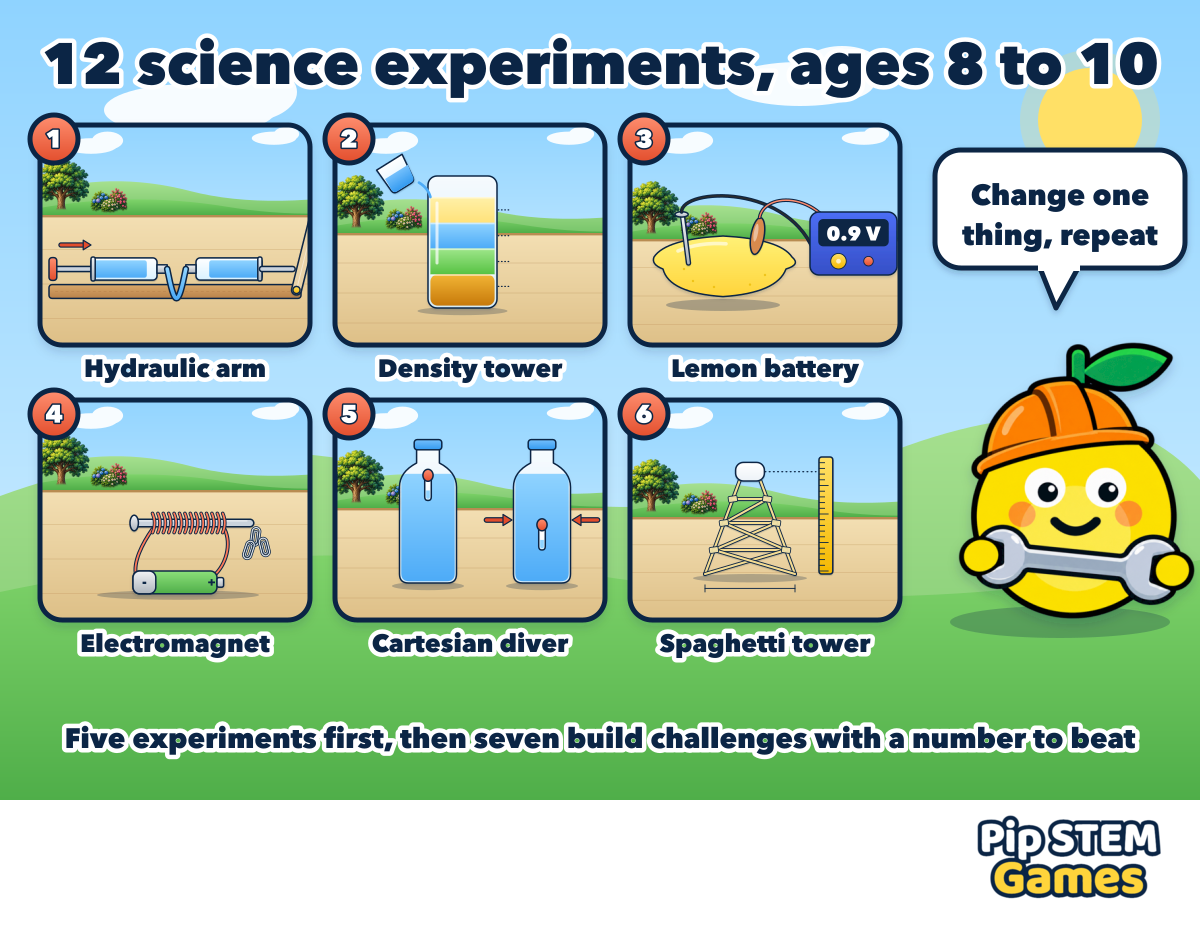
These are 12 science experiments for 10 year olds, and for 8 and 9 year olds too: five experiments first, then seven build challenges with a number to beat.
1. Hydraulic arm
Two water-filled syringes make a push-and-lift arm. Ages 8–10 · 30 to 40 minutes
- 2 needle-free 10 ml syringes (caps on when not in use)
- 30 cm of aquarium tubing
- A cardboard base, tape, a lolly stick
- A tray, in case of drips
- Fill both syringes and the tubing with water and join them. Push out every air bubble.
- Tape the syringes to the base.
- Fix the lolly-stick arm so the second plunger pushes it.
- Press the first plunger. How far does the arm move for each 1 ml?
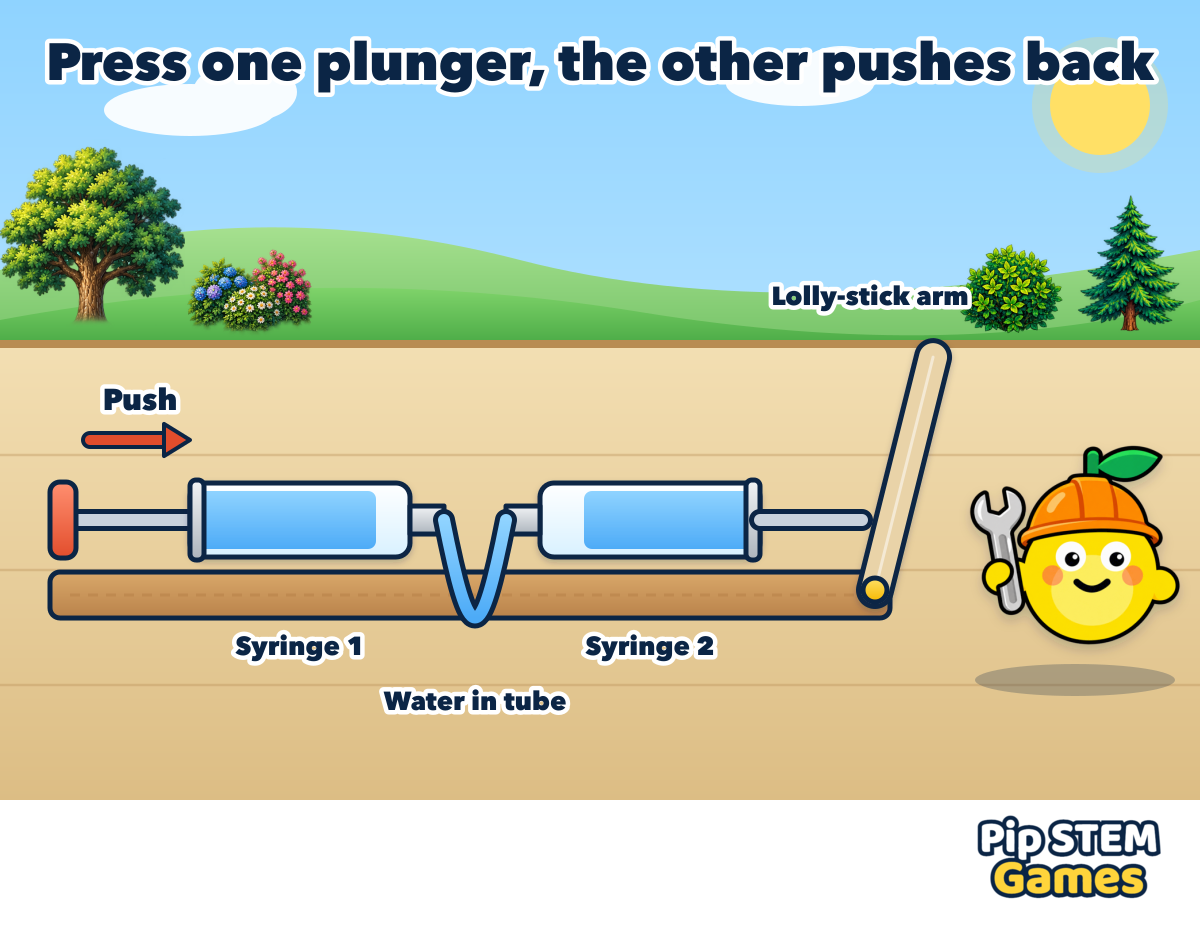
Water cannot be squashed, so the push travels along the tube. One air bubble makes the arm spongy, so refill if it feels soft.
2. Density tower
Pour four liquids into a glass and watch them stack in layers. Ages 8–10 · 15 minutes
- Honey, dish soap, coloured water, vegetable oil
- A tall clear glass
- A spoon
- A grape, a cork or a coin to drop in
- Pour the honey in first, then the dish soap, slowly down the side.
- Add the coloured water the same way, then the oil.
- Drop in a grape, cork or coin and predict where it stops.
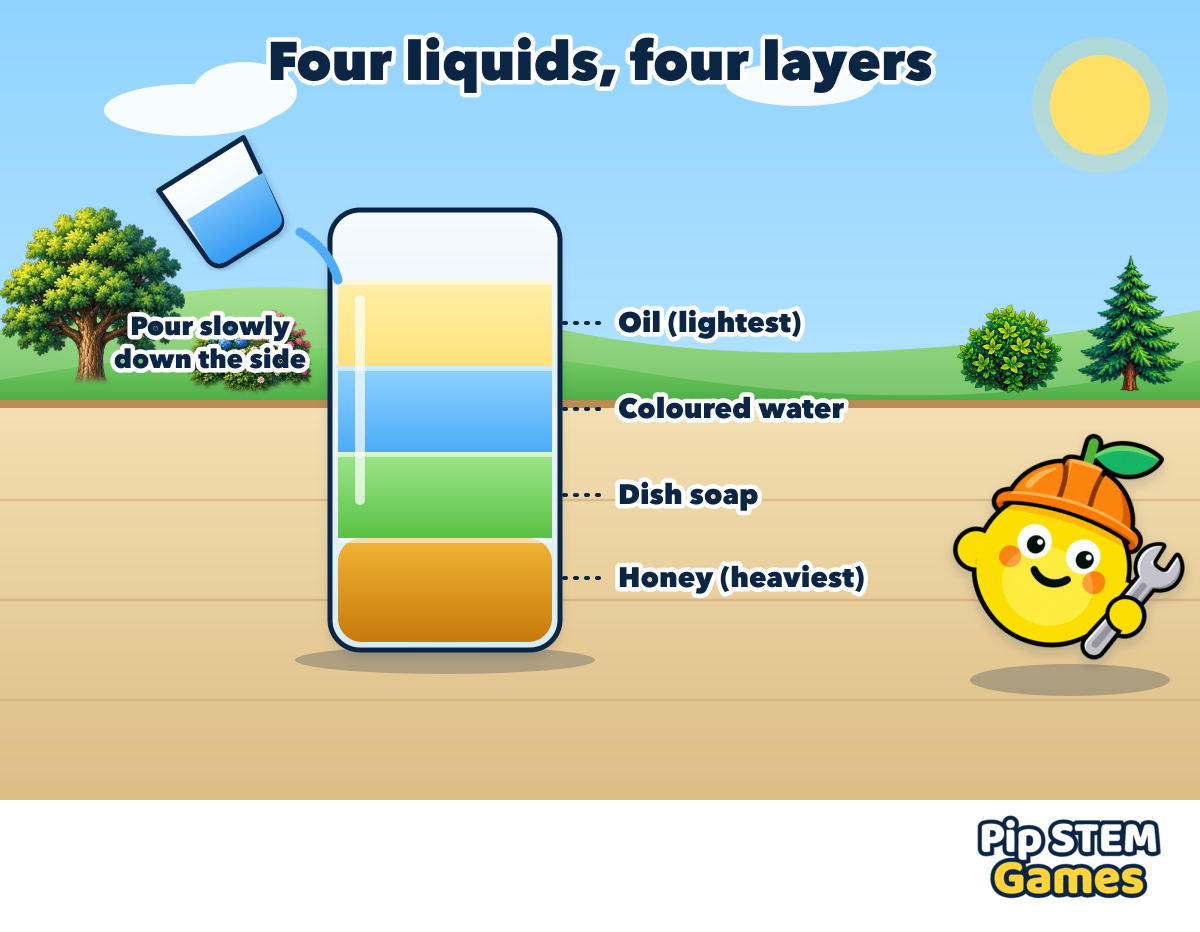
Denser liquids sink below lighter ones. If the layers mix, pour slower and use the back of a spoon.
3. Lemon battery
Make electricity from a lemon and measure it. Ages 8–10 · 20 minutes
- A lemon
- A galvanised nail and a copper coin or screw
- 2 wires with crocodile clips
- A multimeter
- Roll the lemon on the table to loosen the juice.
- Push in the nail and the copper at least 3 cm apart.
- Clip the meter to each, set to volts, and read it.
- Join the nail of the first lemon to the copper of a second lemon with a wire, then read the meter again.
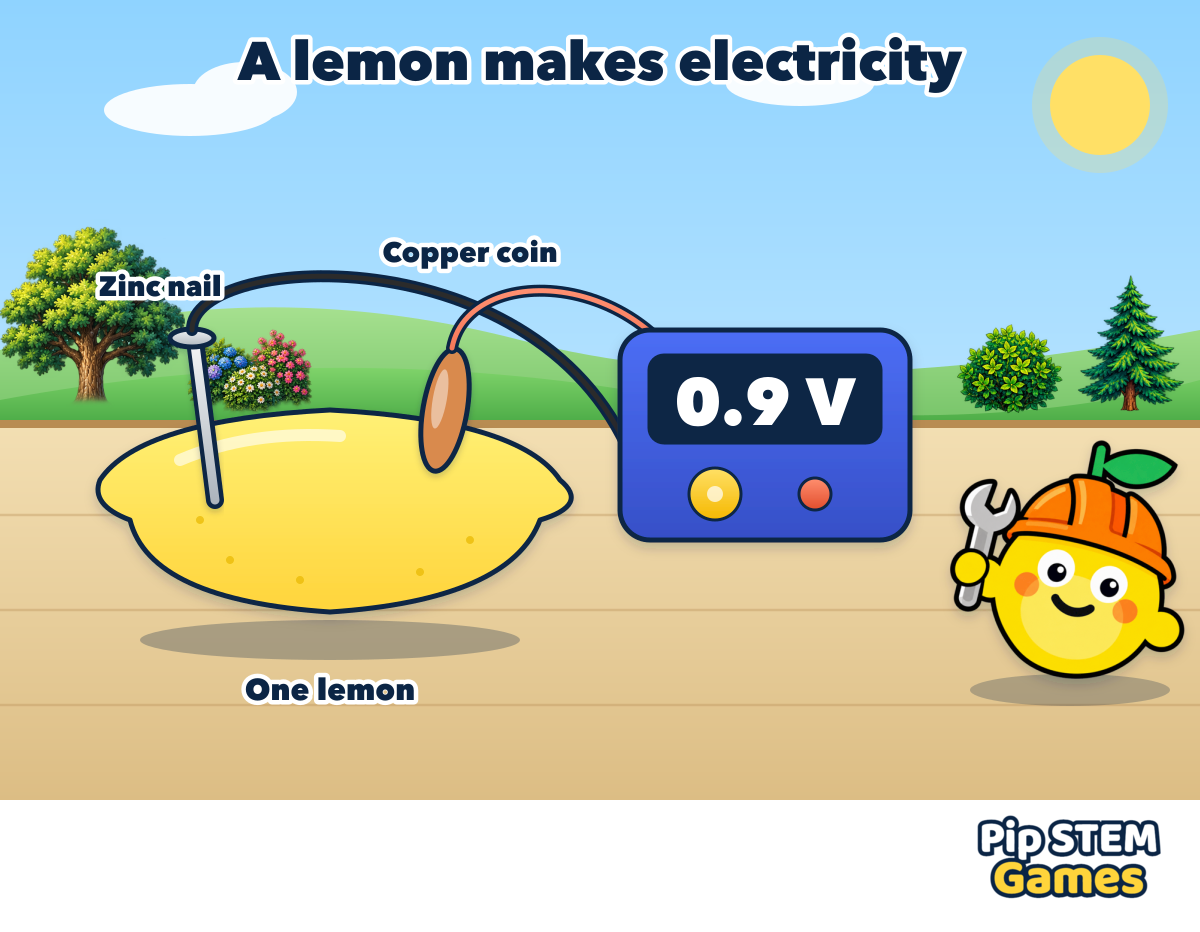
One lemon gives roughly 0.9 volts. Two lemons in a chain can dimly light a red LED.Do not eat the lemons, and keep the nail away from faces.
4. Electromagnet
Wrap wire round a nail and pick up paper clips. Ages 8–10 · 20 minutes · adult nearby
- An iron nail, about 8 cm
- 1 metre of insulated wire, ends stripped by an adult
- One 1.5 V AA battery (no button cells)
- Paper clips
- Wrap about 30 turns of wire tightly round the nail.
- An adult touches the wire ends to the battery ends for a few seconds only.
- Count the paper clips it lifts.
- Try 15 turns, then 45, and count again.
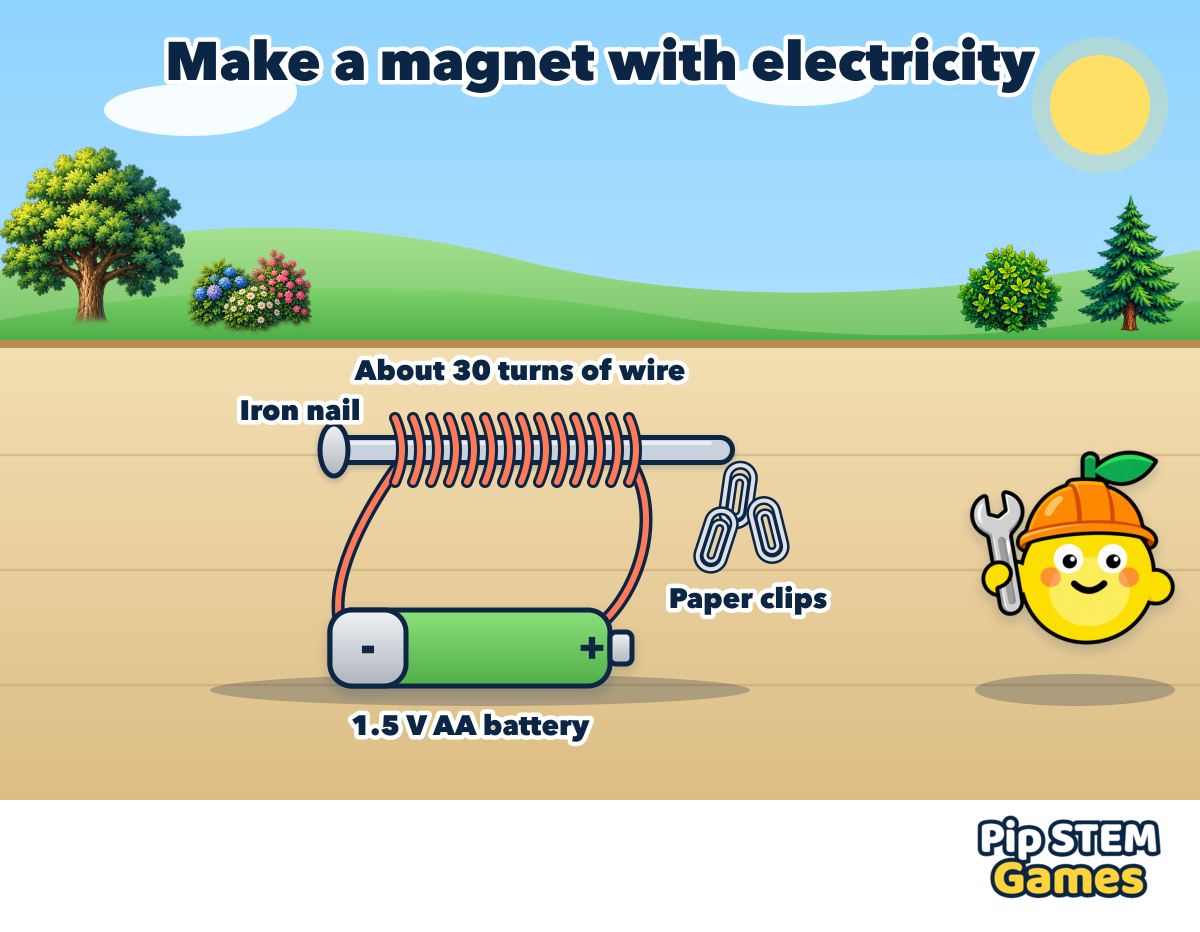
More turns usually lift more clips. The wire and battery warm up quickly. If either gets warm, an adult disconnects it at once and lets it cool before the next test, and never connect the wire to a mains socket.
5. Cartesian diver
Make a pipette sink and rise by squeezing a bottle. Ages 8–10 · 10 minutes
- A full plastic bottle with a lid
- A dropper pipette
- A bowl of water
- Half-fill the pipette with water, so it just floats.
- Drop it in the bottle, fill to the top and screw the lid on.
- Squeeze the bottle and the pipette sinks.
- Release and it rises.
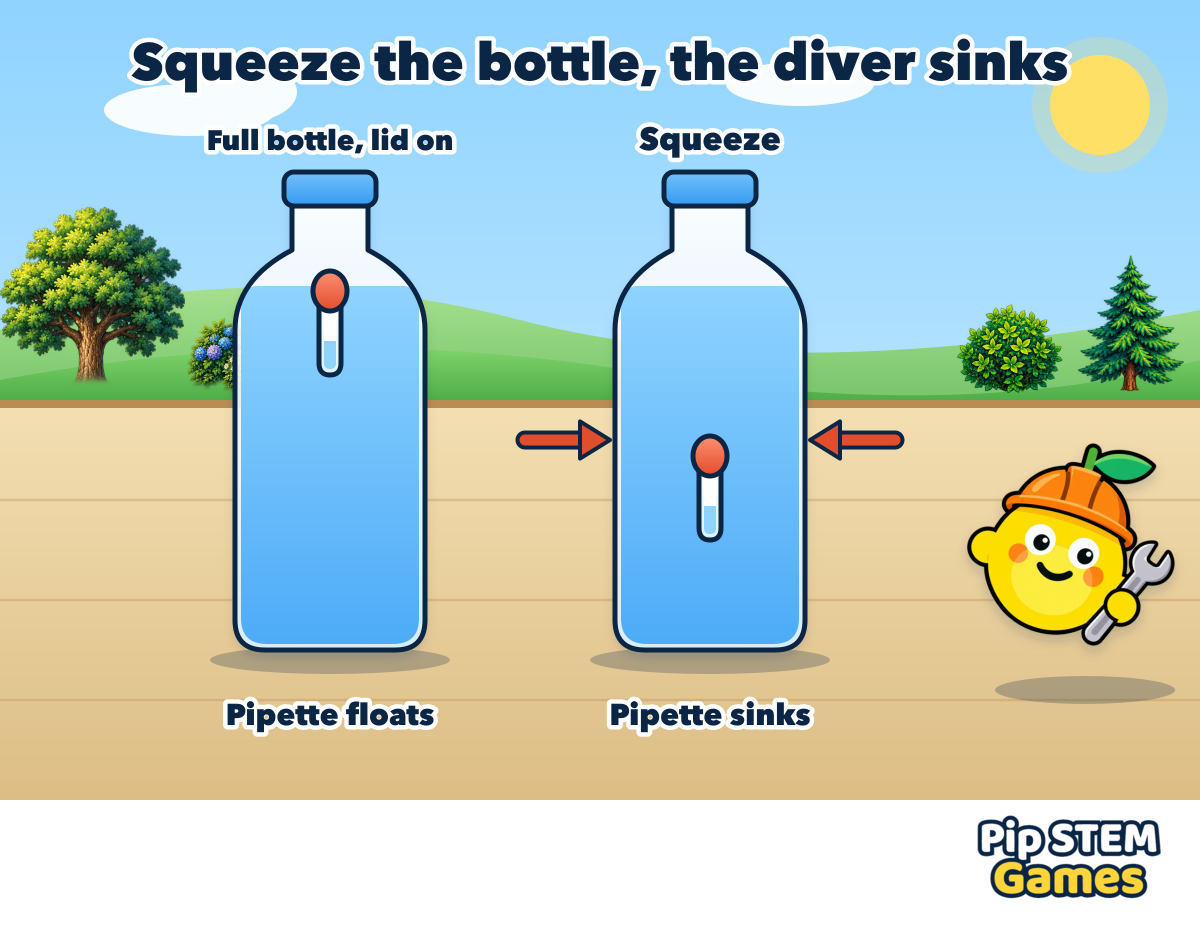
Squeezing pushes water in and squashes the air bubble, so the pipette gets heavier for its size. If it will not sink, add a bit more water to the pipette.
6. Spaghetti tower
Build the tallest tower from spaghetti and tape. Ages 8–10 · 25 minutes
- 20 sticks of dry spaghetti
- 1 metre of masking tape
- 1 marshmallow
- A ruler and a timer
- Set an 18 minute timer.
- Build a wide base and bring the sticks together as it rises.
- Put the marshmallow on top.
- Measure the height and rebuild to beat it.
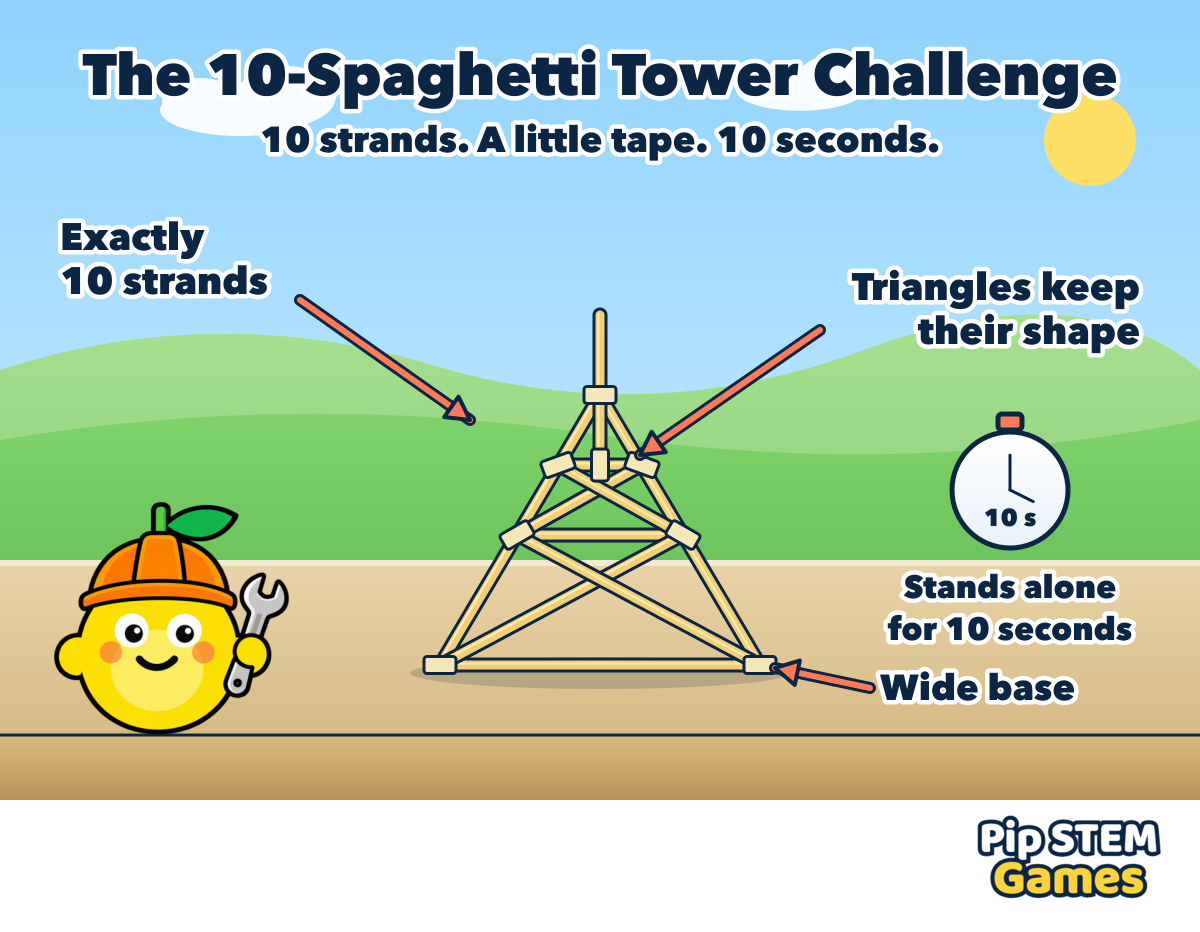
Triangles in the legs make it stiff. Check for wheat and gelatin allergies first. Rebuild after it falls; see the 10 spaghetti tower challenge.
7. Balloon-powered car
Measure how far a balloon car travels, then improve it. Ages 8–10 · 30 minutes
- Card, 2 straws, 2 skewers, 4 bottle tops
- A balloon and tape
- A tape measure
- Build the car with wheels on skewer axles.
- Tape a straw to the top, pointing backwards, and fix the balloon to it.
- Blow up the balloon, release and measure the distance.
- Change one thing, such as wheel size, and measure again.
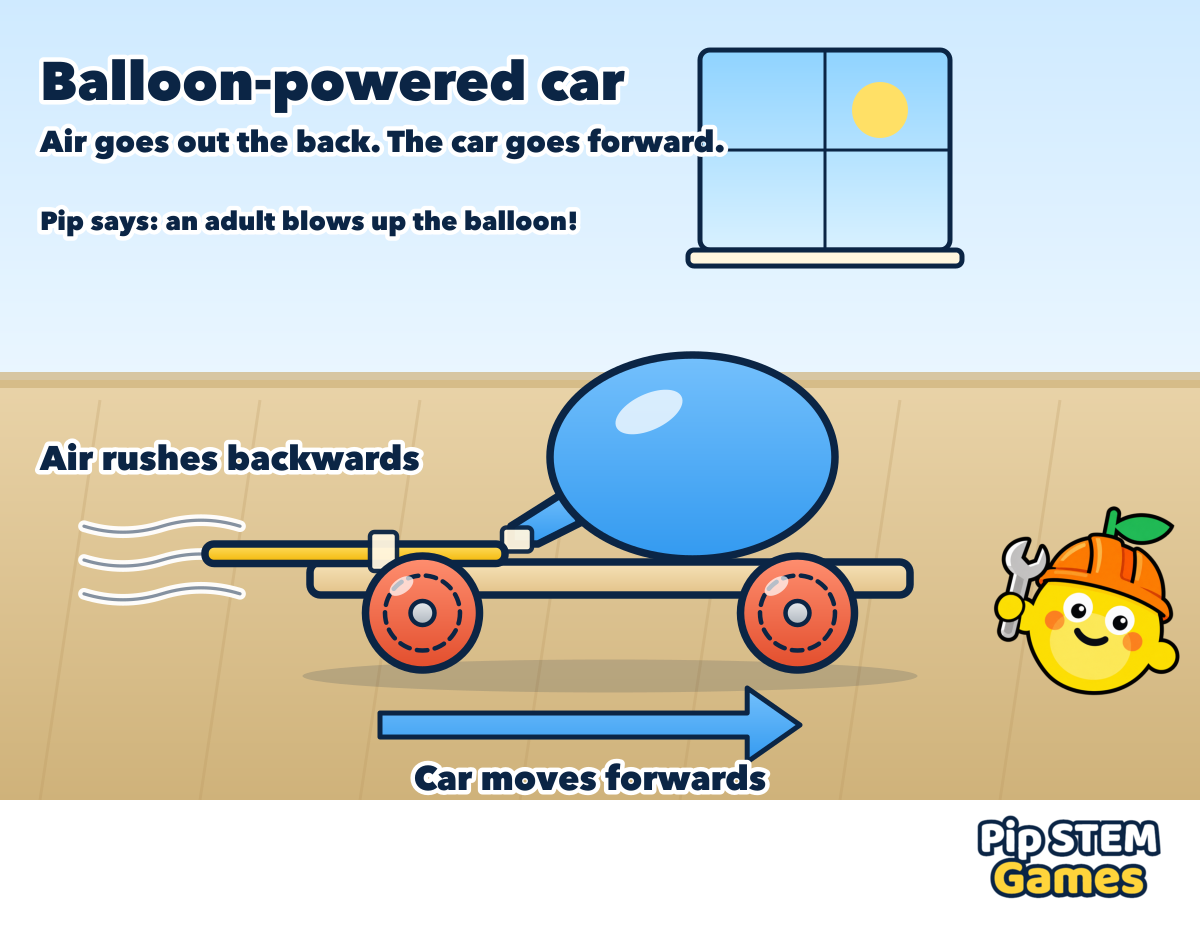
Air pushed backwards pushes the car forwards. Test on a flat floor and clear up burst balloons straight away. See the balloon car build.
8. Pulley lift
Lift a bag of coins using a pulley, then add a second wheel. Ages 8–10 · 30 minutes
- A pulley wheel or a clean cotton reel on a pencil
- A second pulley wheel or cotton reel
- String
- A small bag with a few coins
- A sturdy support
- An adult fixes the pulley to the support.
- Thread the string over the wheel and tie the bag to one end.
- Lift the bag by pulling down.
- Hang the second wheel from the bag, run the string under it, and tie the loose end to the support. Pull and compare how hard it feels.
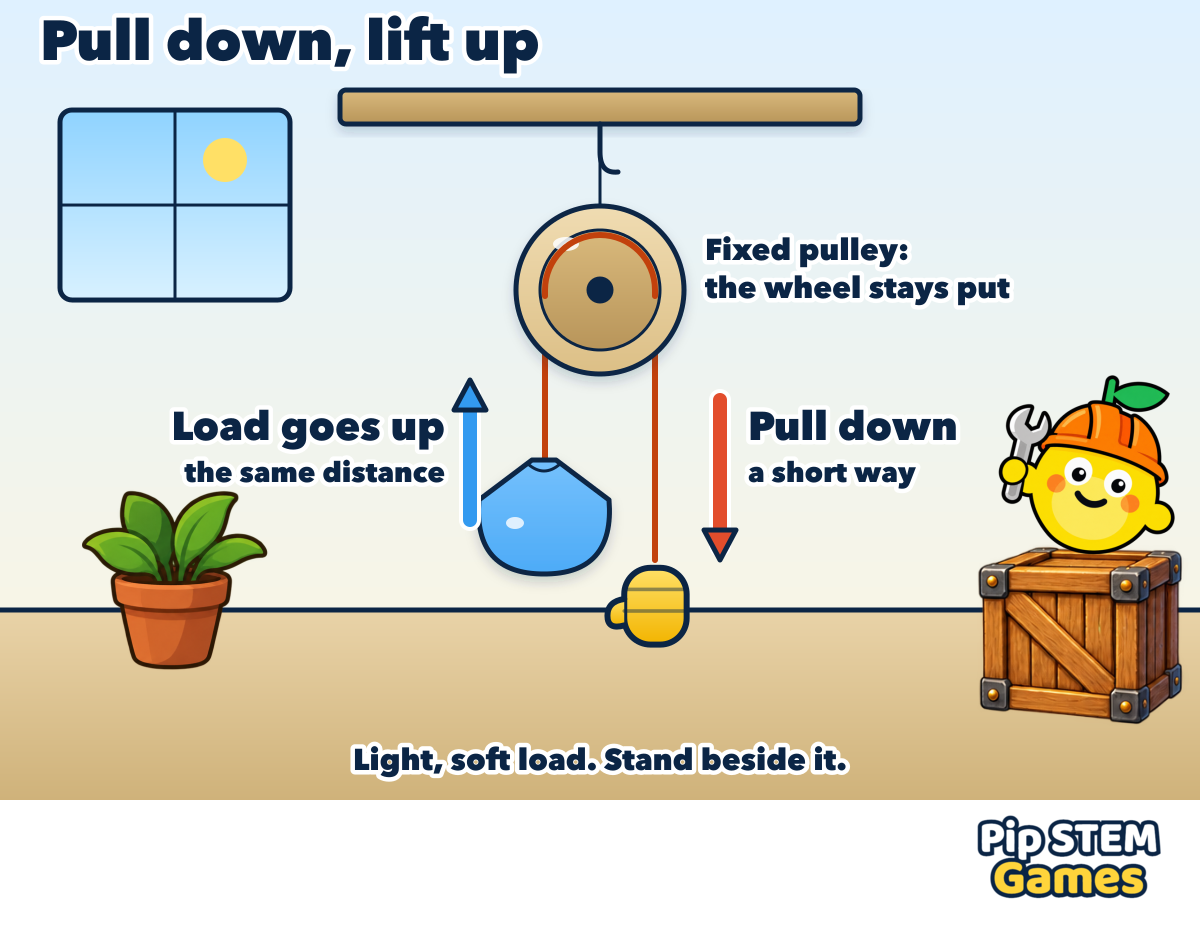
One fixed wheel only changes direction. A second wheel hanging from the load halves the pull (ignoring friction), but you pull twice as much rope. Try the Pulley Puzzle game too.
9. Cardboard marble run
Build a track that takes a marble 10 seconds or more. Ages 8–10 · 45 minutes
- Card, tubes and tape
- A marble
- A phone timer
- Build a sloped track on a box.
- Add turns, then a catch tray.
- Time the marble.
- Change slopes until you reach 10 seconds.
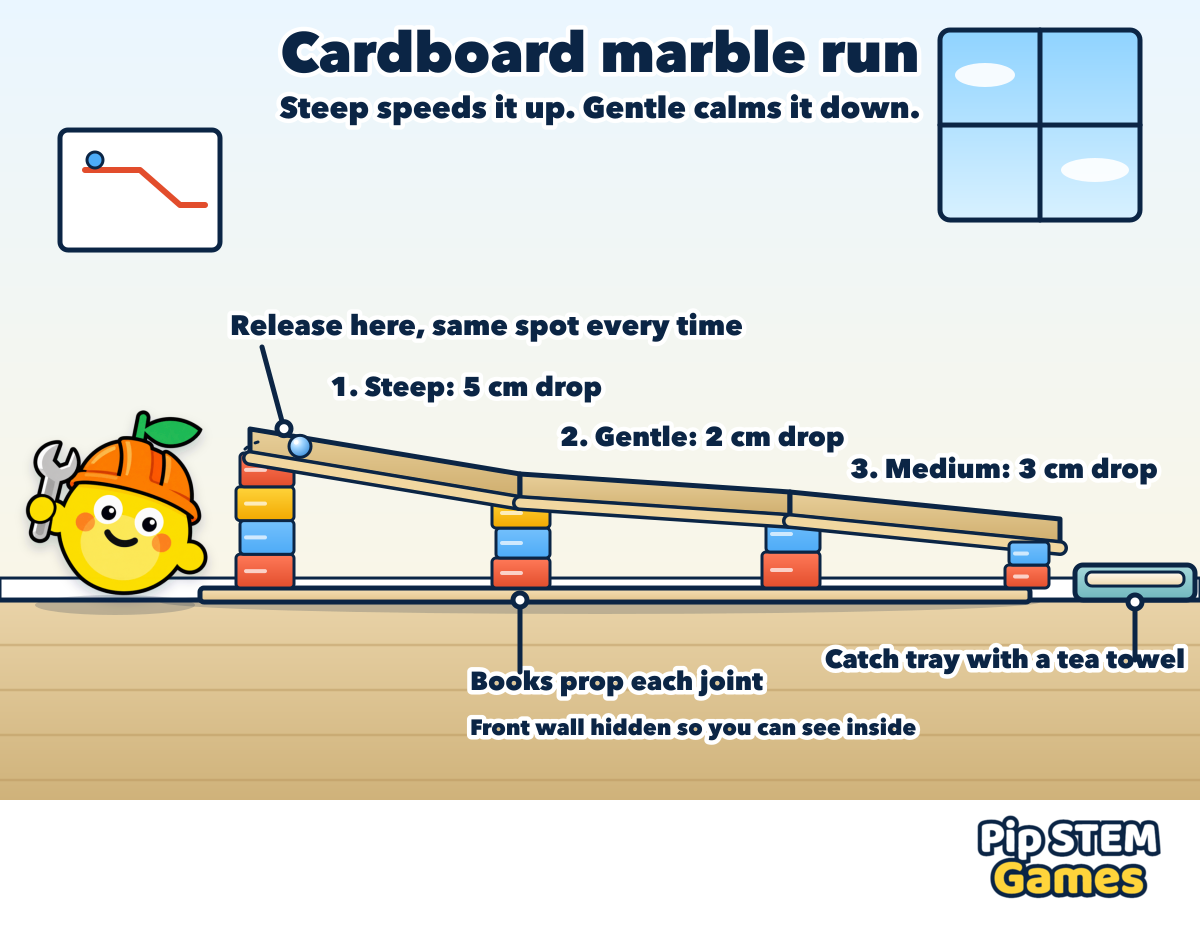
Flat sections slow the marble and steep ones speed it up. Full steps in the cardboard marble run.
10. Paper bridge
Make a one-sheet bridge that holds the most coins. Ages 8–10 · 20 minutes
- A sheet of paper
- 2 stacks of books, 20 cm apart
- Coins
- Lay the sheet flat across the gap.
- Add coins until it sags.
- Fold it into an accordion and retest.
- Record the number of coins for each design.
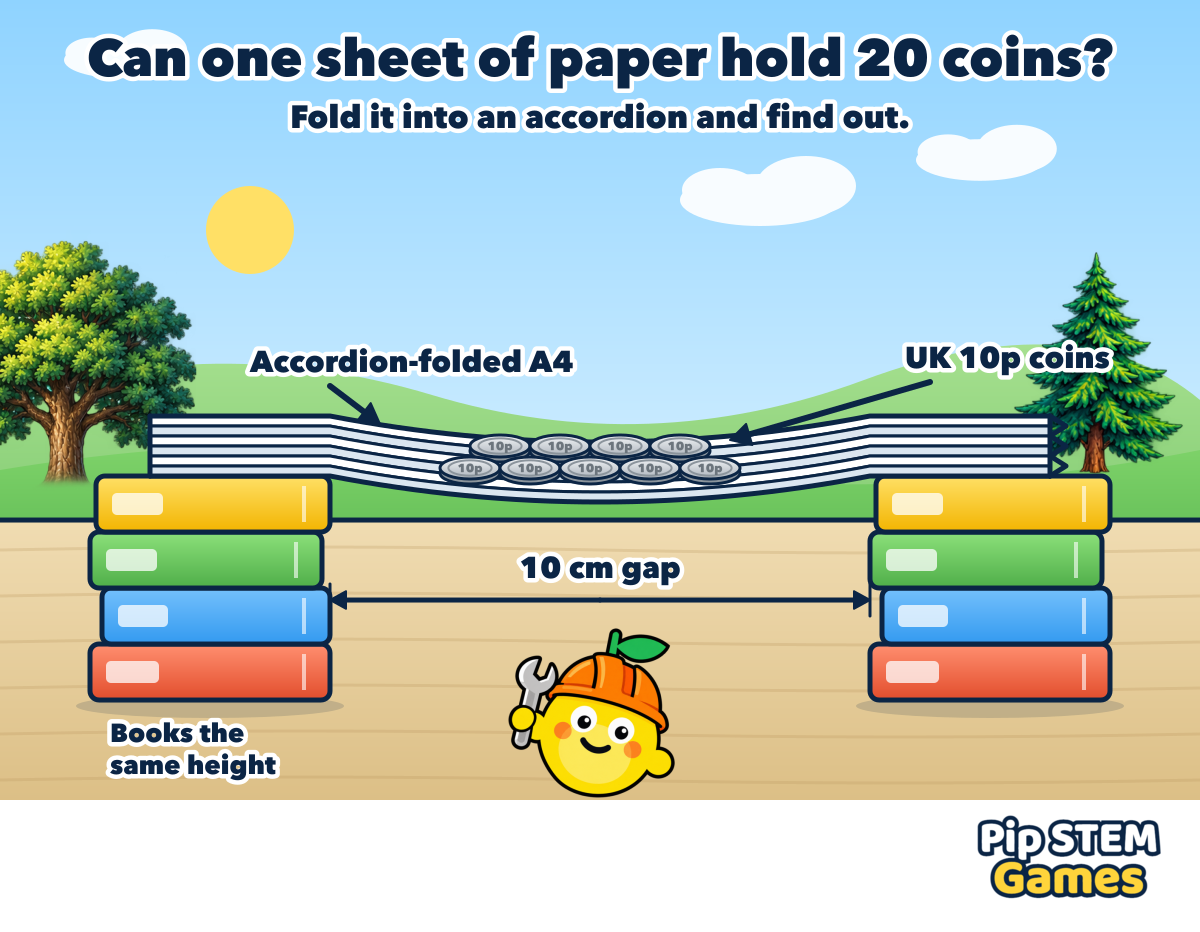
Folds make paper stiffer. Keep the paper, gap and coins the same each time so it is a fair test. See can one sheet of paper hold 20 coins?
11. Strongest shape
Test which frame shape resists squashing best. Ages 8–10 · 25 minutes
- Lolly sticks or strips of card
- Paper fasteners or tape
- A few light books
- Make a triangle, a square and a square with a diagonal brace.
- Press down gently on each frame.
- Stack books on each to see which holds.
- Record which wobbled first.
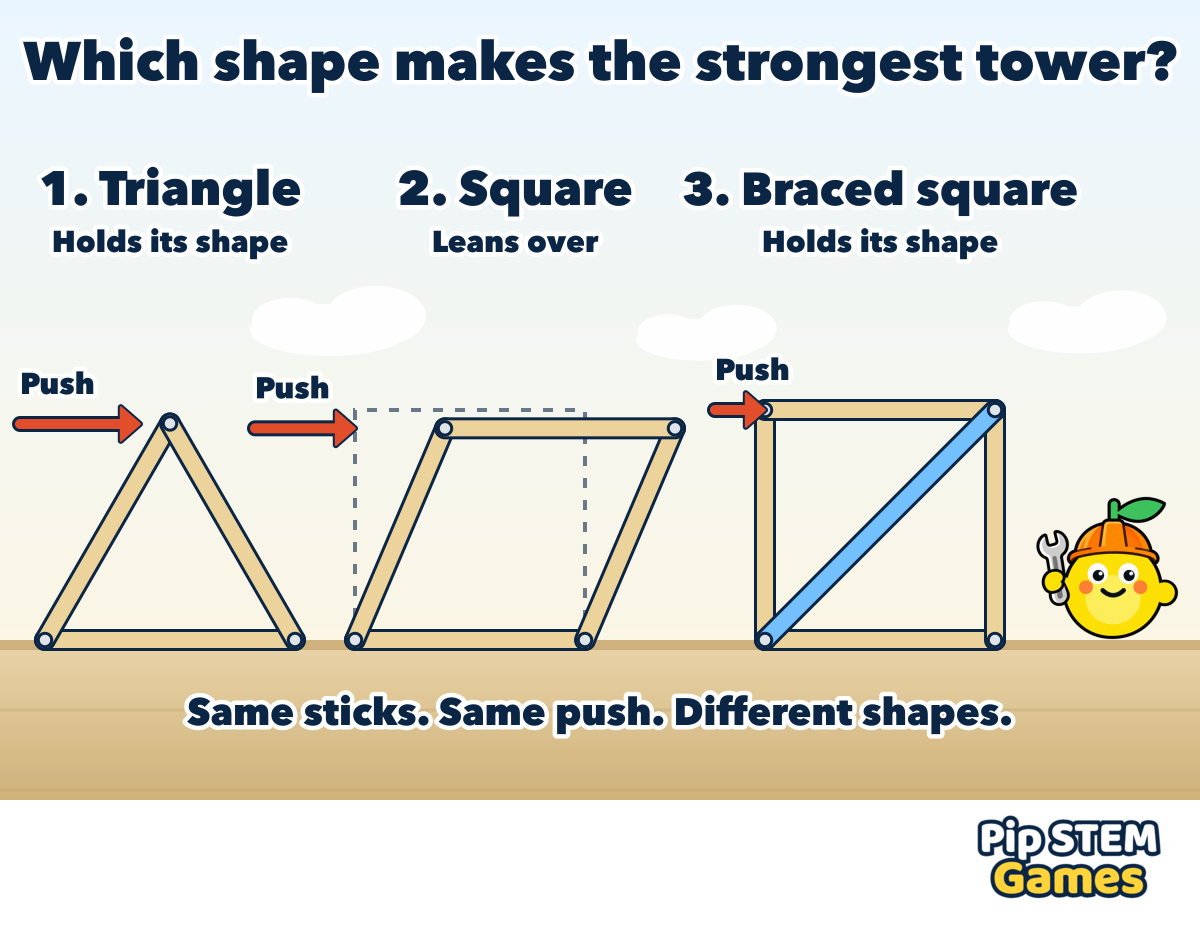
A triangle cannot change shape unless one of its sides changes length, so it resists squashing. A diagonal brace turns a square into two triangles. See which shape makes the strongest tower.
12. Floating foil boat
Design a foil boat that holds the most pennies. Ages 8–10 · 25 minutes
- Squares of kitchen foil, 20 cm
- A basin of water
- Pennies or washers
- A towel
- Fold the foil into a boat.
- Float it and add pennies near the middle, one at a time.
- Count how many it carries before water comes in.
- Redesign and beat your own record.
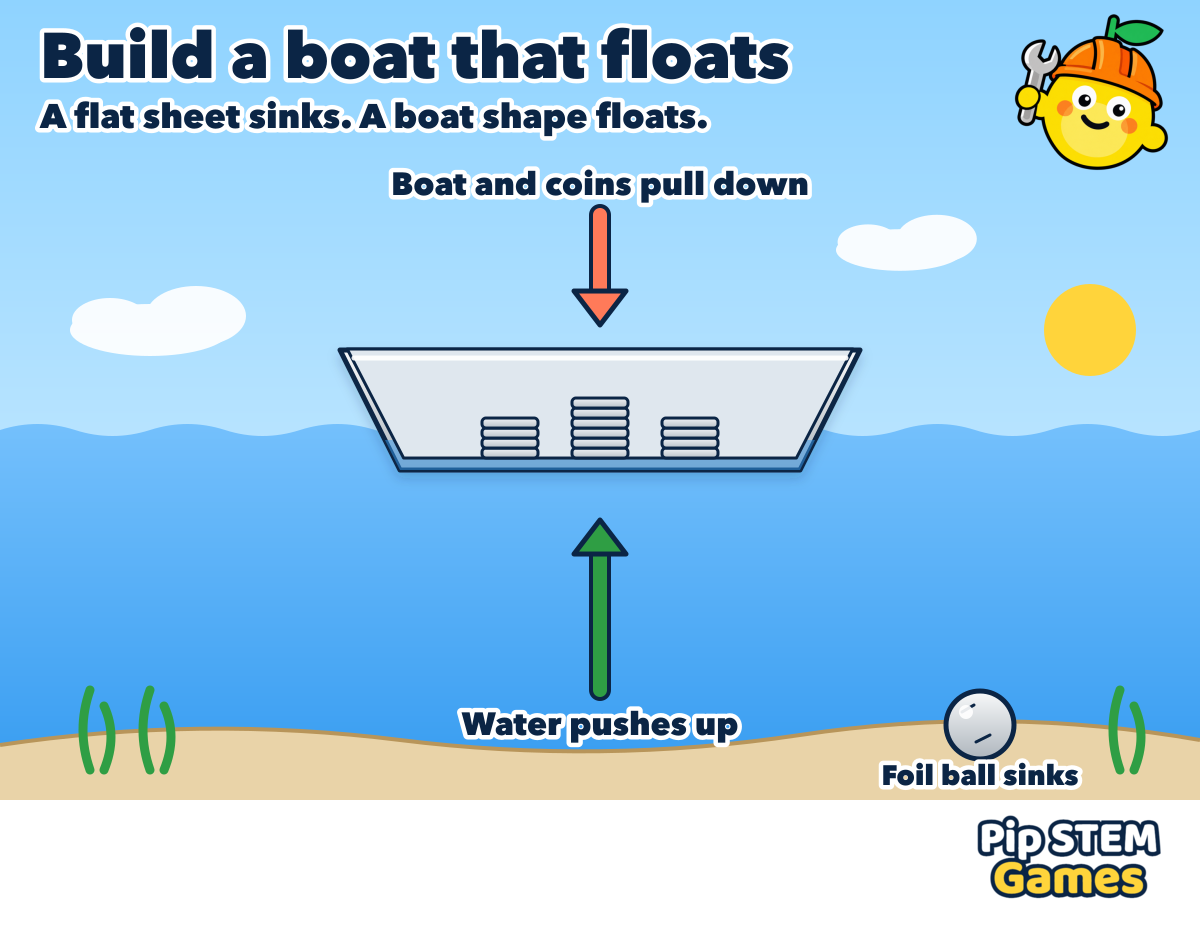
A wide hull pushes aside more water, so it carries more. Dry up spills; see how to build a boat that actually floats.
How much to help
Help less than you think you should. Do the dangerous parts yourself (hot glue, blades, mains electricity) and ask questions instead of giving answers: "What did you change?" and "Why do you think it fell?" Wait ten seconds before suggesting anything.
For more practice at engineering thinking, the Senior Engineers workbook turns pulleys, gears and circuits into pencil-and-paper challenges for ages 8 to 12. Use AA batteries only, never button cells, and never connect anything to the mains.
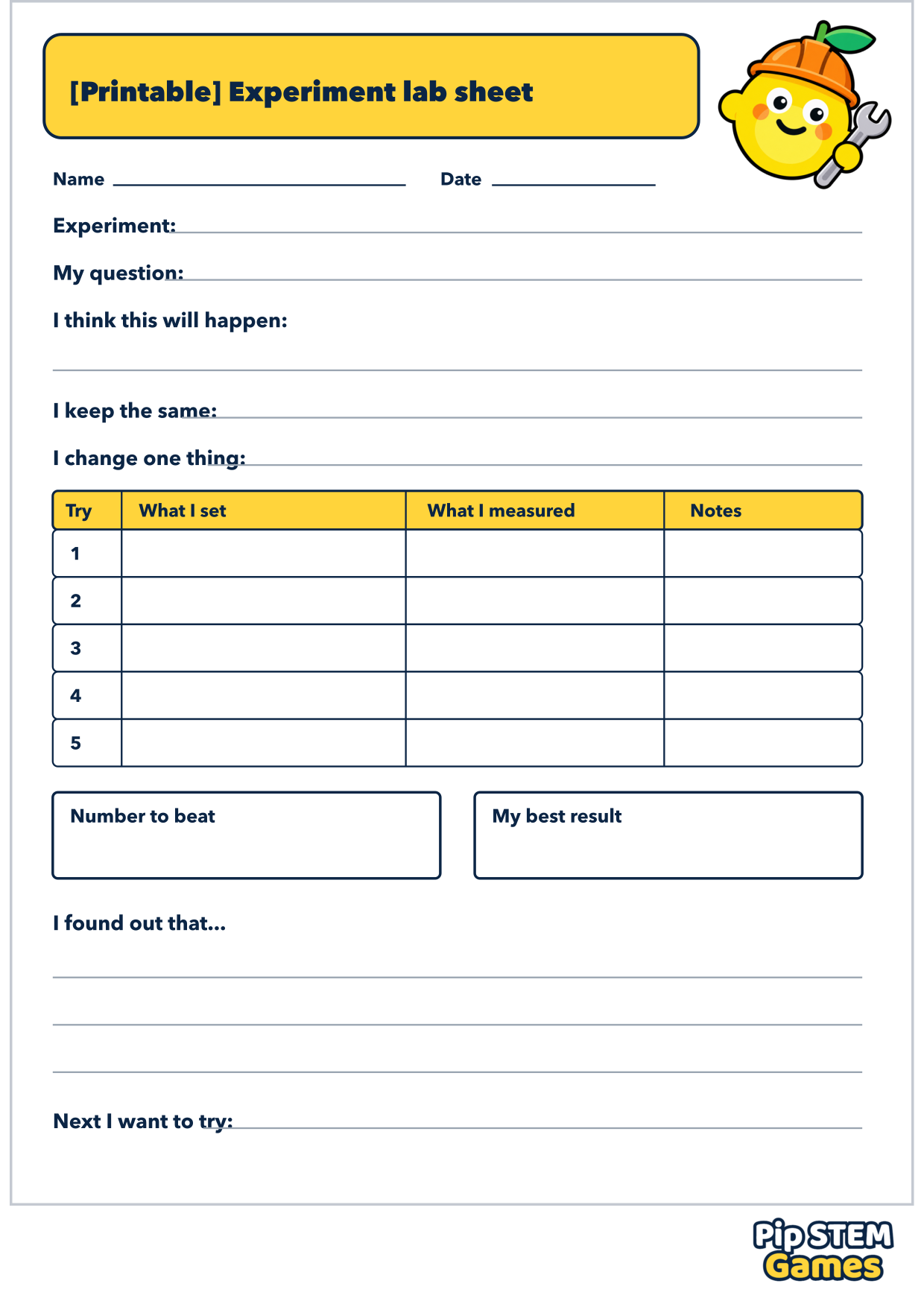
Print this lab sheet and fill it in for any experiment.
Questions parents ask
What are good STEM activities for a 9 year old?
Build challenges with a number to beat work best: a spaghetti tower, a balloon car, a pulley that lifts a bag of coins or a marble run. Add an experiment such as a density tower or lemon battery for variety. Aim for 20 to 40 minutes per activity.
What science experiments can a 10 year old do on their own?
Most 10 year olds can run a density tower, a cartesian diver and a hydraulic arm with little help. Keep batteries, hot glue and sharp tools supervised. Let them write down a prediction first.
How do I make STEM fun if my child gets bored easily?
Give them a score to beat and a free choice of materials. Short rounds of 10 to 15 minutes, with a rebuild between them, often work better than one long session. Letting them design the challenge for you also helps.
Is a lemon battery really safe?
Yes. A lemon battery produces about 0.9 volts and very little current, which is harmless. Don't eat the lemons after pushing metal into them, and keep the nail away from faces.
How many STEM activities should we do each week?
One or two a week is plenty. Consistency beats volume, and a single activity repeated with a twist teaches more than five different ones.
Great STEM activities to try next...
 The 10-Spaghetti Tower Challenge [Printable]Build challenge
 Build a Simple Pulley With Household Items [Printable]Build challenge
 Which Bridge Would You Build? Beam, Arch or Truss [Printable]Build challenge
More to try: 12 STEM Activities for 5 to 7 Year Olds · 8 STEM Activities for KS1 (Year 1 and Year 2) · 8 STEM Activities for KS2 (Year 3 to Year 6)

Pip STEM Games
We make engineering games and workbooks for kids aged 5 to 12. Every activity here is one we'd happily run at the kitchen table: test it, watch it fail, fix it, try again.




