

Key takeaways
- Ten-year-olds want a challenge with a number to beat, not a list of ideas.
- Twelve builds and puzzles, mostly from things already in the house.
- Start with a 10 minute challenge and move up to a 45 minute build.
- Raise or lower the target to suit a 9 or a 12 year old.
- Adults handle scissors, knives and anything hot, and supervise balloons.
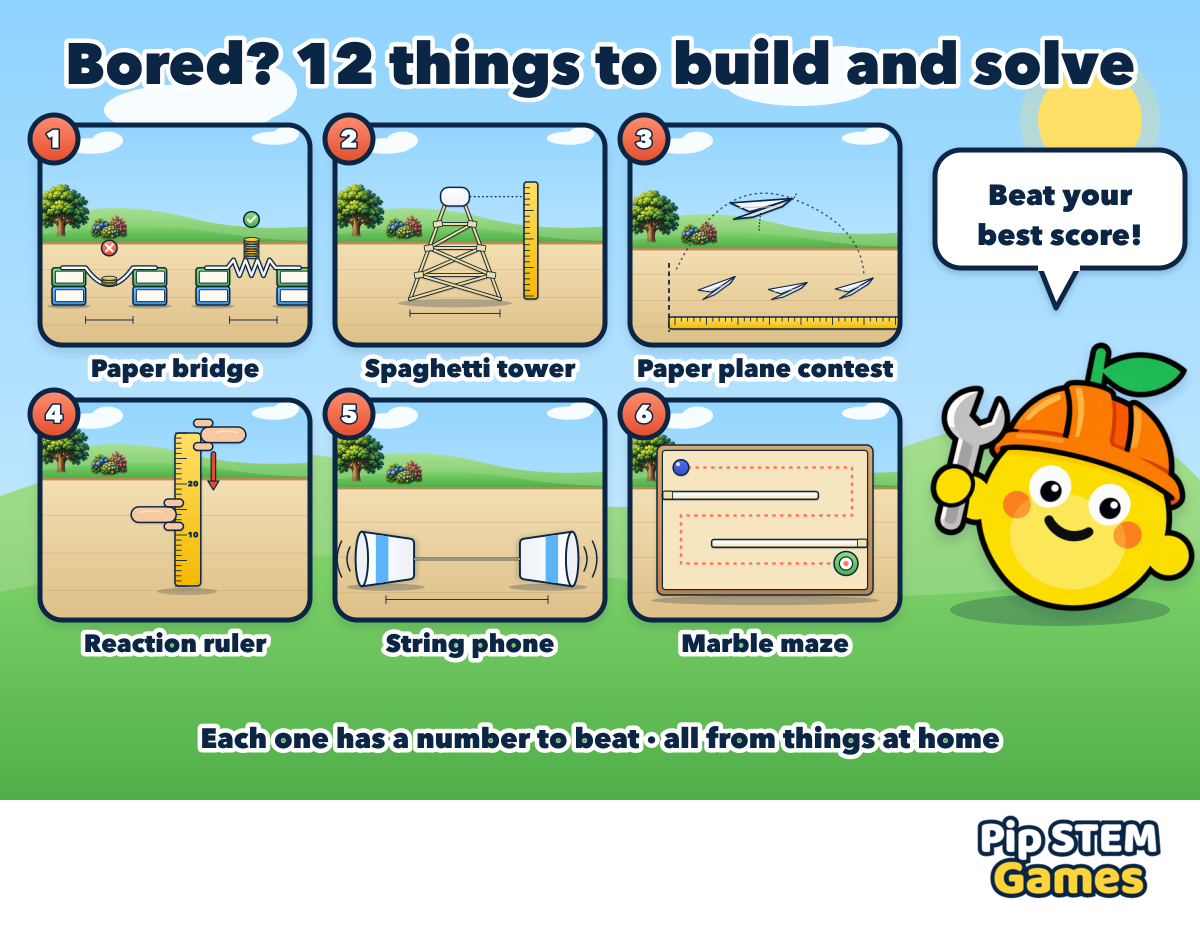
Here is what to do when bored for 10 year olds at home: 12 things to build and solve, each with a number to beat.
1. Paper bridge
Make one sheet of paper hold as many coins as you can. Ages 8–12 · 15 minutes
- A sheet of A4 paper
- 2 stacks of books, 20 cm apart
- 20 coins
- Lay the paper flat across the gap and add coins one at a time.
- Fold the paper into an accordion and try again.
- Beat your own coin count with a new fold.
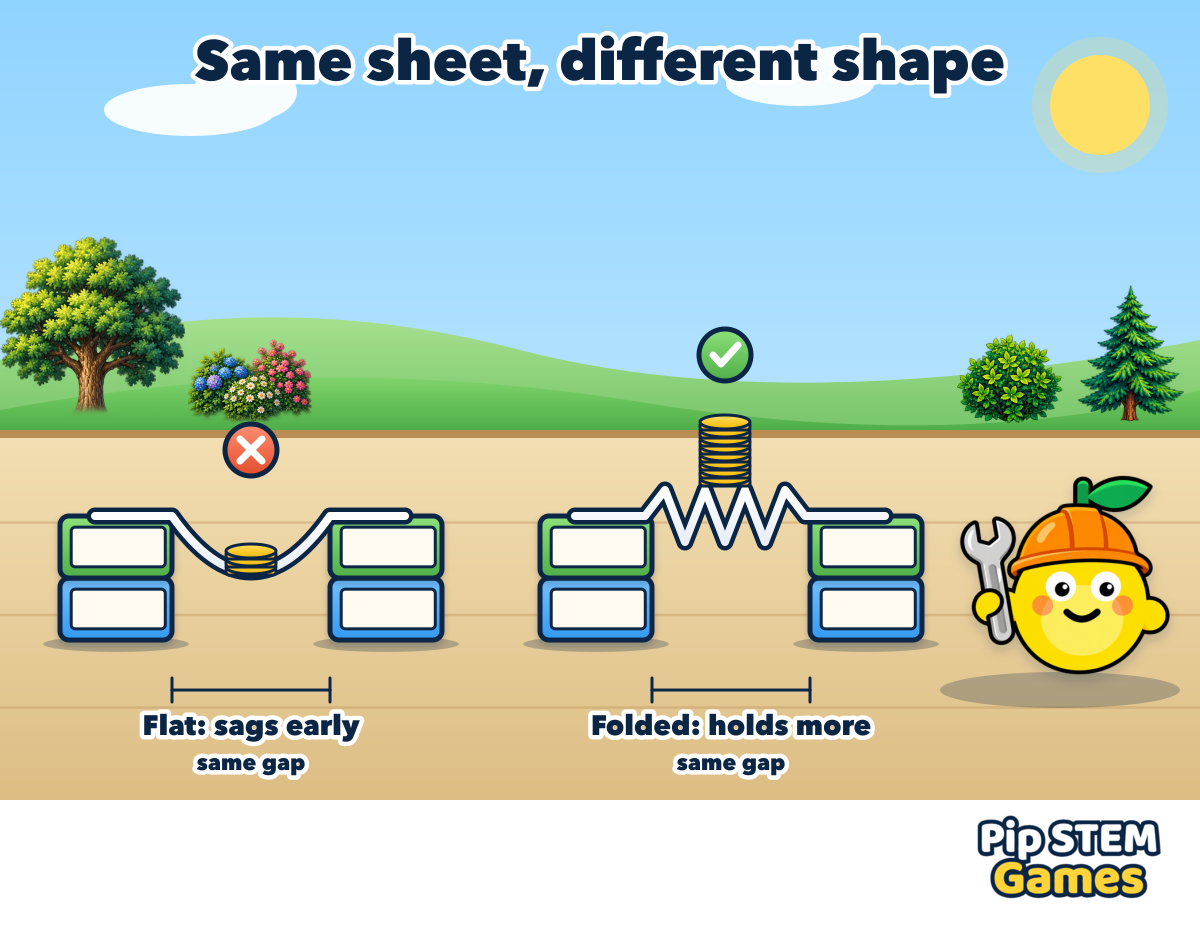
Folds make paper stiff. If it sags early, add more folds. See one sheet of paper and 20 coins.
2. Spaghetti tower
Build the tallest freestanding tower you can in 18 minutes. Ages 8–12 · 30 minutes
- 20 sticks of dry spaghetti
- Masking tape
- A marshmallow
- A ruler
- Tape a wide base on the table.
- Bring the sticks together as it rises.
- Add the marshmallow and measure the height.
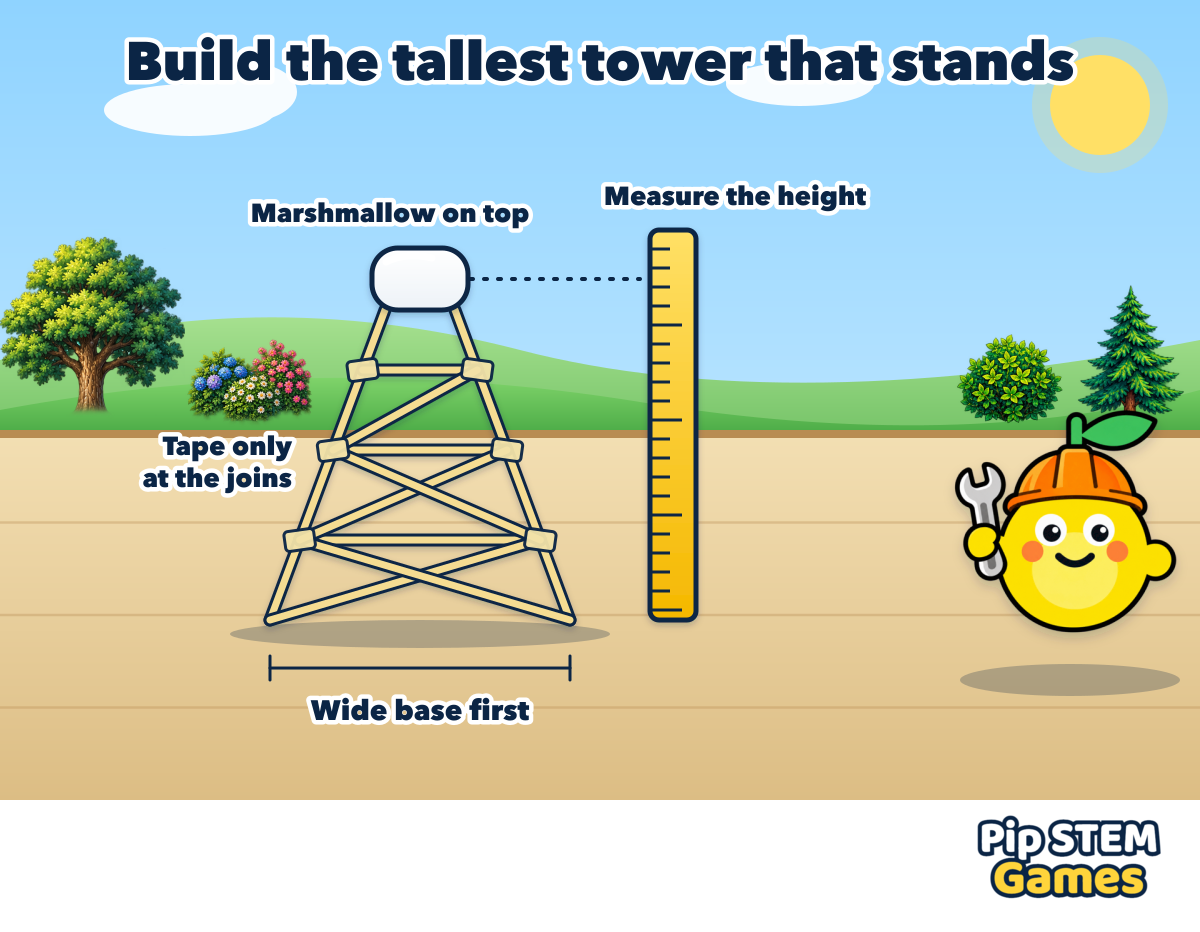
A wide base stops it tipping. Rebuild after a fall; the spaghetti tower challenge has more tips. Check for allergies before using the marshmallow.
3. Paper plane contest
Fold three planes and find which flies furthest. Ages 8–12 · 20 minutes
- 3 sheets of A4 paper
- A tape measure
- A clear hallway
- Fold three different designs.
- Throw each one three times from the same line, away from faces.
- Measure each landing and keep the best score.
- Add a paperclip to the nose and throw again.
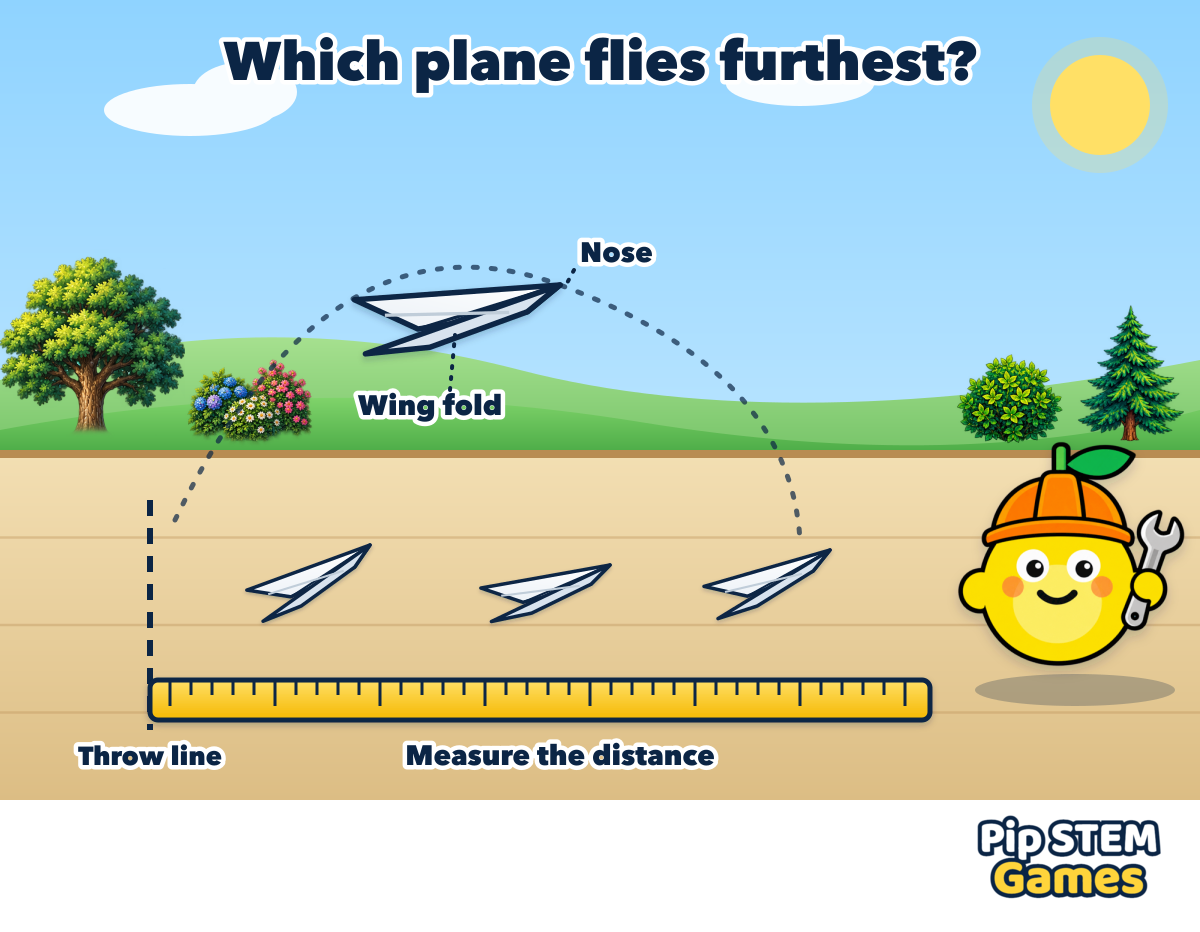
Weight at the nose steadies the flight. Try the Paper Plane Lab game when it rains.
4. Reaction ruler
Test how quickly you can catch a falling ruler. Ages 8–12 · 10 minutes
- A 30 cm ruler
- A friend or family member
- Hold the ruler at the top with its zero end between their open fingers.
- Drop it without warning.
- They catch it. Read the number at their top finger.
- Swap roles and compare.
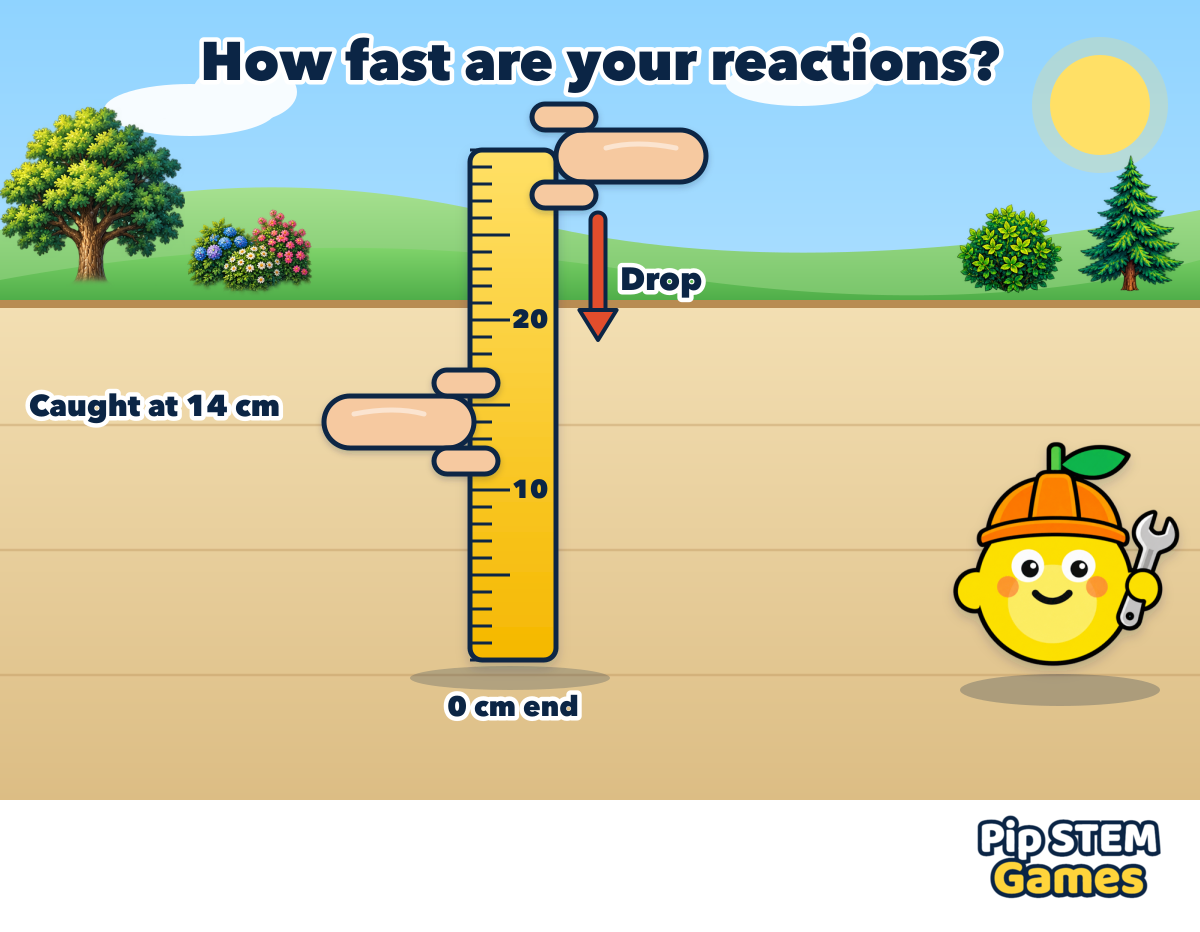
Short catches mean fast reactions. Try again with the other hand and see if it changes.
5. String phone
Make two cups talk across a room. Ages 8–12 · 15 minutes
- 2 paper cups
- 3 metres of string
- A pencil to make a hole (adult helps)
- A paperclip each
- An adult makes a small hole in the bottom of each cup.
- Thread the string through and tie each end to a paperclip inside the cup.
- Walk apart until the string is tight.
- Talk into one cup while a friend listens at the other.
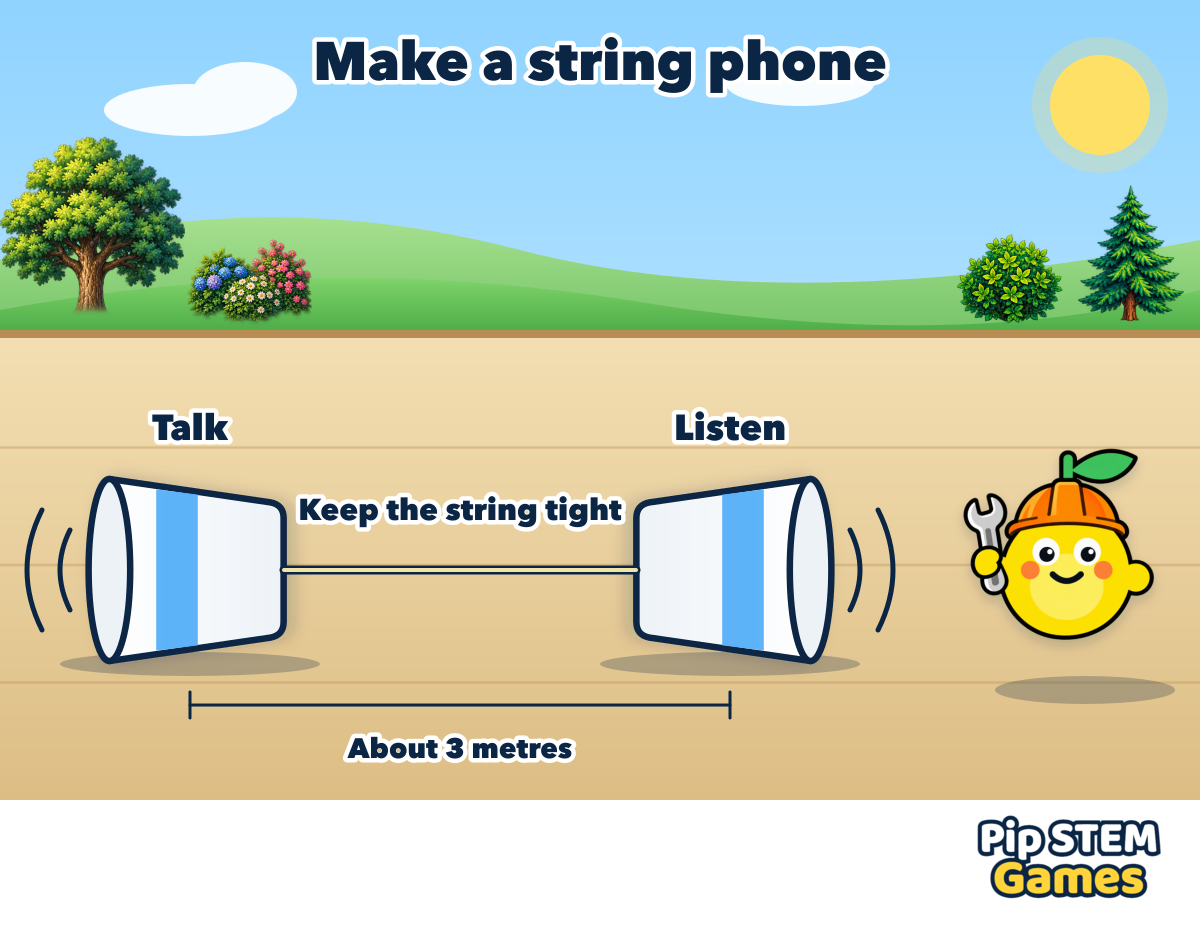
Sound shakes the string. If you cannot hear, pull the string tighter and keep it off the furniture. Never loop string round a neck or finger.
6. Marble maze
Build a maze in a box lid and steer a marble to the goal. Ages 8–12 · 30 minutes
- A shallow box lid
- Cardboard strips
- Tape
- A marble
- Tape two card walls across the lid, each with a gap at opposite ends.
- Mark Start and Goal.
- Tilt the lid to guide the marble round.
- Add a third wall to make it harder.
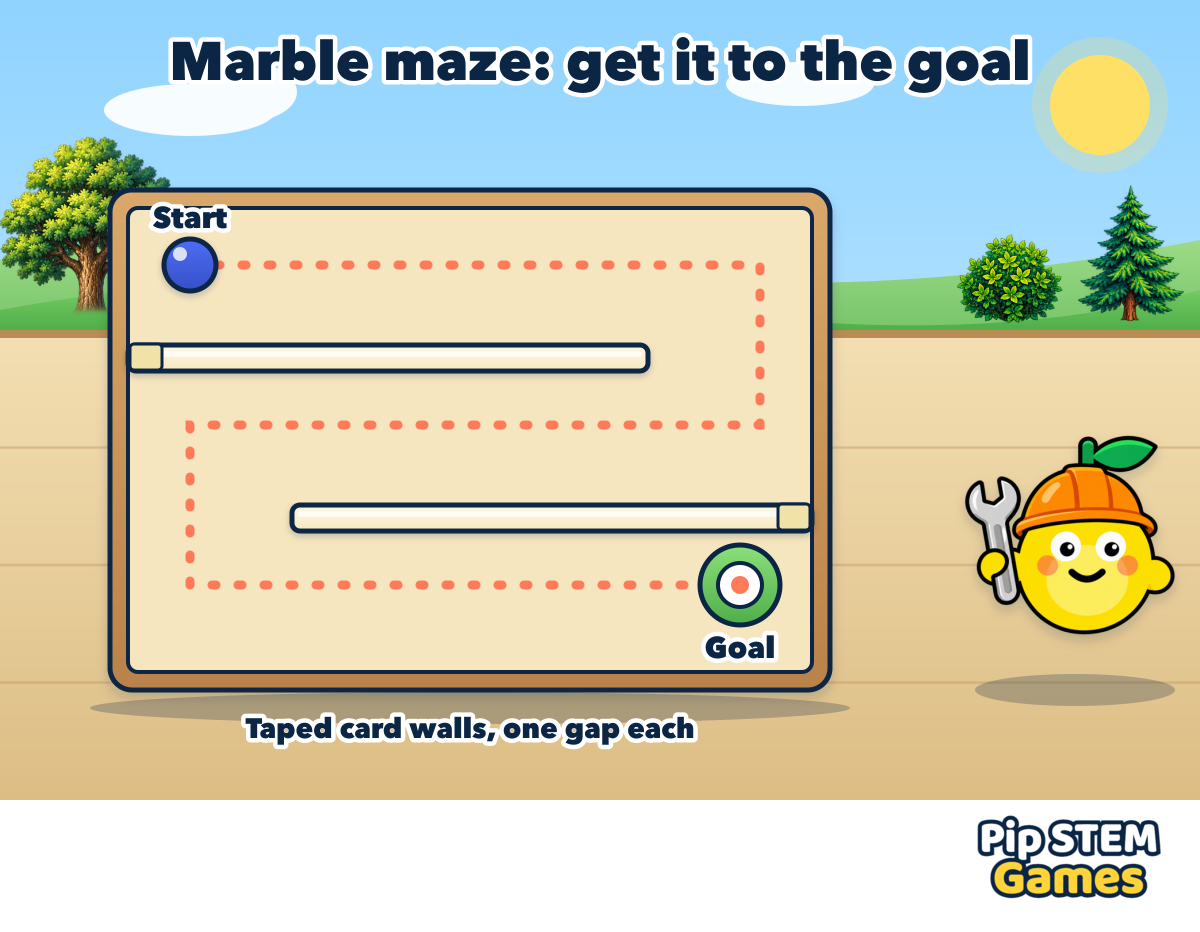
Make gaps wider if it is too hard. Keep marbles away from younger children.
7. Cardboard marble run
Make a track that takes a marble at least 10 seconds. Ages 8–12 · 45 minutes
- Card, tubes and tape
- A marble
- A phone timer
- Build a sloped track on a box.
- Add a turn and a catch tray.
- Time the marble.
- Change the slope until it takes 10 seconds.
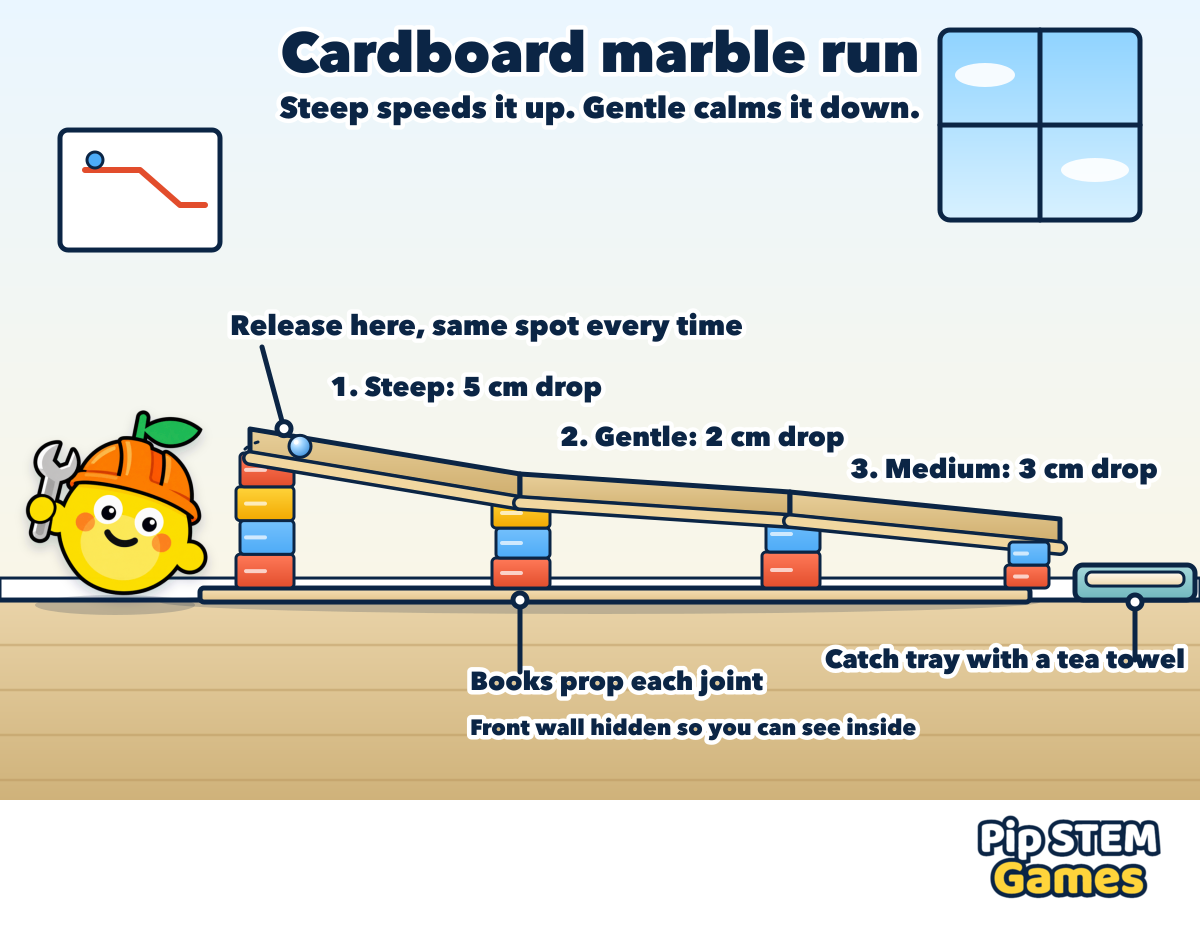
Flat parts slow it down. Steps are in the cardboard marble run.
8. Balloon-powered car
Build a car and see how far a balloon can send it. Ages 8–12 · 30 minutes
- Card, 2 straws, 2 skewers, 4 bottle tops
- A balloon and tape
- A tape measure
- Build the body and wheels on skewer axles.
- Tape a straw on top, pointing backwards, and fix the balloon to it.
- Blow up, release and measure.
- Change one thing and test again.
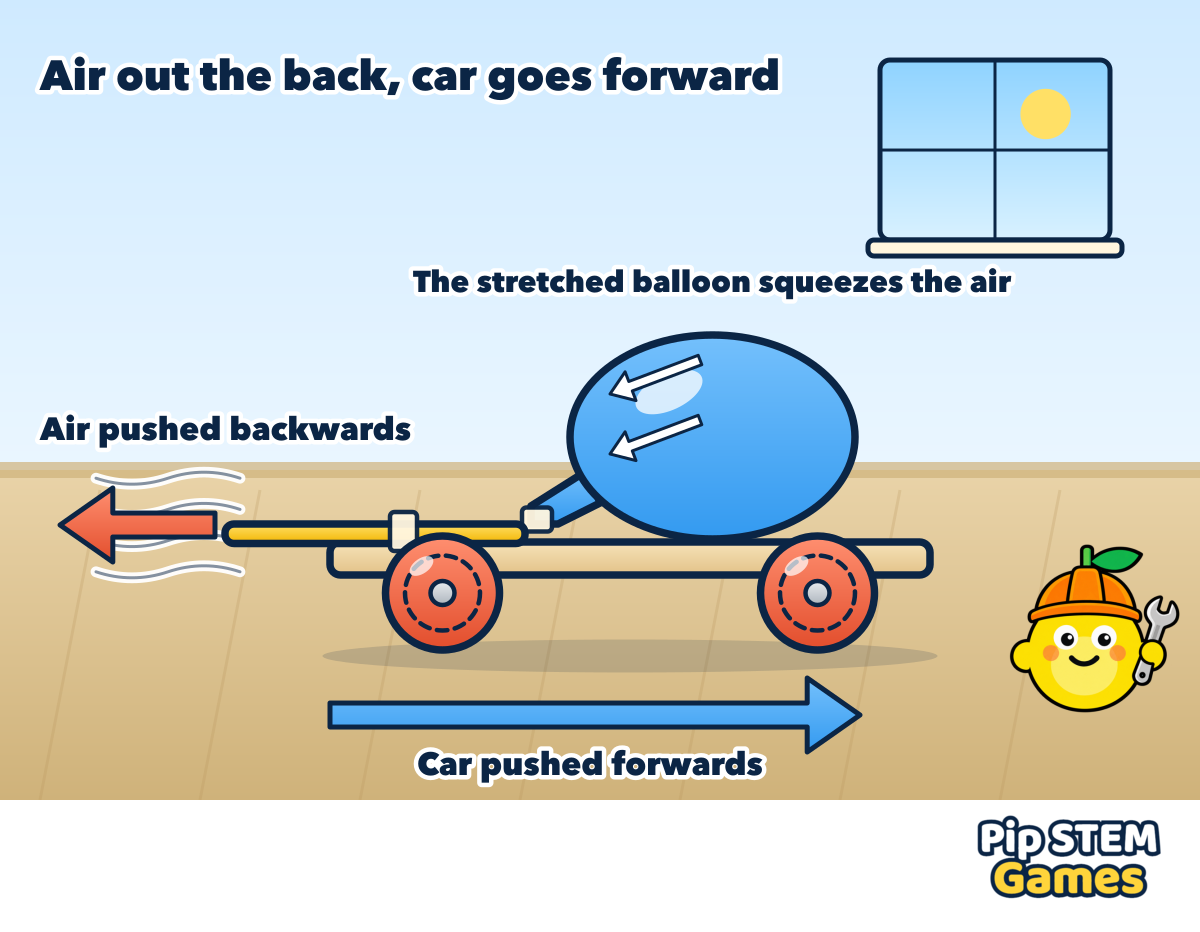
Lighter cars go further. An adult trims the skewer points and helps clear up burst balloons; see the balloon car build.
9. Foil boat
Design a boat that holds the most pennies. Ages 8–12 · 25 minutes
- Squares of kitchen foil
- A basin of water
- Pennies or washers
- Fold the foil into a boat shape.
- Float it and add pennies near the middle one at a time.
- Count how many before it sinks.
- Redesign and beat your count.
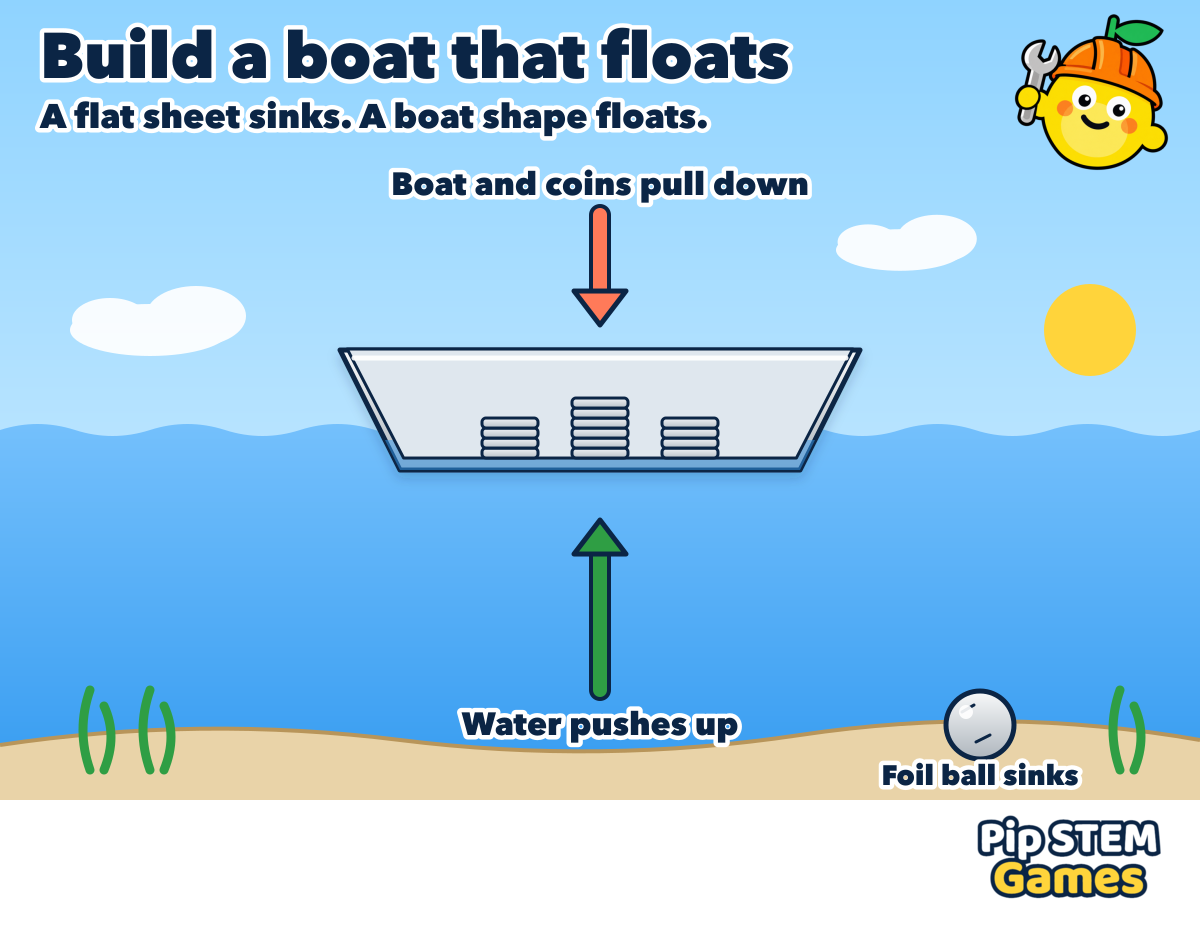
A wider hull pushes aside more water, so it carries more. Dry any spills; see how to build a boat that floats.
10. Pulley lift
Lift a bag of coins with string and a wheel. Ages 8–12 · 30 minutes
- A pulley wheel or cotton reel on a pencil
- A second pulley wheel or cotton reel
- String
- A small bag of coins
- An adult fixes the pulley to a sturdy support.
- Thread the string over it and tie on the bag.
- Pull down to lift the bag.
- Hang a second wheel from the bag, run the string under it and tie the loose end to the support. Pull and compare.
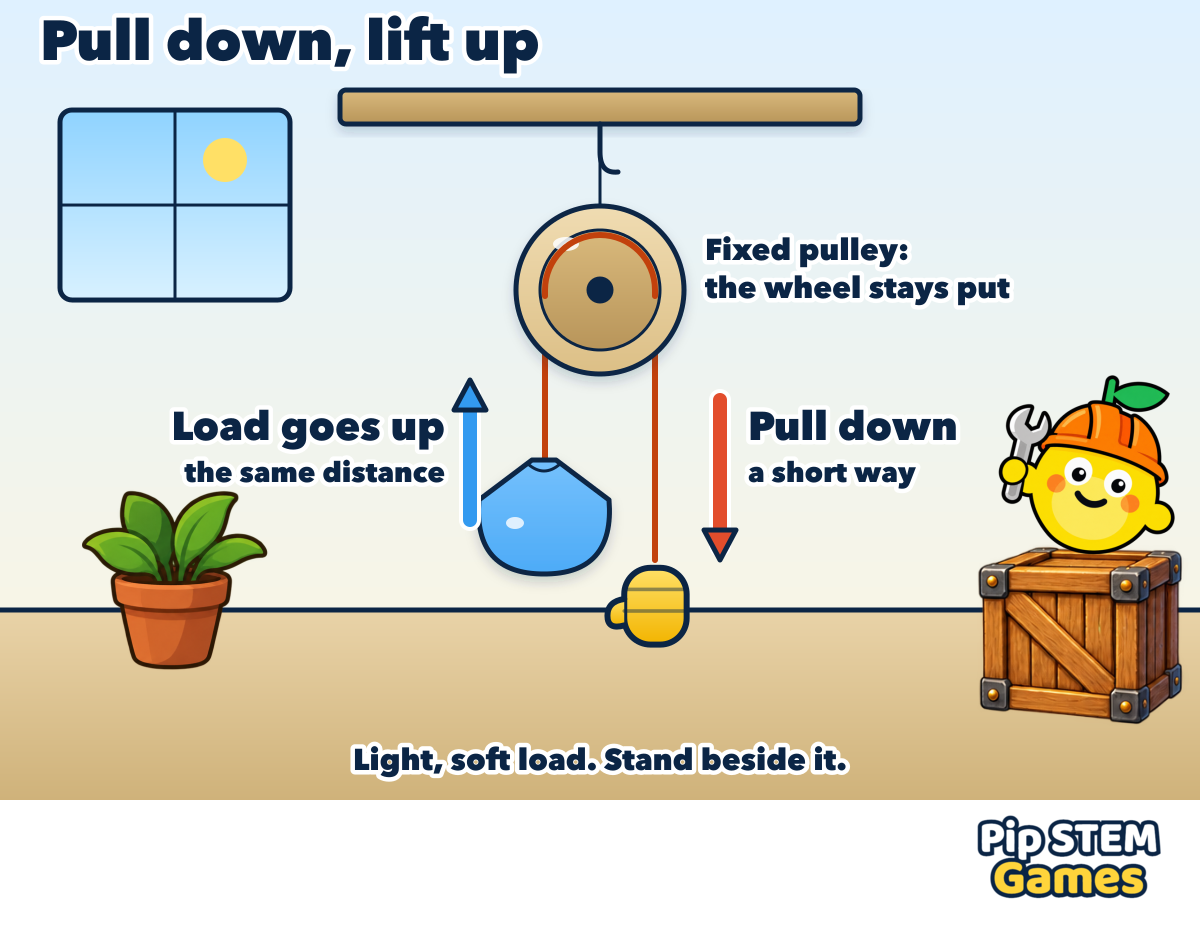
One wheel changes the direction of the pull. Try the Pulley Puzzle game afterwards.
11. Recycling-bin robot
Build a robot from things headed for the recycling. Ages 8–12 · 45 minutes
- Boxes, tubes and bottle tops from the recycling
- Tape, glue and scissors (adult for cutting)
- Pens
- Wash and dry everything you use.
- Pick a job for the robot, such as carrying a spoon.
- Build it and add arms that move.
- Test it and improve one part.
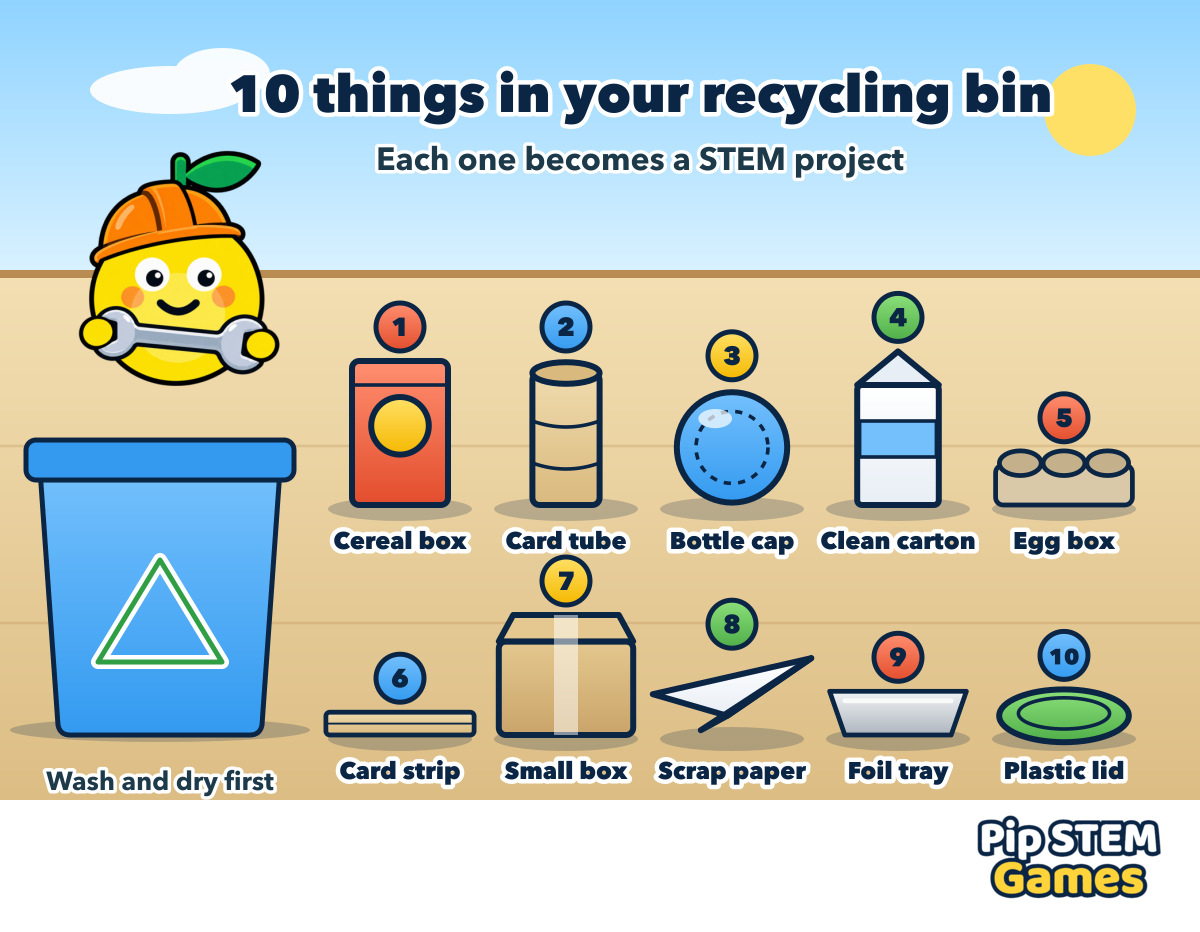
Give the robot a real job and it is easier to design. Ideas in 10 things in your recycling bin.
12. Paper folding test
Find out why a folded sheet is stronger than a flat one. Ages 8–12 · 15 minutes
- 2 sheets of A4 paper
- 2 books
- Coins or small toys
- Bridge a gap with a flat sheet and add weight.
- Fold the second sheet into an accordion.
- Put the same weight on it.
- Record which one wins.
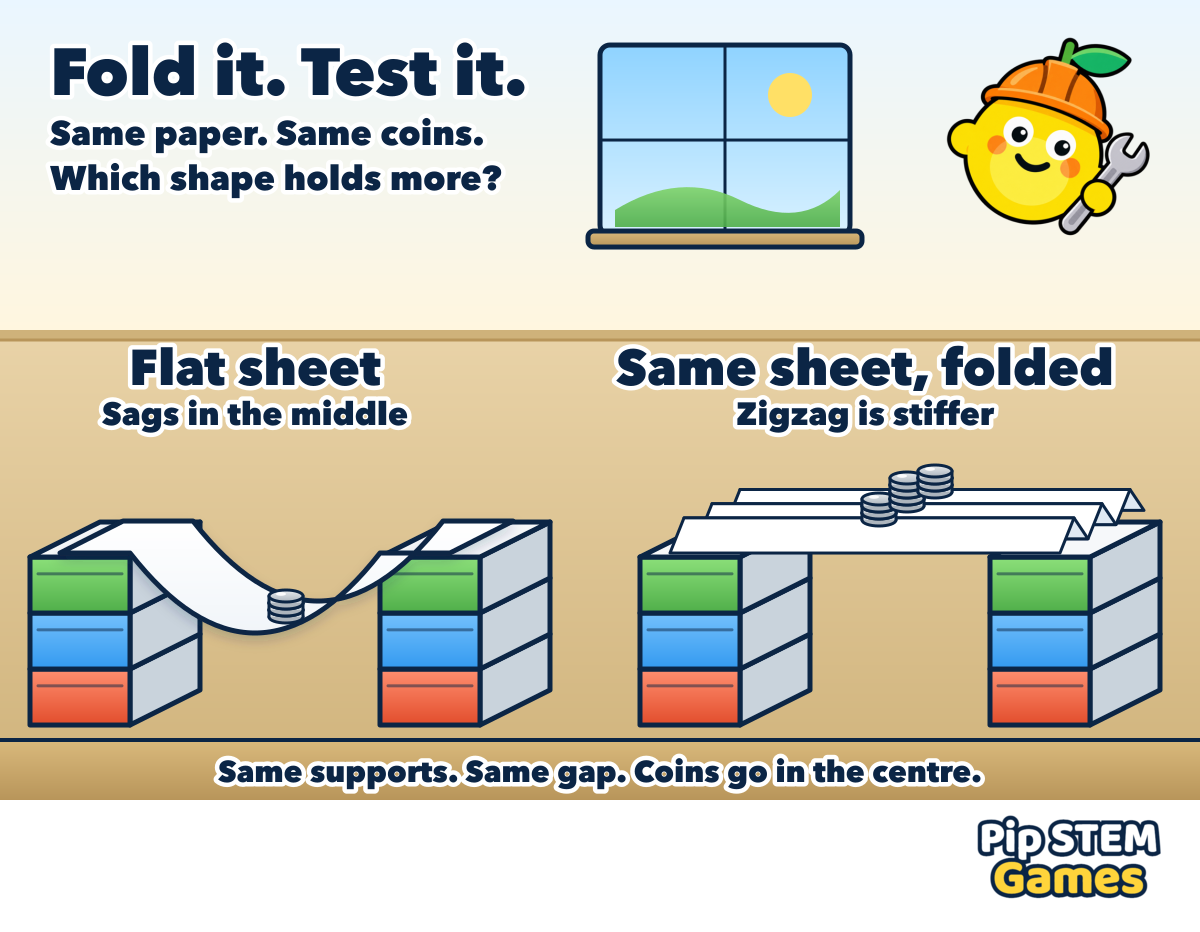
Folds give paper stiffness, like corrugated card. Read what happens when you fold paper.
What if they say it is babyish?
Raise the target: add a timer, a score, or a rule such as "only use paper." Let them judge the results and keep a leaderboard. Ten-year-olds like beating a number more than following a recipe.
For pencil-and-paper puzzles on rainy afternoons, the Senior Engineers workbook has ready-made challenges. Adults should handle scissors, knives and anything hot, and supervise balloons. Paper planes and other throws never go at faces.
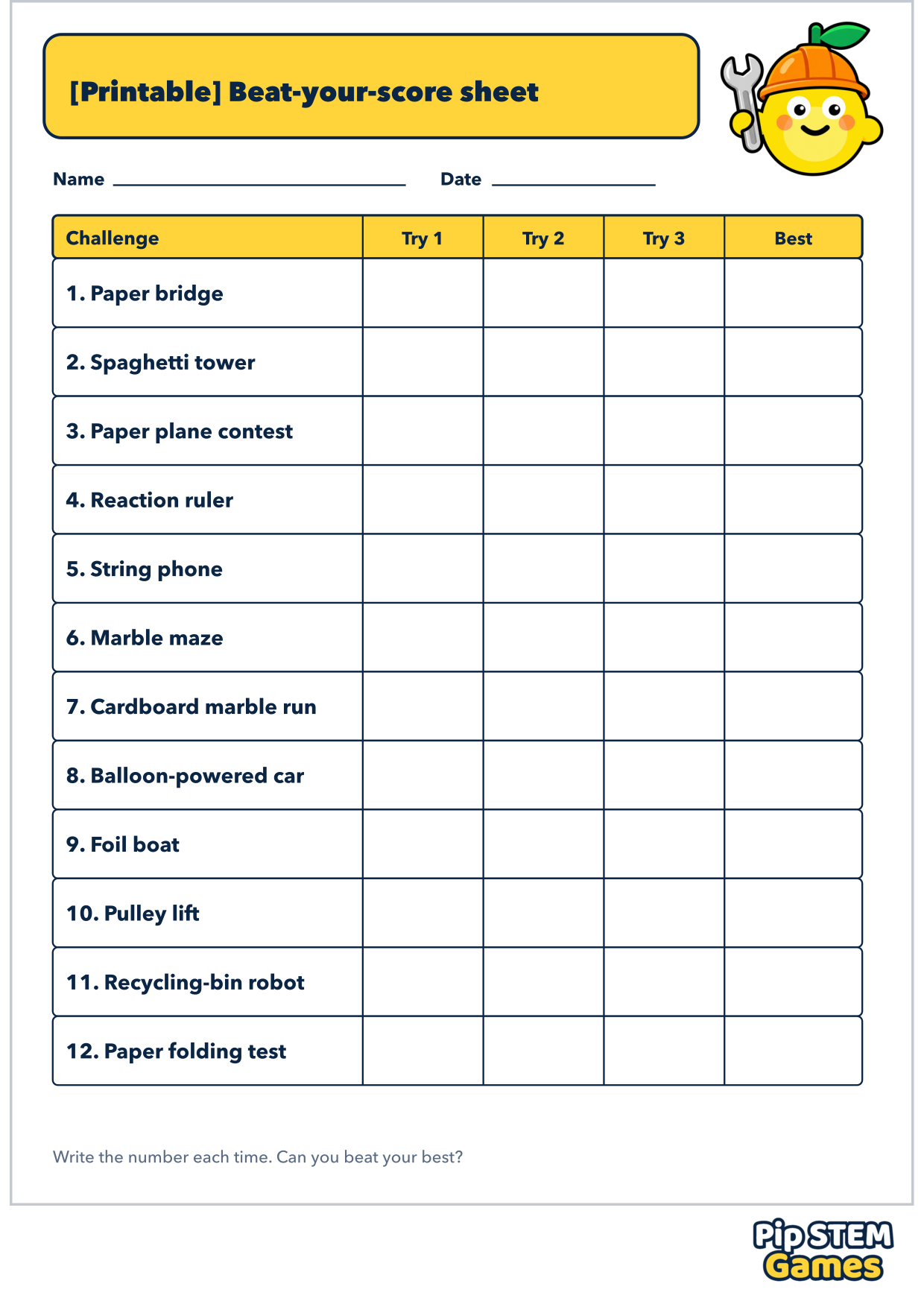
Print this score sheet and write down each try so you can see your best.
Questions parents ask
What should I do when my 10-year-old says they're bored?
Give them a short challenge with a clear goal and a few household items, such as building a paper bridge that holds 20 coins. Then leave them to it. A challenge works better than an idea list.
What are good activities for 10-year-olds at home?
Building challenges work well: spaghetti towers, paper bridges, cardboard marble runs, foil boats and balloon-powered cars. They need only things most houses already have.
What can a 9-year-old do when bored?
The same challenges work with a lower target. Use a shorter gap for the bridge, a smaller tower, or a simpler pulley with one wheel.
What about a bored 12-year-old?
Make it harder: add limits, bigger targets and a timer. Let them design the test themselves and keep a record of scores.
Is it okay for my child to be bored?
Yes, in moderation. Short spells of boredom can push children to find their own ideas. Step in with a starter if it goes on too long.
How much screen time is okay when bored?
That's your call, but a set limit that your child manages themselves tends to work well. Choose puzzle or building games over passive video.
Great STEM activities to try next...
 The 10-Spaghetti Tower Challenge [Printable]Build challenge
 10 Things in Your Recycling Bin That Can Become STEM ProjectsEngineering activities
 Build a Simple Pulley With Household Items [Printable]Build challenge
More to try: 5 Things to Say to a Child Who Is Building

Pip STEM Games
We make engineering games and workbooks for kids aged 5 to 12. Every activity here is one we'd happily run at the kitchen table: test it, watch it fail, fix it, try again.




