

Key takeaways
- Water engineers, a kind of civil engineer, design the systems that clean and deliver water.
- A treatment works screens, mixes, settles, filters and disinfects water.
- Pipes, pumps, tanks and water towers carry clean water to your tap.
- A filter model shows how layers catch dirt, but its water is never safe to drink.
- Change one thing at a time to test what makes the water clearer.
Engineers design clean water systems. Water engineers, a kind of civil engineer, plan how water is cleaned, stored and sent to your tap. This guide shows the five cleaning steps, follows water from river to tap, and gives you a safe filter model and a printable sheet to try at home.
Who designs clean water systems?
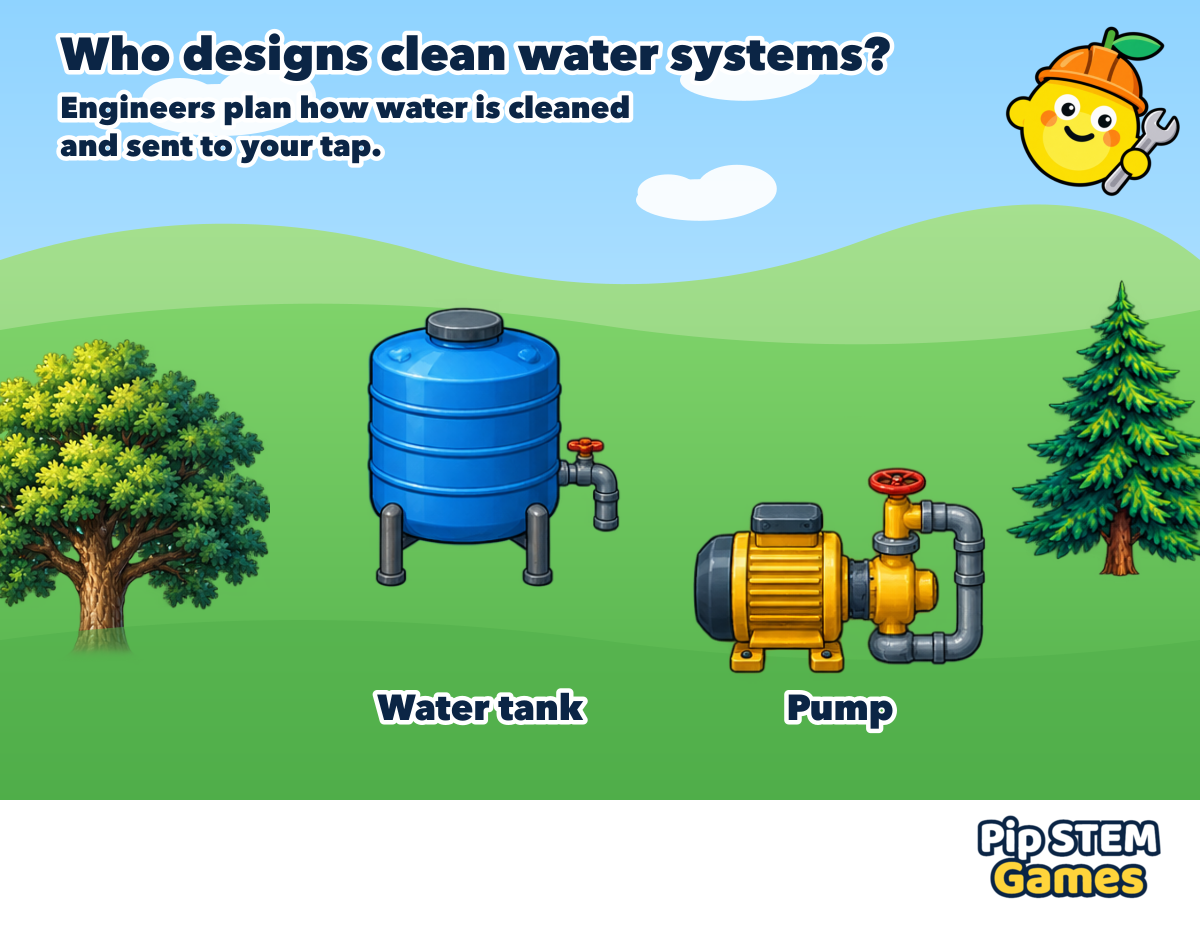
Engineers design clean water systems. Water engineers, who are a kind of civil engineer, work on rivers, dams, drinking water and drains. They plan how water is collected, cleaned, stored and sent to homes.
No single person builds a whole system. Many people work together, and the design takes years. Every time your child turns on a tap, they use the result.
This page shows how water is cleaned, how it travels to your home, and how your child can build a small filter model. It comes with a printable sheet. One rule matters most: never drink water from the model.
How is water cleaned at a treatment works?
A water treatment works cleans river or reservoir water so it is safe to drink. The steps below are the usual ones.
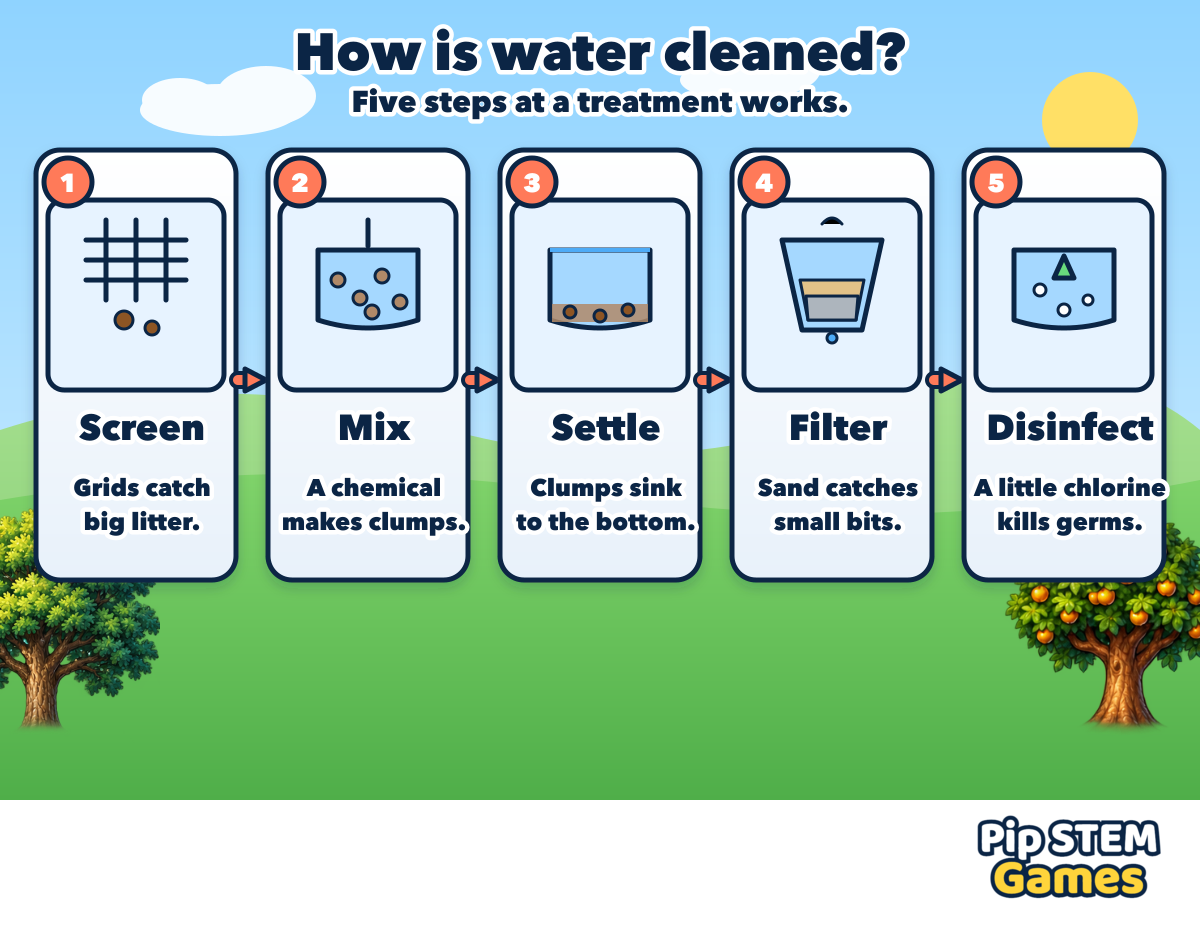
- Screen. Grids or screens catch leaves, twigs and other big litter.
- Mix. A chemical, such as alum or ferric chloride, is added. It makes tiny bits of dirt stick together into clumps called floc.
- Settle. The water sits in a tank. The heavy clumps sink to the bottom.
- Filter. The water passes through filters, often sand, which catch the small bits that are left.
- Disinfect. A small amount of chlorine is added to kill germs.
After that the clean water is stored and then sent out through pipes. Engineers design every tank, filter and pipe so the water arrives clean.
How does clean water get to your tap?
Treatment is only half the job. The water must also travel to your home.
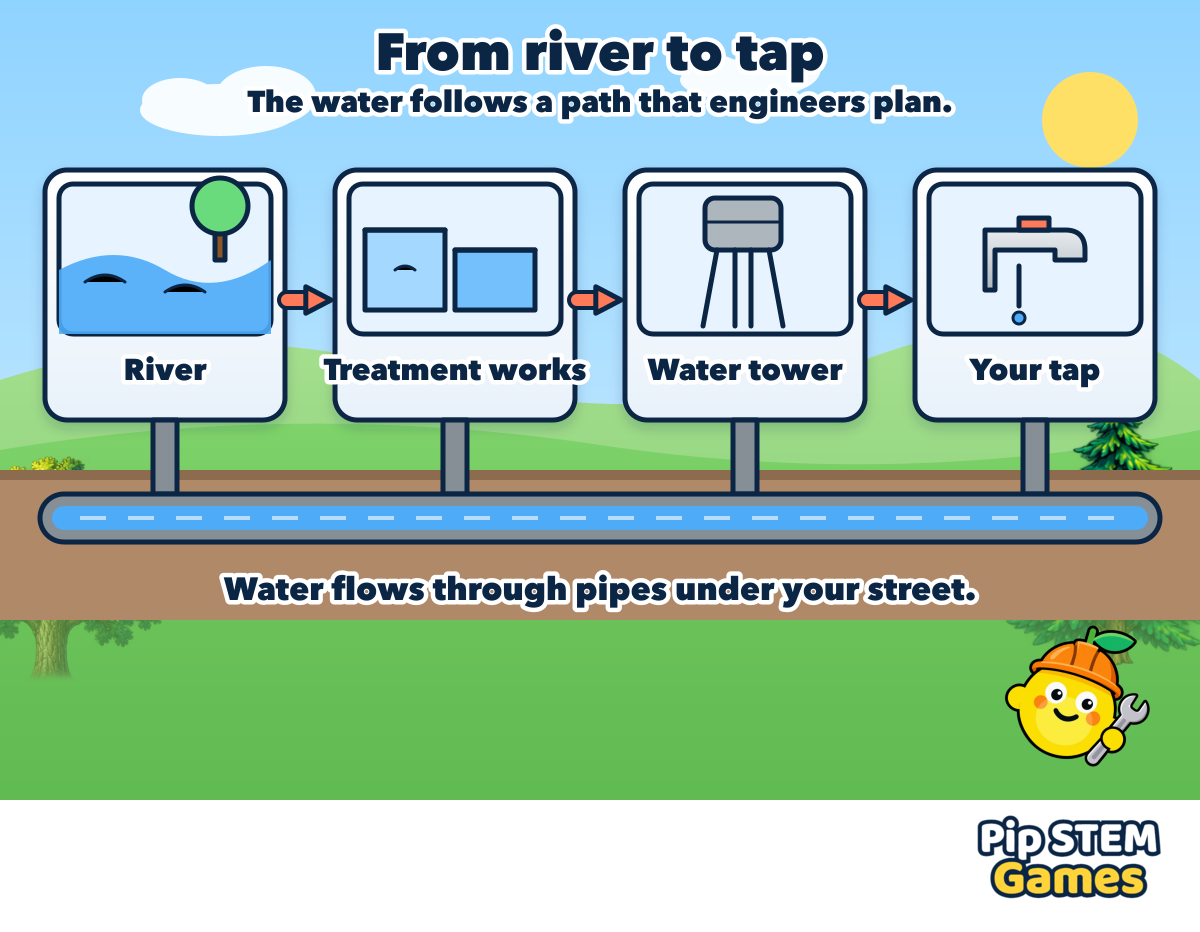
Pipes under the street carry the water, and pumps help push it along. Tanks and water towers store it, so it is ready when people turn on their taps. Our page how does water get to your tap? follows the journey step by step.
Sometimes a pipe blocks or a pump stops. Engineers work out where the fault is and fix it. Read why is the water system blocked? for a problem to solve together.
What kinds of engineer work on water?
Water needs several kinds of engineer.
- Water engineers design the pipes, tanks and treatment steps. They are a kind of civil engineer.
- Environmental engineers work on keeping land, air and water healthy.
- Mechanical engineers work on machines such as pumps and valves.
Children who like puzzles, plumbing or being outdoors may enjoy this work. Meet more careers in engineering careers kids might not know exist.
How can your child try water engineering at home?
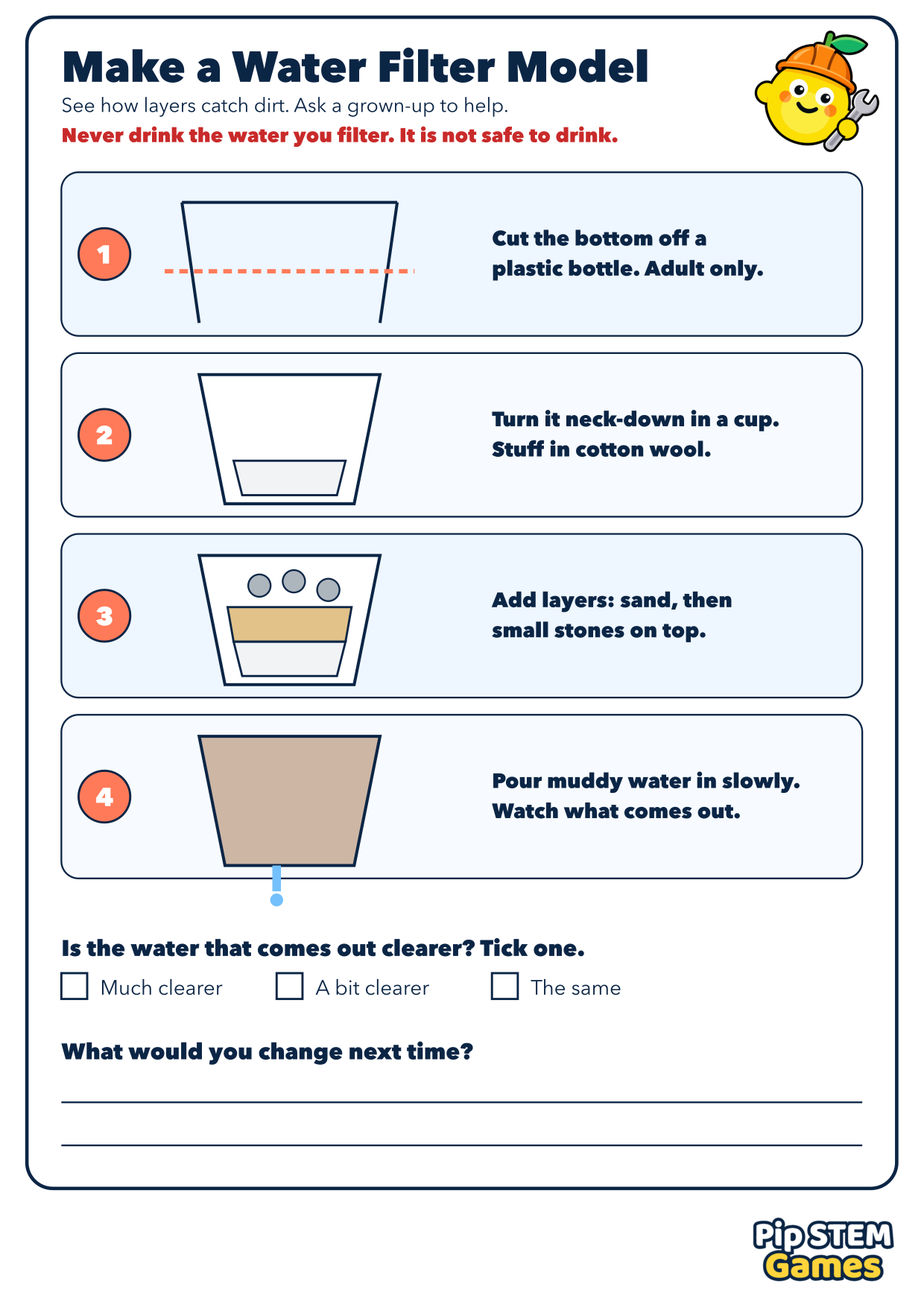
Build a small filter model and see how layers catch dirt. It takes about 20 minutes. It is a model for learning, and the water it makes is not safe to drink.
You need: a clean plastic bottle, a cup, cotton wool, a handful of clean sand, a handful of small stones, muddy water made from soil and tap water, and scissors for an adult.
- An adult cuts the bottom off the bottle.
- Turn the bottle upside down, neck-down, over the cup. Push cotton wool into the neck.
- Add a layer of sand, then a layer of small stones on top.
- Pour the muddy water in slowly and watch what comes out.
- Ask: is the water clearer? What would you change next time?
Safety: an adult must cut the bottle. Never drink the water you filter. Clear water can still hold germs you cannot see, and a real treatment works kills germs with chlorine. Throw the used sand and cotton wool in the bin, and wash hands afterwards.
Pro tip: change one thing at a time. Try a thicker sand layer and see whether the water comes out clearer. Our engineering design process page explains why.
Children can also try filters on screen in our Filter Factory game. Print the sheet below to follow the steps.
How do you change it for each age?
Match the task to the child.
- Ages 5 to 6 (easier): an adult builds the filter. The child pours the muddy water and says what they see.
- Ages 7 to 9: the child builds the filter, ticks the sheet and draws the layers.
- Ages 10 to 12 (harder): test different layers, such as only sand or only cotton wool, and compare the results. Change one thing each time and write down what happened.
The aim is not perfect water. It is to show a child that clean water takes planning, and that people design it. A muddy first try is a normal first version, and the next one is the improvement.
Questions parents ask
Who designs clean water systems?
Engineers do. Water engineers, who are a kind of civil engineer, work on drinking water, rivers, dams and drains, and plan how water is cleaned and sent to homes.
How is dirty water made clean?
A treatment works screens out litter, adds a chemical that clumps dirt together, lets the clumps settle, filters the water, then adds a small amount of chlorine to kill germs.
What is floc?
Floc is the clumps formed when a chemical such as alum or ferric chloride makes tiny bits of dirt in water stick together. The clumps are heavy, so they sink.
Can my child drink the water from the filter model?
No. Never. The model removes some dirt, but clear water can still contain germs. Real treatment works use disinfection to make water safe.
What subjects help you become a water engineer?
Maths and science help, along with design and teamwork. Water engineers also need to care about nature and the environment.
How long does it take to design a water system?
It can take years, because the engineers plan many parts, such as pipes, tanks, pumps and treatment steps, and check each one.
Great STEM activities to try next...
 How Does Water Get to Your Tap?Activity
 Why Is the Water System Blocked?How it works
 Design a Flood Defence for a Small TownActivity
More to try: How Does a Drawbridge Open? A Kids' Guide · How Do Roller Coasters Work? Kids' Guide (Printable) · What Does a Biomedical Engineer Do? Kids Guide

Pip STEM Games
We make engineering games and workbooks for kids aged 5 to 12. Every activity here is one we'd happily run at the kitchen table: test it, watch it fail, fix it, try again.




