

Key takeaways
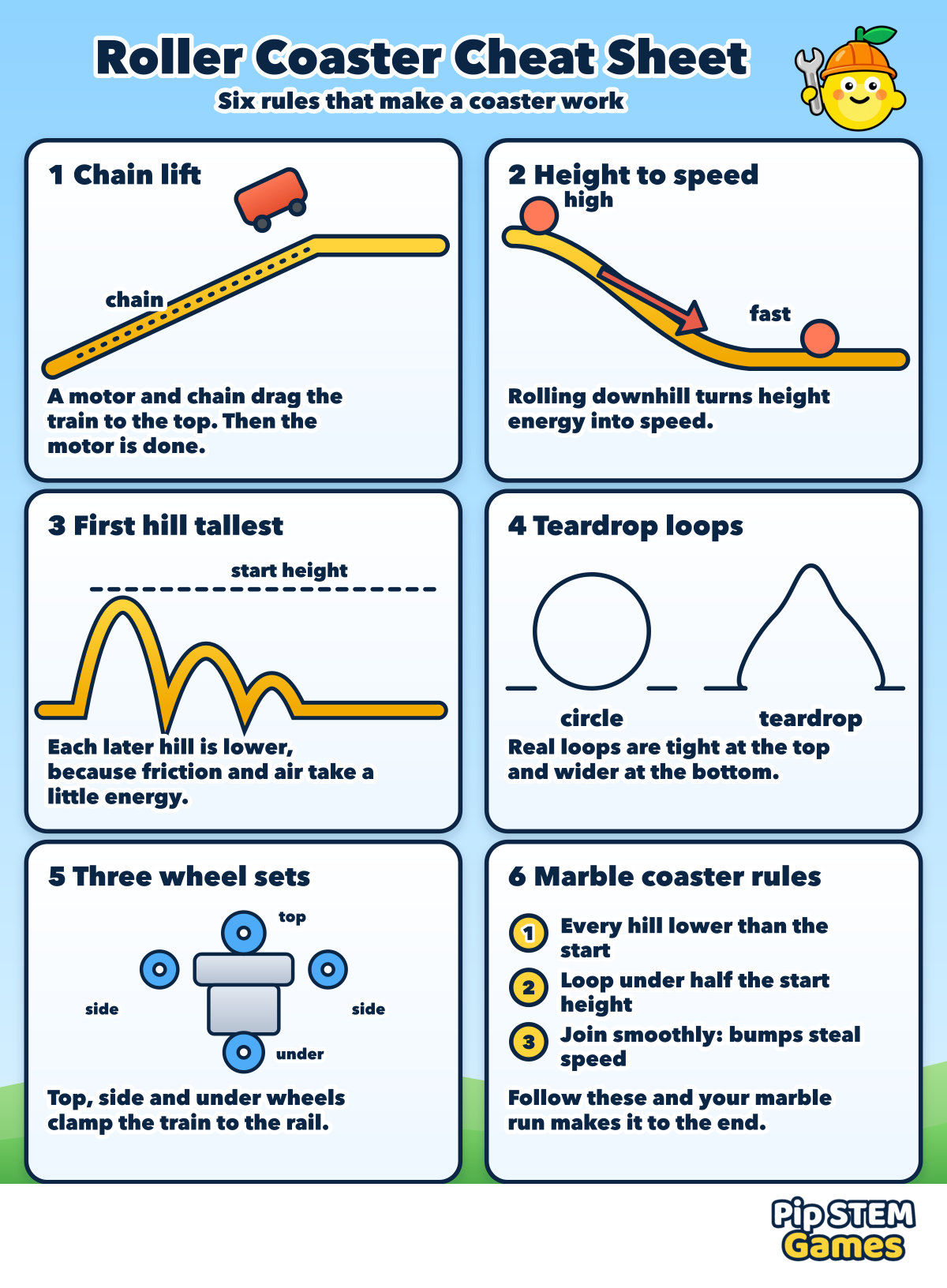
- Most roller coasters have no engine. A chain lifts the train up the first hill, and gravity does the rest.
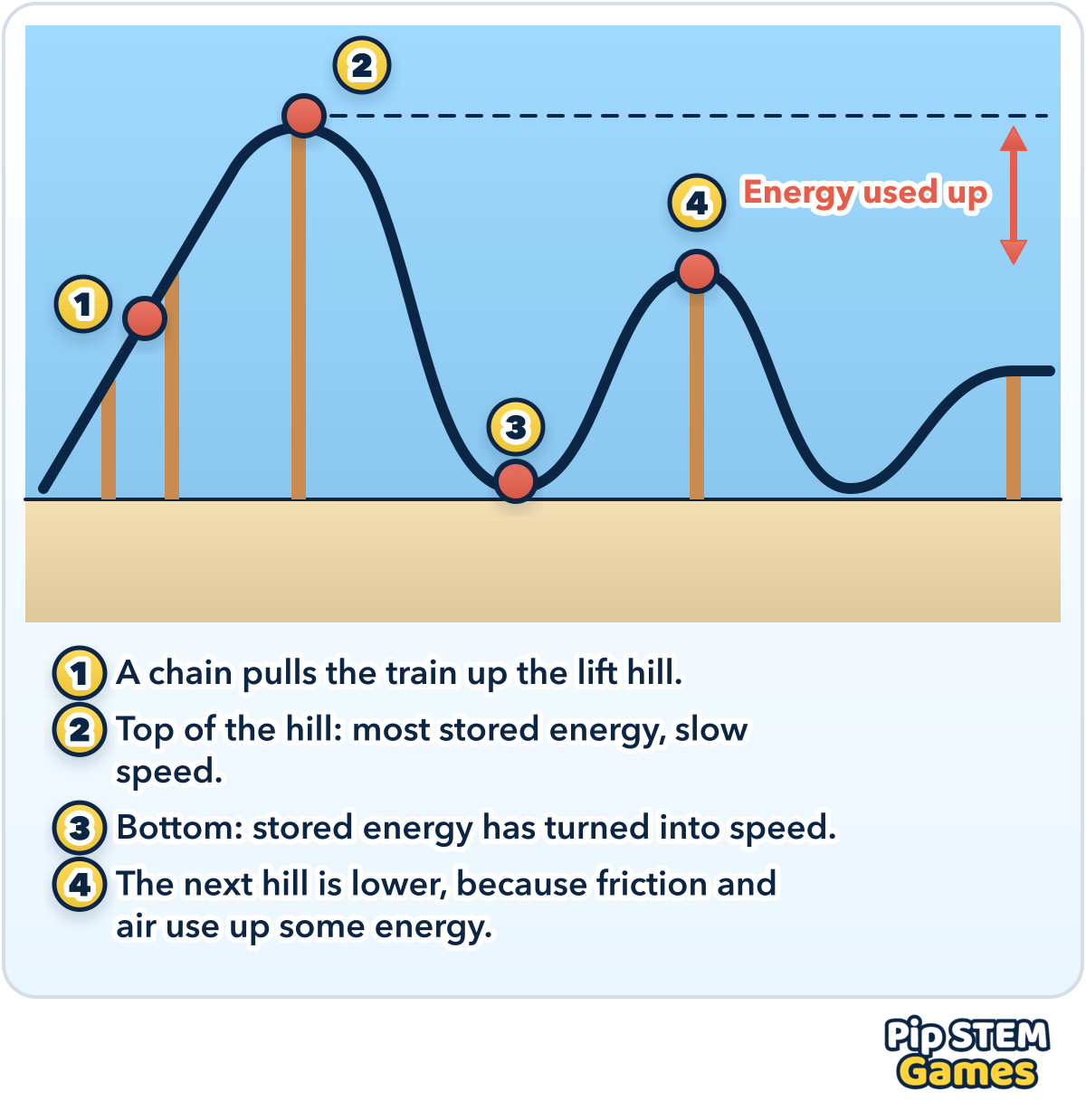
- The first hill is the tallest because every later hill needs energy from it, and friction takes some away.
- Loops are teardrop shaped, not round, to keep the forces on riders comfortable.
- Wheels under the track lock the train on, so riders stay on even upside down.
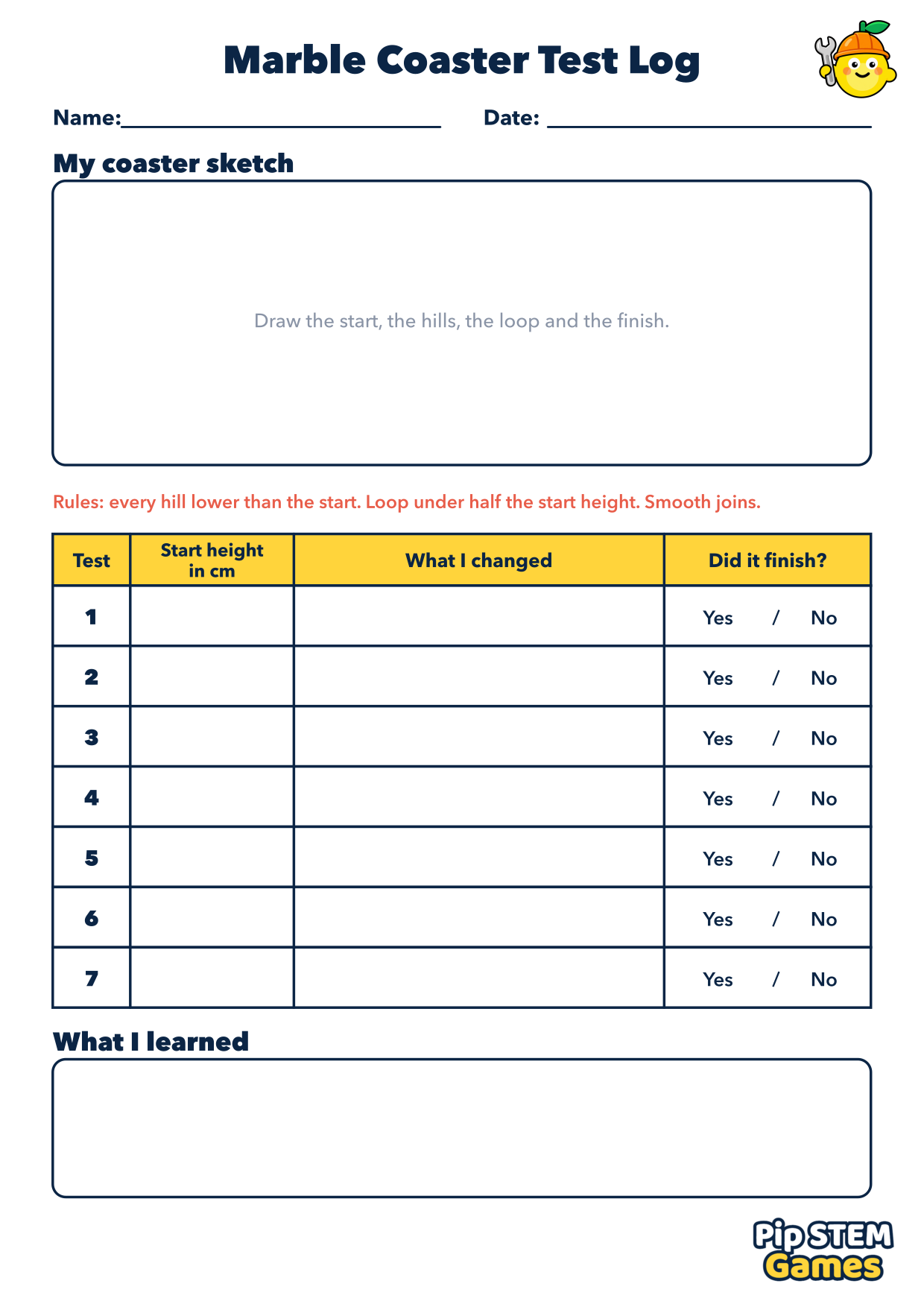
- A marble coaster from foam pipe insulation shows every one of these ideas in 30 minutes.
A roller coaster works by storing energy on the first hill and spending it on everything after. A motor and chain pull the train to the top, which gives it potential energy. When it drops, that energy turns into speed, and the train uses that speed to climb the next hills and loops. Apart from launches and brakes, there's no engine pushing it round. Here's how each part works, and how to build a marble roller coaster that follows the same rules. A printable test log is included.
What makes a roller coaster move without an engine?
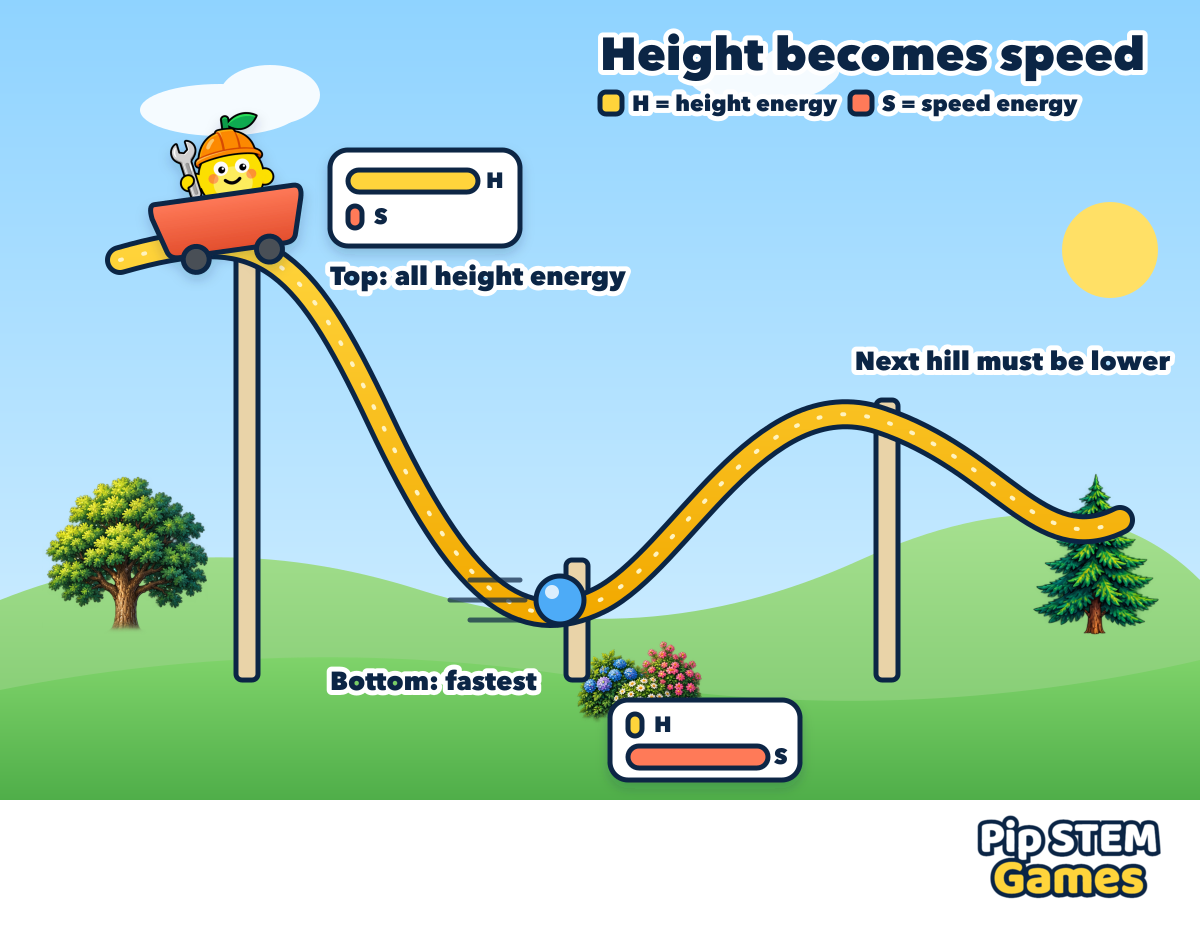
Gravity moves a roller coaster after the lift hill has given it stored energy. Most traditional coasters have a chain lift: a loop of chain under the track that hooks onto the train and drags it slowly to the top. Once the train rolls over the crest, the motor has finished its job.
The train is now a big, heavy ball rolling down a slope. Height has become speed, which is the stored-energy-to-movement swap behind the forces in our forces for kids guide. The faster it goes, the more energy it carries into the next climb.
Some newer coasters skip the chain and use a launch instead: powerful magnets or a hydraulic system fire the train from 0 to high speed along a flat section. They still need hills to bring the train back to the station.
Why is the first hill always the tallest?
The first hill is the tallest because it supplies all the energy for the ride, and friction and air drag steadily take some away. On a simple coaster with one lift, no later hill can be taller than the first, or the train wouldn't have enough energy to reach the top.
Think of the first hill as a bank deposit. Each hill and loop spends a bit, and wheels, air and brakes drain a bit more. Designers plan so that the train always has a little left over when it reaches the end, then the brakes stop it.
Try it with a marble run: the hills get lower as the marble goes. If a marble ever rolls back down a hill without reaching the top, it didn't have enough height to begin with. Our cardboard marble run proves it.
Can a marble clear a hill taller than where it started?
No. A marble released from rest cannot clear a hill taller than where it started. This quick test shows why every hill after the first has to be shorter.
You need: a long strip of stiff card or half a foam pipe insulation tube (an adult cuts it), tape, a marble, a stack of books, a tray to catch the marble and a ruler. Marbles are small parts, so keep them away from children under 3.
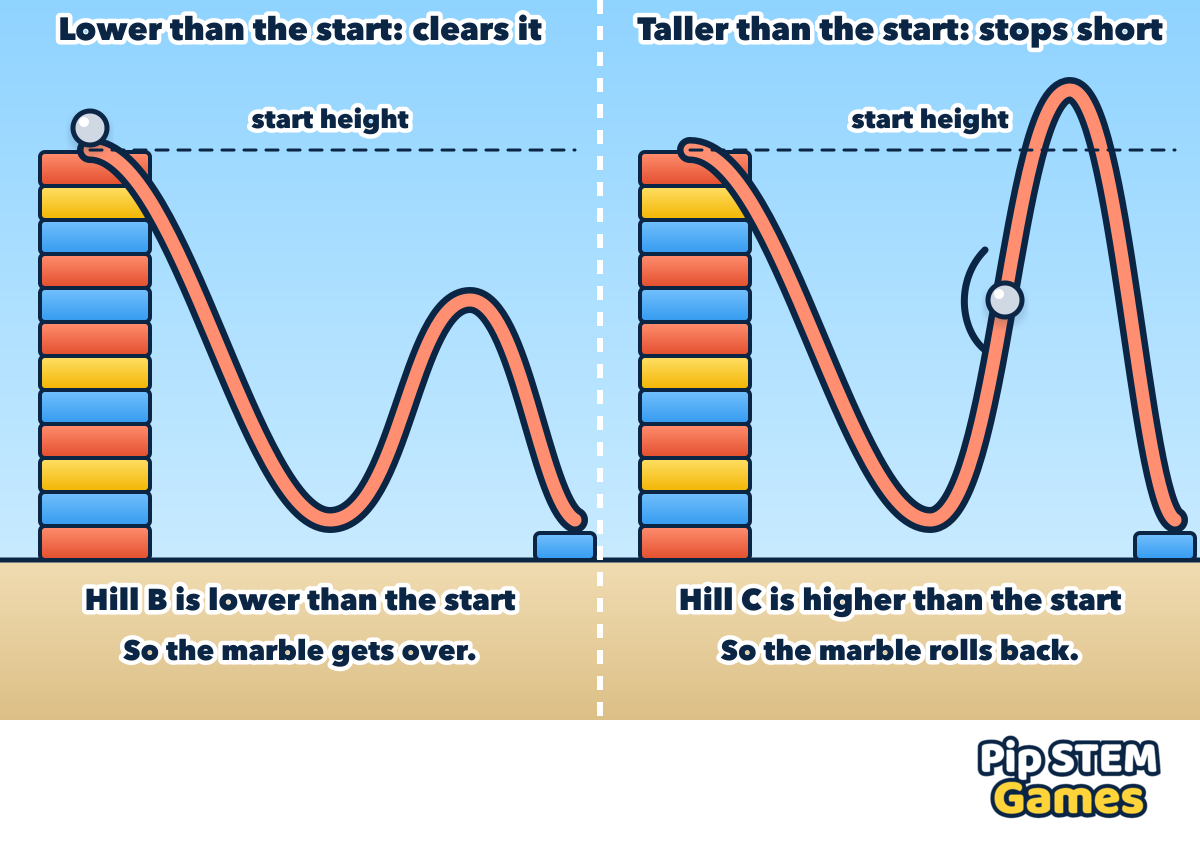
- Tape the track so it starts high on the books and dips down to the table.
- Raise the middle into a hill lower than the start and tape it firmly.
- Ask your child to predict: will the marble clear the hill?
- Let go of the marble at the start without pushing. Record what happens.
- Now raise the middle hill higher than the start and test again.
- Measure each start height and hill height with the ruler and write them down.
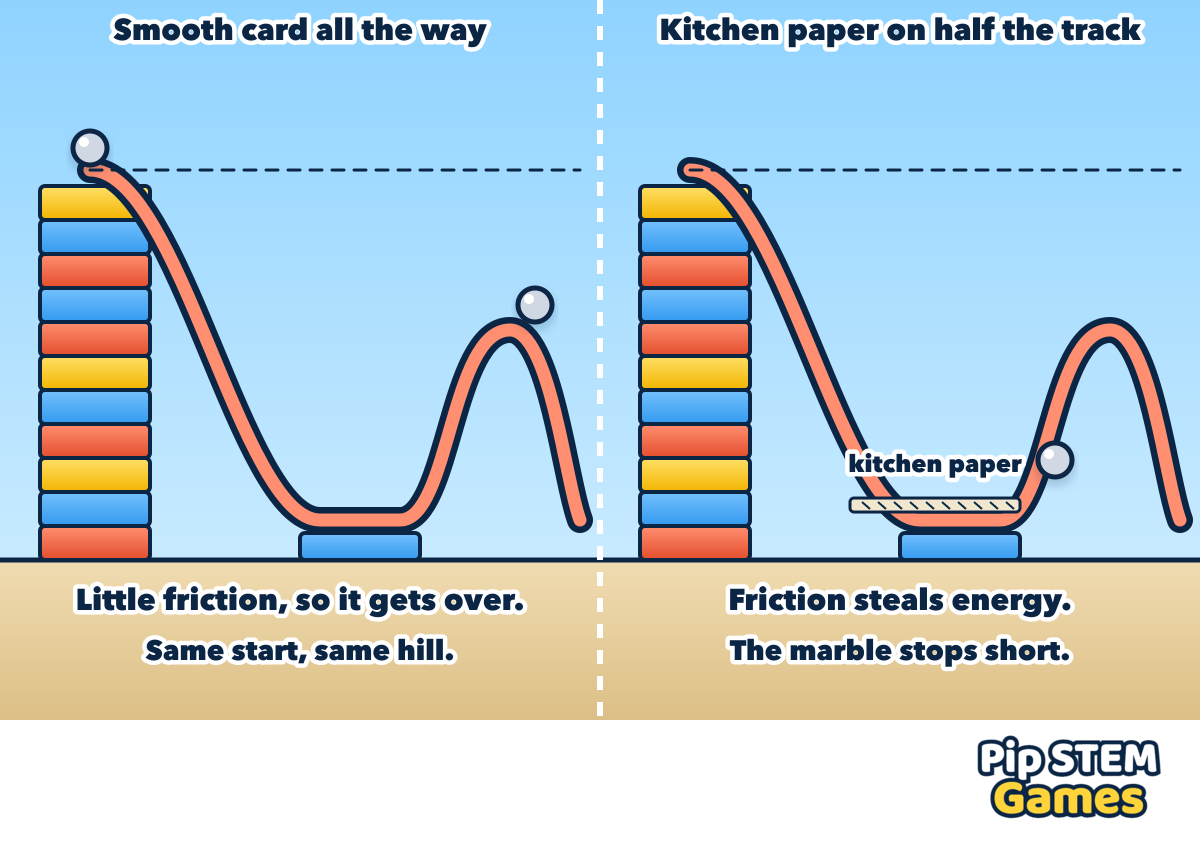
The lower hill should usually be cleared. The taller one should not, because the marble cannot rise above the height it began from, and friction takes a little energy on the way. Write down what you actually see, because your track may surprise you.
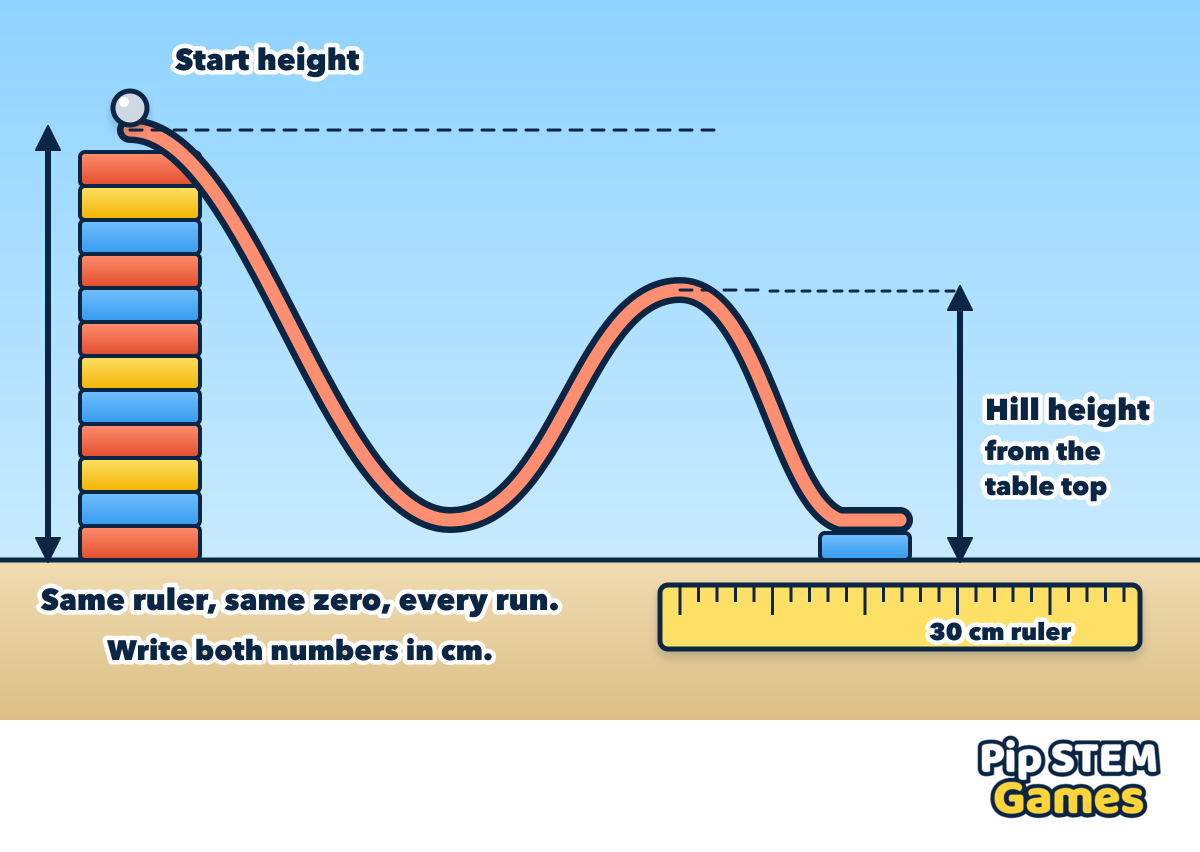
Keep it fair: change only the hill height, and use the same marble, track, start mark and release each time. Do three runs per setting. Then try a heavier ball, or cover half the track in kitchen paper to add friction, and predict before you test.
For ages 5 to 7, build one hill and sort the results into got over and did not. For ages 8 to 12, record the heights in centimetres and graph the tallest hill the marble clears.
How do roller coaster loops work?
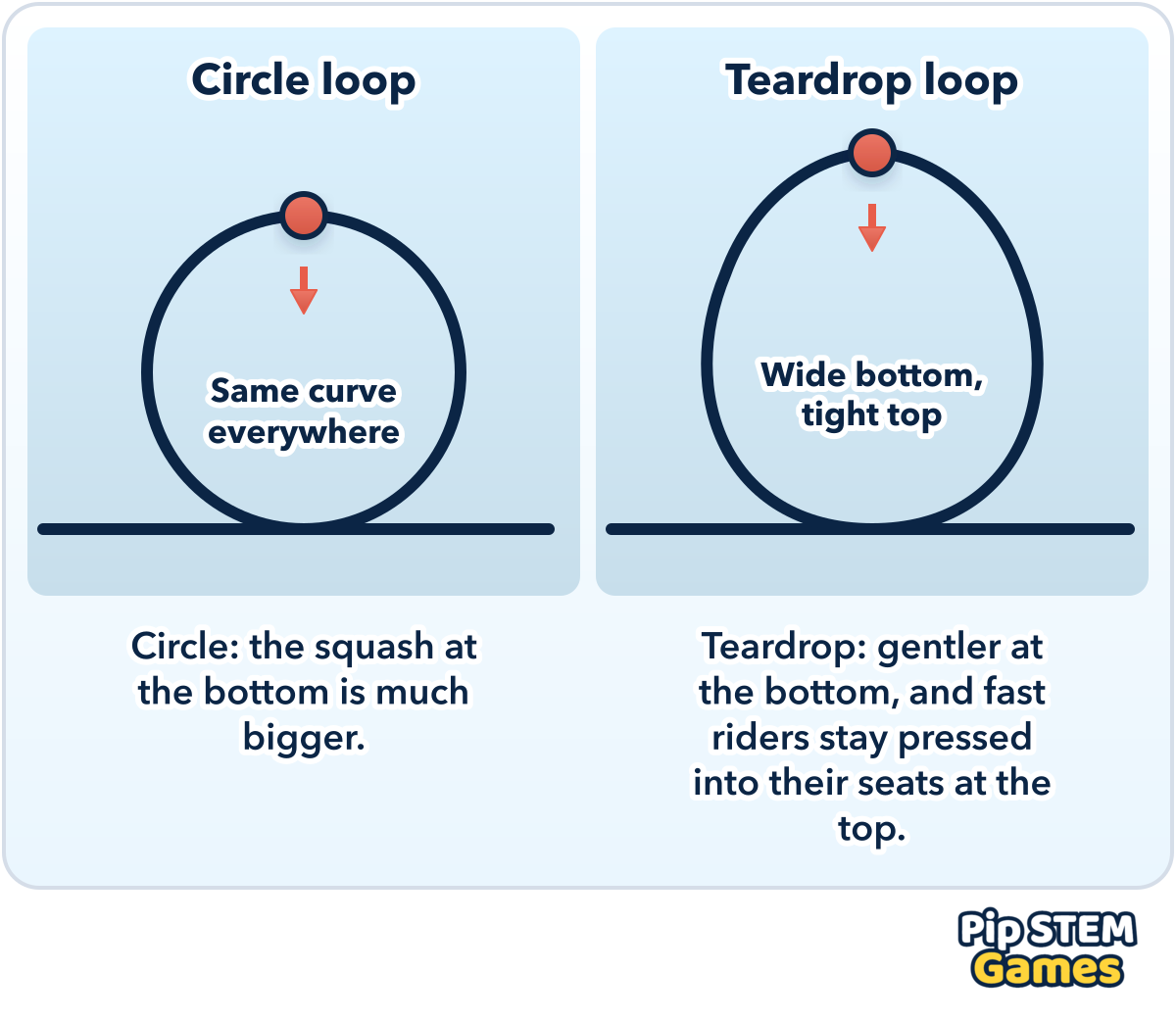
Loops work because the train is moving fast enough that it presses into the track at the top, so riders stay in their seats. The track keeps pushing the train round the curve; the speed keeps riders pressed against the seat rather than falling out.
Real loops aren't circles. They're teardrop-shaped, tight at the top and wider at the bottom. A circular loop would make the forces on riders at the bottom much larger. The teardrop keeps those forces to a safe, comfortable level. Early loops were circular and pulled riders hard at the bottom. The first modern teardrop-shaped (clothoid) loop opened in 1976 at Six Flags Magic Mountain.
Riders also feel "pulled" in the loop. That's a force called centripetal force, directed towards the middle of the curve. Your child has felt this on a playground swing: at the bottom of each swing you feel pressed into the seat.
How do the wheels keep a roller coaster on the track?
Three sets of wheels grip the track from different angles: running wheels on top, side wheels on the sides and up-stop wheels underneath. Together they clamp the train to the rail so it can't lift off or slide sideways.
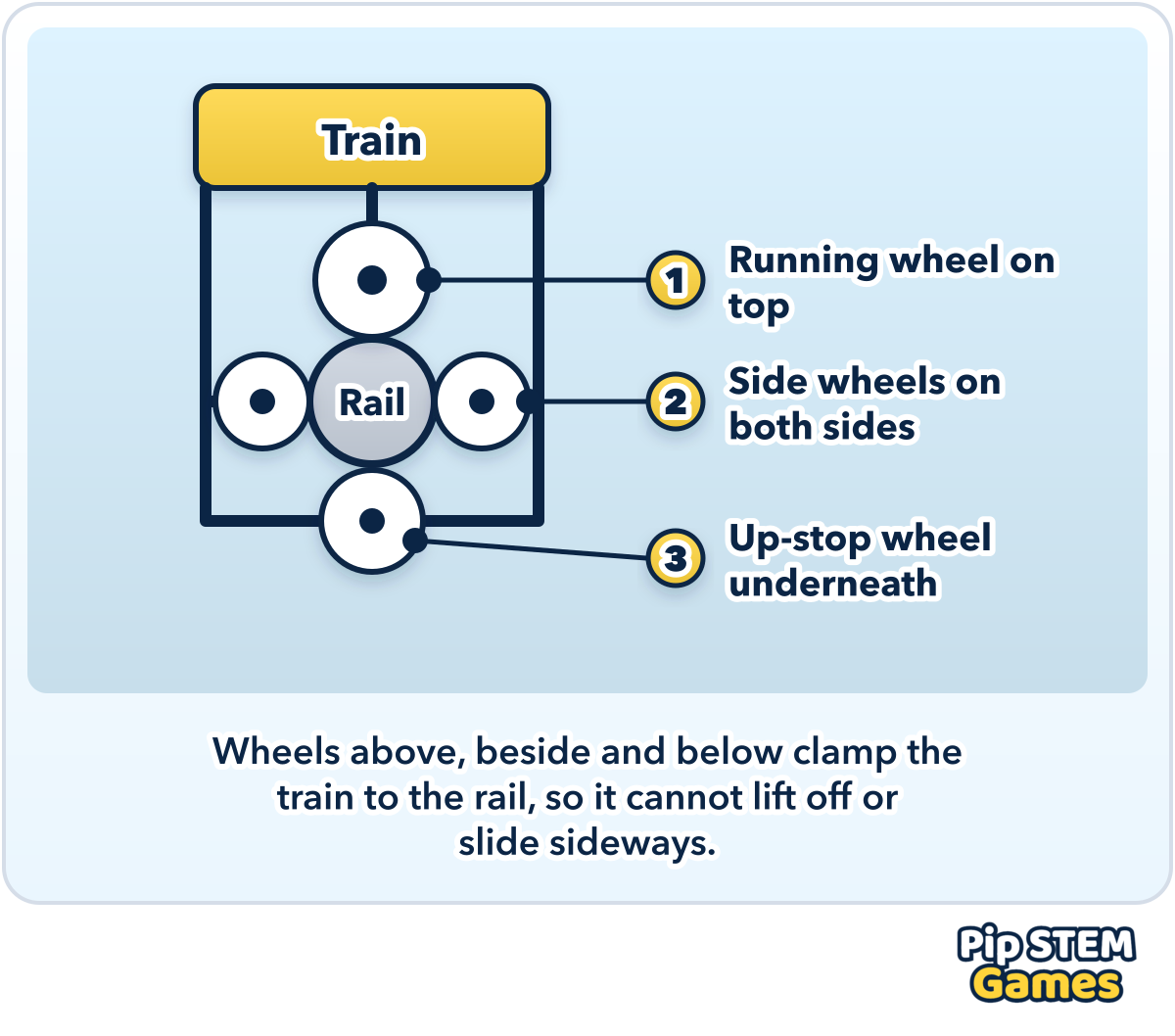
That's why a train can go upside down safely. The wheels underneath hold the train down against the rail, and the restraints (a lap bar or over-the-shoulder restraint) hold the rider in. Brakes at the end are usually metal fins on the track that squeeze the train, or magnets that slow it without touching the track.
How do you build a marble roller coaster?
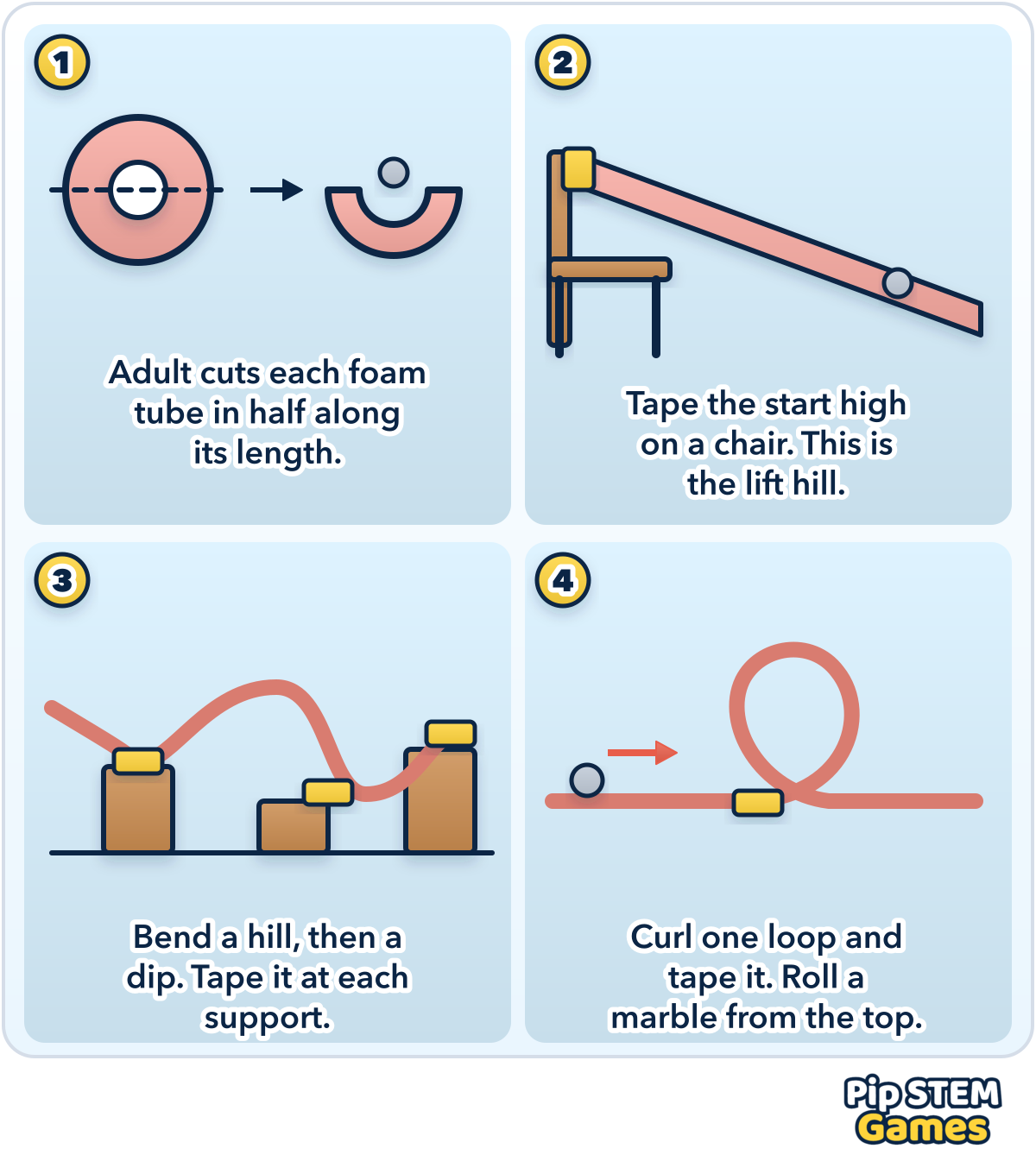
The easiest roller coaster project uses foam pipe insulation split in half to make a half-pipe track. A 30-minute build gives a working coaster with hills and a loop.
You need: 4 to 6 pieces of 1.5 m foam pipe insulation (from a DIY shop), masking tape, scissors, marbles, a chair or table edge, a shoebox to catch the marble.
- Cut each length of insulation in half lengthwise. Adults only: an adult cuts the foam tube.
- Tape the start of the track to a high point, like a stack of books or a shelf at child height. Nobody should climb on a chair to do this. This is your lift hill.
- Bend the track into a hill, then a dip. Tape it at each contact point with chairs, books or walls.
- Add a loop by curling the track in a full circle and fixing it with tape.
- Roll a marble from the top. Adjust until it makes it all the way to the end.
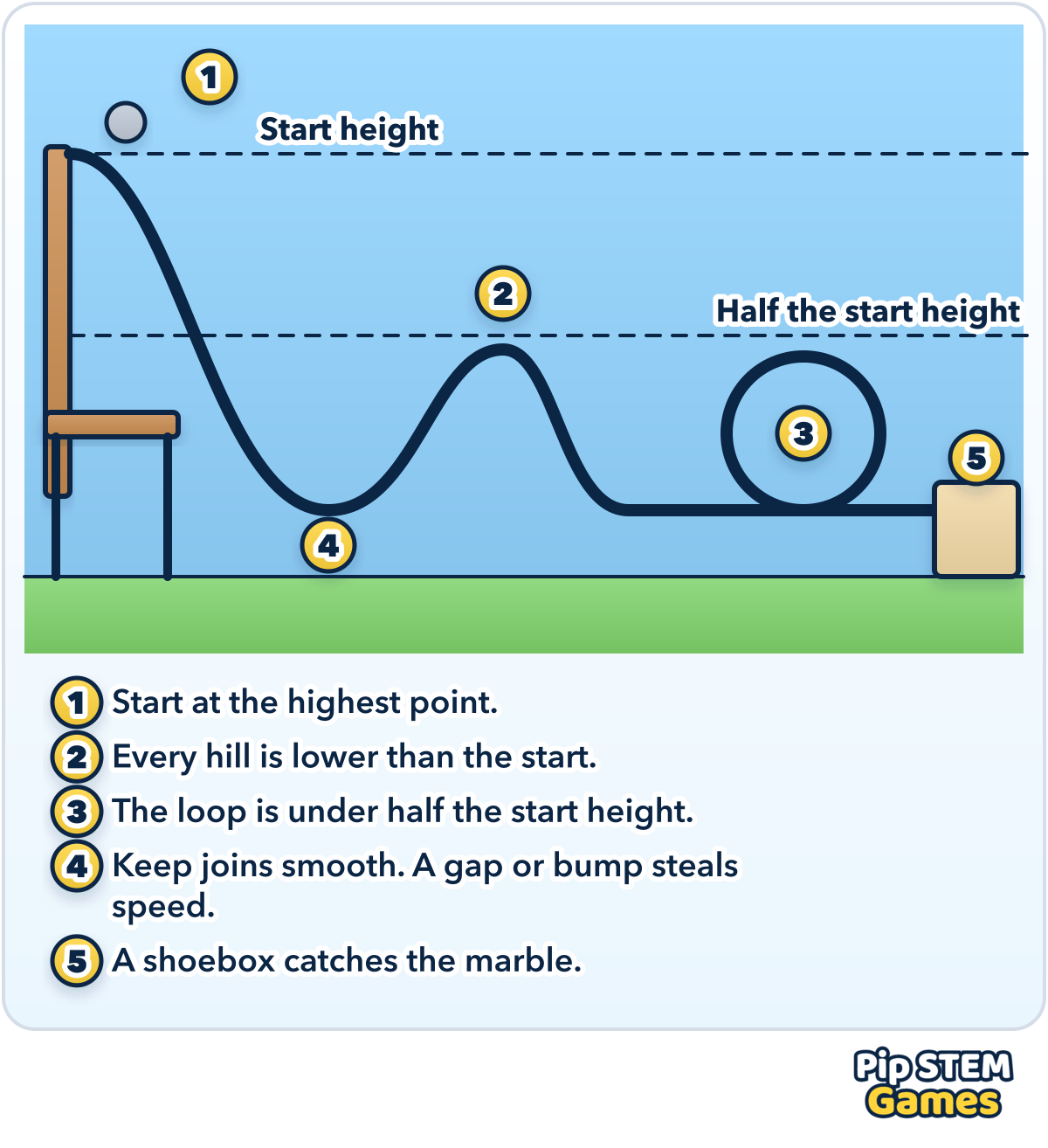
Rules that stop the marble stalling: keep every hill lower than the start; keep the loop's height under half the start height; and keep joins smooth, because a gap or bump steals speed. Marbles are a choking hazard for under-3s, so keep them away from toddlers. Our Chain Reaction game is a good warm-up for planning how one movement sets off the next.
What do you do if the marble keeps falling off?
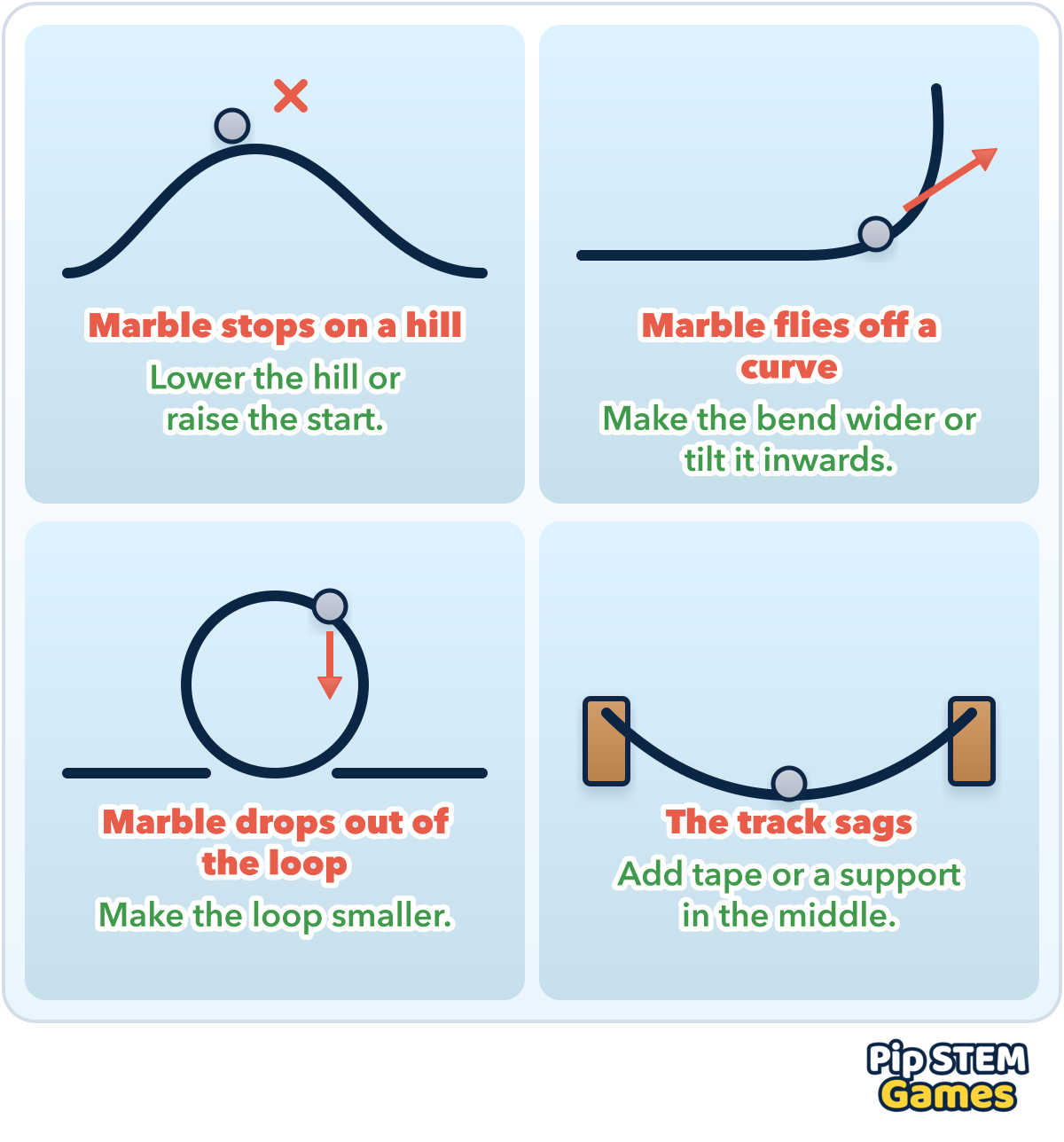
If the marble falls off, add more height at the start or flatten the part where it left. Usually the track needed a higher start, a smoother join or a wider curve.
- Marble stops on a hill: lower the hill or raise the start.
- Marble flies off a curve: make the bend wider or tilt the track inwards.
- Marble drops out of the loop: the loop's too big or too steep. Shrink it.
- Track sags: add tape or a support between the two ends.
Pro tip: film the marble with a phone in slow motion. You can see exactly where it slows down or jumps the track.
For ages 5 to 7, try a simpler ramp-and-bump version with a toy car; the Senior Engineers workbook has force and energy puzzles for ages 8 to 12.
Questions parents ask
Do roller coasters have engines?
Most don't. A chain lift pulls the train up the first hill, then gravity does the work. Launch coasters use magnets or hydraulics for a quick start, and brakes stop the train at the end.
Why don't riders fall out at the top of a loop?
The train is moving fast enough that the track keeps pushing riders into their seats. Restraints add a second layer of safety.
Why are roller coaster loops not circular?
A round loop would squash riders too hard at the bottom. A teardrop shape keeps the forces smaller and steadier.
What forces act on a roller coaster?
Gravity pulls the train down, the track pushes back, friction and air drag slow it, and centripetal force steers it round curves.
Can kids build a roller coaster at home?
Yes. Foam pipe insulation and marbles make a good model. Ages 8 and up can do it with a little adult help for cutting.
Which roller coaster project is best for school?
A marble coaster from foam tube with a recorded start height, a measured finish time and a short explanation of the energy changes.
Great STEM activities to try next...
 DIY Cardboard Marble Run for KidsActivity
 Make a Balloon-Powered Car at HomeActivity
 Build a Simple Pulley With Household ItemsActivity
More to try: What Is a Pulley? How They Work + DIY Pulley System · Kinetic vs Potential Energy for Kids (Printable) · 8 Egg Drop Ideas That Actually Work

Pip STEM Games
We make engineering games and workbooks for kids aged 5 to 12. Every activity here is one we'd happily run at the kitchen table: test it, watch it fail, fix it, try again.




