

Key takeaways
- Every design lowers the force on the egg, either by slowing the fall before impact or by making the stop take longer.
- Start with the padded box, then add straw legs or a parachute.
- Practise with a hard-boiled egg, then use a raw egg in a zip bag.
- An adult does every drop from height, and nobody stands underneath.
- Change one thing after each drop so you know what made the difference.
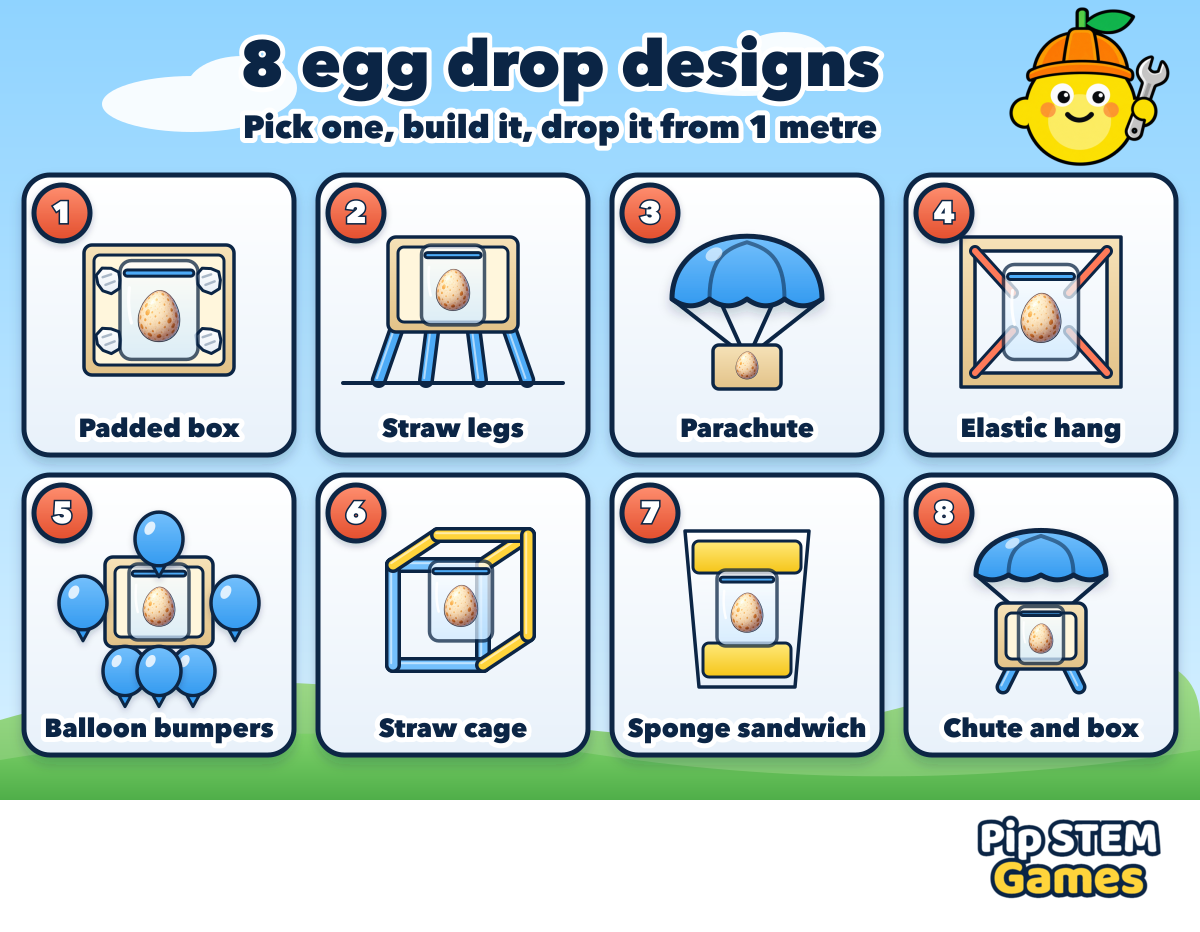
These are 8 egg drop ideas that work for ages 6–12, from a 15-minute padded box to a parachute, with a cutaway picture of each build.
1. Padded box
The easiest design and the one to try first. Ages 6–12 · 15 minutes.
- Small cardboard box, about the size of a tissue box
- Crumpled paper or bubble wrap
- Zip-lock bag
- Tape
- 1 egg (hard-boiled for practice)
- Put the egg in the zip-lock bag and press the air out.
- Line the box with 3 cm of crumpled paper all round.
- Set the bagged egg in the middle so it floats, then pack more paper above it.
- Close the lid, tape it shut and shake gently. The egg shouldn't rattle.
- Weigh the box if your event has a mass limit. An adult drops it, starting at 1 metre.
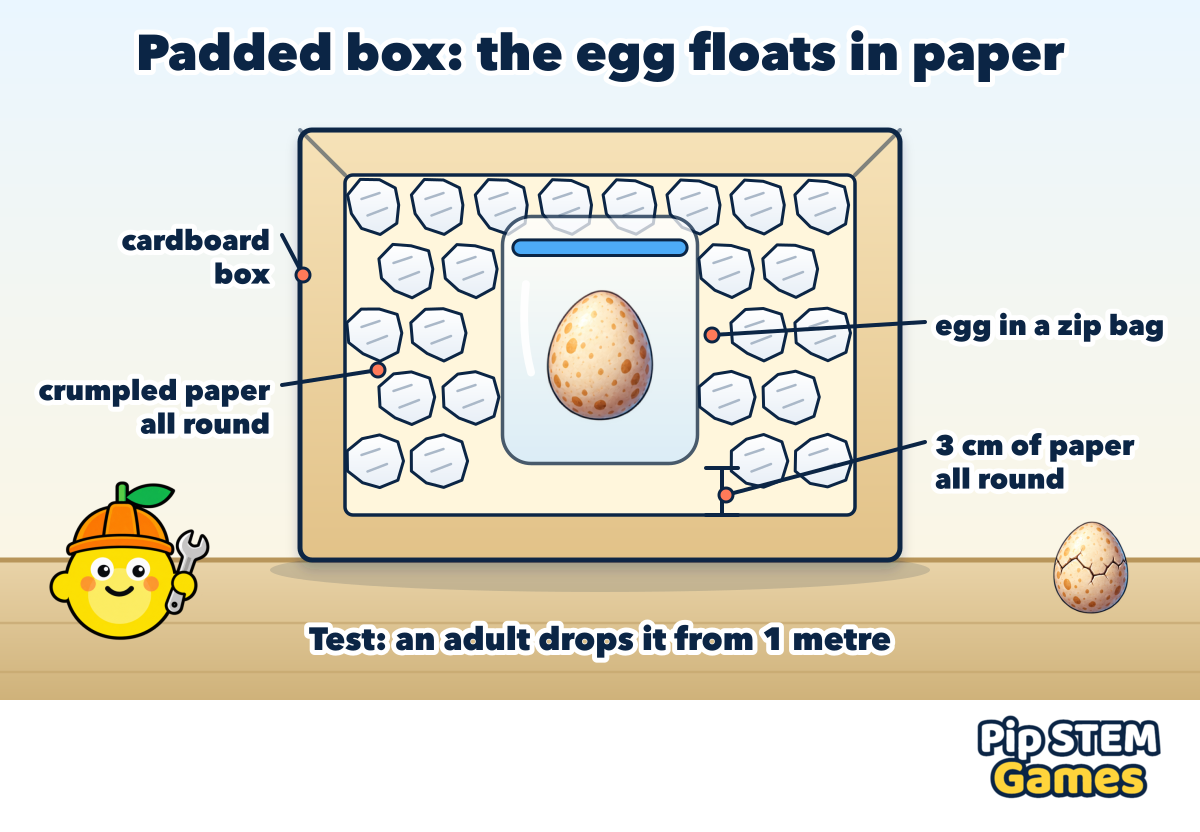
Soft packing spreads the stop over more time. If it cracks, add more padding or use softer material, and watch out for a box that's too heavy.
2. Straw crumple legs
Legs that squash on landing. Ages 8–12 · 20 minutes.
- Padded box from item 1
- 4 drinking straws
- Tape
- Make the padded box from item 1.
- Tape one straw at each bottom corner, pointing down.
- Angle the legs slightly outwards, like a table with splayed legs.
- Trim the legs to the same length so the box lands level.
- An adult drops the hard-boiled egg first from 1 metre, then goes higher.
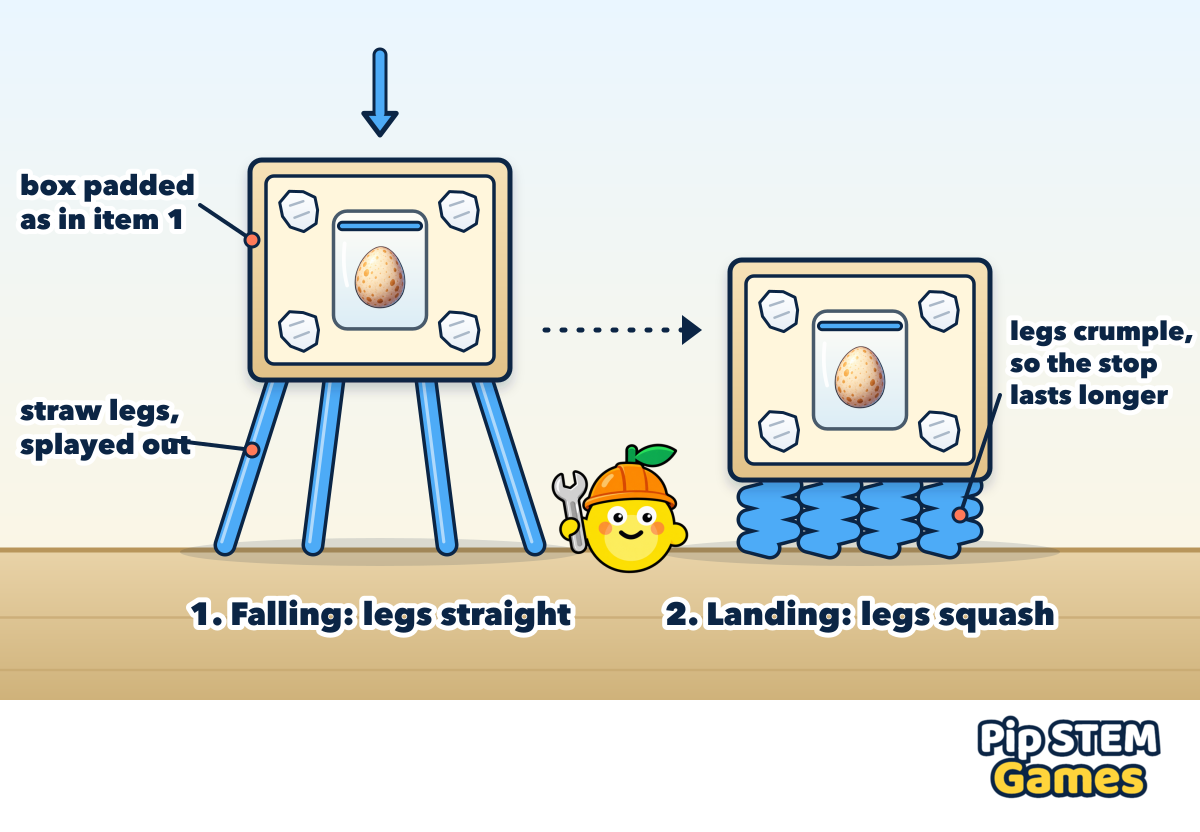
Squashing legs make the stop last longer, so the force on the shell drops. If the legs buckle sideways, tape short straws across them as braces.
3. Parachute
Slows the whole fall through the air. Ages 8–12 · 20 minutes.
- Plastic bag, handkerchief or coffee filter
- Scissors (adult help)
- String, about 160 cm
- Tape
- Small light container for the egg
- Cut a square about 40 cm wide from the plastic bag.
- Tape a 40 cm piece of string to each corner.
- Tie all four strings to the top of the egg container.
- Fold the canopy neatly so it opens when dropped.
- An adult drops it from a safe height with lots of room. Higher drops give the canopy time to open.
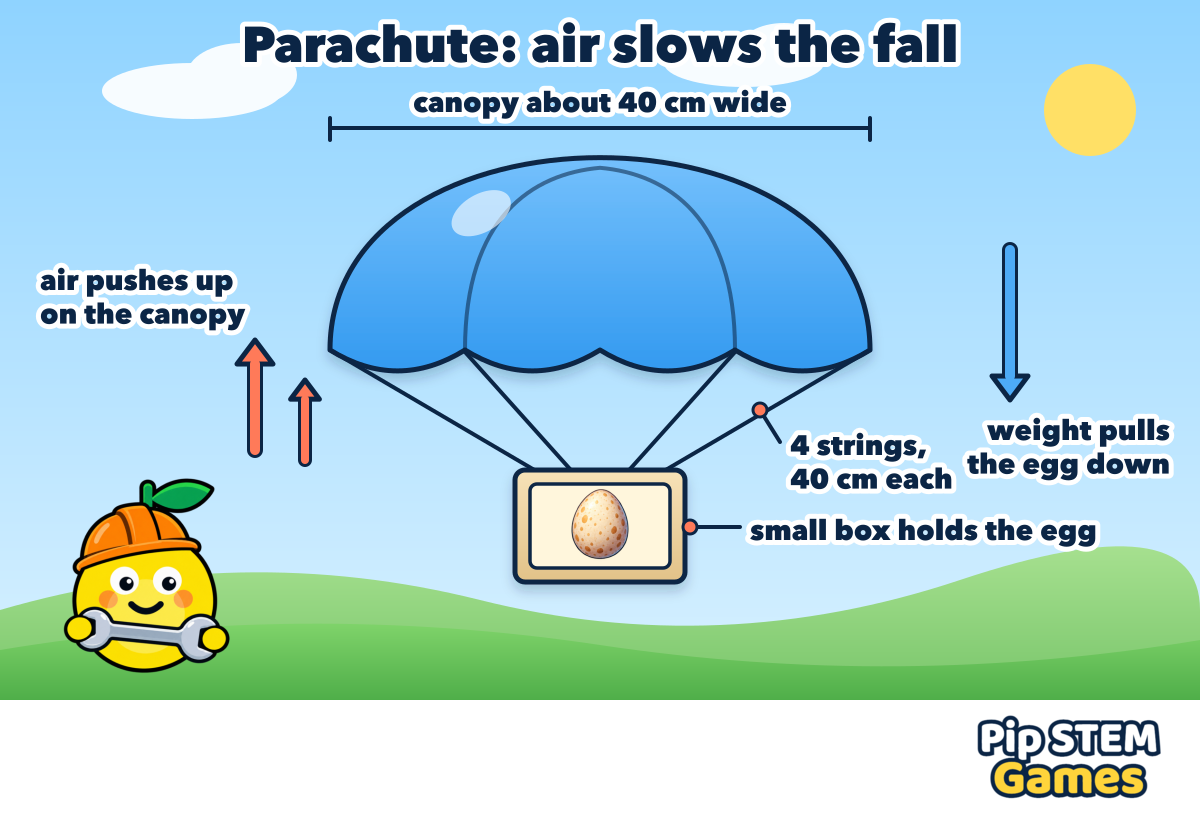
The most common failure is a canopy that doesn't open or strings that tangle. Shorten the strings or fold it more neatly. Our parachute design guide has more on canopy size.
4. Elastic suspension
The egg hangs in mid-air. Ages 9–12 · 30 minutes.
- Open cardboard frame (a box with the lid and sides cut away, adult help)
- 6 rubber bands
- Zip-lock bag
- Tape
- Put the egg in a zip-lock bag.
- Stretch rubber bands from different corners of the frame to the bag.
- Tape each band to the frame so it can't slip.
- Check the egg sits in the middle and doesn't touch the frame.
- An adult drops it from 1 metre and checks the egg.
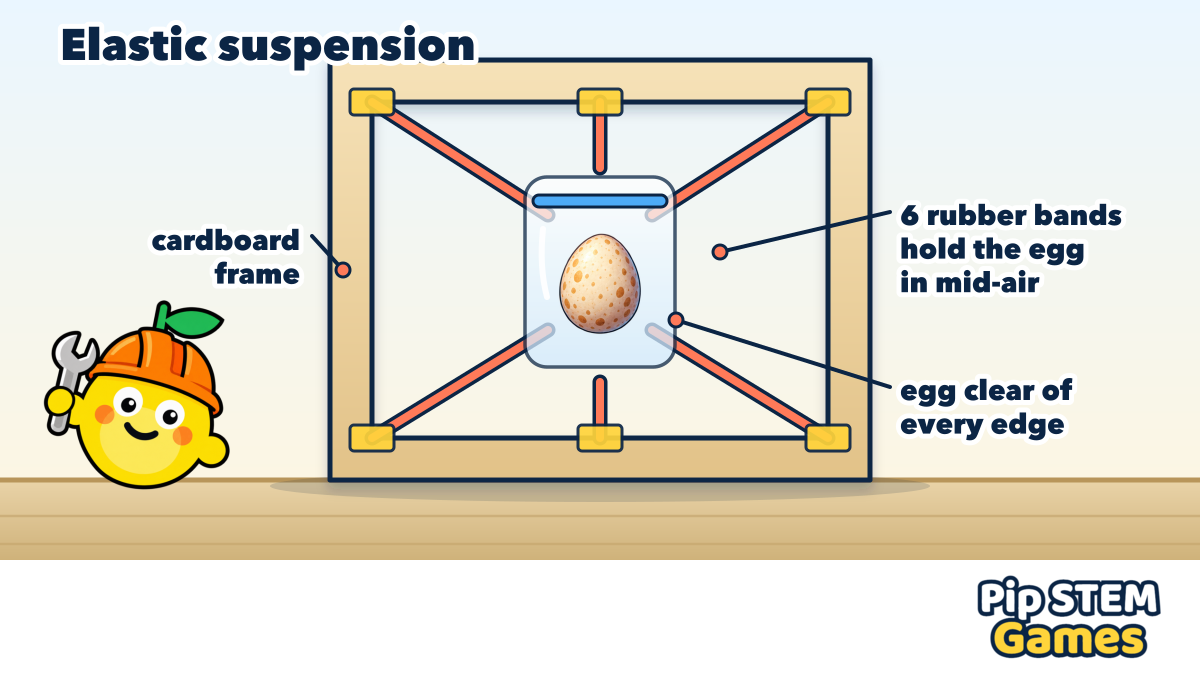
The bands stretch to slow the egg gently. If the egg bumps the frame, make the bands shorter and tighter so it hangs further in.
5. Balloon bumpers
Quick and cheerful. Ages 8–12 · 20 minutes.
- Small padded box
- 6 small balloons
- Masking tape
- An adult to blow up the balloons
- Build the padded box from item 1.
- An adult inflates six small balloons, only half full so they stay squishy.
- Tape three balloons to the bottom, one to the top and one to each side.
- Check that none of the balloons can pop against the table when it lands.
- An adult drops it from 1 metre.
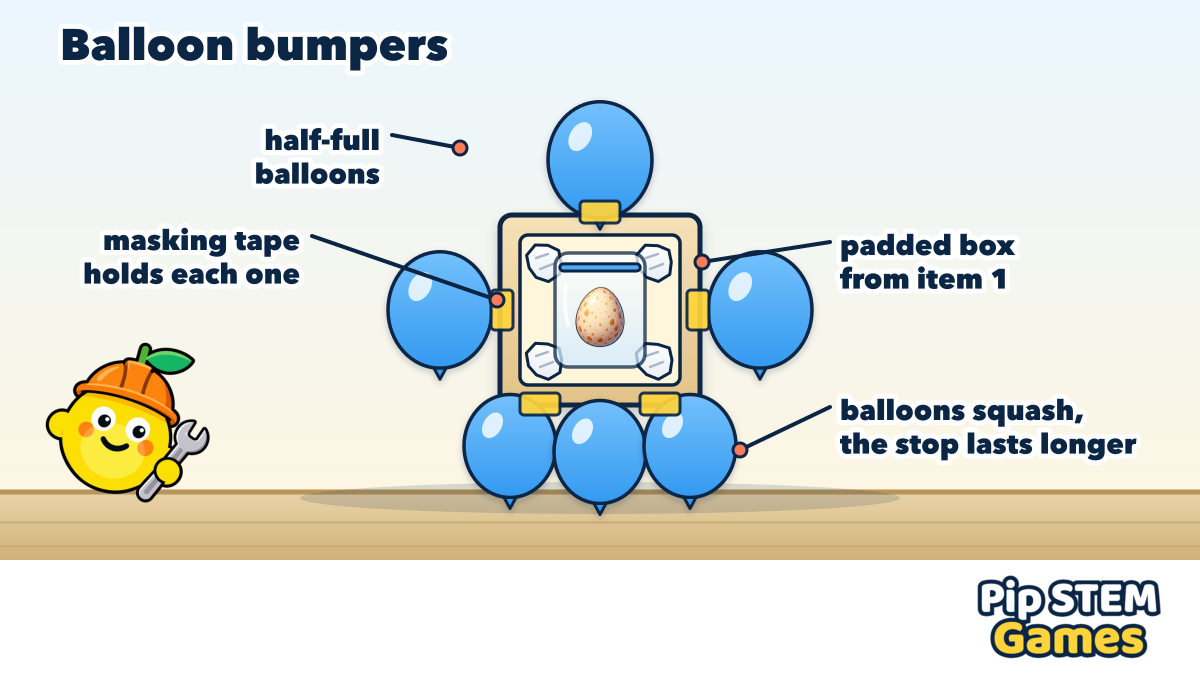
The balloons squash on impact and slow the stop. Keep balloons away from under-6s because broken pieces are a choking risk.
6. Straw cage
Light, simple and surprisingly strong. Ages 8–12 · 25 minutes.
- 30 drinking straws
- Masking tape
- Zip-lock bag
- 1 egg
- Make a cube from 12 straws, taping the corners well.
- Add straws across each face to make a grid.
- Put the bagged egg in the centre.
- Tape more straws around it so the egg can't touch any face.
- An adult drops it from 1 metre.
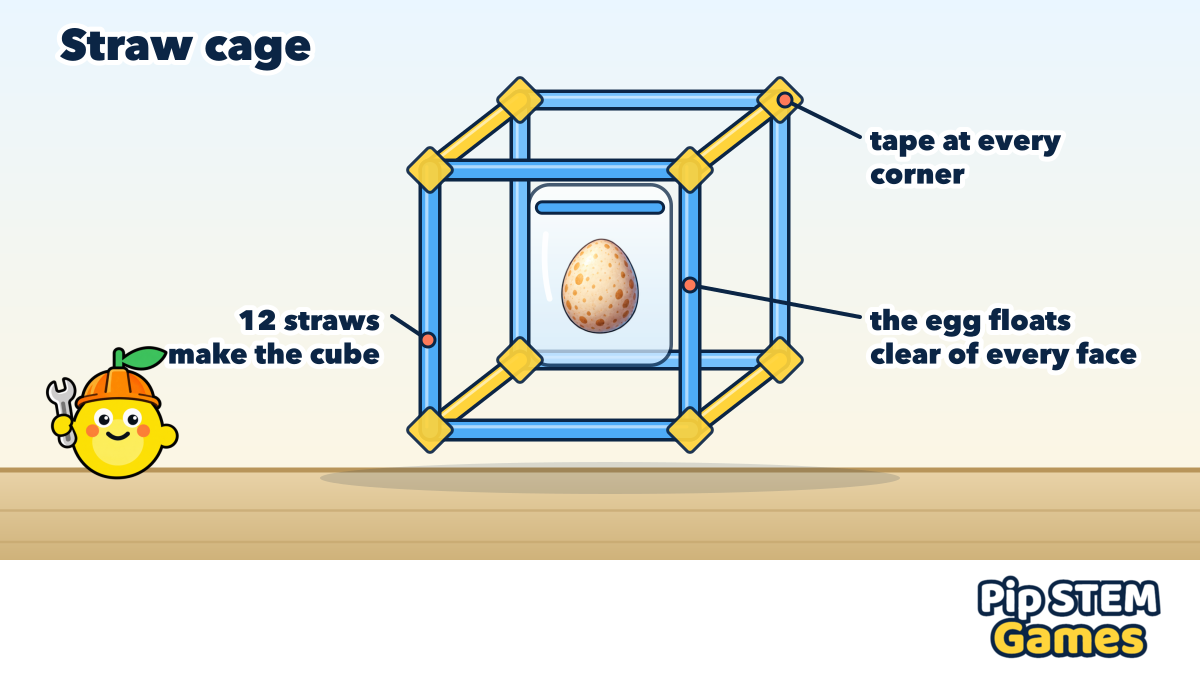
The straws flex and spread the force. If the cage bends flat, add short diagonal straws, since triangles are strong shapes.
7. Sponge sandwich
Great for younger children. Ages 6–12 · 10 minutes.
- Paper cup
- 2 clean kitchen sponges
- Zip-lock bag
- Tape
- Cut a sponge to fit the bottom of the cup.
- Put the bagged egg on top.
- Place a second sponge over the egg.
- Tape the top shut or cover with card.
- An adult drops it from a low height first.
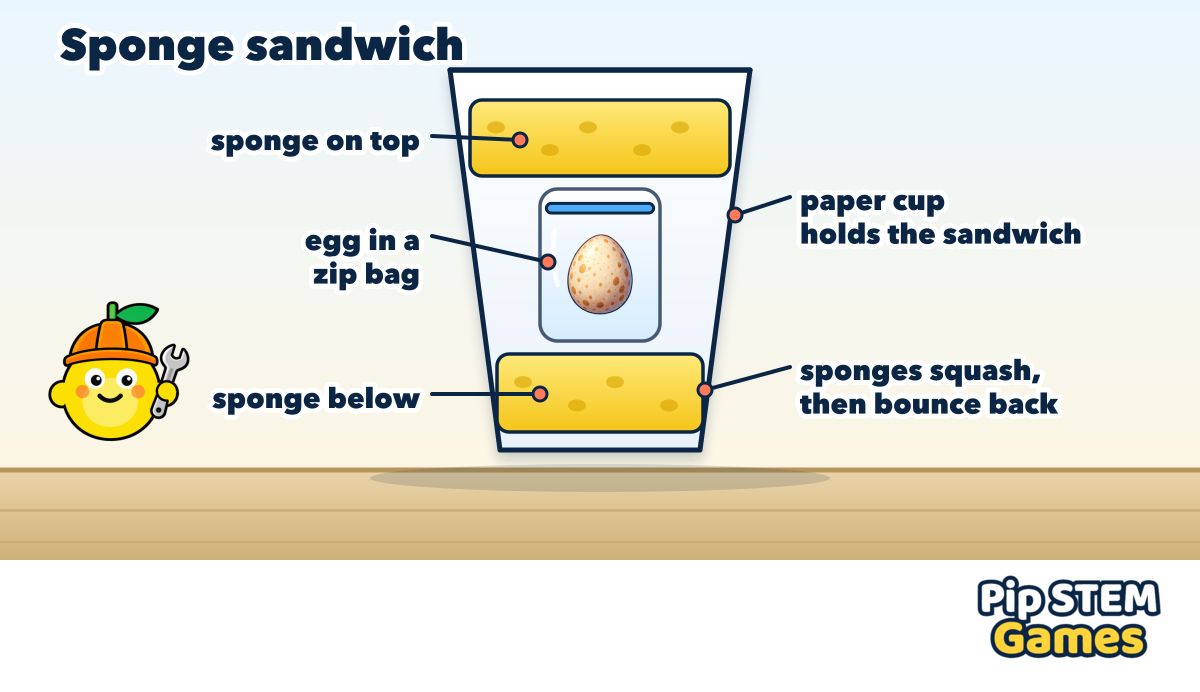
Sponges squash and bounce back. Test with a hard-boiled egg first, and stop if the cup splits at the side.
8. Parachute plus padded box
Two ideas in one. Ages 9–12 · 30 minutes.
- Padded box with straw legs (items 1 and 2)
- Parachute canopy and strings (item 3)
- Build the padded box and straw legs.
- Make the canopy and tie the strings to the box.
- Check the box isn't too heavy for the canopy.
- Fold the canopy carefully before each drop.
- An adult drops it from a safe height.
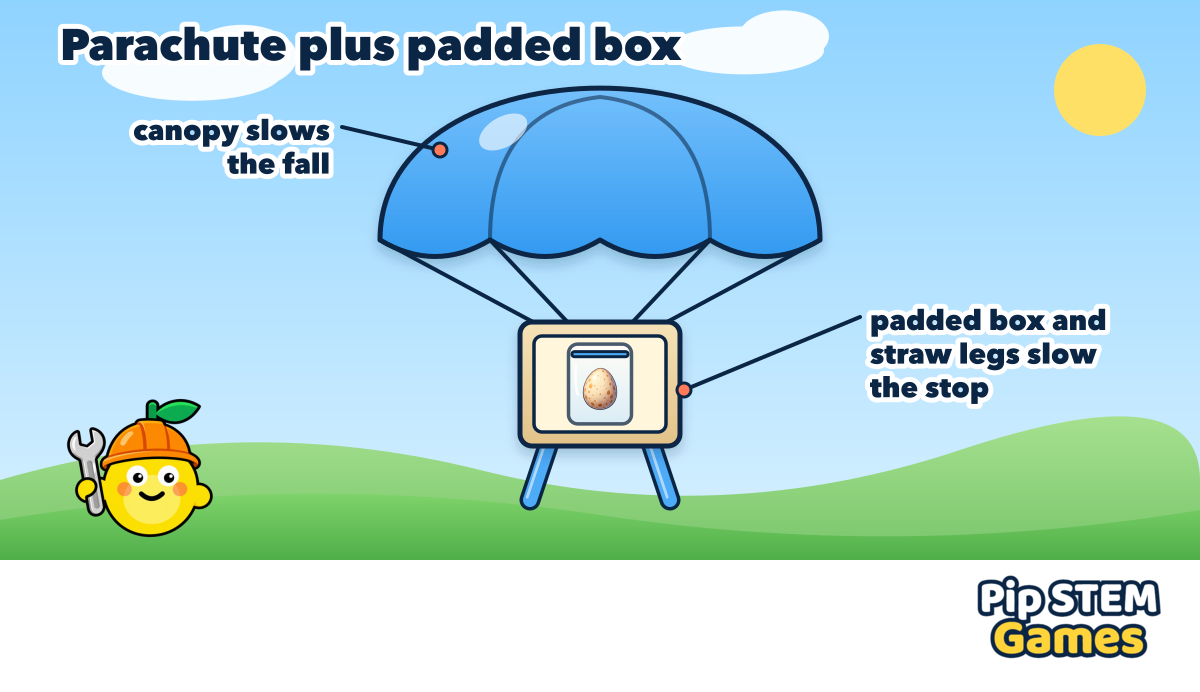
The canopy slows the fall and the padding slows the stop. Combining two ideas can work better than one, but weigh it if your event has a limit.
How to run an egg drop safely
Drop outdoors or on a wipeable floor, and wash hands after touching raw egg. Raw egg can carry bacteria, so keep fingers away from faces.
- Practise with a hard-boiled egg, then use a raw egg for the final test.
- An adult does every drop from height and handles any ladder. Never drop from a window, balcony or stairwell.
- Stand clear below and keep faces away from falling containers.
- Check the rules first: drop height, weight limit and size limit.
- Keep strings and balloons away from children under 6.
For another test-and-fix project, try our paper and coins challenge, play Balloon Lift to see how air pushes things up, or use the Senior Engineers workbook for more build ideas.
Questions parents ask
What is the best egg drop design?
A padded box with crumple legs is hard to beat for reliability. A parachute adds extra protection from greater heights. Combining two ideas is usually better than relying on one.
How high can an egg be dropped without breaking?
It depends on the design. A well-padded container can survive drops that crack an unprotected egg, so work up in steps from a low height and check your event rules.
What materials are best for an egg drop?
Drinking straws, bubble wrap, crumpled paper, cardboard, rubber bands and a plastic bag for a canopy. Light and soft is the aim, so avoid heavy materials.
Does a parachute make an egg drop easier?
It helps from higher drops because it slows the fall. From short drops it can add weight and complexity, so a padded box is often enough.
Can I use a hard-boiled egg to practise?
Yes. A hard-boiled egg is a good first test because it cracks if the design fails, but it makes less mess. Use a raw egg for the final test.
What age is the egg drop project for?
It suits ages 6–12 with an adult doing the drops. Younger children can do a lower, supervised version with a soft toy or a ball of play dough in a cup.
Great STEM activities to try next...
 Can One Sheet of Paper Hold 20 Coins? [Printable]Activities
 Why Does My Tower Keep Falling Over? Try the Tilt Test [Printable]Build challenge
 Make a Balloon-Powered Car at Home [Printable]Build challenge
More to try:

Pip STEM Games
We make engineering games and workbooks for kids aged 5 to 12. Every activity here is one we'd happily run at the kitchen table: test it, watch it fail, fix it, try again.




