

Key takeaways
- The island has four problems and only 10 materials, but the best fixes cost 11.
- Score each problem by the harm it does if left, then divide by its cost.
- Fix the biggest harm per material first and stop when the budget runs out.
- Test every fix on a tray and write down what really happened.
- Any plan is good if it fits the budget and you can defend it with results.
You have 10 materials to save the island, and the fixes cost 11. This planning game for ages 5 to 12 asks your child to rank four problems by harm, spend the fewest materials that solve them, then test each fix on a tray. Engineers call this working within constraints. It takes about 45 minutes with counters, a cup, lolly sticks and paper.
What is the Save the Island challenge?
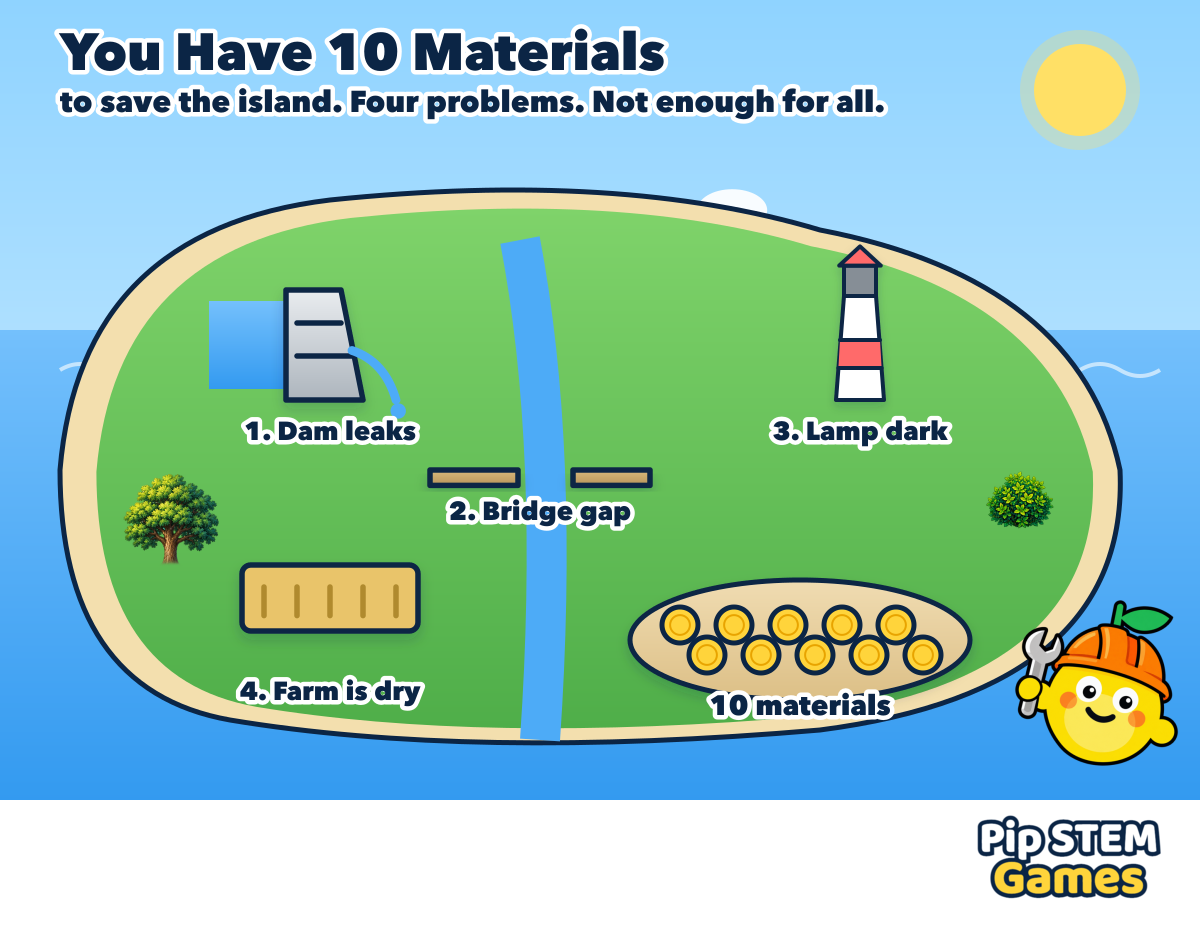
Your island has four problems: a dam that leaks, a bridge with a gap, a lighthouse with no light, and a farm field with no water. Every fix costs some materials, and you only have 10. You must decide what to fix, how well to fix it, and what to leave.
This is a real engineering skill. Project teams never have unlimited money, time or parts. Project managers draw it as a triangle: the work you want, the money you have and the time you have. Push on one corner and another one has to give. Hospitals do something similar in an emergency, called triage, from a French word that means sorting. They sort by need so scarce help goes furthest.
This is a made-up island for learning. It is not a real place, and the costs are game numbers you can change.
What materials do you need?
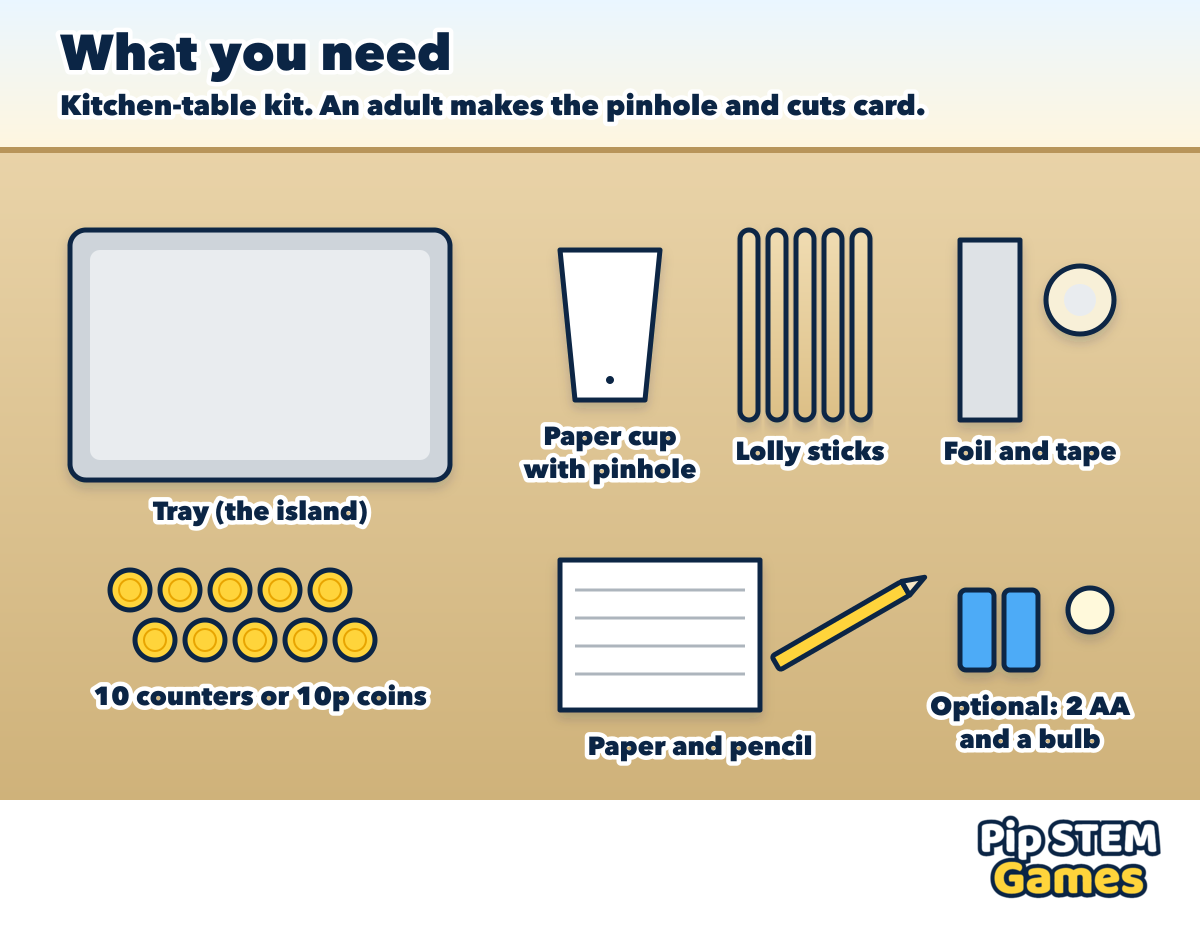
- 10 small counters to be your materials (dried pasta, paper clips or UK 10p coins all work)
- A tray or baking sheet to be the island
- A paper cup with a small pinhole, for the dam test (an adult makes the hole)
- Lolly sticks, card strips or straws for the bridge
- A strip of card or foil and tape for a lighthouse beam
- Paper and a pencil, or the printable planner below
- Optional: a bulb, holder and 2 AA batteries that match it. Never use mains power.
Safety: counters, pasta, coins and paper clips are small parts, so stay close with younger children and keep them away from toddlers. Keep water on the tray and wipe spills at once. An adult makes any holes and cuts any card.
How do you set up the four problems?
- Draw the island on paper and mark the four problems on it.
- Write a cost beside each fix, using the table below or your own numbers.
- Put the 10 counters in a pile next to the island.
- Add up the cost of the best fix for every problem.
- Notice the total is more than 10. That is the point of the game.
- Dam leak: a patch costs 2.
- Bridge gap: a strong bridge costs 3, a weak one costs 1.
- Lighthouse: a simple foil beam costs 2, a battery lamp costs 3.
- Farm water: a channel costs 3.
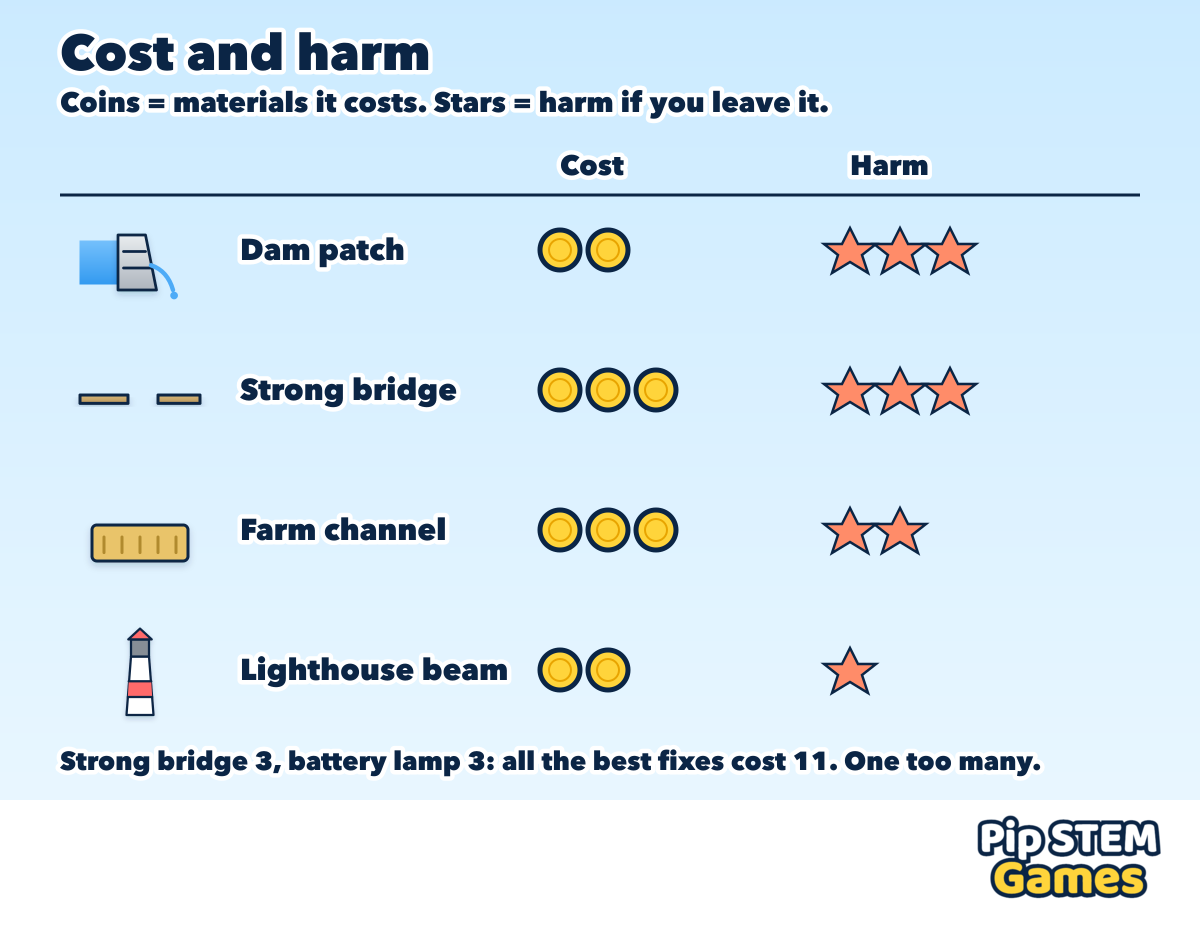
The best version of every fix adds up to 11. So something has to give.
How do you decide which problem comes first?
Predict first. Ask your child which problem looks worst, and write the guess down before you do any sums.
- For each problem, ask: what happens if I leave this broken?
- Give it a harm score from 1 (small harm) to 3 (big harm).
- Divide the harm score by the cost. This shows how much help you get for each material.
- Fix the problem with the biggest number first, then the next.
- Stop when you run out of materials.
A leaking dam can flood the farm, so it scores 3. A broken bridge cuts the island in half and stops help getting across, so it scores 3 too. A dry field hurts, but not today, so it scores 2. A dark lighthouse on a clear, calm day scores 1. With these scores the dam comes first (3 ÷ 2 = 1.5), then the bridge (3 ÷ 3 = 1), the farm (2 ÷ 3, about 0.7) and the lighthouse last (1 ÷ 2 = 0.5).
Your child may score things differently. That is fine, as long as they can say why. If a storm is coming, the lighthouse might jump up the list.
How do you test each fix?
A plan on paper is a guess until you test it. Test each fix on the tray.
- Fill the paper cup with a little water and count how long it takes to drip empty through the pinhole. Patch it with tape and count again.
- Lay the bridge across a gap between two books. Add counters one at a time until it sags. Count how many it held.
- Check that the lighthouse beam points out over the water, where ships would be.
- Pour a small splash of water along the farm channel and watch whether it reaches the field.
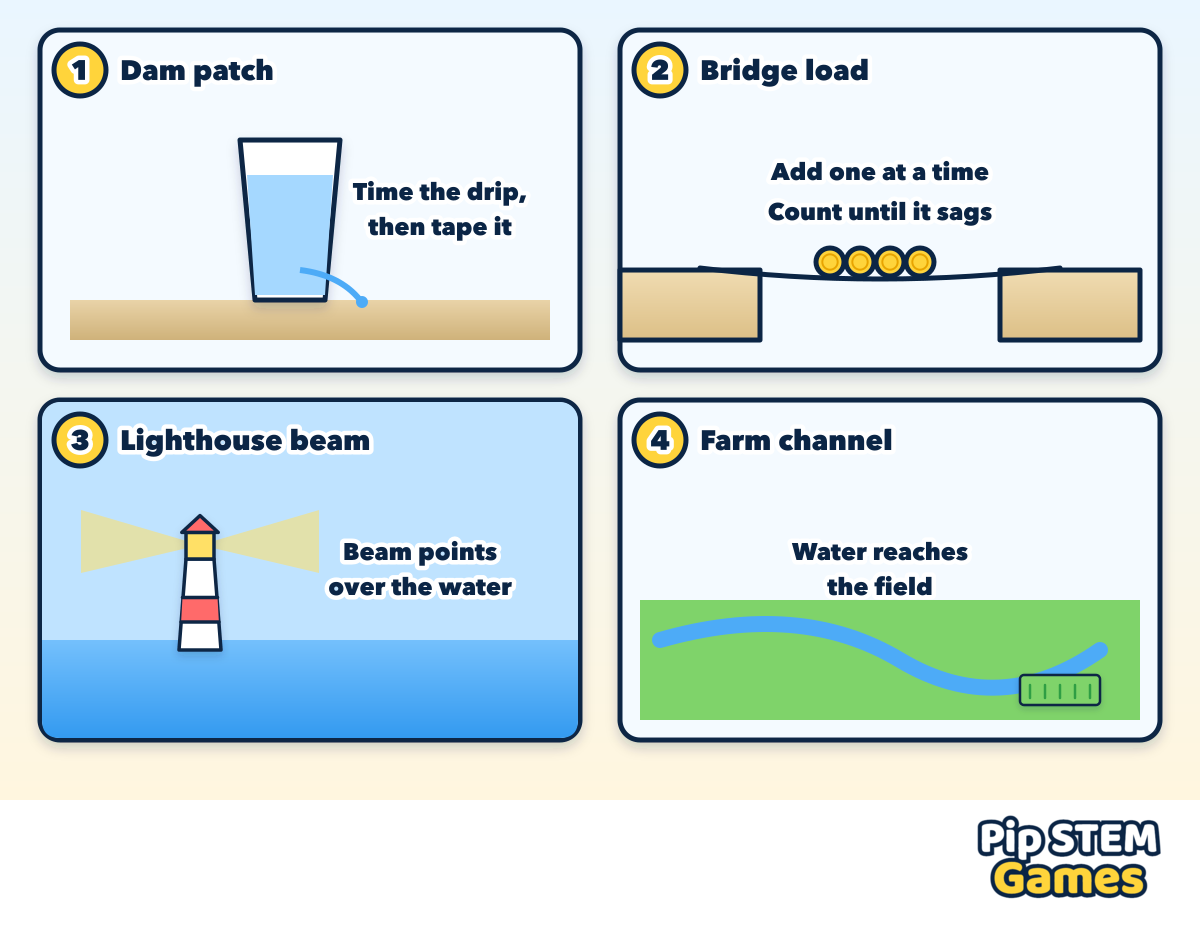
Record real results. If the bridge held 4 counters, write 4. To keep it a fair test, change one thing at a time. When you compare two bridges, use the same gap, the same counters and the same number of sticks, and test each bridge three times.
What does a good plan look like?
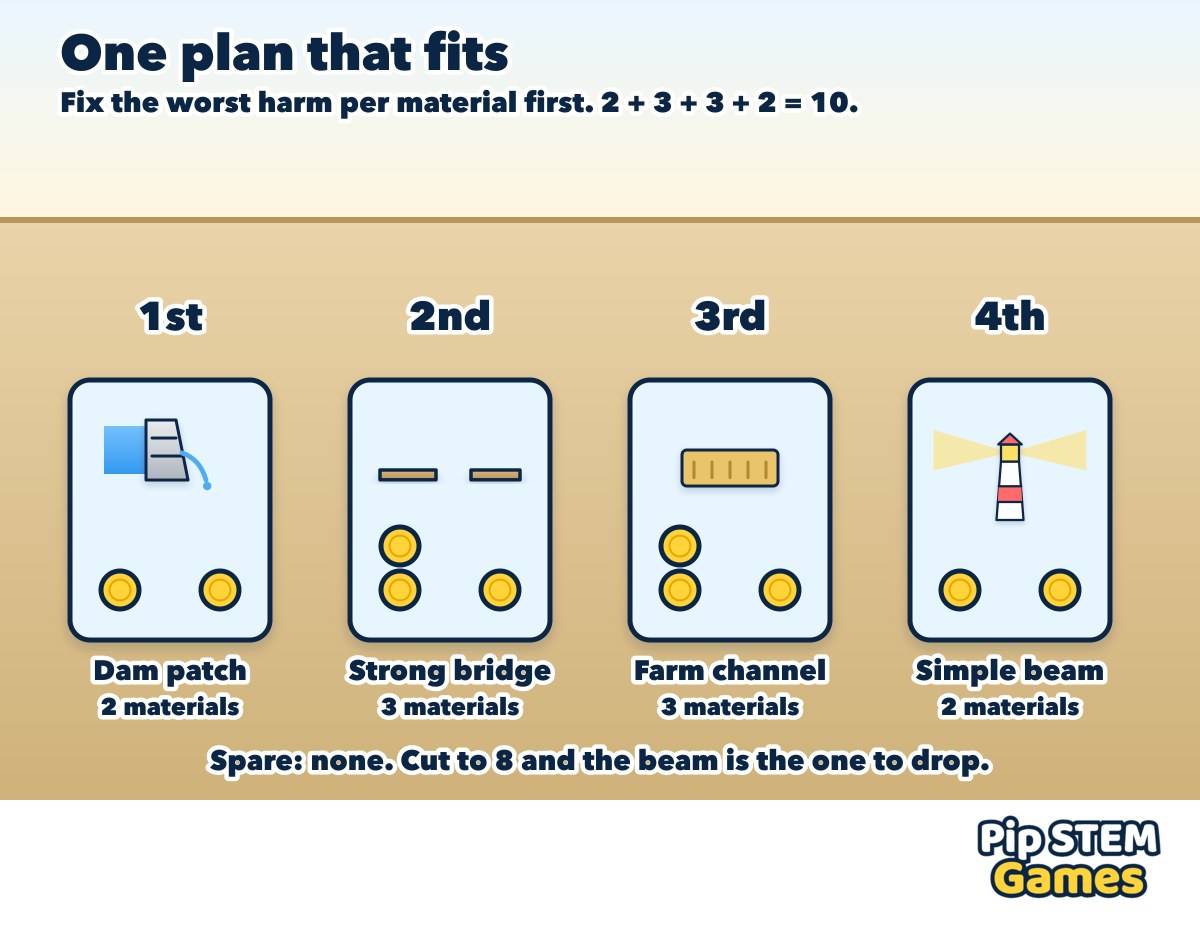
Here is one plan: dam patch (2), strong bridge (3), farm channel (3) and a simple foil beam instead of the battery lamp (2). That spends all 10. It fixes every problem, but the lighthouse gets the cheaper fix because it does the least harm today.
Another family might build a weak bridge for 1 and buy the battery lamp. That works too if they can explain why, and if the weak bridge passed its load test. The best plan is the one you can defend with your test results. For a version where you choose which broken machine to fix first, try which machine should we repair first.
What if it goes wrong?
- The cup leaks everywhere: make a smaller pinhole and add tape in layers.
- The bridge sags at once: fold the card into a U-shaped channel or add a second layer. Folding makes card much stiffer.
- The water misses the farm: tilt the tray a little so the channel slopes downhill.
- The plan costs too much: drop or downgrade the fix with the lowest harm ÷ cost number.
- Everyone argues: ask each person to point to the score that backs up their choice.
Next test: cut the budget to 8 and see which fix you drop. Then add a fifth problem, such as a storm wall costing 3, and rebuild the plan. You can practise the same choose-and-fix thinking on screen in Leak Hunt.
How do you adapt it by age?
- Ages 5 to 7: use two or three problems, simple counting and an adult-led build. Let your child move the counters. The Junior Engineers workbook has more hands-on builds.
- Ages 8 to 10: use all four problems and the harm ÷ cost column.
- Ages 11 and 12: add a time limit, a second island, or a budget that changes after each storm. The Engineering Workbook for Kids has more planning challenges.
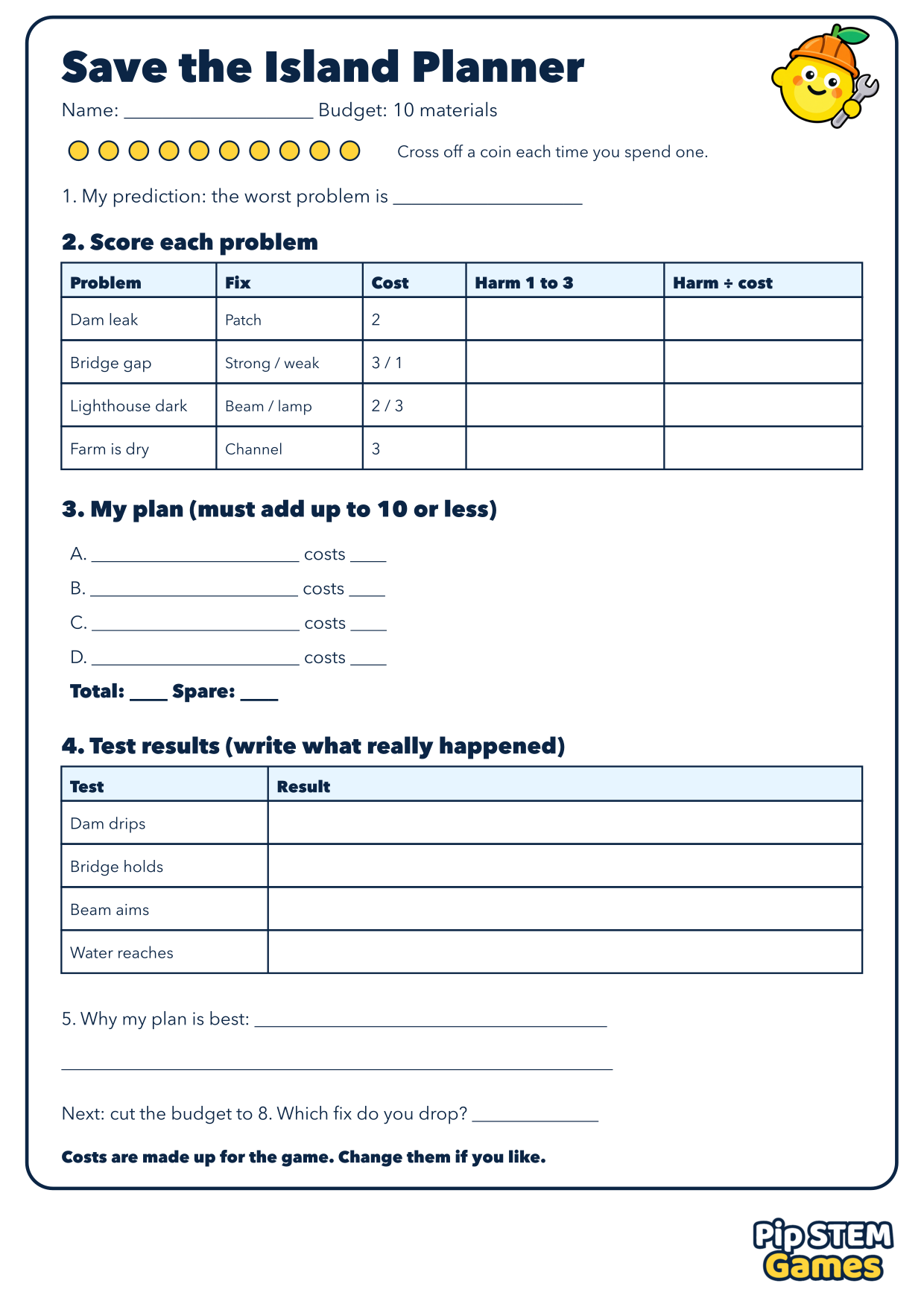
Print the planner below. It has the 10 coins to cross off, the scoring table, a plan box and a test results table.
The big idea: when you cannot fix everything, sort by harm, spend wisely, and test before you trust. To map how the island's places depend on each other, try the engineering island mission map.
Questions parents ask
What does "working within constraints" mean?
It means solving a problem with limits on money, time or materials. Engineers almost never have enough of everything, so they rank the jobs and choose the fixes that do the most good for what they have.
Is there one right answer?
No. Any plan that stays within 10 materials and comes with clear reasons and real test results is a good answer. Different harm scores lead to different plans.
What can I use as materials?
Any 10 small, matching items: dried pasta, paper clips, buttons or UK 10p coins. Keep small parts away from young children.
What age is this for?
Ages 5 to 12. Younger children count and choose with an adult; older children use the harm divided by cost score, time limits and changing budgets.
Do I need batteries?
No. A foil beam works for the lighthouse. If you add a lamp, use only 2 AA batteries that match the bulb holder and never mains power.
How do I make it a fair test?
Change one thing at a time. Compare bridges with the same gap, counters and number of sticks, and repeat each test three times.
Great STEM activities to try next...
 The Engineering Island Mission MapSystems thinking
 Which Machine Should We Repair First?Activity
 Build a Sustainable Island [Printable]Build challenge
More to try: 7 Engineering Projects Using Recycled Materials · Potato and Lemon Battery Experiment for Kids

Pip STEM Games
We make engineering games and workbooks for kids aged 5 to 12. Every activity here is one we'd happily run at the kitchen table: test it, watch it fail, fix it, try again.




