

Key takeaways
- A sustainable island needs four systems: power, water, transport and waste.
- Wind turbines work best on open, exposed ground, so test it with a paper pinwheel.
- Keep the rain tank higher than the village so gravity carries water to the taps.
- A tissue filter catches visible mud only; the test water is never safe to drink.
- Change one thing at a time, count the results, and redraw the plan when it breaks.
Build a sustainable island is a paper planning game for ages 5 to 12: your child draws an island, then chooses where its power, water, transport and waste go, and checks that every choice works with the others. It takes 45 to 60 minutes with paper, pens and a few bits from the recycling box. Everything here is a model for thinking, not a real engineering design.
What is a sustainable island?
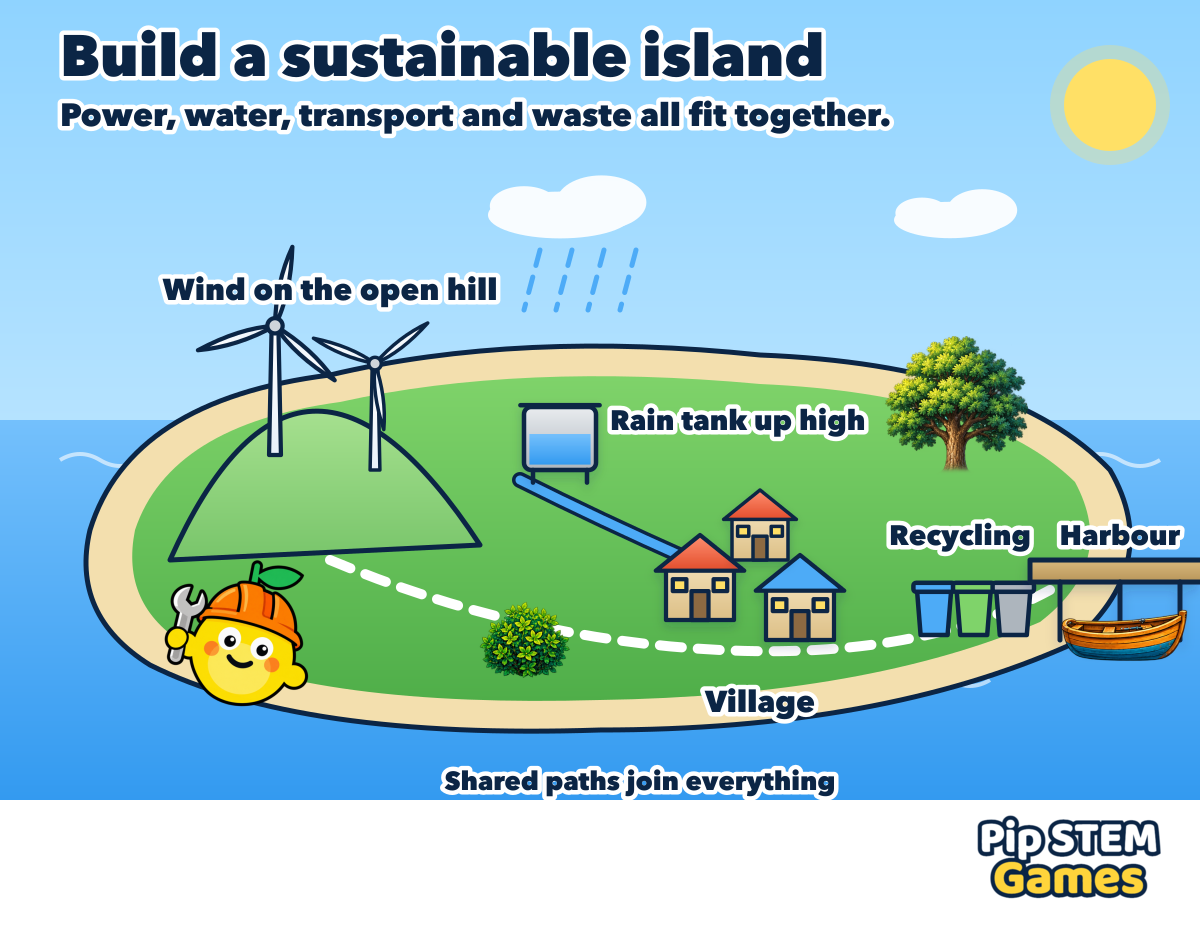
A sustainable island meets its own needs without running out of the things it depends on. That means four systems: power, drinkable water, a way to move people and goods, and a plan for rubbish. The fun starts when your child finds out that moving one thing changes the others. Put the turbines next to the houses and you lose the best wind. Put the water tank at the bottom of the hill and nothing reaches the taps.
This isn't made up. The Isle of Eigg in Scotland switched on its own island grid in 2008. It runs on hydro, wind and solar, with batteries and a backup generator for calm, dry spells, and it was planned to be about 98% renewable. Homes there agree to use no more than 5 kW at a time, so everyone shares the power fairly. That is exactly the kind of trade-off your child will meet on paper.
What do you need?
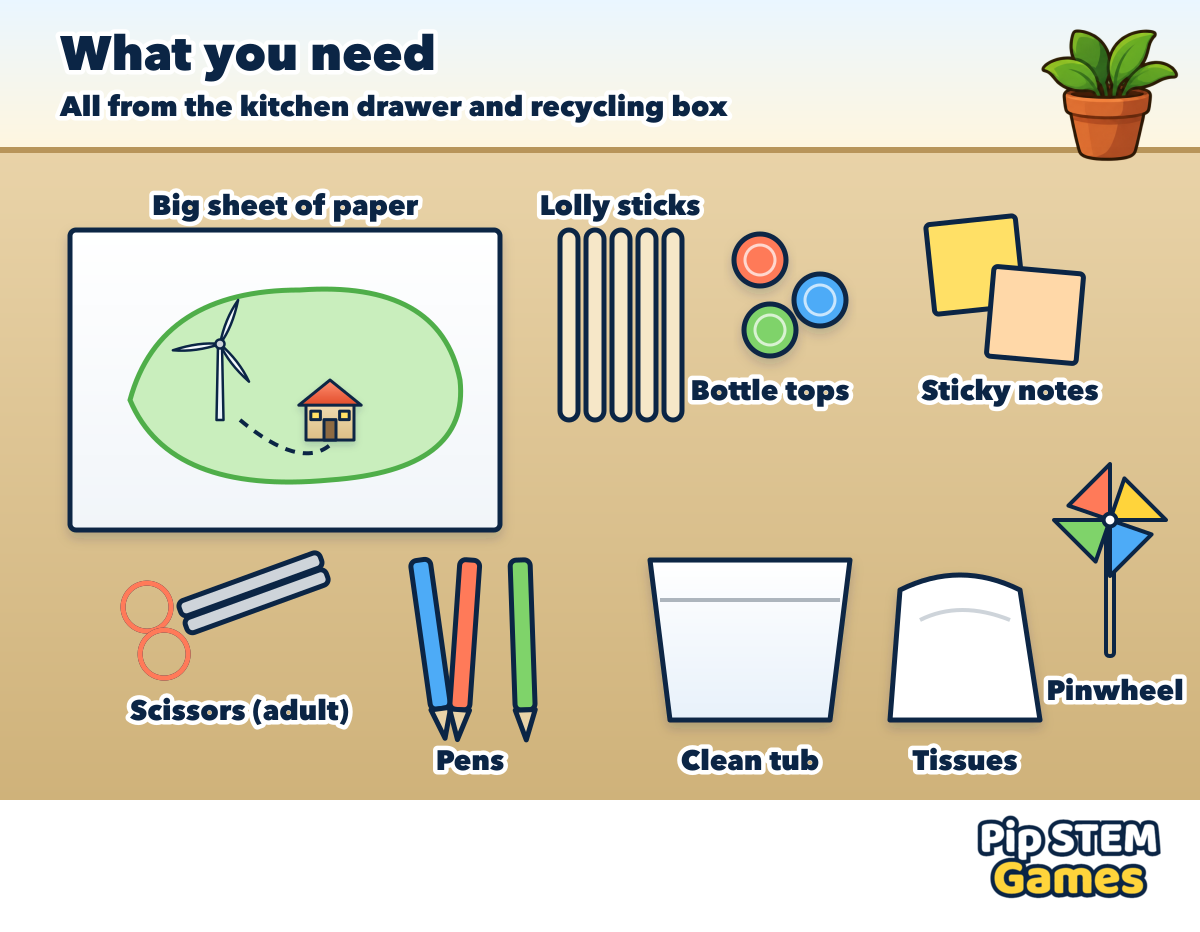
- A big sheet of paper, or the inside of a cereal box opened flat
- Pencils and three or four coloured pens
- 12 lolly sticks or paper straws, plus scrap card and a few bottle tops
- Sticky notes
- Round-ended scissors (an adult cuts for younger children)
- Two small clean plastic tubs, a tissue and a spoonful of garden soil for the water test
- A paper pinwheel: a 15 cm square of paper, a pencil with a rubber and a drawing pin, which an adult pushes in
Safety: bottle tops and drawing pins are small parts, so keep them away from toddlers and supervise younger children. You don't need a hairdryer or a fan. Your child's own breath is the wind. Use only clean, dry household items, and wash hands after touching soil.
How do you plan wind power?
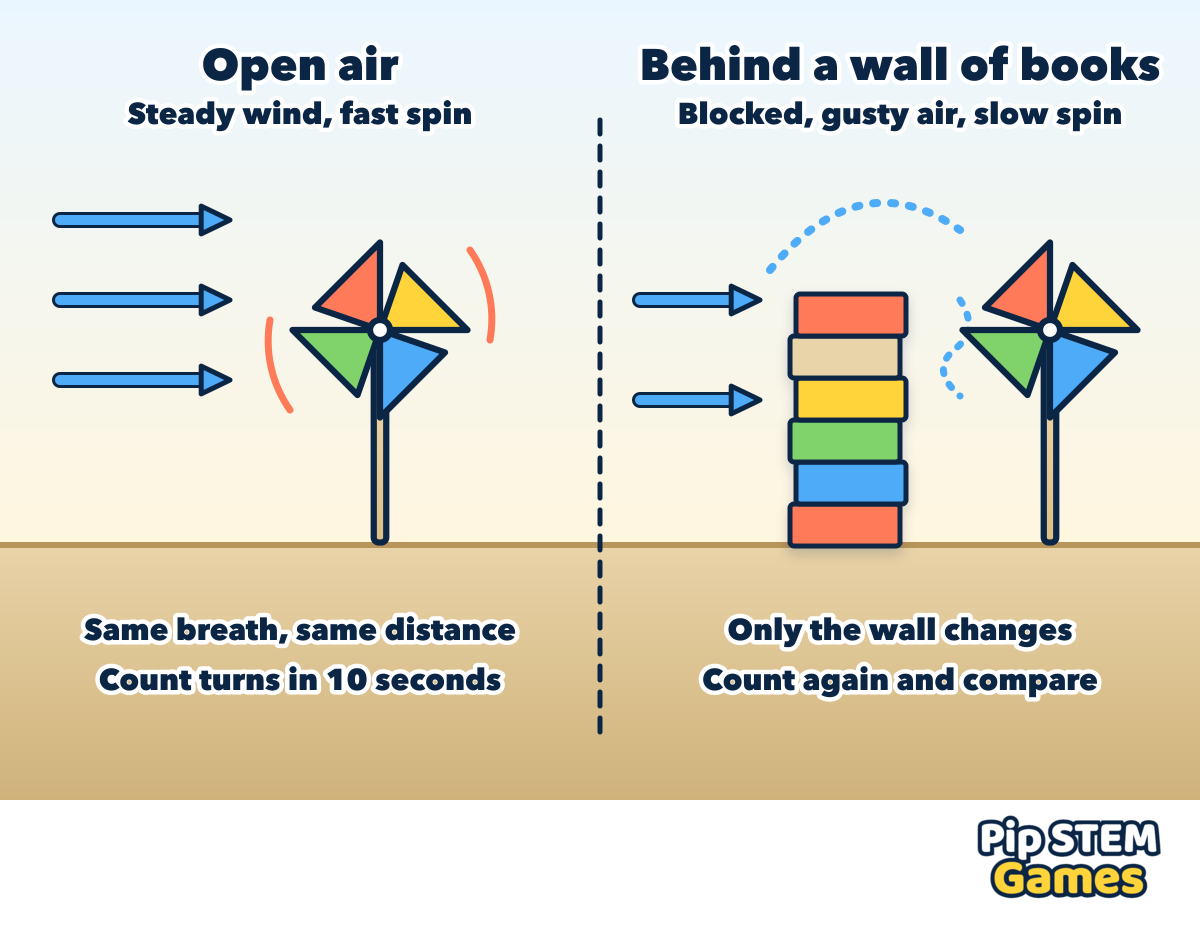
Put the turbines somewhere open and exposed, like a hilltop or the windy coast, and away from houses. Wind slows down and gets choppy when it has to pass buildings, trees or hills, so sheltered spots give less power.
- Draw an island that fills most of the sheet.
- Draw a big arrow at the edge to show where the wind comes from. In the UK it most often blows from the south-west, so that is a sensible start.
- Test the idea with the pinwheel. Blow on it from 30 cm away in open air and count the turns in 10 seconds.
- Now stand a wall of books between you and the pinwheel and blow again, same breath, same distance.
- Mark your turbine spot on the map and write one reason next to it.
One honest limit: wind isn't steady. Ask your child what happens to the lights on a still day. A good plan adds a back-up, such as a battery store drawn as a box, or a second source like solar panels on roofs. For more on blade shape and speed, try our guide to making a wind turbine spin faster, or place turbines on screen in the Wind Farm game.
How do you plan clean water?
Catch rain, store it high, and let gravity carry it down to the taps. Many islands can't pipe water from a big river, so roofs and slopes collect rain into tanks instead.
- Draw a rain catchment, such as a big roof or a sloping patch of ground.
- Draw a storage tank on higher ground than the village.
- Draw a pipe from the tank down to the houses.
- Ask: what would happen if the tank sat lower than the taps? (Nothing would come out without a pump.)
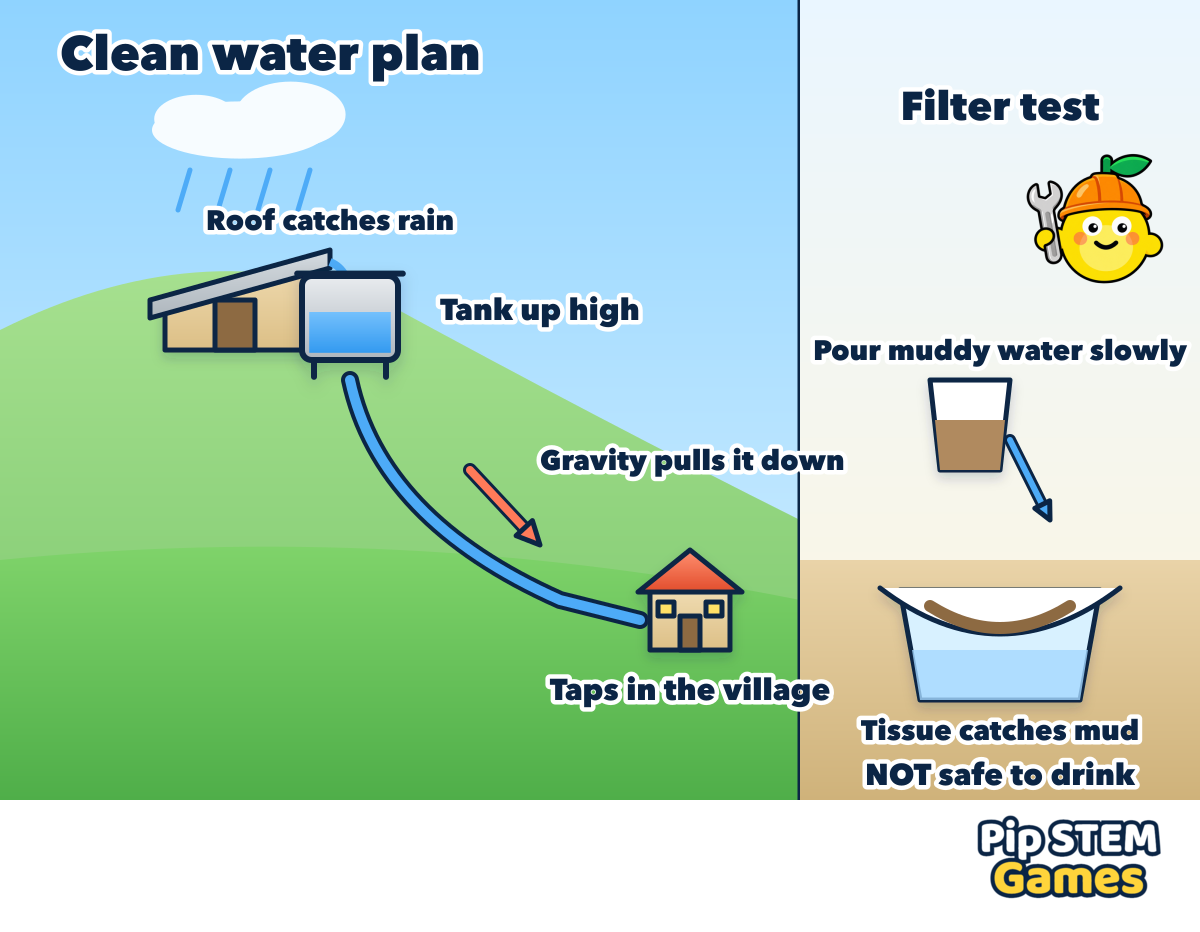
The filter test: stir a spoonful of soil into a cup of cold tap water. Hold a tissue over a clean tub and pour slowly. Look at what the tissue catches. A tissue removes the bits you can see, but germs and dissolved dirt pass straight through, so the water is never safe to drink. Tell your child that before you start, and pour it on the garden afterwards. Our page on how water gets to your tap shows how real treatment works, step by step.
How do you plan transport and waste?
Give every village a route to the harbour, the water tank and the wind site, using as few lolly sticks as possible. Short, shared routes mean less building and less to repair.
- Set the budget: 12 lolly sticks for all the routes on the island.
- Lay the sticks on the map as paths, bike lanes or a little electric bus line. Use a different pen colour for each kind.
- If you run out, join two villages onto one route.
- Now sort waste on three sticky notes: reuse, recycle, rubbish.
- Draw a recycling point near the harbour so materials can be shipped off, and a compost heap for food scraps.
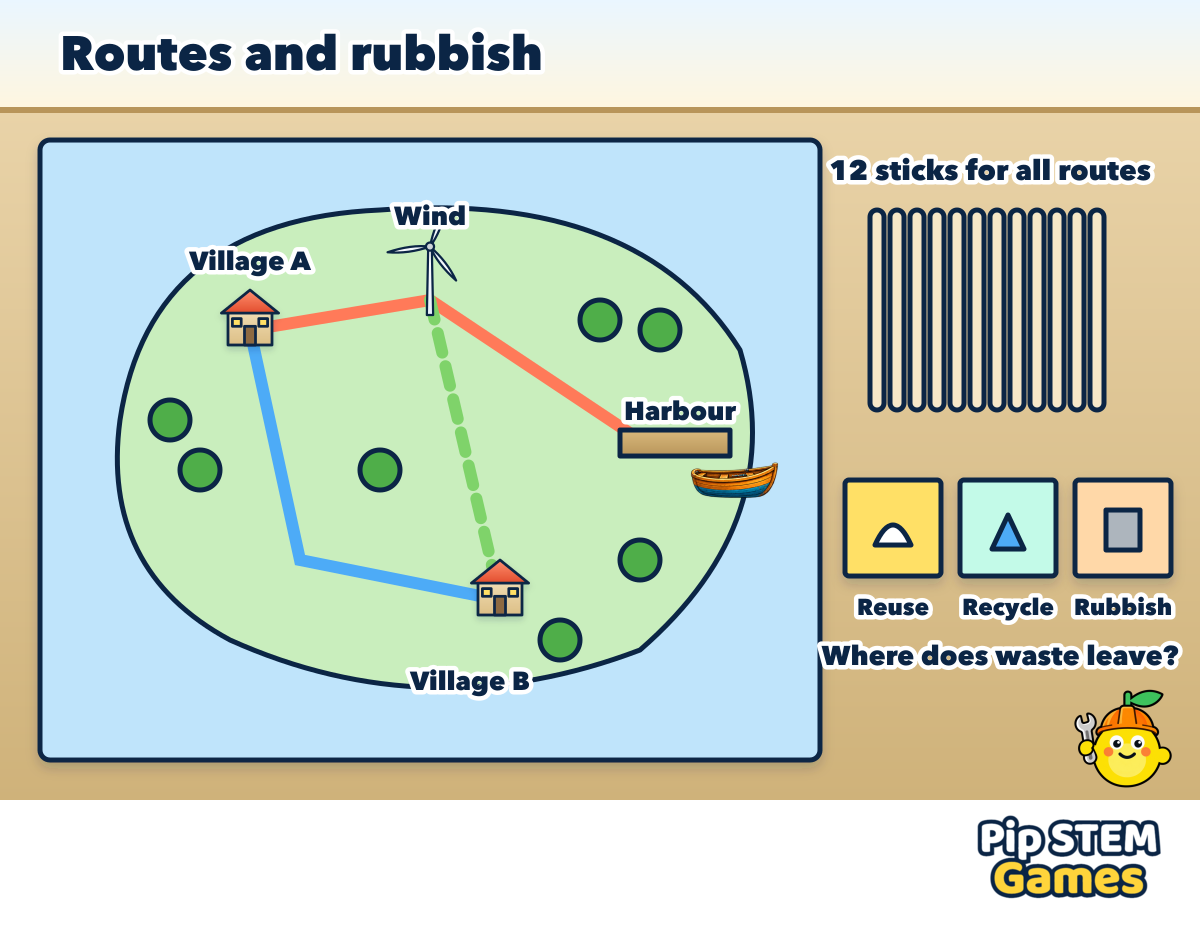
The question that makes children think hardest is: where does waste leave the island, and how often? A boat that only calls once a fortnight means a lot of storage. If your child likes sorting, the recycling robot build follows on nicely.
How do you run a fair test, and what if it doesn't work?
Change one thing, keep everything else the same, and count. Move the pinwheel from the open "hilltop" to behind the books, and keep the same pinwheel, the same 30 cm distance and the same gentle breath. Count turns in 10 seconds three times and take the middle number. Write the results down before you decide anything. Frankly, the most useful moment is when the numbers surprise you.
- The pinwheel won't spin: it is probably stuck on the pin. Wiggle the pin to make the hole a bit bigger, or use thinner paper.
- The routes won't fit the budget: shorten them, or join two villages onto one shared route.
- The filter test looks the same: add a second layer of tissue and compare the two.
- A child gets cross that the plan "broke": that's the point. Engineers redraw plans all the time.
Next test: a storm cuts one road. Can every village still reach the water tank and the harbour? Redraw until the answer is yes.
How do you adapt it by age?
- Ages 5 to 7: draw and talk. One choice for each system, and do the pinwheel test together. The Junior Engineers workbook has more paper builds at this level.
- Ages 8 to 10: add the 12-stick budget and the fair pinwheel test with written numbers.
- Ages 11 and 12: write a reason for every choice and one trade-off, such as "turbines on the hill are further from the village, so the cable is longer". The Senior Engineers workbook takes trade-offs further.
Print the planning sheet below and fill it in as you go. It keeps the four systems on one page, which is the whole point: a sustainable island works only when the parts work together.
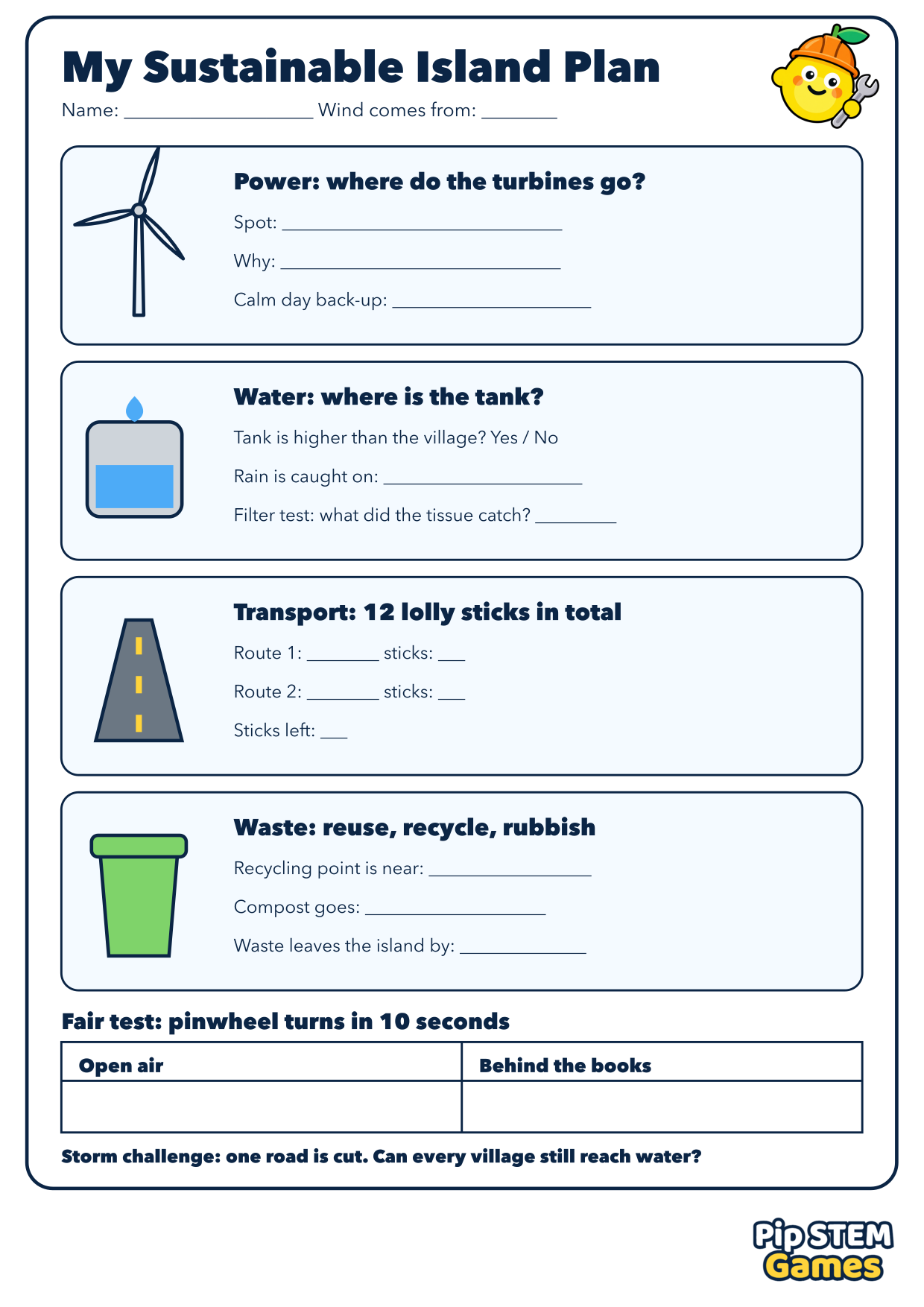
To see how the whole island fits together as a map, try the engineering island mission map next.
Questions parents ask
What makes an island sustainable?
A sustainable island can keep supplying power, clean water, transport and waste handling without running out of what it relies on. In practice that means renewable power with a back-up, collected and stored water, short shared routes and a plan for reusing and shipping out rubbish.
Is there a real island that runs on renewable power?
Yes. The Isle of Eigg in Scotland switched on its own grid in 2008, using hydro, wind and solar with batteries and a backup generator. It was planned to run on about 98% renewable power.
Where should wind turbines go on an island?
Somewhere open and exposed, such as a hilltop or a windy coast, and away from homes. Buildings, trees and hills slow the wind and make it gusty, so sheltered spots give less power.
Can children drink the water from the filter test?
No. A tissue filter only catches the bits you can see. Germs and dissolved dirt pass through, so the water is never safe to drink. Pour it on the garden afterwards.
What age is this activity for?
Ages 5 to 12. Younger children draw and make one choice per system; children of 8 to 10 add the lolly stick budget and the fair test; 11 and 12 year olds explain their trade-offs in writing.
How long does it take?
About 45 to 60 minutes for the full plan. You can split it into four 15-minute sessions, one for each system.
Great STEM activities to try next...
 Can You Make the Wind Turbine Spin Faster?Activity
 How Does Water Get to Your Tap?Activity
 The Engineering Island Mission MapActivity
More to try:

Pip STEM Games
We make engineering games and workbooks for kids aged 5 to 12. Every activity here is one we'd happily run at the kitchen table: test it, watch it fail, fix it, try again.




