

Key takeaways
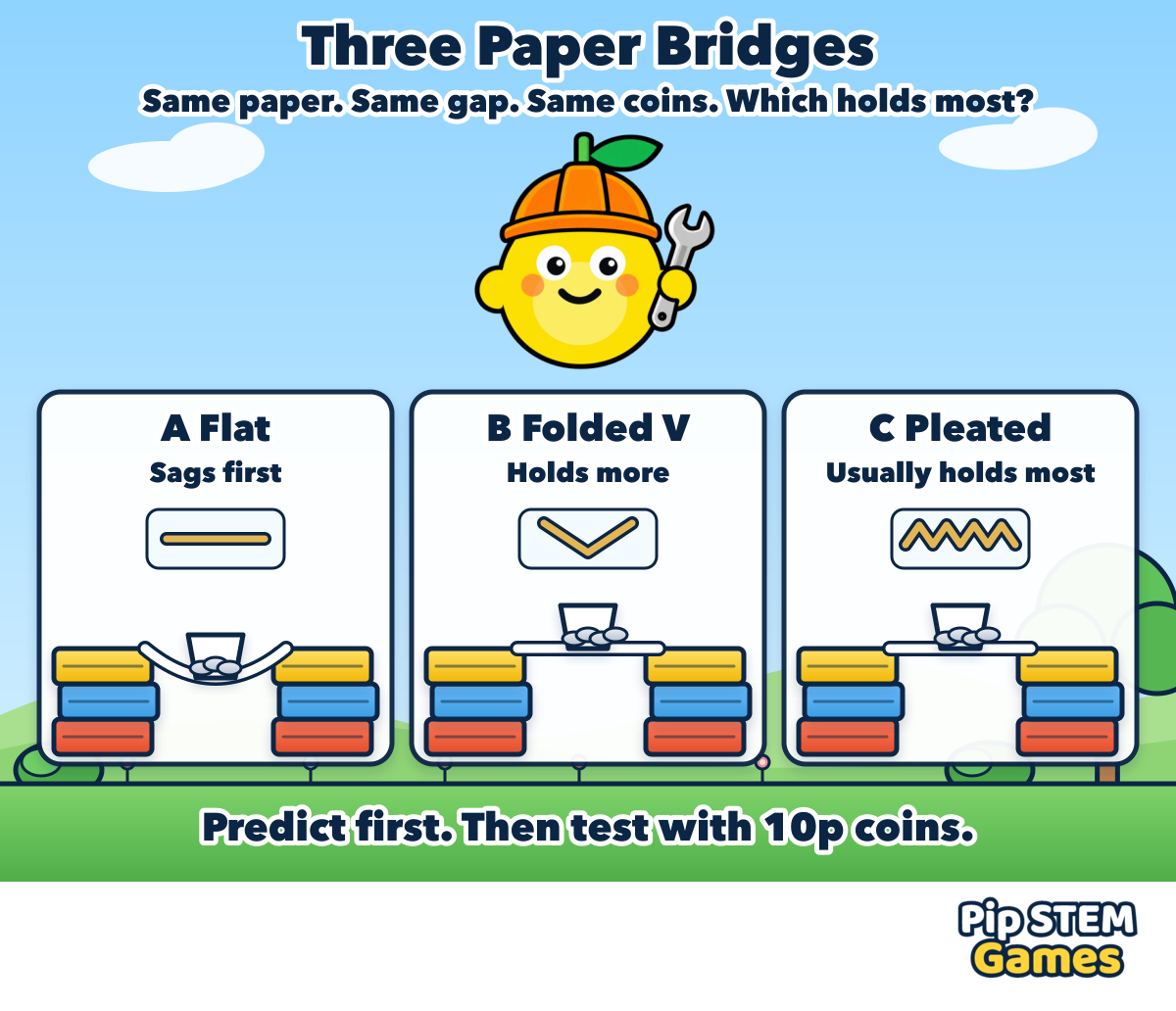
- Three designs from the same paper: flat, folded V and pleated.
- Shape changes how much a bridge holds, not the paper.
- Keep the gap, cup and coins the same for a fair test.
- Predict first, then count coins until it sags or falls.
- A deeper shape usually holds more, so test to find out.
These paper bridge designs for kids use one sheet each: flat, folded V and pleated. Test all three with the same coins and see which holds the most.
1. Flat sheet
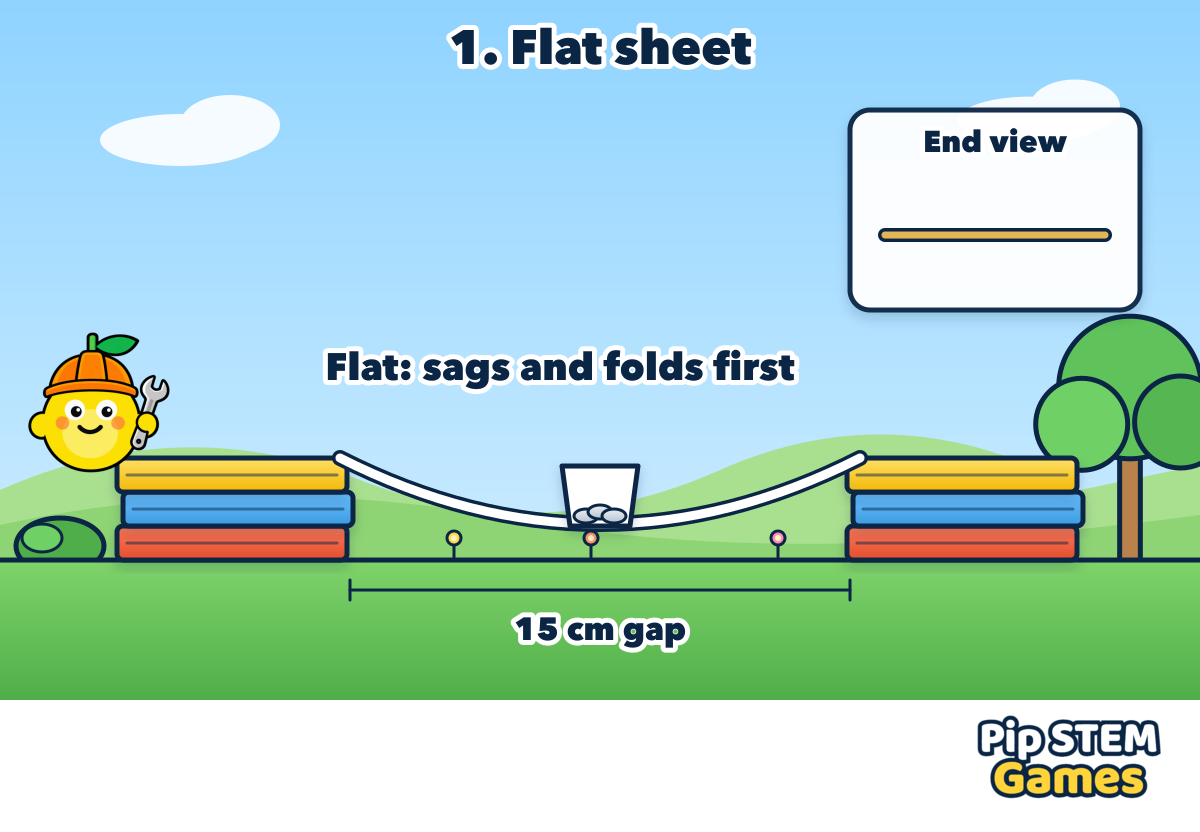
A single flat sheet is your baseline. About 10 minutes, ages 5 to 12.
- 3 sheets of A4 paper, the same type
- 2 stacks of books, the same height
- A small paper cup
- UK 10p coins (each weighs 6.5 g)
- A ruler and a pencil
- Set the two book stacks 15 cm apart. Check with the ruler.
- Lay one flat sheet across the gap, overlapping each stack by about 3 cm.
- Put the cup in the exact middle.
- Add 10p coins one at a time, gently, and count them.
- Stop when the paper sags to the table or falls. Write down the count.
All of the paper can curve at once, so a flat sheet bends easily. Predict first: how many coins will it hold?
2. Folded V
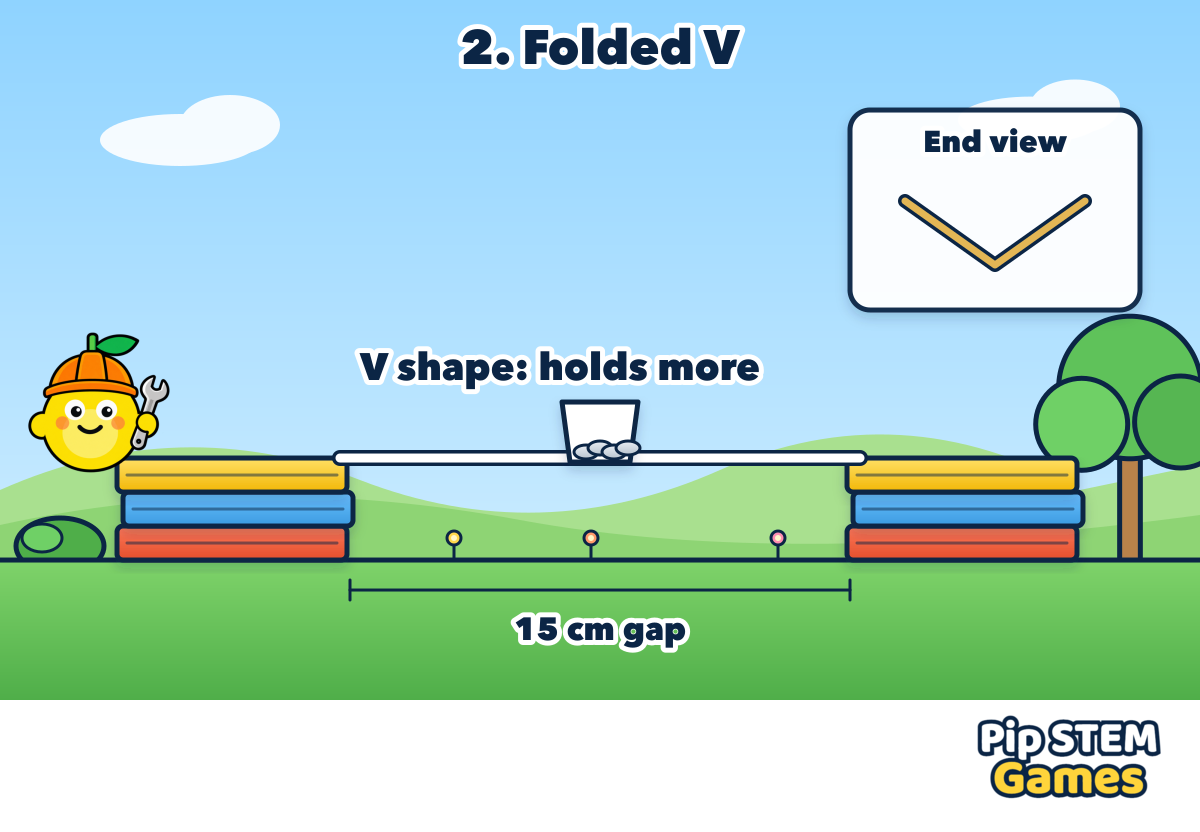
Folding adds depth to the paper. About 10 minutes, ages 5 to 12.
- 1 sheet of A4 paper
- The same books, cup and coins
- Fold the sheet in half along its length.
- Open it out into a shallow V shape, like a tent roof upside down.
- Lay it across the same 15 cm gap with the same overlap.
- Place the cup in the middle and add coins one at a time.
- Stop at the sag or collapse and write down the count.
The fold makes the paper deeper from top to bottom, so it is stiffer. It usually holds more than the flat sheet.
3. Pleated sheet
Pleats add depth again and again. About 15 minutes, ages 5 to 12.
- 1 sheet of A4 paper
- The same books, cup and coins
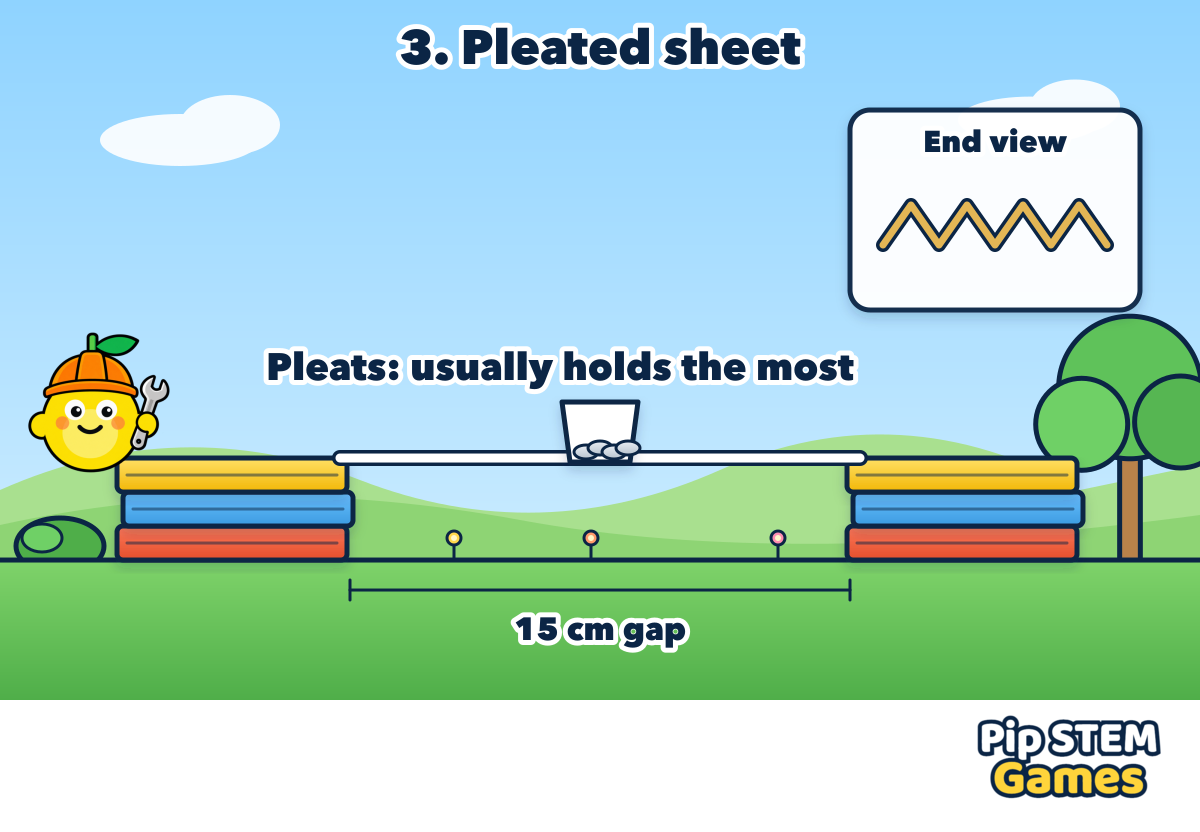
- Fold the sheet backwards and forwards like a fan, with folds about 2 cm wide.
- Press every fold flat with the edge of a ruler.
- Lay it across the gap with the pleats running along the bridge, from one stack to the other.
- Place the cup in the middle and add coins one at a time.
- Stop at the sag or collapse and write down the count.
Each pleat adds depth, so the paper is stiffer still. It usually holds the most, but test it and see. Try the Bridge Builder game next.
Why does the shape of paper change how much it holds?
When a bridge bends, the top edge is squeezed and the bottom edge is stretched. A deeper shape keeps the top and bottom further apart, so it bends less. The paper has not changed, only its shape. Our paper bridge challenge uses the same idea, and why arches are so strong shows another shape trick. Engineers choose a shape before they choose a material, because a smart shape can make ordinary material do far more work.
How do we keep the test fair?
Change only the design. Keep the same paper, the same gap, the same cup, the same position and the same way of adding coins. Repeat each bridge twice and compare. Build every bridge from a fresh sheet, because paper that has already held coins is weaker. Lay each sheet the same way round, and add the coins at the same speed. If results vary a lot, add coins more slowly and always place the cup in the exact centre.
What if the results look odd?
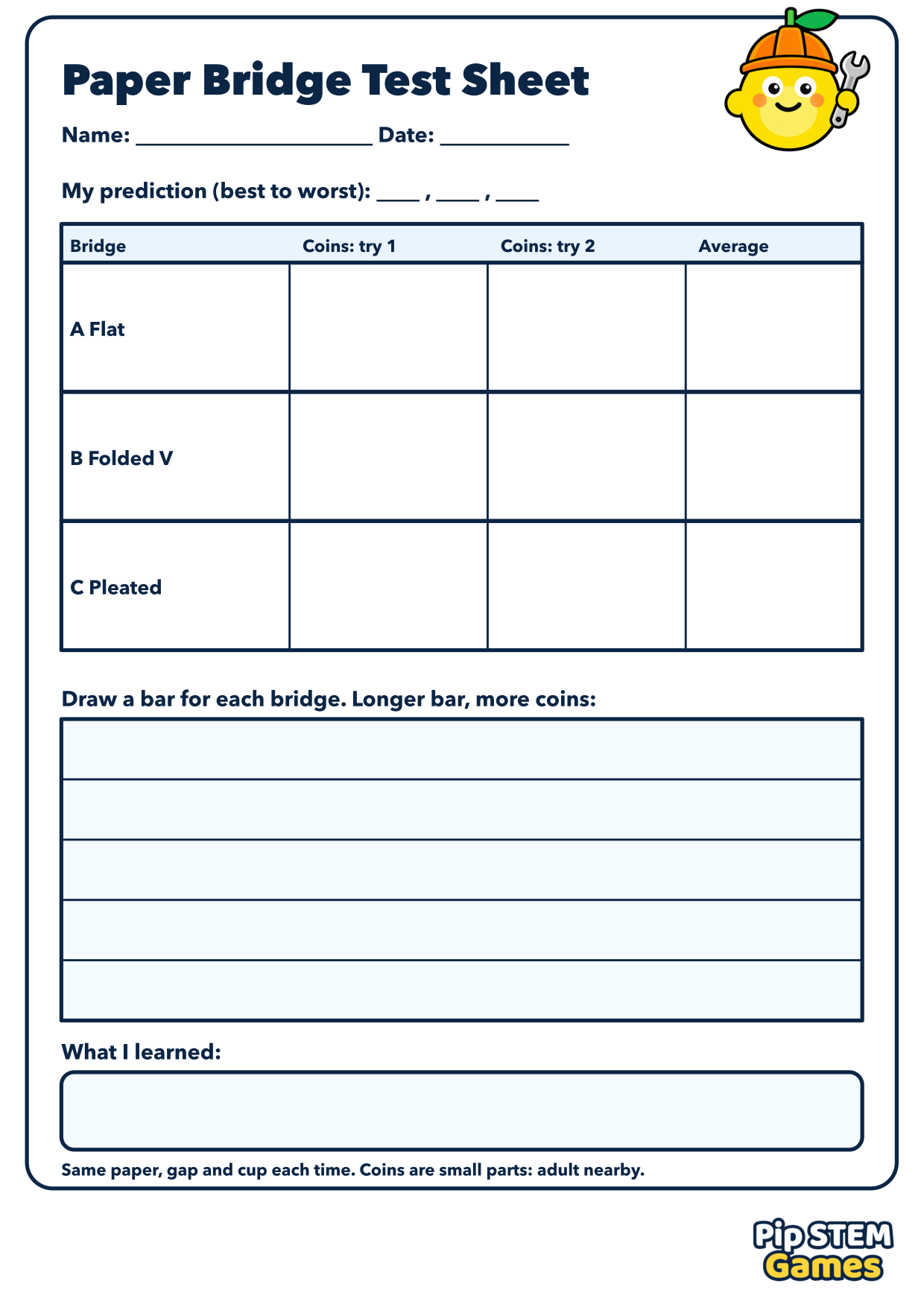
If the bridge slides off, add more overlap or use heavier books. If the pleats open up, press the folds firmly. Try pleats running across the gap instead of along it and predict which will hold more before you test. Our engineering workbook for kids has more tests like this. Ages 5 to 7 can count coins in tens and say which held more. Ages 8 to 12 can average two tries and draw a bar chart. You could also try a rolled tube of paper, or two pleated sheets stacked together, and predict where each one will land. Write your prediction on the sheet before you test, then compare it with what happened. This is a home model to test ideas, not a real bridge design.
Questions parents ask
Which paper bridge design holds the most?
A pleated sheet usually holds the most and a flat sheet the least. Test them yourself, because results depend on your paper and how carefully you fold.
Why does folding make paper stronger?
Folding adds depth. A deeper shape keeps the squeezed top and the stretched bottom further apart, so it bends less.
How far apart should the supports be?
Set the book stacks 15 cm apart, and keep the same gap for every bridge so the test is fair.
How many 10p coins will it hold?
It varies with paper type and folds, so we give no fixed number. Count your own and compare the three designs.
Is it safe for young children?
Yes with an adult nearby. Coins are small parts, so keep them away from children under three.
Great STEM activities to try next...
 Paper Bridge Challenge: Build a Bridge From One Sheet of Paper [Printable]Build challenge
 Which Bridge Would You Build?Activity
 Spot the Engineering MistakeBuild challenge
More to try: A 10-Minute STEM Challenge for Kids: Paper Bridge · Bridge Builder: Design a Stronger Paper Bridge · Family Challenge: Build a 30 cm Bridge with Paper and Card

Pip STEM Games
We make engineering games and workbooks for kids aged 5 to 12. Every activity here is one we'd happily run at the kitchen table: test it, watch it fail, fix it, try again.




