

Key takeaways
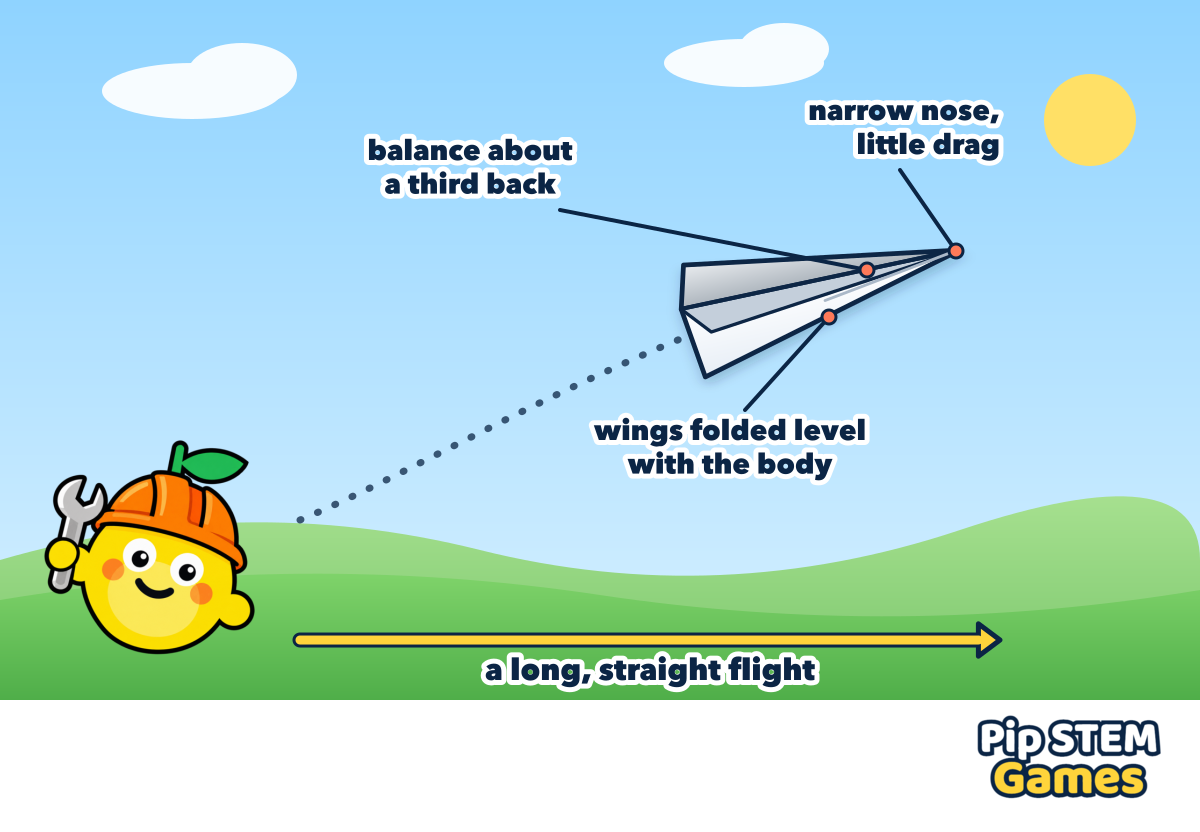
- Fold a dart for distance: narrow wings, a sharp nose and a firm, level throw.
- Fold a glider for hang time: wide wings, a blunt nose and a gentle, level release.
- A plane that dives needs the back edges of its wings bent up; one that stalls needs a little more nose weight.
- Change one thing at a time, such as flap size or paper clip position, then throw again.
- Throw each design five times and take the average, because one throw can be a fluke.
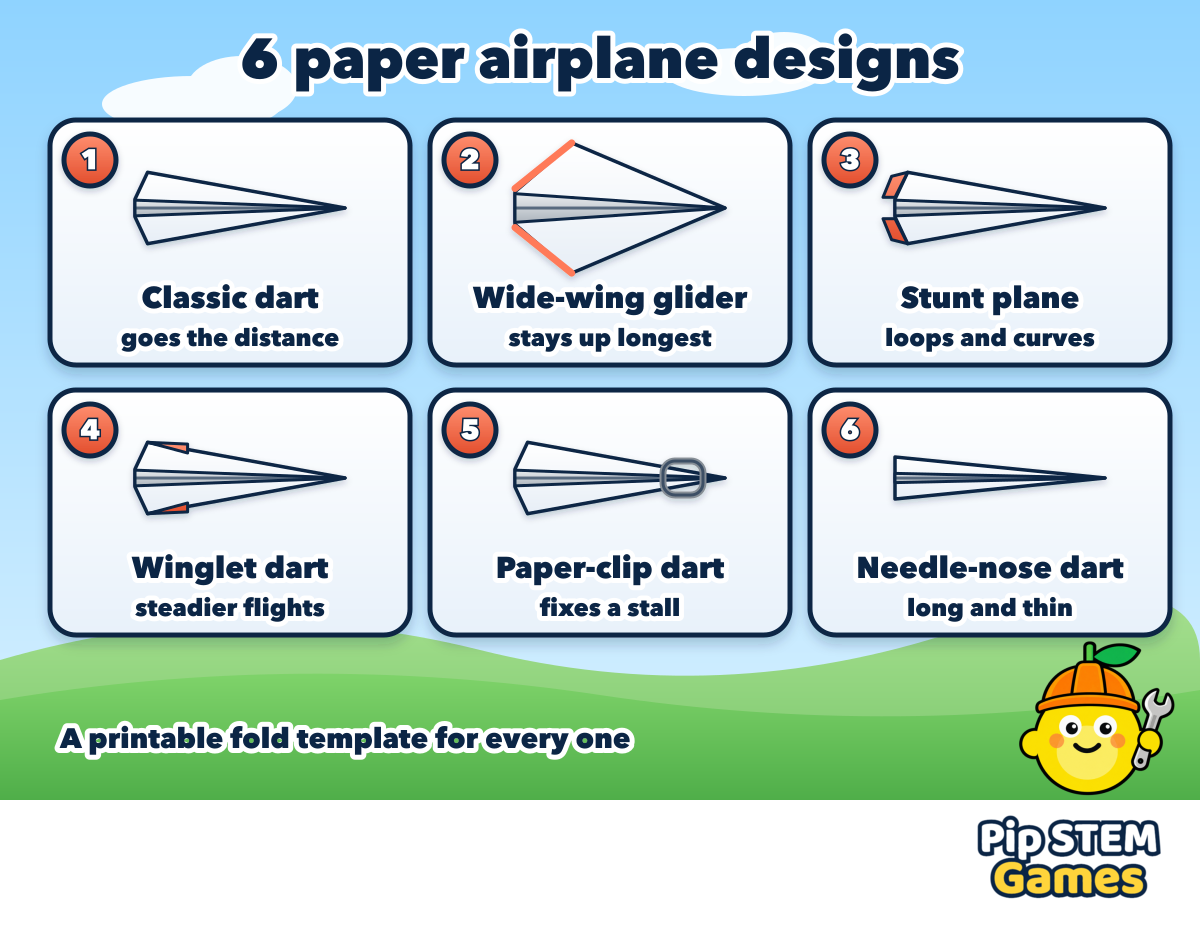
These are 6 paper airplane designs for kids, from a 3-minute dart to a wide-wing glider, each with a printable A4 fold template.
1. Classic dart
Our go-to for distance. Ages 5–12 · 3 minutes.
- 1 sheet of A4 or letter paper (80 gsm printer paper is fine)
- Fold the paper in half lengthways, crease it hard, then open it.
- Fold the top two corners in to the centre crease to make a point.
- Fold the two new slanted edges in to the centre crease again. The nose gets narrower.
- Fold the plane in half along the first crease, with the folds on the outside.
- Fold each wing down so its top edge lines up with the bottom of the body.
- Hold it up and look from the nose. Both wings should be mirror images.
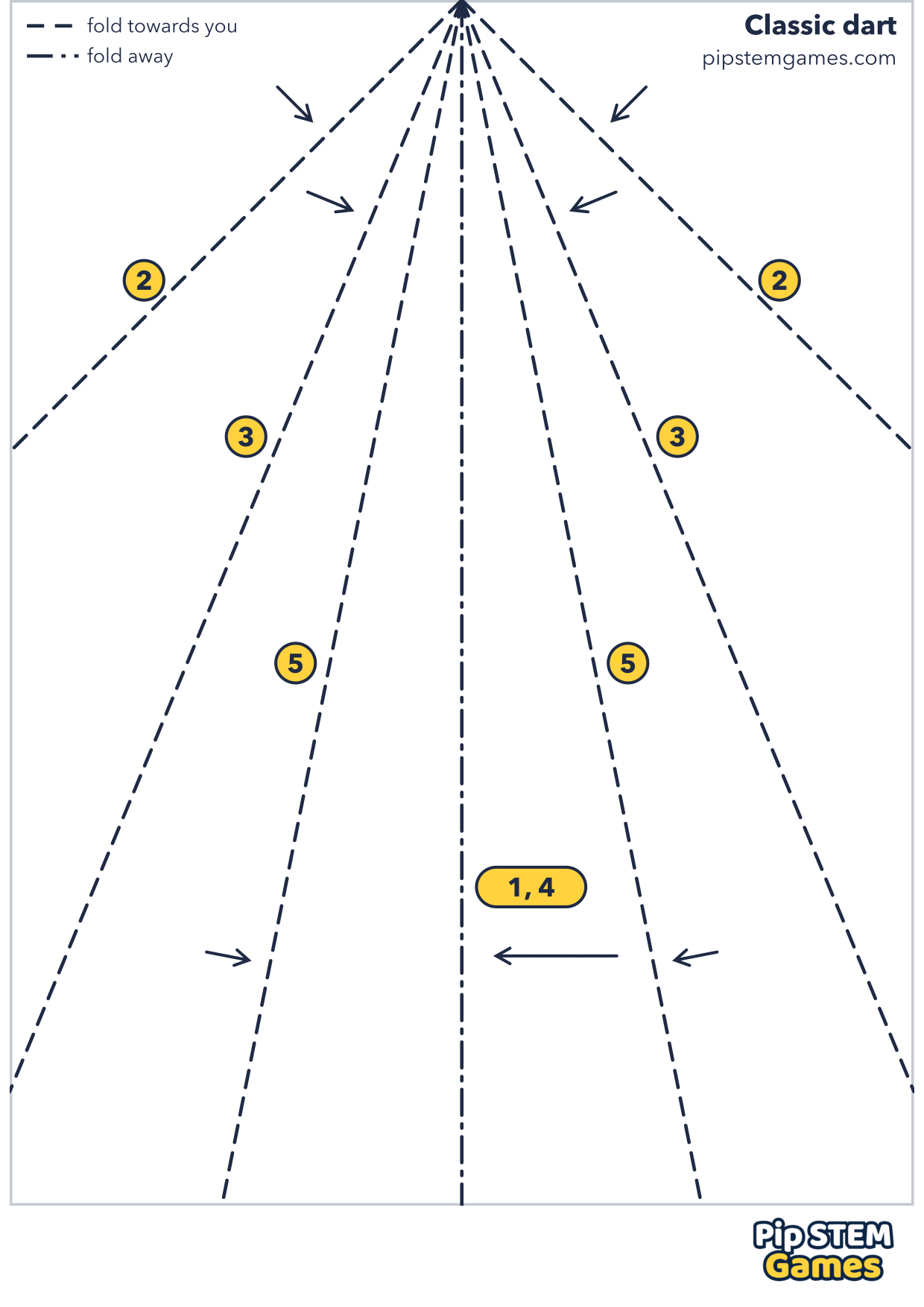
Press every crease with a thumbnail, because loose folds flap and add drag. If it dives nose-first, bend the back edge of each wing up a touch.
2. Wide-wing glider
Stays up longest. Ages 7–12 · 4 minutes.
- 1 sheet of A4 or letter paper
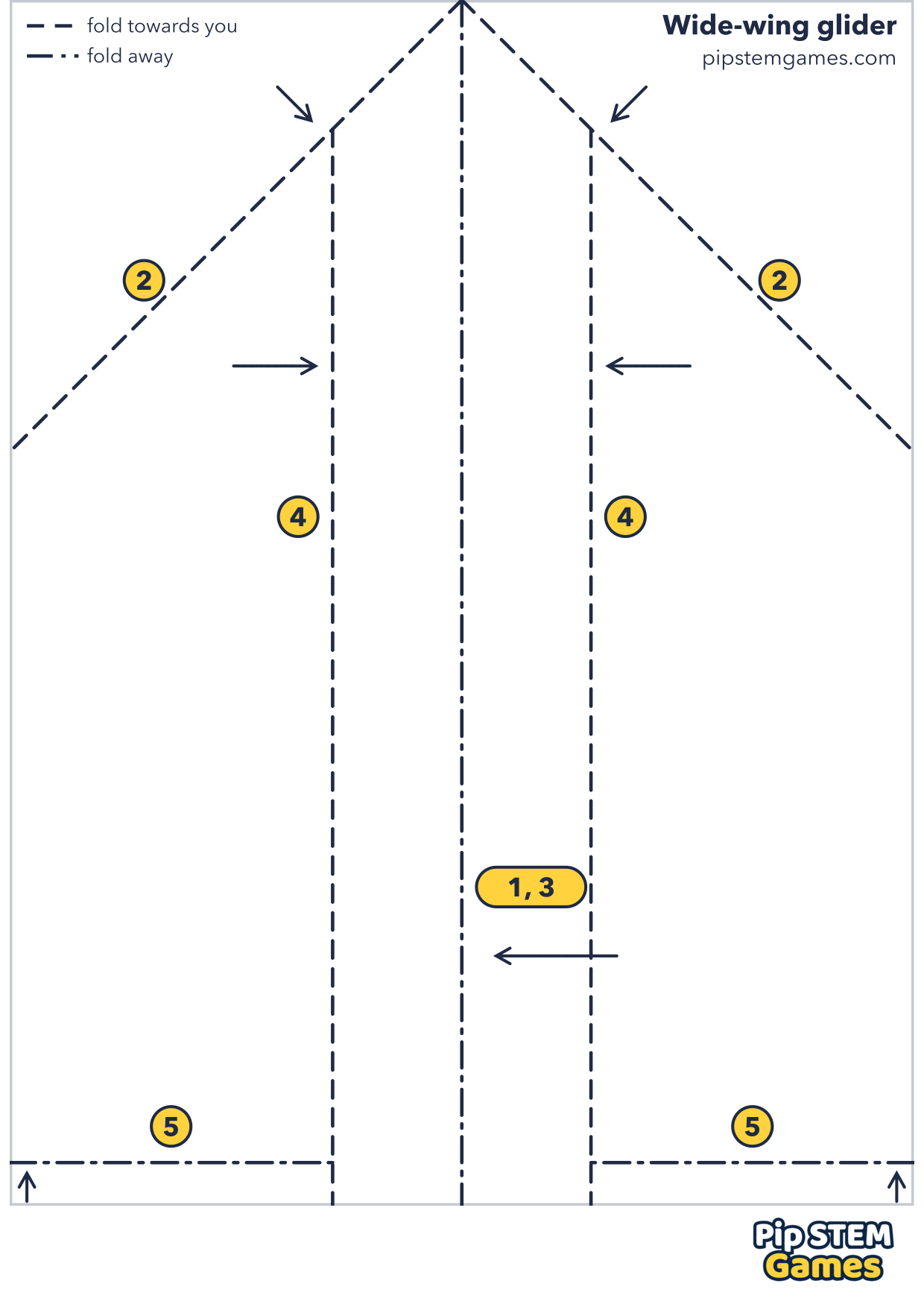
- Fold in half lengthways (line 1), crease, and open it again.
- Fold the top corners in to the centre crease once only (line 2). Don't do a second fold, so the nose stays blunt.
- Fold the plane in half along line 3, the centre crease, with the corner folds on the outside.
- Fold each wing down along line 4 so the wings come out wide.
- Bend the back edge of each wing up very slightly along line 5. These little flaps are called elevators.
- Release it nearly level and gently. Gliders hate a hard throw.
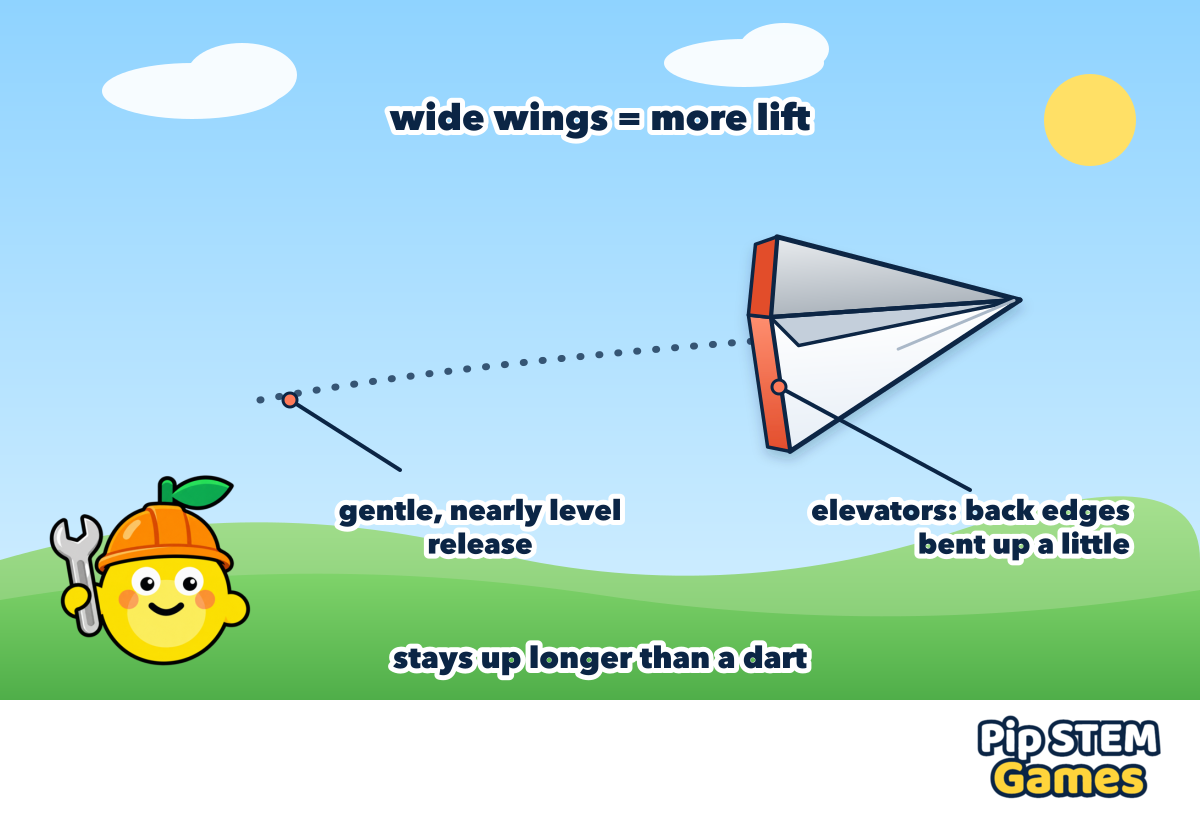
A glider rarely beats a dart for distance, but it hangs in the air longer than a dart does. Time it with a phone stopwatch, or try the wings and nose weight yourself in the Paper Plane Lab game.
3. Stunt plane
Loops and curves, if you get the flaps right. Ages 8–12 · 5 minutes.
- 1 sheet of A4 or letter paper
- A ruler for measuring the flaps
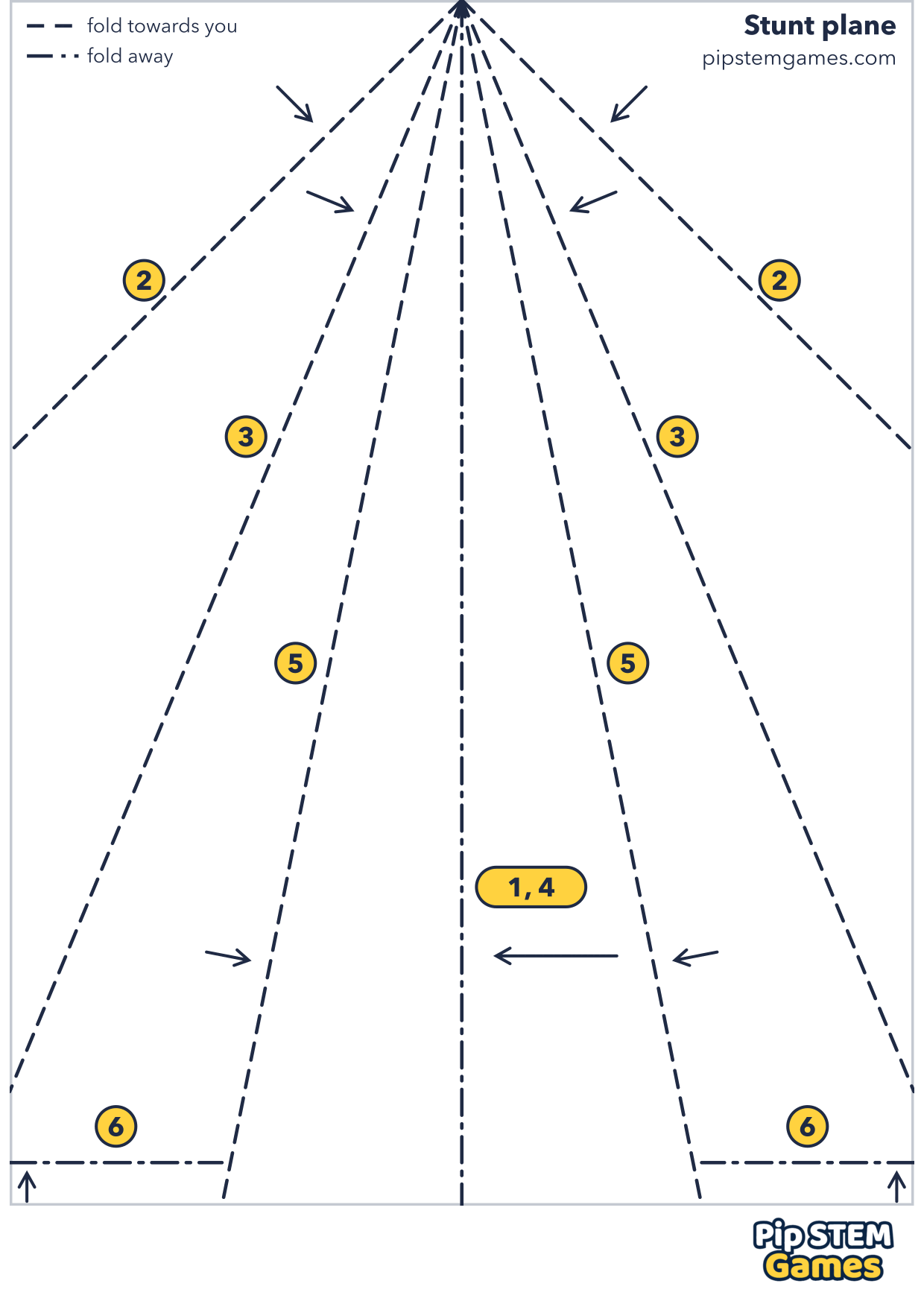
- Fold a classic dart by following lines 1 to 5 on the template, and press all the creases flat.
- Fold the back edge of each wing upwards along line 6, 1 cm in. Make both flaps the same size.
- Hold the plane by the spine, a third of the way back from the nose.
- Throw it at medium speed, pointed slightly upwards, with a clear space above.
- Change the flaps by 2 or 3 mm and throw again to see what happens.
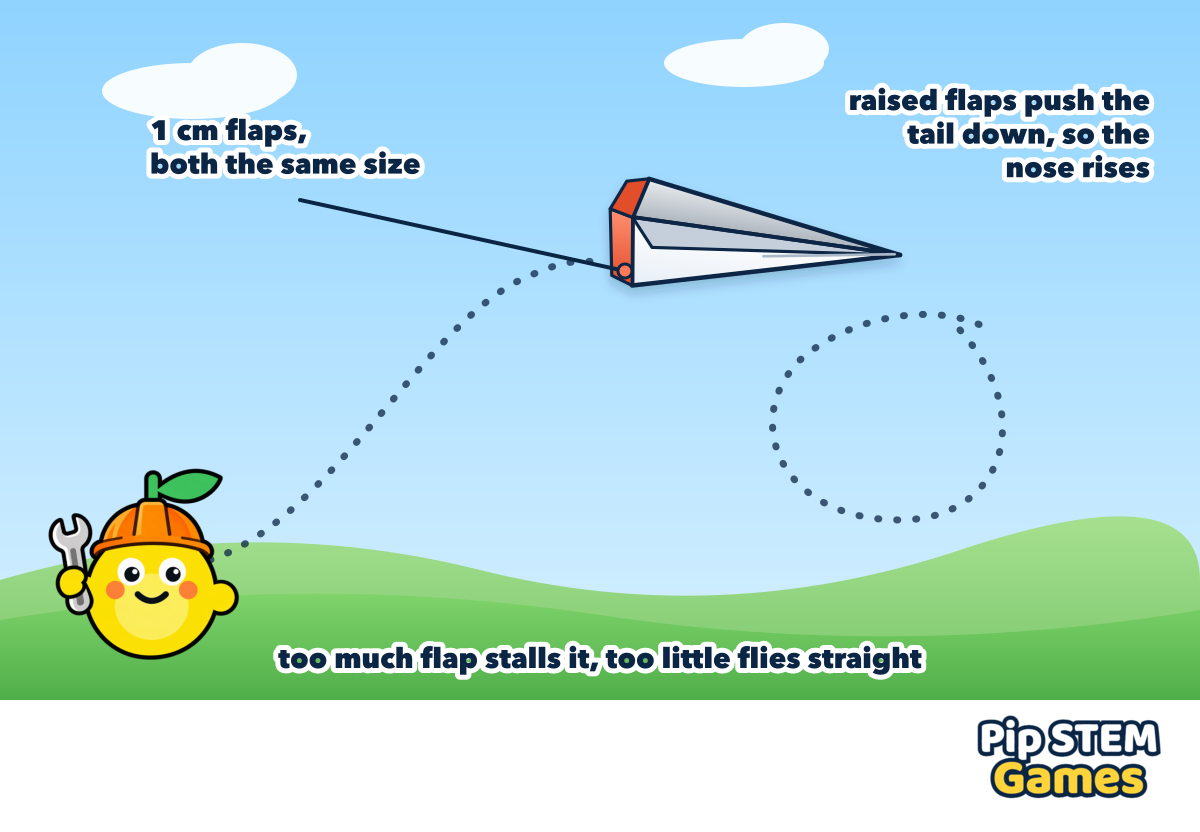
Raised flaps push the tail down, so the nose tends to rise. Too much flap and it stalls; too little and it flies straight. Finding the in-between is the whole game.
4. Winglet dart
A steadier dart for wobbly throwers. Ages 8–12 · 5 minutes.
- 1 sheet of A4 or letter paper, or a finished classic dart (item 1)
- Fold a classic dart by following lines 1 to 5 on the template, or start from a finished one.
- Fold about 1 cm of each wing tip upwards along line 6 and check both tips match.
- Press the creases hard so the tips stay up.
- Throw it level and firm. Compare five throws against the plain dart.
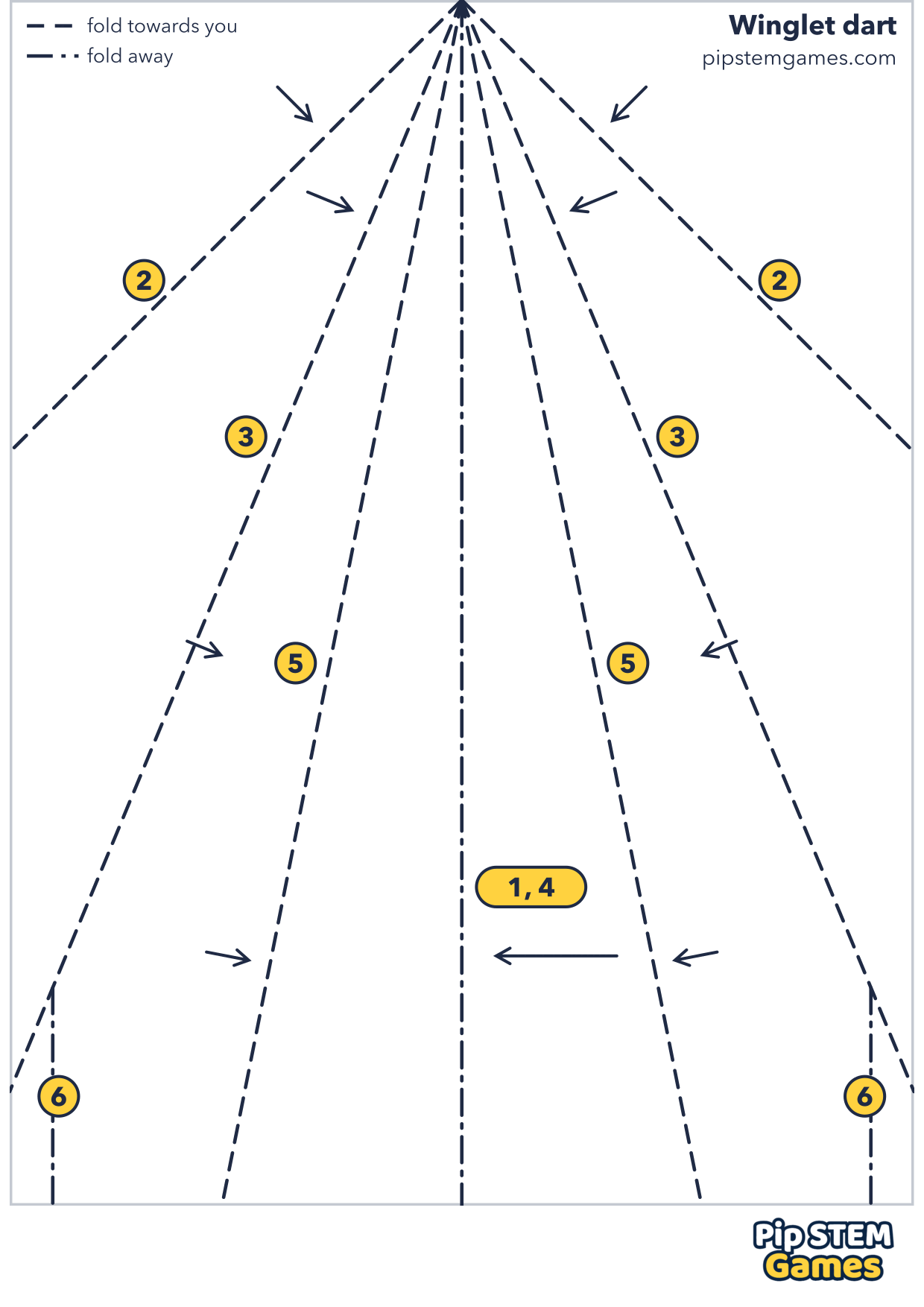
Tilted-up tips help stop a plane wobbling side to side. Real airliners have similar upturned wing tips. Check that both tips match, or the plane will curve.
5. Paper-clip dart
Adds nose weight to fix a stall. Ages 8–12 · 5 minutes.
- 1 sheet of A4 or letter paper
- 1 small metal paper clip
- Fold a classic dart by following lines 1 to 5 on the template.
- Balance the dart on one finger and find the spot where it sits level. The balance point on the template is about a third of the way back.
- If it tips backwards, clip the paper clip onto the nose, and balance again.
- Slide the clip a little at a time until the plane balances near that spot.
- Test-fly it. Move the clip forwards if it climbs and stalls, or backwards if it dives.
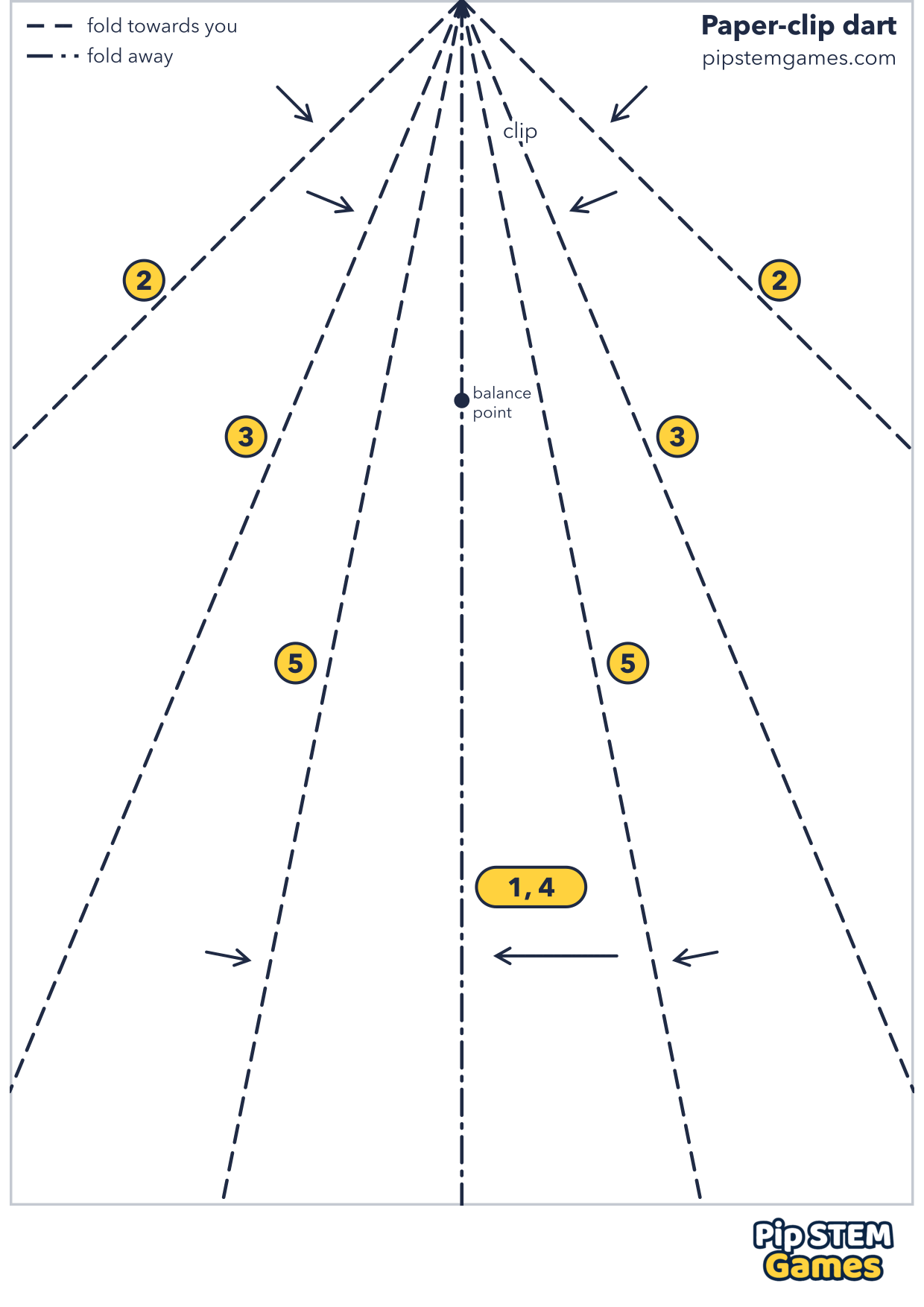
Weight at the front stops the nose pitching up. A plane that stalls needs a bit more at the nose; a plane that dives needs a bit less. Keep the clip small, and never throw it at anyone's face.
6. Needle-nose dart
The longest, thinnest fold. Ages 8–12 · 5 minutes.
- 1 sheet of A4 or letter paper
- Crease the centre (line 1) and open it. Fold the corners in (line 2), then the slanted edges in (line 3).
- Fold the slanted edges in to the centre crease a third time (line 4).
- Fold in half along line 5, the centre crease, with the folds on the outside.
- Fold the narrow wings down along line 6, level with the body.
- Throw it level and firm down a hallway.
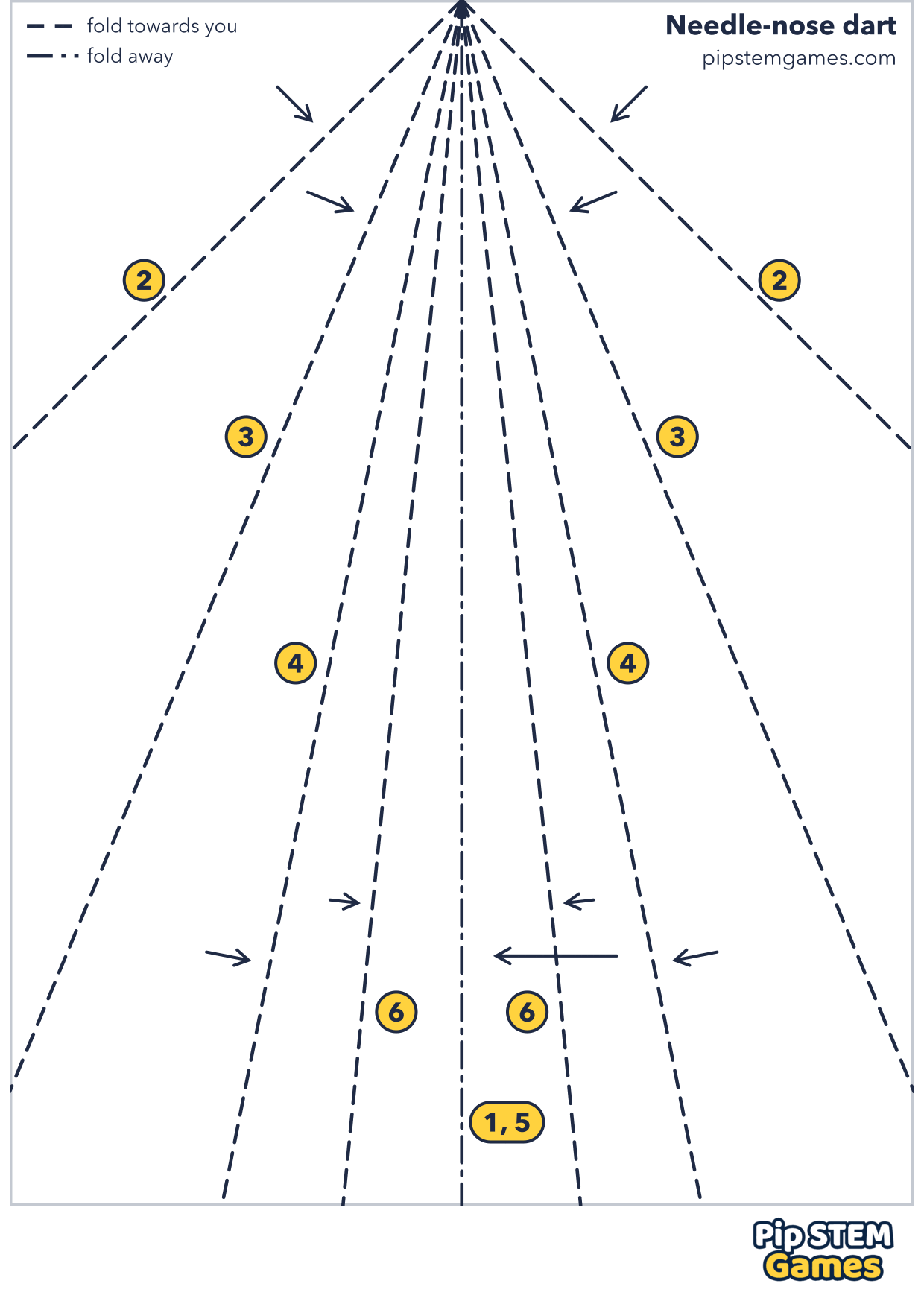
Narrow wings mean less drag but also less lift, so it needs a firmer throw. Race it against the classic dart over five throws each and see which wins.
How to test them fairly
Test them with the same paper, the same thrower and the same starting line. Throw each plane five times, measure where it first lands, then add the five numbers and divide by five.
- Fly indoors in a hallway or outdoors with no wind.
- Change one thing at a time, such as the flap size or the clip position.
- Never throw at faces, pets or windows, and keep sharp-nosed planes in a clear space.
- Every design here needs only folding, plus a paper clip for the paper-clip dart.
- Keep paper clips away from children under 6.
Want more folding practice? Try the paper and coins challenge too. Our paper folding experiments show what a fold does to strength, and the Senior Engineers workbook has more build-and-test pages for ages 8 to 12.
Questions parents ask
What is the best paper airplane design for distance?
The classic dart is usually best. It has a pointed nose, narrow wings and tight creases. Throw it level and firmly for the best distance.
What paper is best for paper airplanes?
Standard 80 gsm printer paper works well for home. Thick card is stiff and hard to fold neatly.
How do I make a paper airplane fly straighter?
Check that both wings are the same shape and angle. Then make sure the nose isn't bent and the tail fold is centred. Small differences make a plane curve.
How far can a paper airplane fly?
It depends on the fold and the thrower. Guinness World Records lists 98.43 metres (Liu Liwen, Shanghai, 28 December 2025) as the farthest flight by a paper aircraft. Measure your own planes and try to beat your best.
Why does my paper airplane plunge nose-first?
The nose is too heavy for the wings. Bend the back edges of the wings up a little, or remove a paper clip from the nose.
How do I make a paper airplane stay in the air longer?
Use a glider design with wide wings and slightly raised back edges, and release it almost level and gently. Lighter paper and smooth creases help too.
Great STEM activities to try next...
 Watch What Happens When You Fold Paper [Printable]Build challenge
 Can One Sheet of Paper Hold 20 Coins? [Printable]Activities
 Can You Make the Wind Turbine Spin Faster? [Printable]Forces & energy
More to try:

Pip STEM Games
We make engineering games and workbooks for kids aged 5 to 12. Every activity here is one we'd happily run at the kitchen table: test it, watch it fail, fix it, try again.




