


Key takeaways
- Bernoulli's principle: where a fluid such as air moves faster, its pressure is lower.
- A plane's wing makes lift by pushing air downwards and by creating lower pressure above the wing. Both ideas describe the same thing.
- The "air above the wing has to catch up" story is wrong. Air doesn't need to meet at the back.
- Blowing over a paper strip or between two sheets shows the principle in under a minute.
- A paper plane mainly flies because its wings are tilted up into the air, so they push air downwards.
Bernoulli's principle says that where air (or any fluid) moves faster, the pressure in it is lower. That helps explain how planes fly: a wing is shaped and tilted so that air moves faster over the top, and the lower pressure above plus the downward push on the air together lift the plane up. This guide explains the idea in kid-friendly terms, clears up the popular myth about how wings work, and gives three paper experiments for ages 8 to 12. A printable lab sheet is included.
What is Bernoulli's principle in simple words?
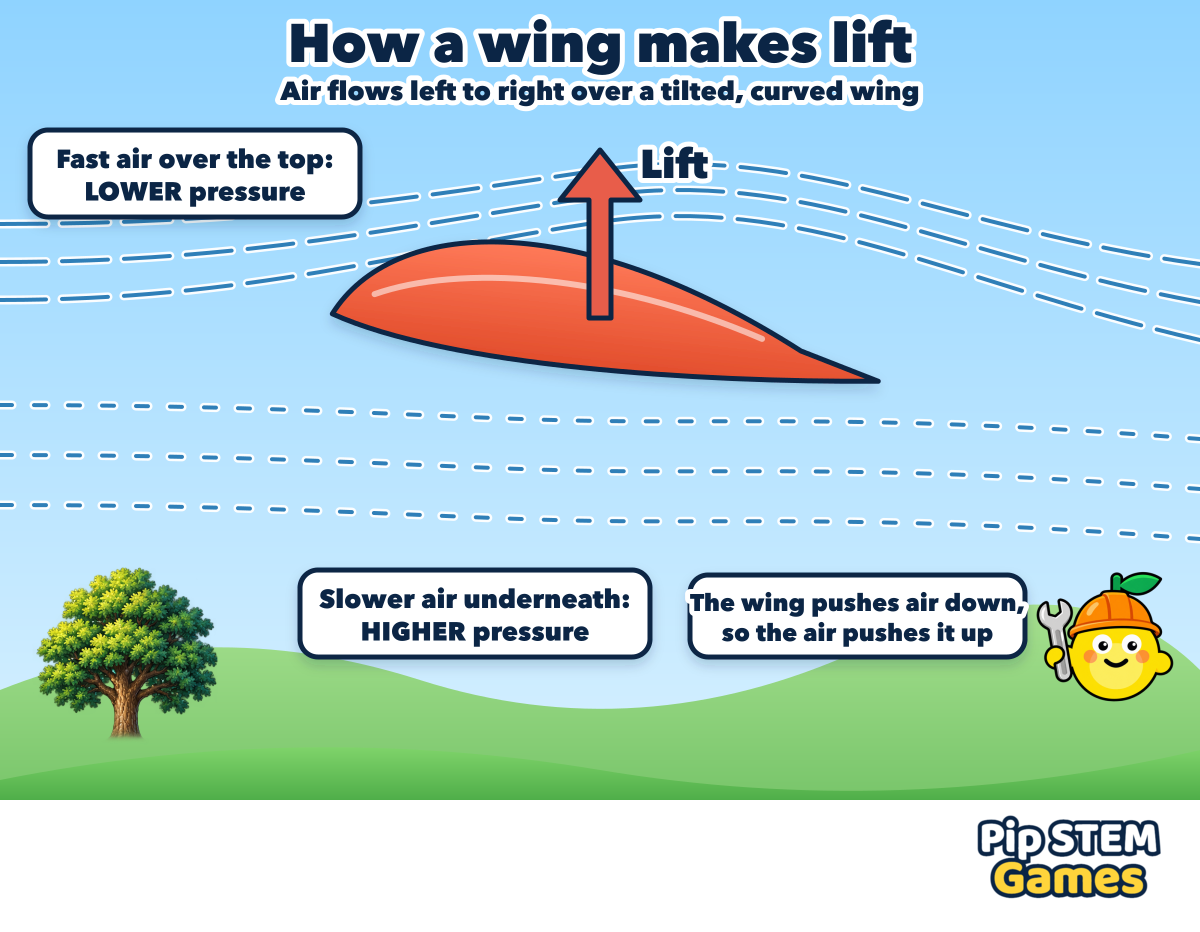
Bernoulli's principle says that fast-moving air has lower pressure than slow-moving air. Swiss scientist Daniel Bernoulli worked this out in the 1700s while studying how liquids flow through pipes.
Pressure is how hard air pushes on a surface. Still air pushes equally in all directions. When air speeds up, it pushes less sideways on whatever is next to it. If air is fast on one side of an object and slow on the other, the slower side pushes harder, so the object moves towards the fast air.
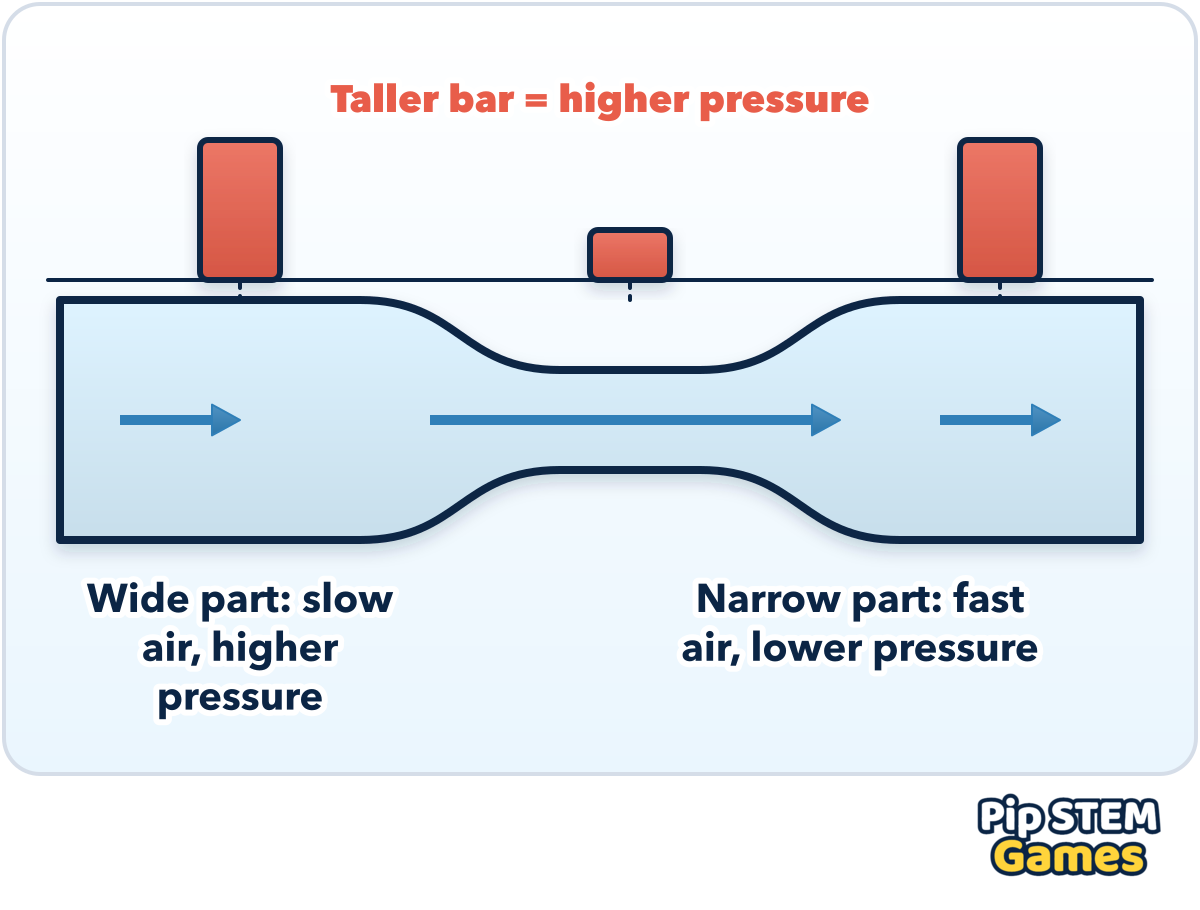
The same effect shows up in a garden hose, a shower curtain that blows inwards, and a lorry that pulls a passing cyclist towards it. Please don't test the cyclist one.
How do planes fly?
Planes fly because their wings create lift, an upward force bigger than the plane's weight. Wings are tilted slightly upwards (the angle of attack) and curved on top, so they push air downwards and speed air up over the top at the same time.
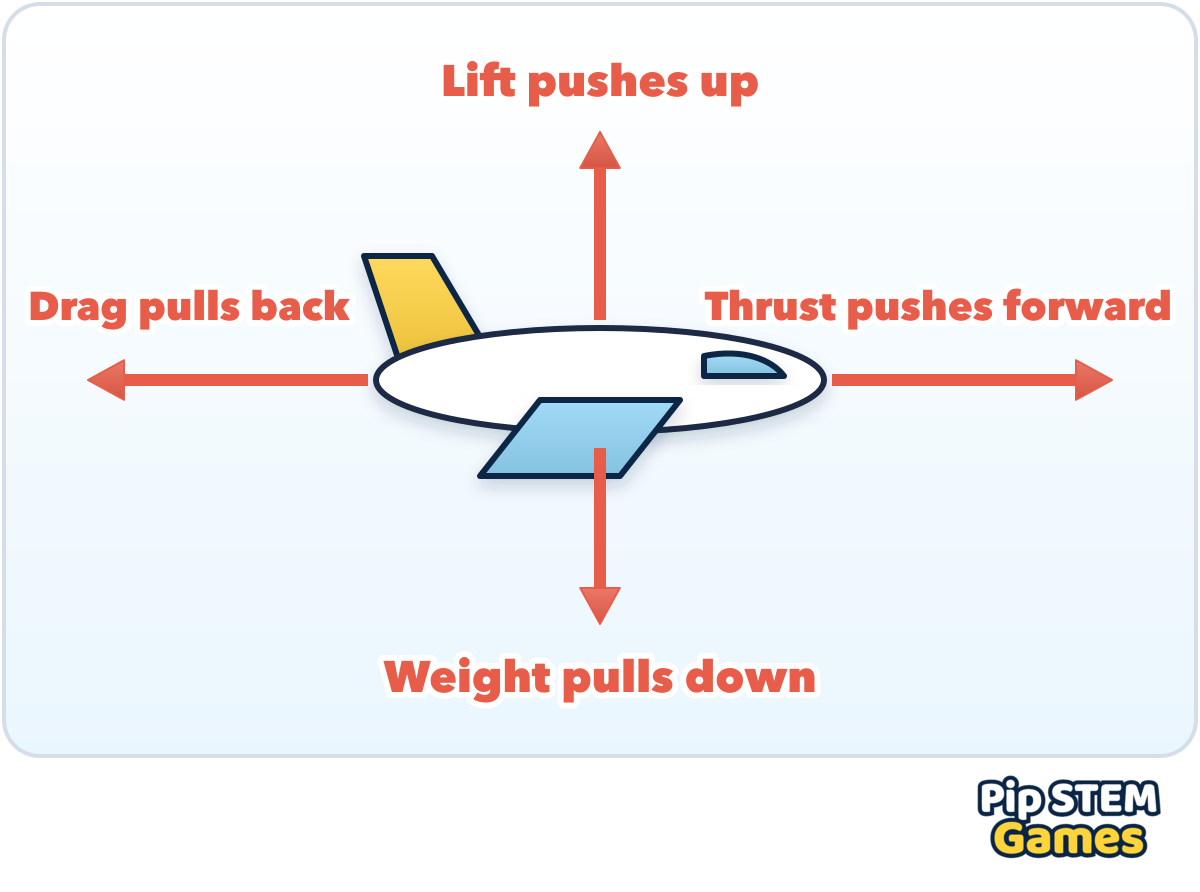
There are four forces on a plane. Lift pushes up, weight pulls down, thrust from the engines pushes forward and drag from the air pulls back. Take off happens when lift beats weight.
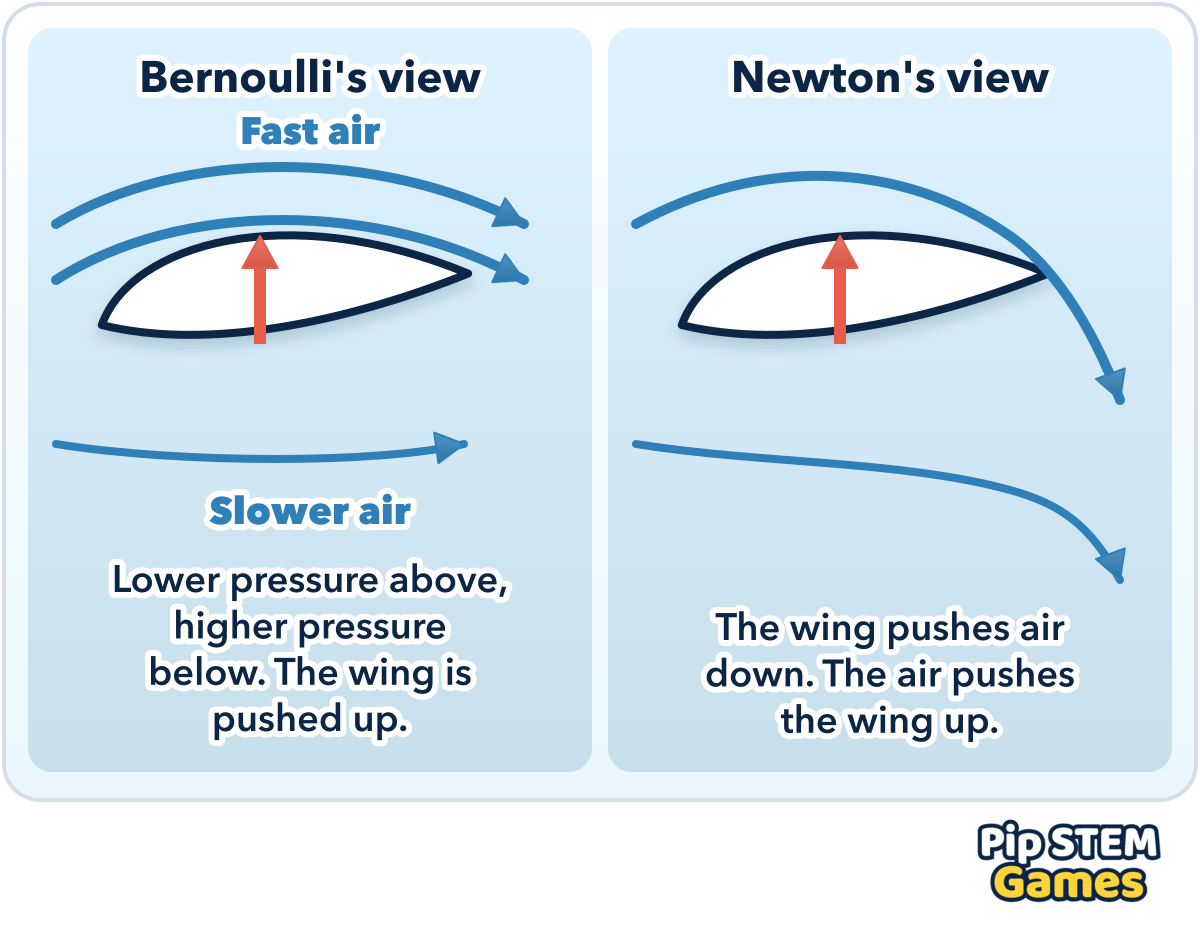
The lift comes from two views of the same event:
- Bernoulli's view: air moves faster over the curved top of the wing, so pressure is lower above than below. The higher pressure underneath pushes the wing up.
- Newton's view: the wing deflects air downwards. Pushing air down means the air pushes the wing up (Newton's third law).
Neither one is wrong, and engineers use both. NASA's education pages make this point clearly. You can try the idea in the Paper Plane Lab game, where tilting and shape changes how far a plane flies.
Is the 'equal transit time' explanation true?
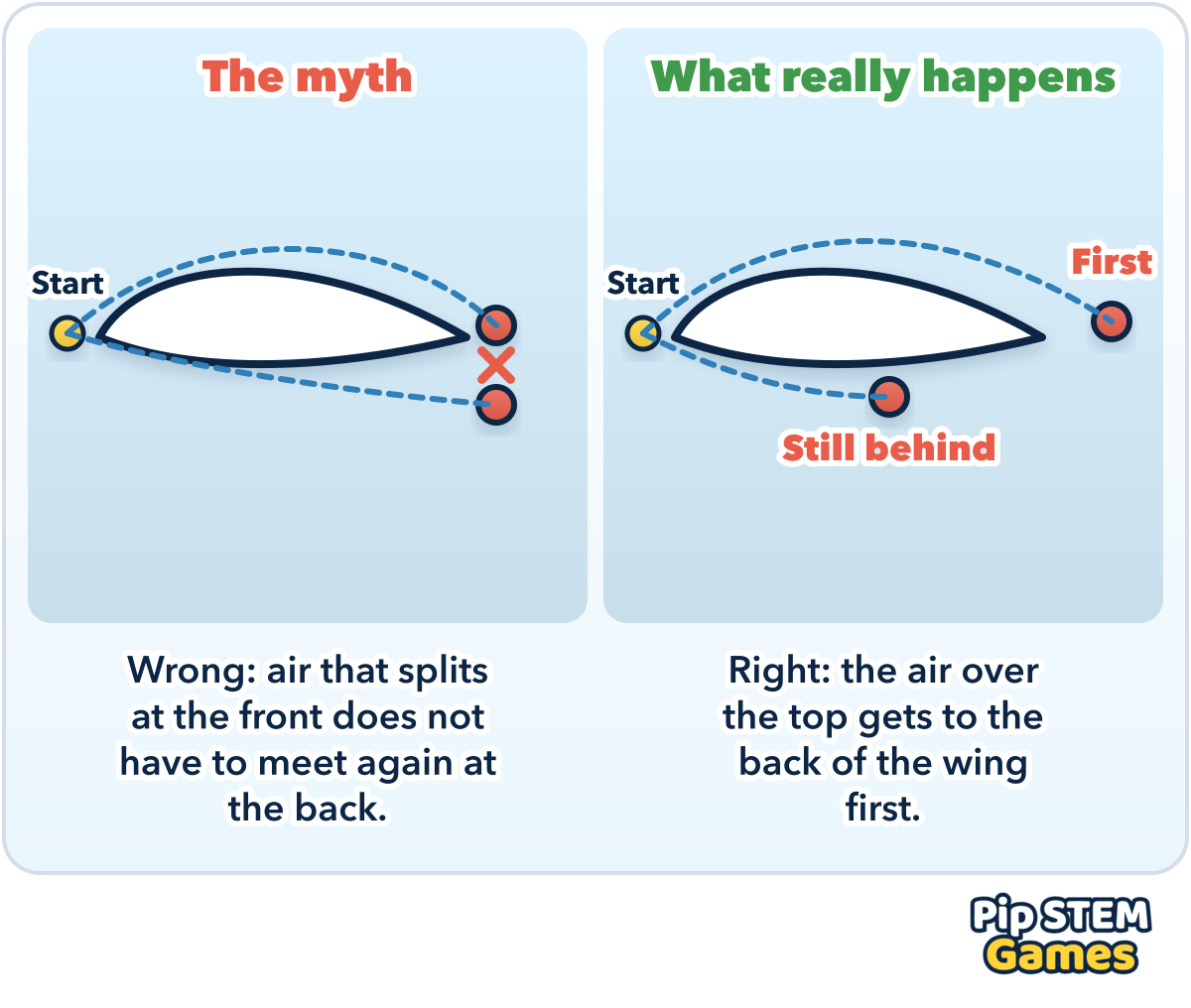
No. The popular story says air splits at the front of the wing and must meet again at the back, so the top air has to go faster because its path is longer. That's wrong, and it appears in many textbooks.
Nothing forces the air that splits at the front to meet again at the back. In real airflow, the air over the top reaches the back of the wing well before the air underneath, as NASA Glenn Research Center's "Incorrect Lift Theory" page (grc.nasa.gov, wrong1.html) explains. The air also speeds up far more than the "longer path" idea would predict.
Frankly, this is one of the most common science myths out there, so if your child is told the old story at school, a polite "I read that it's a bit different" is a good response. A wing really does speed up the air above it. The shape and tilt are what cause it, not a race.
Which experiments show Bernoulli's principle?
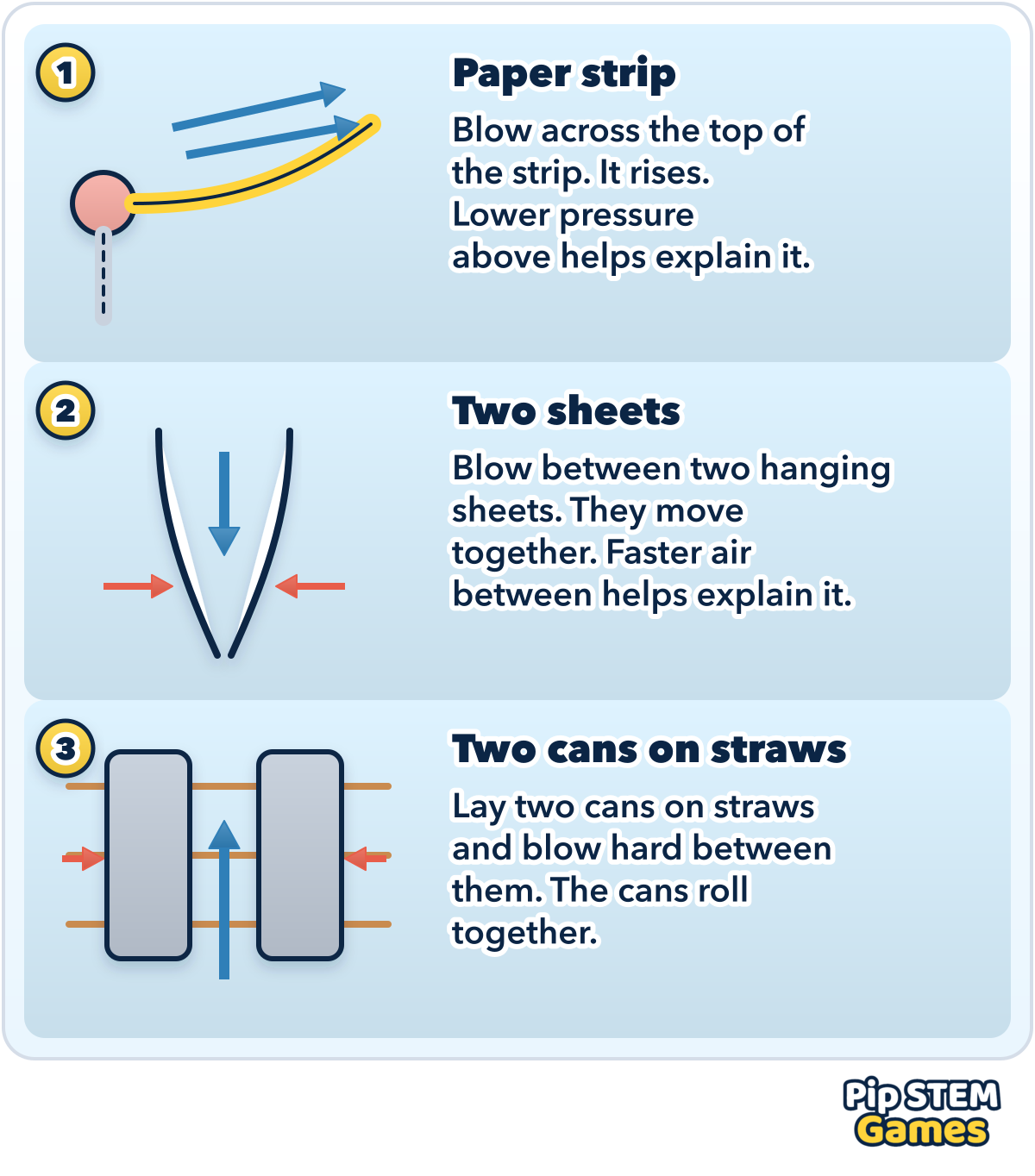
Three experiments show it in under a minute each: a paper strip, two hanging sheets and two cans on straws. All you need is paper, your breath and a few household items. The steps are below.
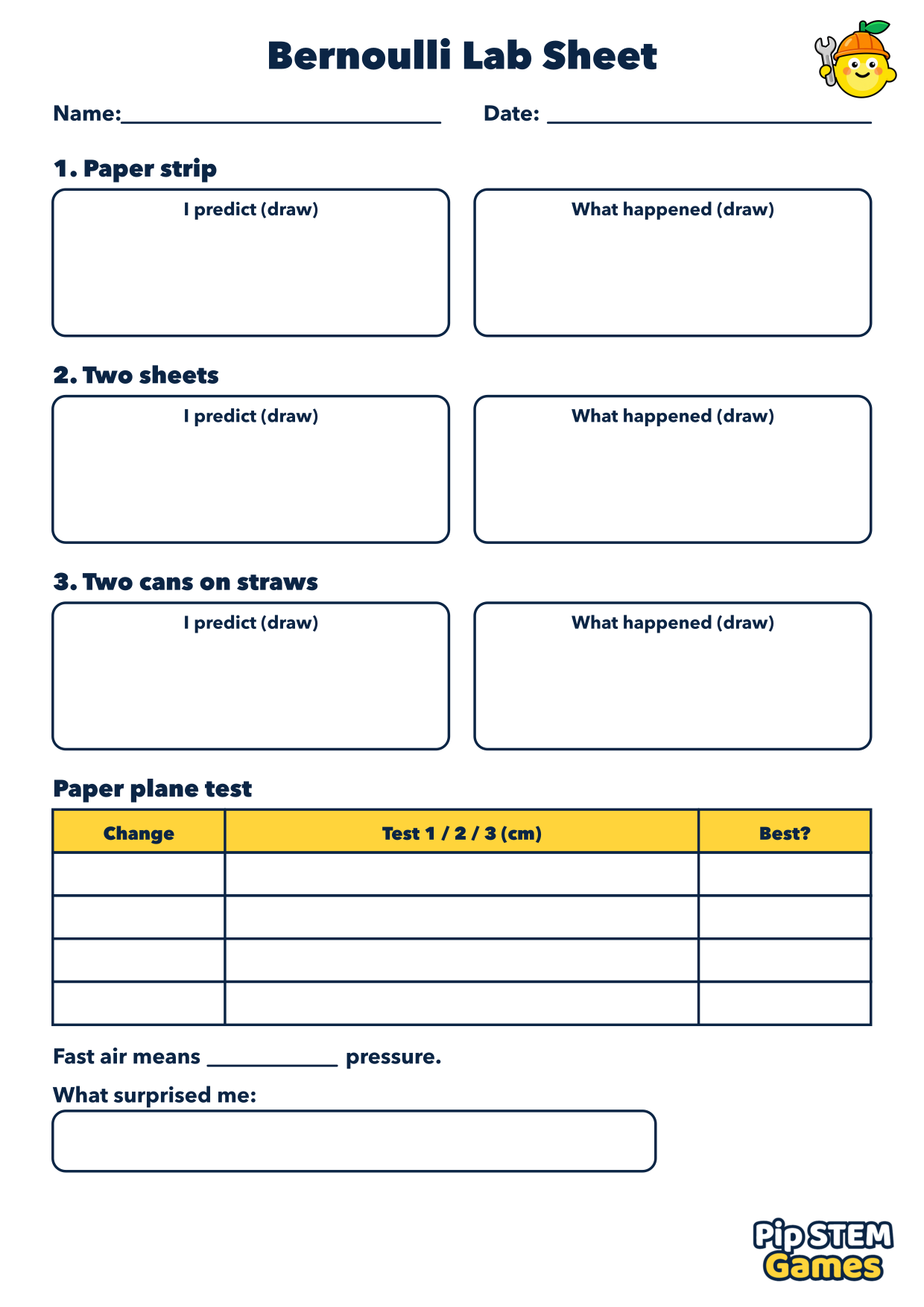
Ask your child to draw where the fast air is and where the high pressure is before they test. Drawing the prediction first is half the learning. Our one sheet of paper post shows another way paper surprises people.
1. Paper strip
Ages 8–12 · 5 minutes · one child at a time. Blow across the top of a strip of paper and watch it lift into the air.
You need:
- 1 sheet of A4 paper (ordinary printer paper)
- Scissors (an adult cuts for younger children)
- A ruler
How to do it:
- Cut a strip about 3 cm wide and 15 cm long from the A4 sheet.
- Hold one short end between your finger and thumb, just under your bottom lip. The strip should hang down and curl slightly away from you.
- Before you blow, ask your child to predict: will the strip go up, stay put or blow away?
- Blow gently and steadily straight out, over the top of the strip. Keep blowing and watch.
- Try a lighter puff, then a stronger one. Then try a strip cut from thin card and compare.
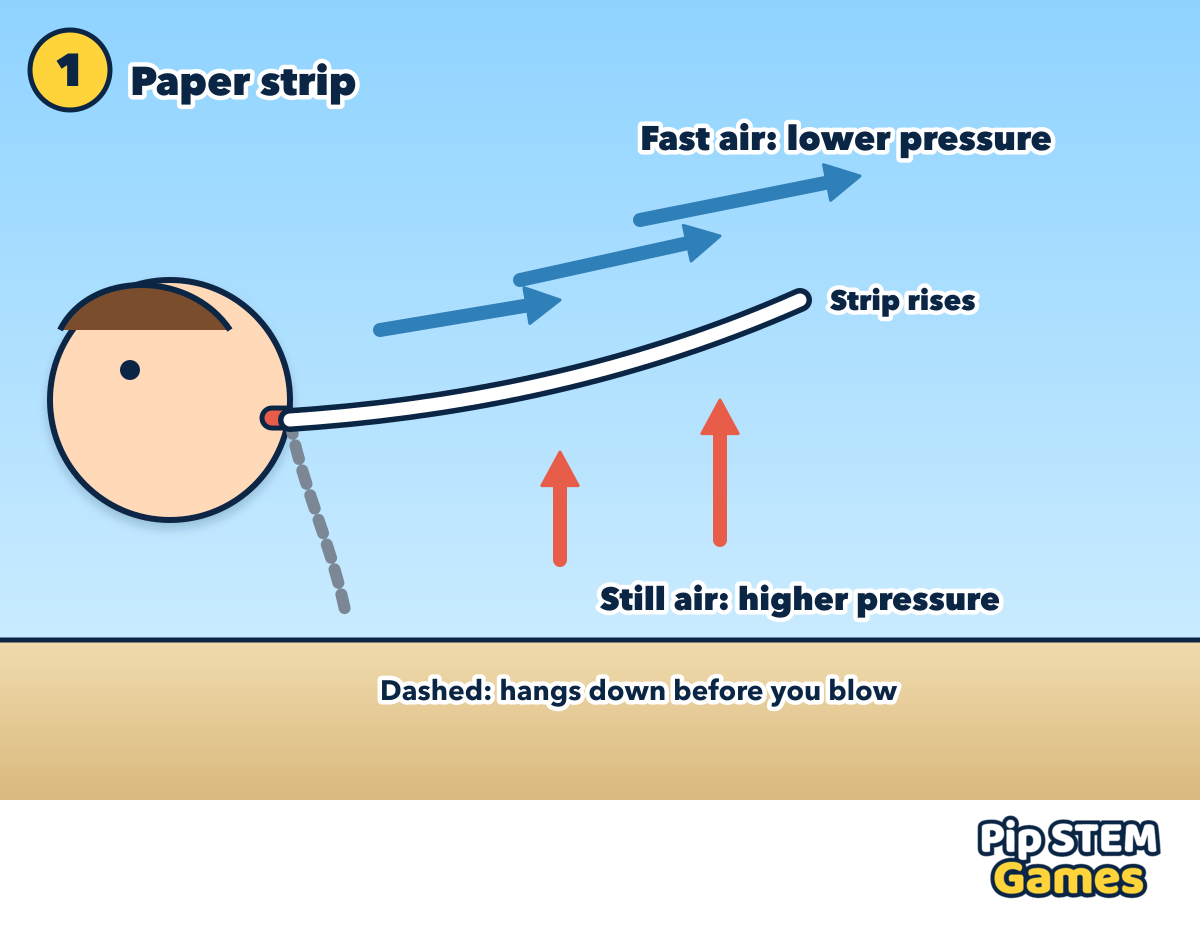
What to notice and why: The strip lifts and floats up towards flat. Your breath makes the air above the paper move faster, so the pressure there drops below the pressure of the still air underneath, and the higher pressure pushes the paper up. Scientists still debate the exact explanation, so treat this as a good working idea rather than the whole story. Both ideas describe one event.
Safety: An adult cuts the strips, or children use safety scissors. Blow gently and stop for a rest if anyone feels dizzy.
2. Two hanging sheets
Ages 8–12 · 5 minutes · one or two children. Blow down between two sheets of paper and watch them swing towards each other, not apart.
You need:
- 2 sheets of A4 paper (thin printer paper works best)
- A ruler to check the gap
- Optional: a long ruler or lolly stick to hold both sheets at the top
How to do it:
- Hold one sheet in each hand by its top edge, about 5 cm apart, so both hang straight down.
- Ask your child to predict first. Most people guess the sheets will blow apart.
- Put your lips level with the top of the gap. Blow steadily down between the sheets.
- Watch the bottoms of the sheets. Do they move together or apart?
- Change one thing at a time: a wider gap (10 cm), a harder blow, or a thicker sheet. Note what changes.
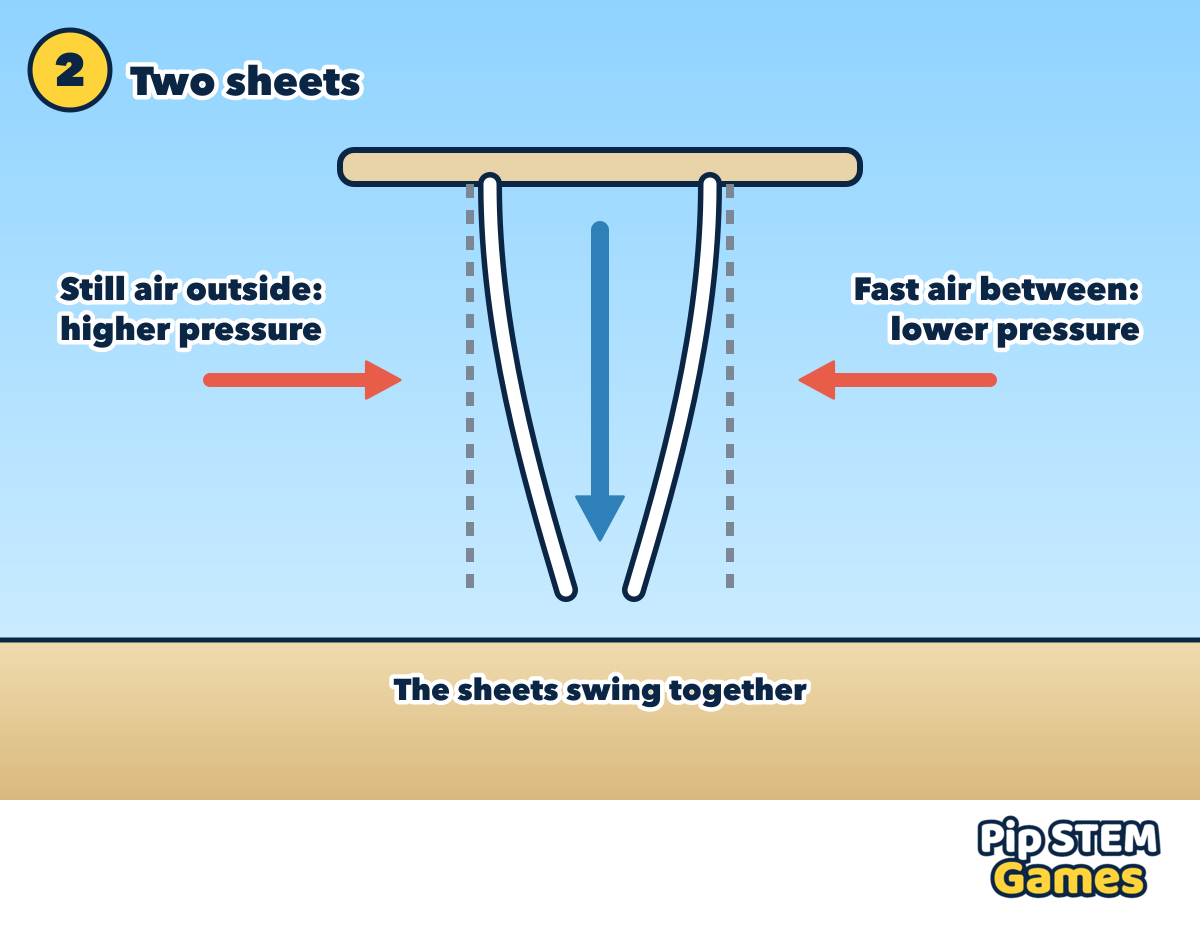
What to notice and why: The sheets move together. Blowing makes the air between them fast, so the pressure there is lower than the pressure of the still air on the outer sides, and the outer air pushes both sheets inwards. This is the surprise that makes the experiment memorable, because it feels like blowing should push things apart. If it doesn't work first time, narrow the gap a little.
Safety: There's nothing hazardous here. Keep it to gentle blowing and take a break if anyone feels light-headed.
3. Two cans on straws
Ages 8–12 · 10 minutes · an adult helps set up. Blow along the gap between two cans resting on straws and watch them roll together.
You need:
- 2 empty, rinsed drinks cans (an adult checks that the tops have no sharp edges), or 2 empty plastic bottles with the lids on
- 3 drinking straws
- Masking tape
- A smooth, flat table, with a tray or low edge so the cans can't roll off
How to do it:
- Lay the three straws side by side along the table, about 4 cm apart, and tape both ends down so they stay put. They are the rails.
- Lay the two cans across the rails like wheels, with the cans about 3 cm apart. Check they roll freely with a gentle nudge.
- Predict: will the cans roll apart, together or stay still?
- Kneel so your mouth is level with the table at one end of the gap. Blow hard and steadily along the gap, between the cans.
- Try again with a wider gap. Measure how far apart the cans can be and still move.
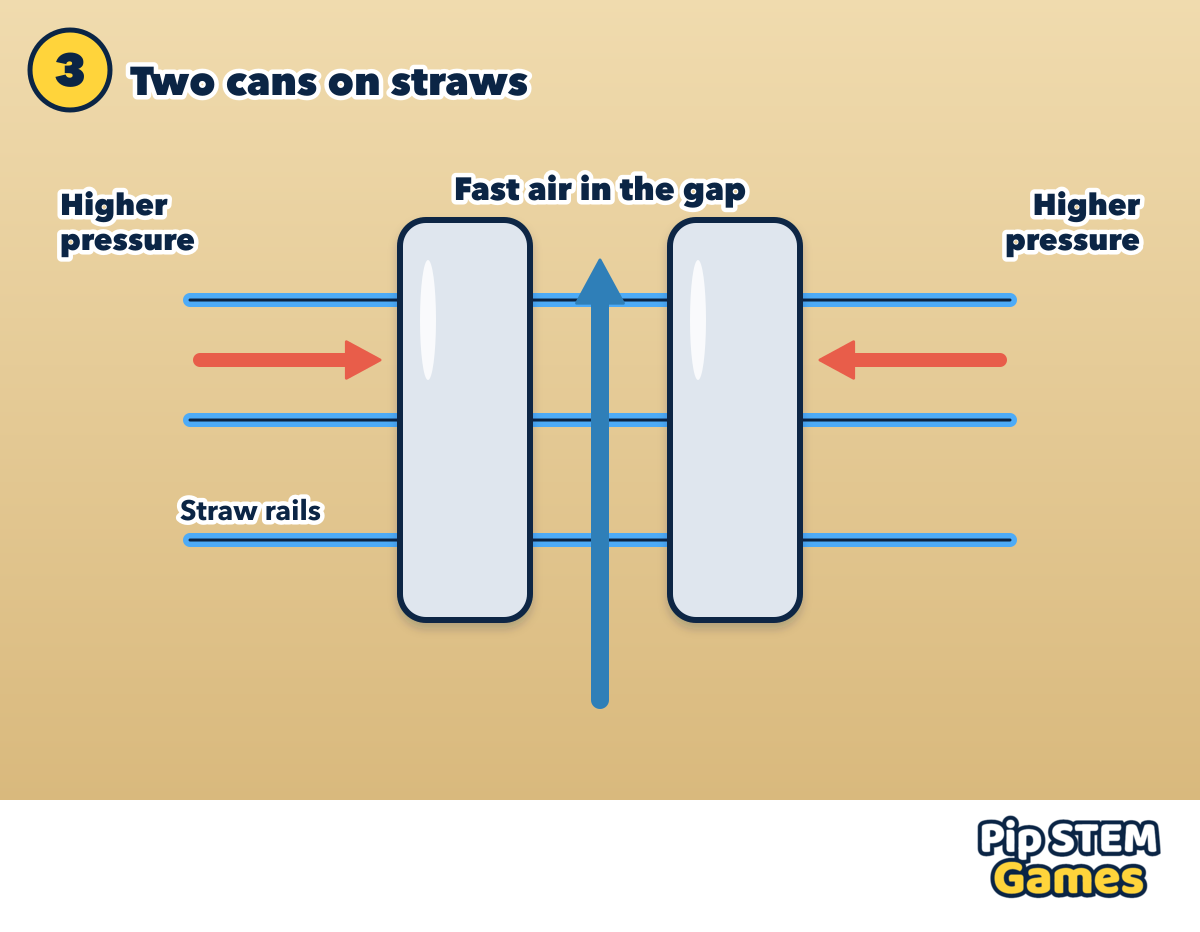
What to notice and why: The cans roll towards each other. The air squeezed between them moves faster than the air on the outside, so the pressure in the gap is lower. The still air outside is at higher pressure, and it pushes each can inwards. Cans on straws roll with very little friction, so even a small difference in pressure moves them.
Safety: An adult handles the cans and checks rims for sharp edges. Work on a tray so nothing rolls off the table, and keep fingers out from between the cans. Blow in short breaths and pause if anyone feels dizzy.
Why does a paper plane fly?
A paper plane flies because its wings are tilted slightly upwards into the air, which pushes air down and lifts the plane. Flat paper wings can fly well, so the curved-wing shape isn't what matters most.
Three small changes have big effects:
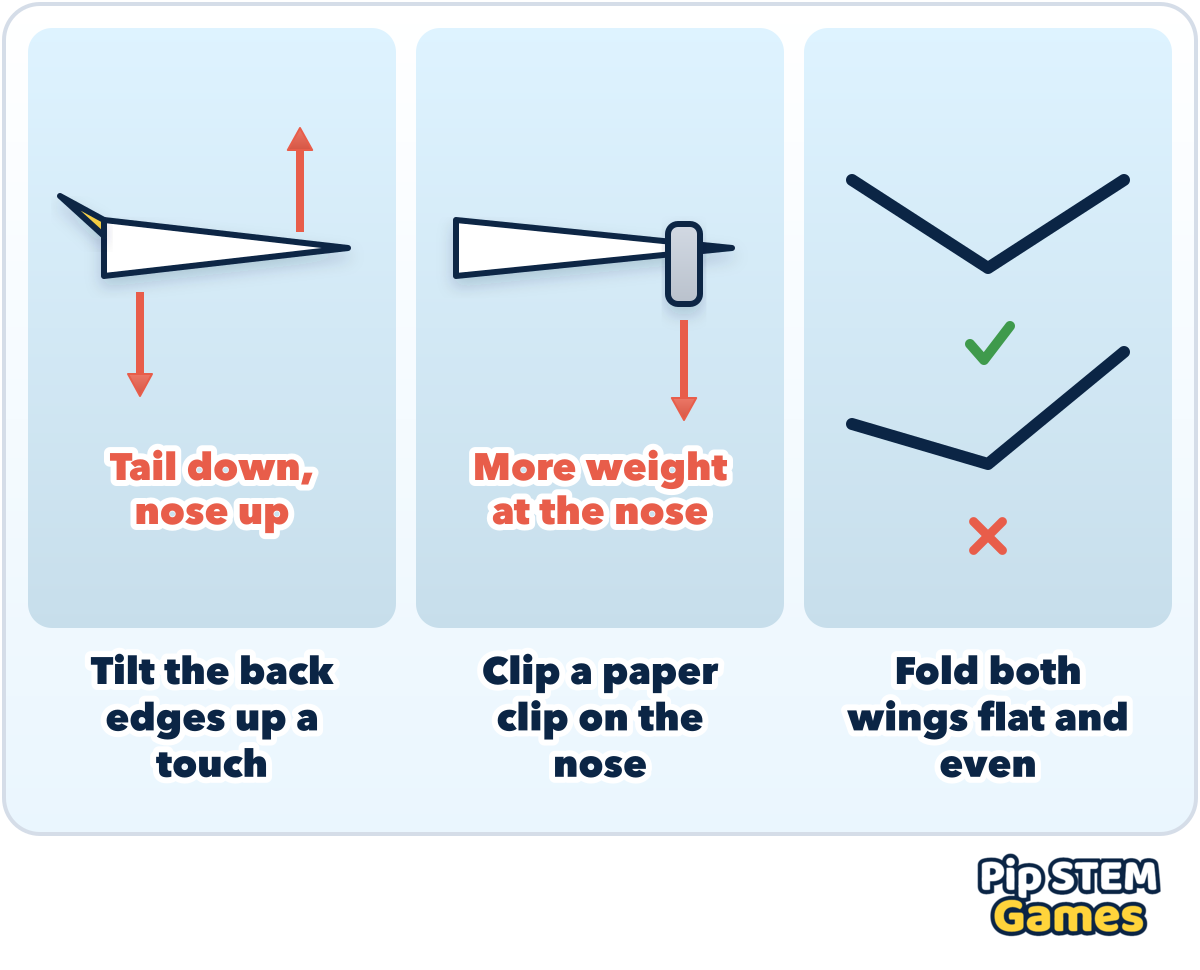
- Tilt the back edges up a touch (these are called elevators). The nose lifts and the plane glides instead of plunging.
- Add weight to the nose with a paper clip. The plane balances and flies straighter. An adult adds the paper clip for younger children, and paper clips stay away from under-6s.
- Fold the wings flat and even. A wing that's higher on one side makes the plane roll.
Test a plane three times with each change and note how far it goes. Change one thing at a time and the results will make sense.
How can older and younger children use this idea?
Ages 8 to 10 can run the three paper experiments and learn the four forces. Ages 11 and 12 can learn the two explanations of lift and why the transit-time story fails.
Younger children (5 to 7) can still fly paper planes and notice that tilting the back edges changes the flight. The Senior Engineers workbook has air and force puzzles for 8 to 12. For more experiments with moving air, try our wind turbine post, which uses the same idea of catching moving air.
Questions parents ask
What is Bernoulli's principle in one sentence?
Where a fluid moves faster, its pressure is lower. It applies to air, water and any other liquid or gas.
Does Bernoulli's principle explain how planes fly?
It explains part of it. Faster air above the wing means lower pressure, which helps lift. The wing also pushes air downwards, and that reaction is a second way to see the same lift.
Why does paper rise when you blow over it?
The air moving fast over the top has lower pressure than the still air underneath. The paper moves towards the lower pressure.
What are the four forces of flight?
Lift, weight, thrust and drag. Lift beats weight to get airborne, and thrust beats drag to go forward.
Why do paper planes fly if the wings are flat?
The wings are tilted slightly up and push air down, which pushes the plane up. Weight at the nose and slightly raised back edges keep it level.
What age can children learn Bernoulli's principle?
Children aged 8 and over can follow the paper experiments. The explanation of lift suits ages 11 and 12.
Great STEM activities to try next...
 Can You Make the Wind Turbine Spin Faster?Activity
 Make a Balloon-Powered Car at HomeActivity
 Can One Sheet of Paper Hold 20 Coins?Activity
More to try:

Pip STEM Games
We make engineering games and workbooks for kids aged 5 to 12. Every activity here is one we'd happily run at the kitchen table: test it, watch it fail, fix it, try again.




