

Key takeaways
- Each challenge fits in 10 minutes: guess, test, change one thing, test again.
- All three use scrap paper, tape, paper cups, a ruler and 10p coins.
- Folding paper into pleats usually makes a bridge hold more coins.
- A wide base usually makes a cup tower steadier than a narrow one.
- Change only one thing and repeat each test three times.
These 10-minute engineering challenges give busy parents a real engineering test with scrap paper, tape and a few coins. Each one is a guess, a test, one change and a second test, which is the same loop engineers use. Setup takes about two minutes, and you can run one on a weekday evening without planning ahead.
What can you do in 10 minutes?
You can run one full engineering loop: guess, test, change one thing and test again. That is enough time for a paper bridge, a cup tower or a paper plane.
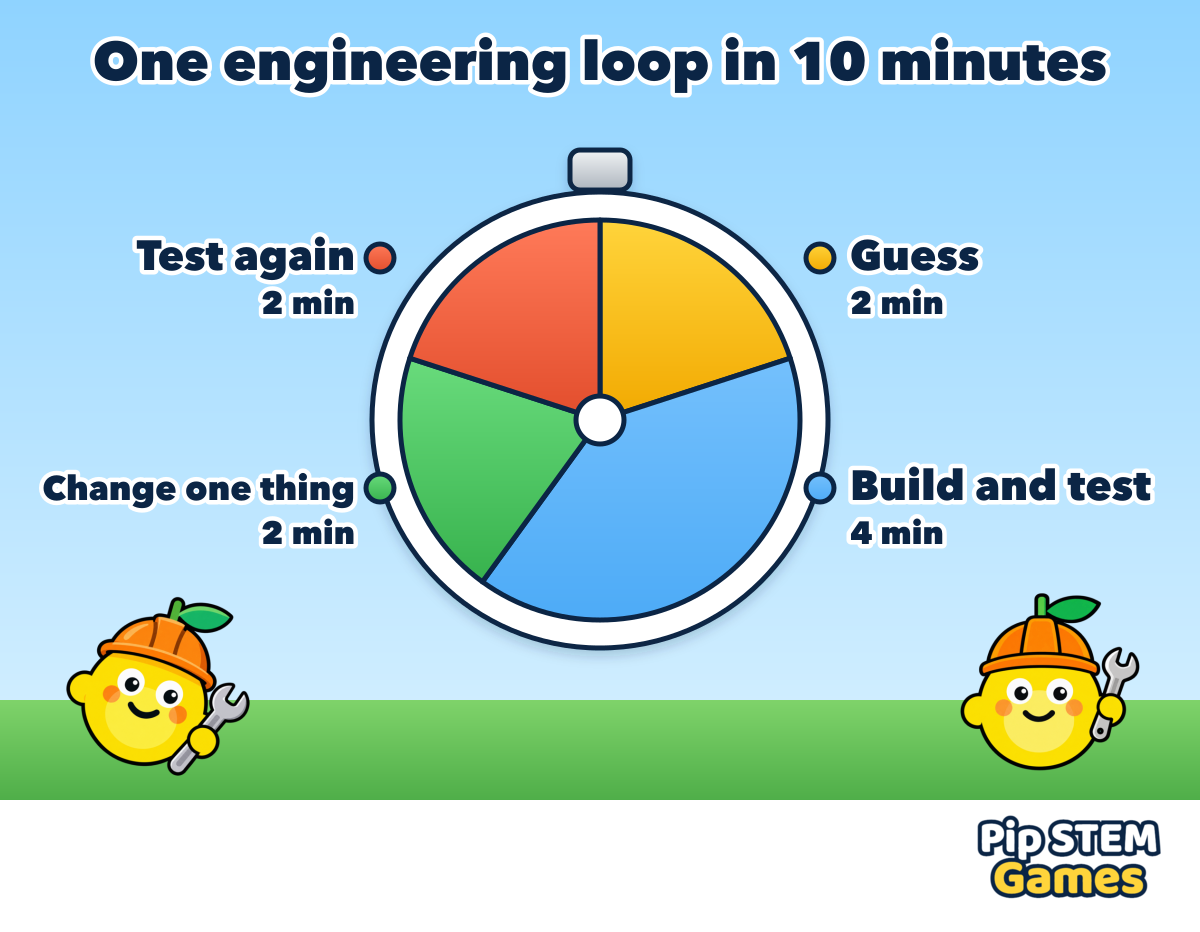
Split the time like the timer below. Two minutes to guess, four to build and test, two to change one thing and two to test again. If the minutes slip, that is fine. The loop matters more than the clock.
What do we need for all three challenges?
You need things you already have, and setup takes about two minutes.
- A few sheets of A4 scrap paper
- Masking tape
- A ruler
- 6 UK 10p coins
- About 6 paper cups
- A pencil and a phone timer
Safety: coins are small parts, so supervise younger children and keep them away from children under 3. Scissors are fine for children who can use them safely with an adult nearby. Clear breakables before launching planes.
How strong can a paper bridge be?
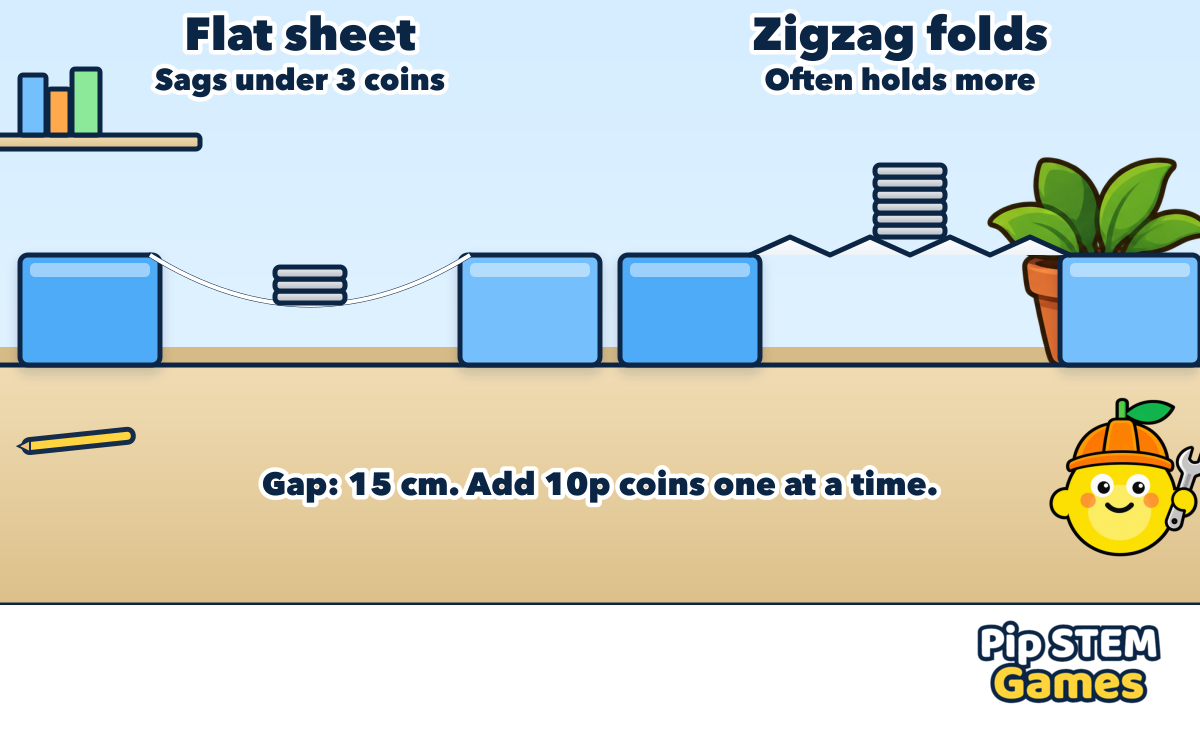
A paper bridge folded into pleats usually holds more than a flat sheet, because the folds stop the paper bending. Time: 10 minutes.
- Set two stacks of books 15 cm apart.
- Lay one flat A4 sheet across the gap and guess how many 10p coins it will hold.
- Add coins one at a time in the middle until it sags into the gap. Write down the number.
- Fold a second sheet into pleats like a fan and repeat.
If both bridges fail at once: check the gap is the same and the coins sit in the centre each time. Want a longer version? Try the paper bridge challenge.
Which cup tower stands tallest?
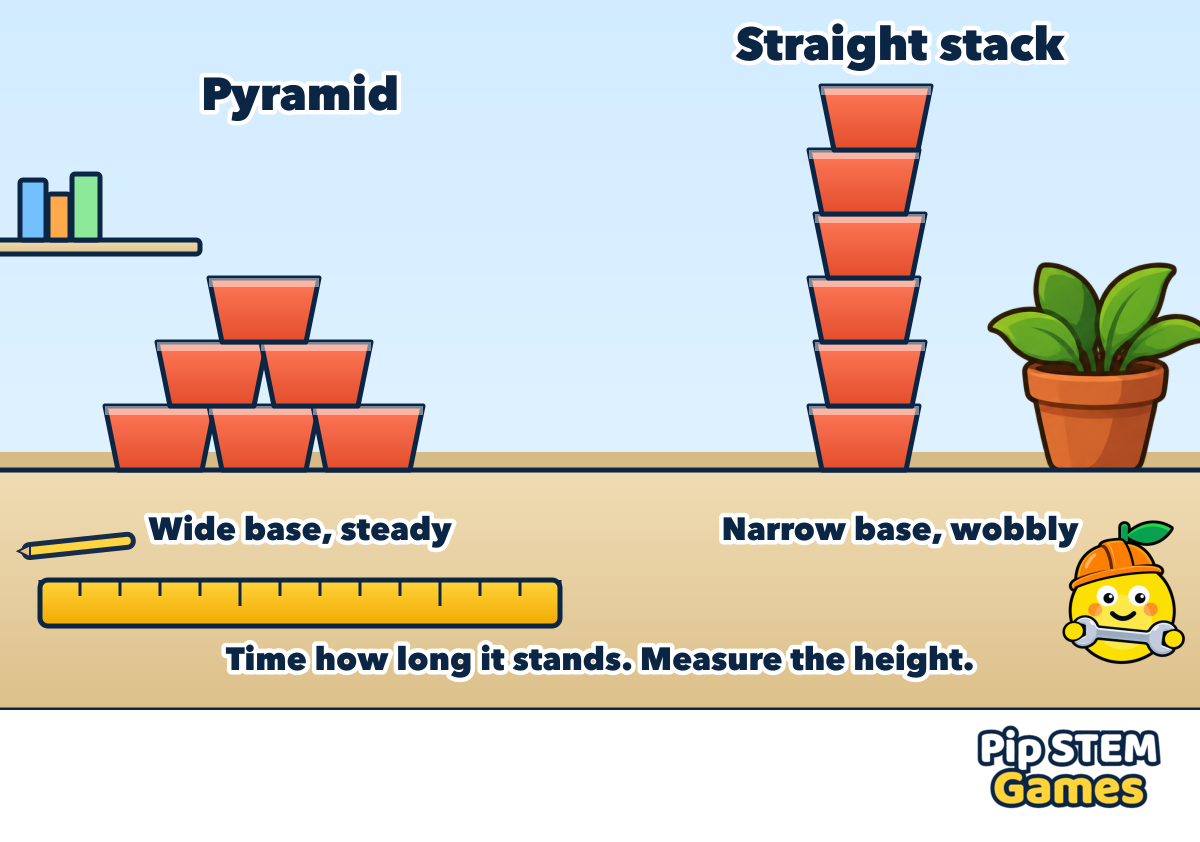
A tower with a wide base is usually steadier than one with a narrow base. Time: 10 minutes.
- Collect six paper cups. Use a sheet of paper as a flat platform if your table is bumpy.
- Guess which shape will stand longest without falling.
- Build a pyramid with three cups on the bottom, two in the middle and one on top. Then build a straight stack of six.
- Time how long each one stands and measure each height with the ruler.
If the tower is wobbly: cups are probably off centre. Press the bottom cups flat on the table first. For a longer tower build, see the paper tower challenge.
Which paper plane design flies furthest?
The plane with the better design flies further, but only a fair test can show which one that is. Change one thing only. Time: 10 minutes.
- Make two planes from identical sheets, one with wide wings and one with narrow wings.
- Launch each from the same line with the same gentle push.
- Measure the distance three times for each plane and compare the middle results.
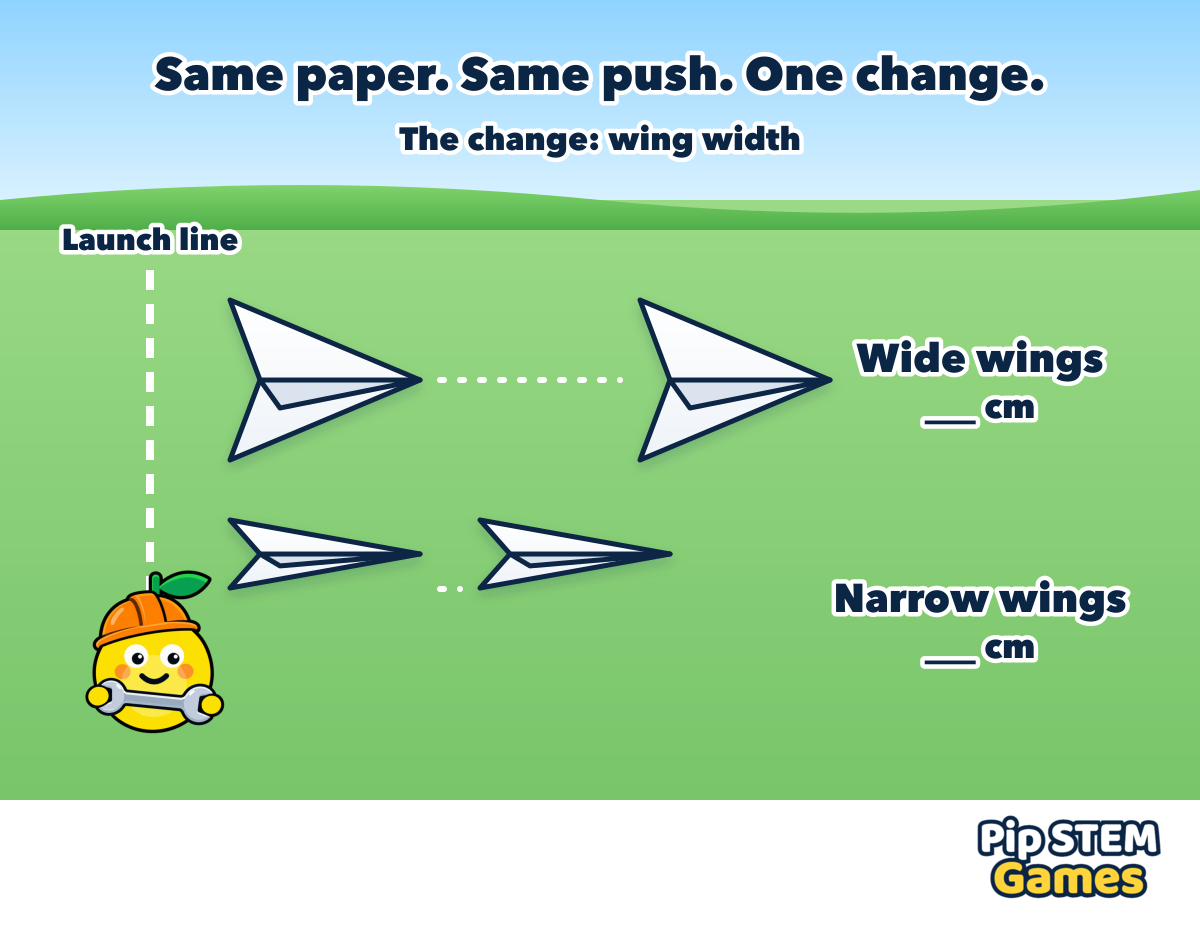
If the results jump around: launch from the same height and angle each time. You can also try your designs in the Paper Plane Lab game.
How do we run a fair test?
Change one thing only and keep everything else the same. That is the whole trick.
Repeat each test three times, because one try can be luck. Write the numbers down on the log, and change one thing before the second round.
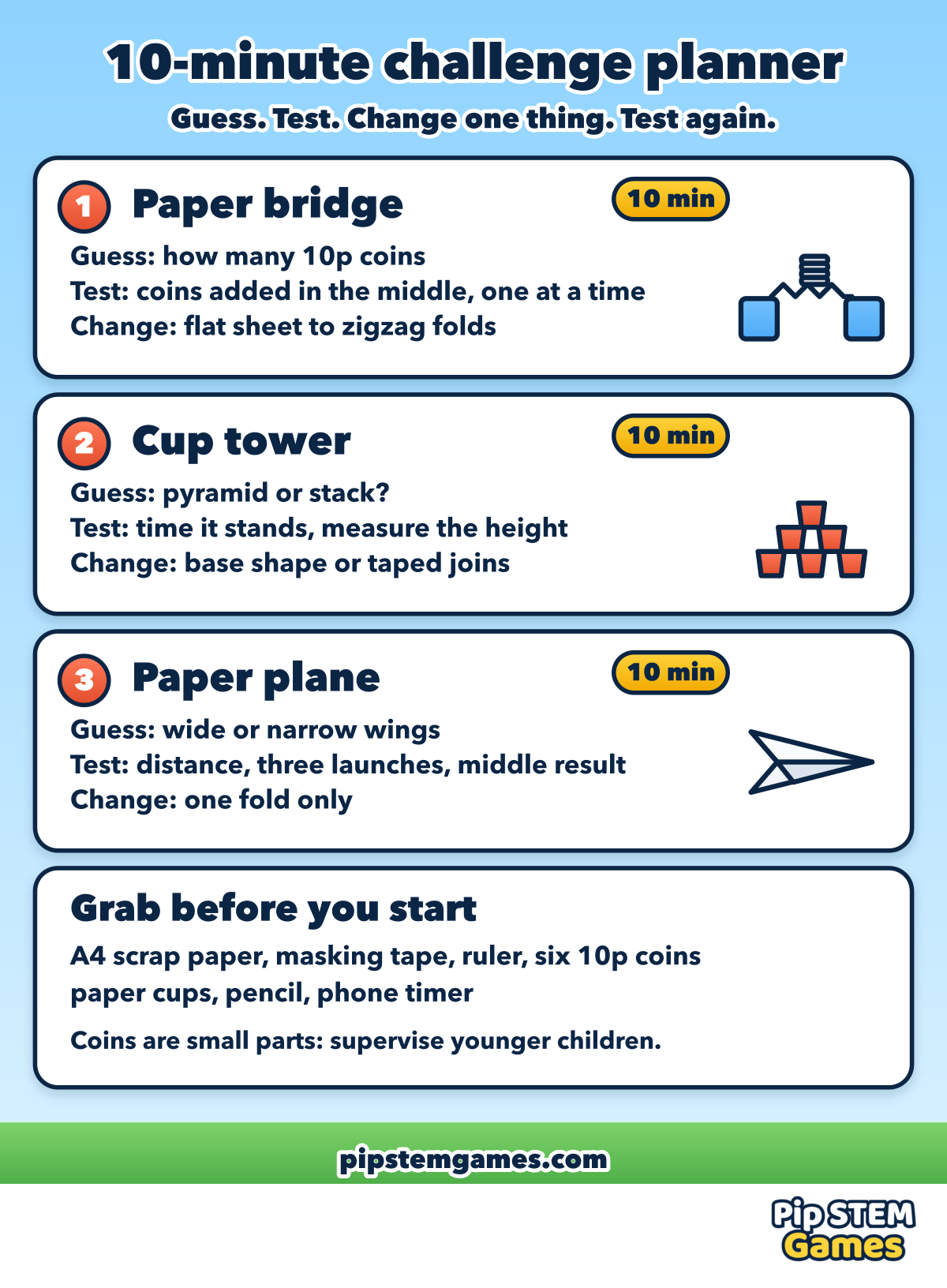
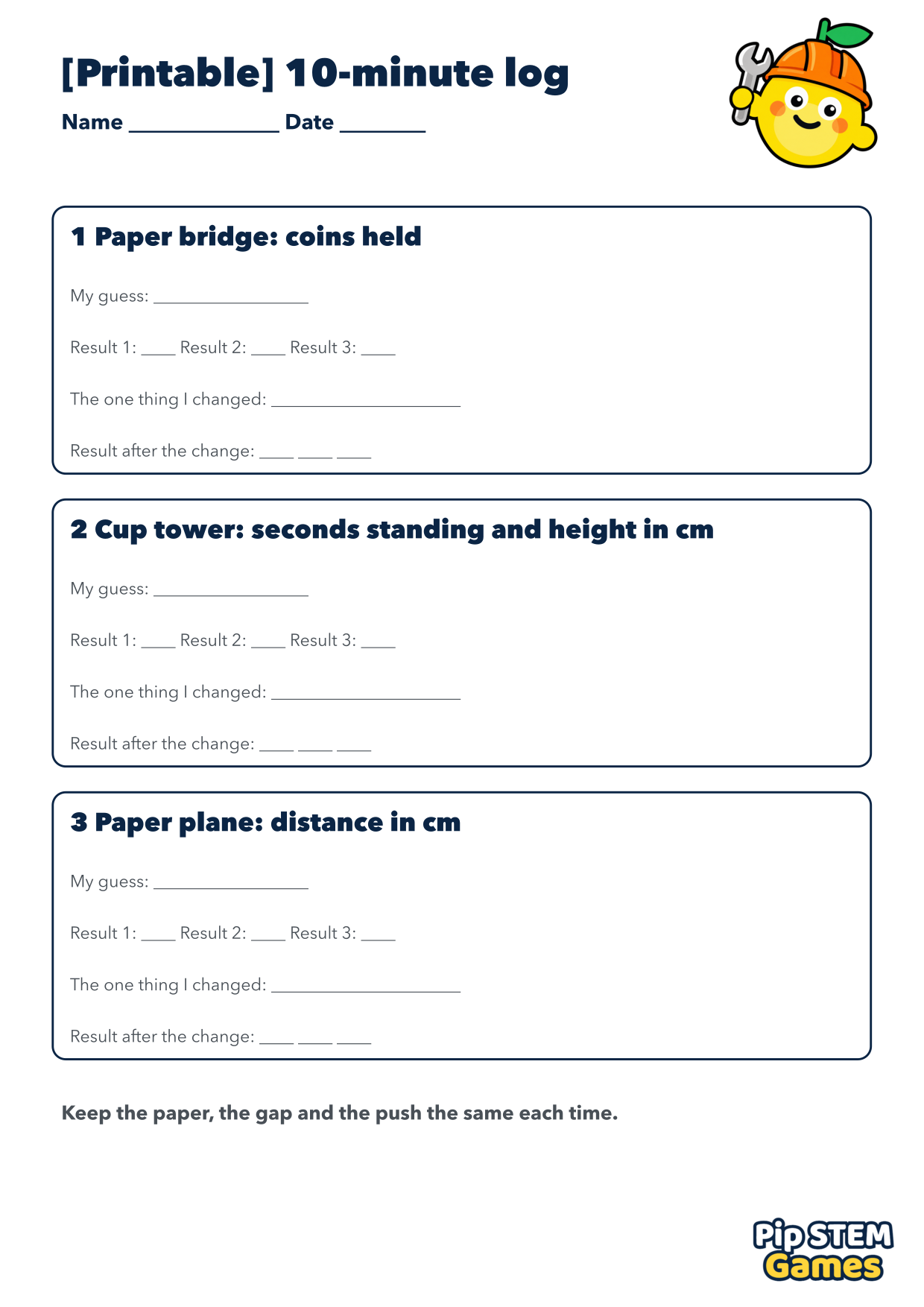
If a test goes wrong, the engineer's five-step fix-it checklist helps you work out why.
What should we test next?
Pick one change and run the loop again. A new test takes just another ten minutes.
- Try a different paper thickness for the bridge.
- Build a taller tower with taped joins.
- Add a paper clip to the nose of a plane and see what changes.
More ideas are in our STEM challenges and simple machines for kids.
How do we adapt for different ages?
Younger children count and compare, and older children measure and calculate.
Ages 5 to 7: count the coins together and use a simple win or lose result. The Junior Engineer's Workbook has more challenges at this level.
Ages 8 to 12: record measurements, work out the middle result of three tries and write a guess before each test. The Engineering Workbook for Kids goes further.
Questions parents ask
What are good 10-minute engineering challenges for kids?
A paper bridge, a cup tower and a paper plane. Each uses scrap paper, tape and coins, and each fits in one short loop of guess, test and change.
How long does setup take?
About two minutes. Put the books, paper, cups and coins on the table before you call the children over.
Do we need special materials?
No. You need A4 scrap paper, masking tape, a ruler, six 10p coins, a few paper cups, a pencil and a phone timer.
Why change only one thing?
If you change two things, you cannot tell which one caused the result. One change at a time gives a clear answer.
Why repeat each test three times?
One try can be luck. Repeating three times shows whether the result keeps happening.
What age are these challenges for?
They suit ages 5 to 12. Younger children count and compare, and older children measure and find the middle result.
Are the challenges safe for young children?
Yes with an adult nearby. Coins are small parts, so keep them away from children under 3 and clear breakables before launching planes.
Great STEM activities to try next...
 Paper Bridge Challenge: Build a Bridge From One Sheet of Paper [Printable]Build challenge
 15 STEM Challenges for Kids: Quick Builds With Everyday MaterialsBuild challenge
 Paper Tower Challenge: How Tall Can Your Child Build With Paper and Tape? [Printable]Build challenge
More to try:

Pip STEM Games
We make engineering games and workbooks for kids aged 5 to 12. Every activity here is one we'd happily run at the kitchen table: test it, watch it fail, fix it, try again.




